
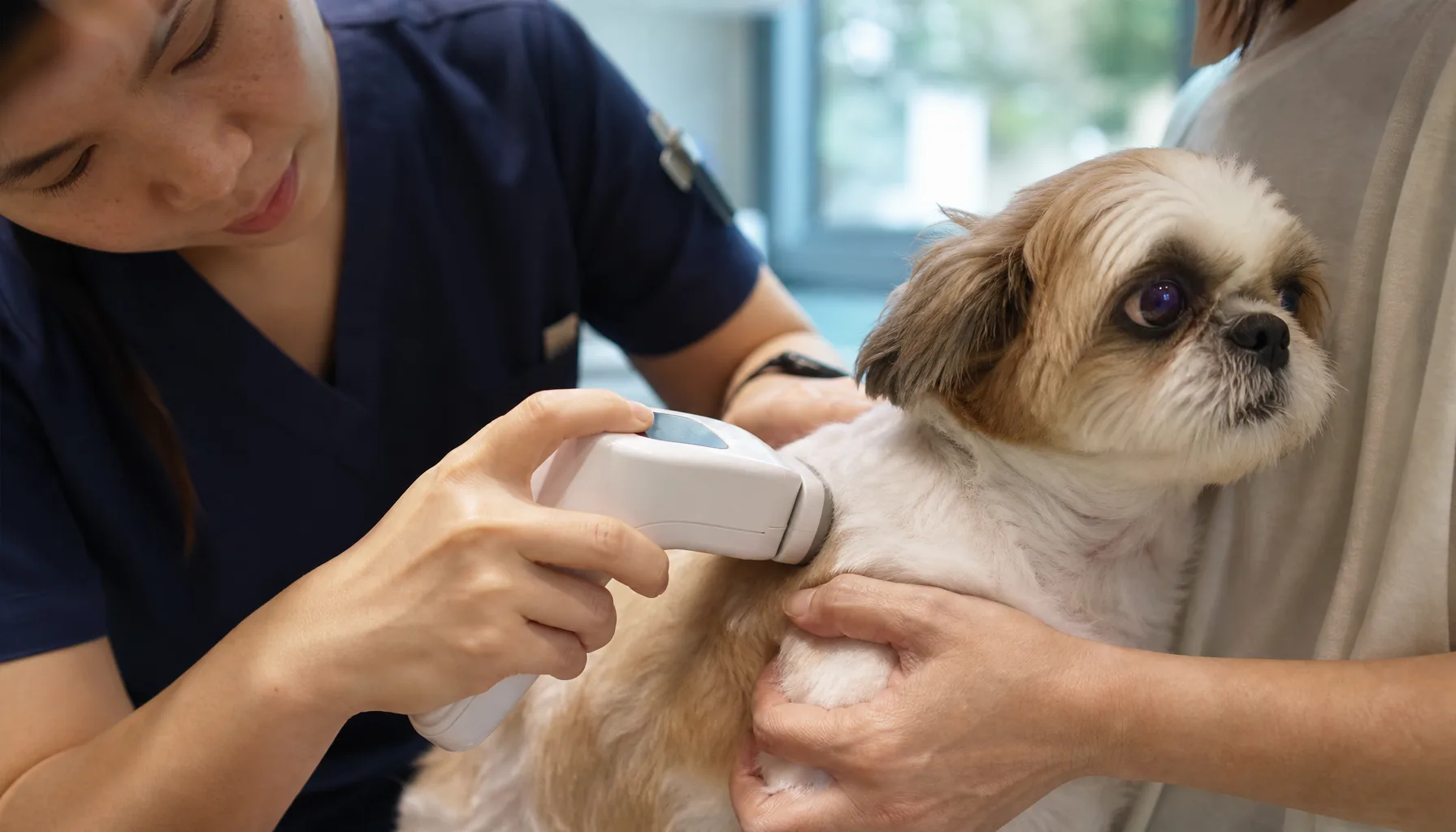

A small chip can help a lost dog find their way back to you, but the useful part is the connection between its number and an up-to-date record. Keep a collar tag as another route to contact you. Neither replaces secure handling, and neither guarantees recovery.
What a scanner actually reads
A microchip is a small implanted electronic identifier. A nearby compatible scanner reads its number; the owner's details are held separately in a registry. It is not a GPS transmitter or a file containing your dog's complete medical history. The AVMA's microchip information explains why implantation, registration and current contact information belong together.
A failed first scan is not proof that no chip exists. Tell the vet about any previous implantation or overseas paperwork, and ask them to investigate a mismatch. Do not buy a second implant simply because you cannot find the number at home. Keep copies of veterinary records separately and request a proper handover when changing clinics.
The Singapore licensing step
AVS requires pet dogs to be microchipped and licensed under the Animals and Birds (Licensing and Control of Cats and Dogs) Rules 2024. Its microchip guidance strongly recommends ISO 11784 or 11785. The separate import conditions specify the required standard and identity on veterinary records. Check the conditions for the actual journey if your dog is travelling; an international-looking number is not clearance to travel.
You need the microchip number for the PALS application. First-time applicants must also complete the Pet Ownership Course under the current application guidance. Ask the clinic or rehoming organisation what it has completed and what remains your responsibility. A chip record is not a substitute for a licence, housing eligibility or any required approval.
At the appointment
Tell the vet about your dog's health, handling needs and any existing chip. Ask them to explain the procedure and aftercare. AVS describes implantation under loose skin between the shoulder blades. There is no need for this guide to promise an exact procedure duration or that every dog will respond in the same way.
Before leaving, ask for the number to be checked by scanning and for a written copy. Compare it carefully with the paperwork. Keep a photo or secure copy where you can find it for licensing, travel and care arrangements, and ask whom to contact if you discover an error later.
When you adopt, move or change your number
Put the identity check alongside the adoption handover: existing chip number, licence or transfer status, vaccination record and current care information. Confirm responsibilities with the rehoming organisation. Do not assume every adoption fee includes the same administration or that a newly adopted dog needs another chip.
Use PALS and AVS's current instructions to update relevant records when contact details or ownership change. Ask AVS about a disputed or unclear record rather than treating the chip as a court determination of ownership. Keep confirmation of completed changes with your dog’s other documents.
Getting a useful quote
Ask whether the quote includes a consultation, the implant, scanning and any administrative help. Confirm which licence fees or later steps are separate. Packages and provider charges differ, so an unsupported national price range would be misleading. If the dog is already chipped, ask about checking and correcting the existing record first.
If a dog goes missing or you find one
Use the lost-pet and finder checklist. A person finding a dog should contact an appropriate service for a safe scanning arrangement rather than arriving at an assumed after-hours address. SPCA's current lost-and-found page explains its contacts and scanning advice. Do not attempt to handle a frightened or injured animal if unsafe.
Scanning may help the service trace a registered contact; it does not make private owner information freely available. Out-of-date records can delay contact, but this guide does not invent a fixed reclaim period or promise automatic rehoming after a number of days. Report a missing dog promptly and follow AVS or SPCA instructions for the actual case.
Keep a recent photograph and identifying details ready. Share only the contact information necessary in public lost-pet posts, and check claims of ownership carefully through the assisting organisation. For prevention, combine current records, a suitable tag, secure doors and careful handling. A separate location device can be an extra aid, but it has its own limits and does not replace the microchip.