
A lift journey adds an extra step to toilet training. A prepared route, a consistent toilet spot and patient rewards can make that step easier. Build the routine around the puppy in front of you, with a safe indoor backup when you need one.
1. Follow your puppy, not a bladder formula
Age alone cannot tell you how long a puppy can wait. Activity, drinking, health and previous learning all matter. Note when your puppy eats, drinks, sleeps and toilets for a few days. Use that pattern to plan earlier opportunities, rather than testing the longest possible interval.
The RSPCA suggests opportunities every 45 minutes to an hour, depending on age, alongside trips after waking, meals and play. Some puppies need more frequent access. Sniffing, circling and restlessness are reasons to act sooner. Overnight needs vary too; respond to waking rather than expecting an age-based overnight hold.
2. Choose a practical toilet spot
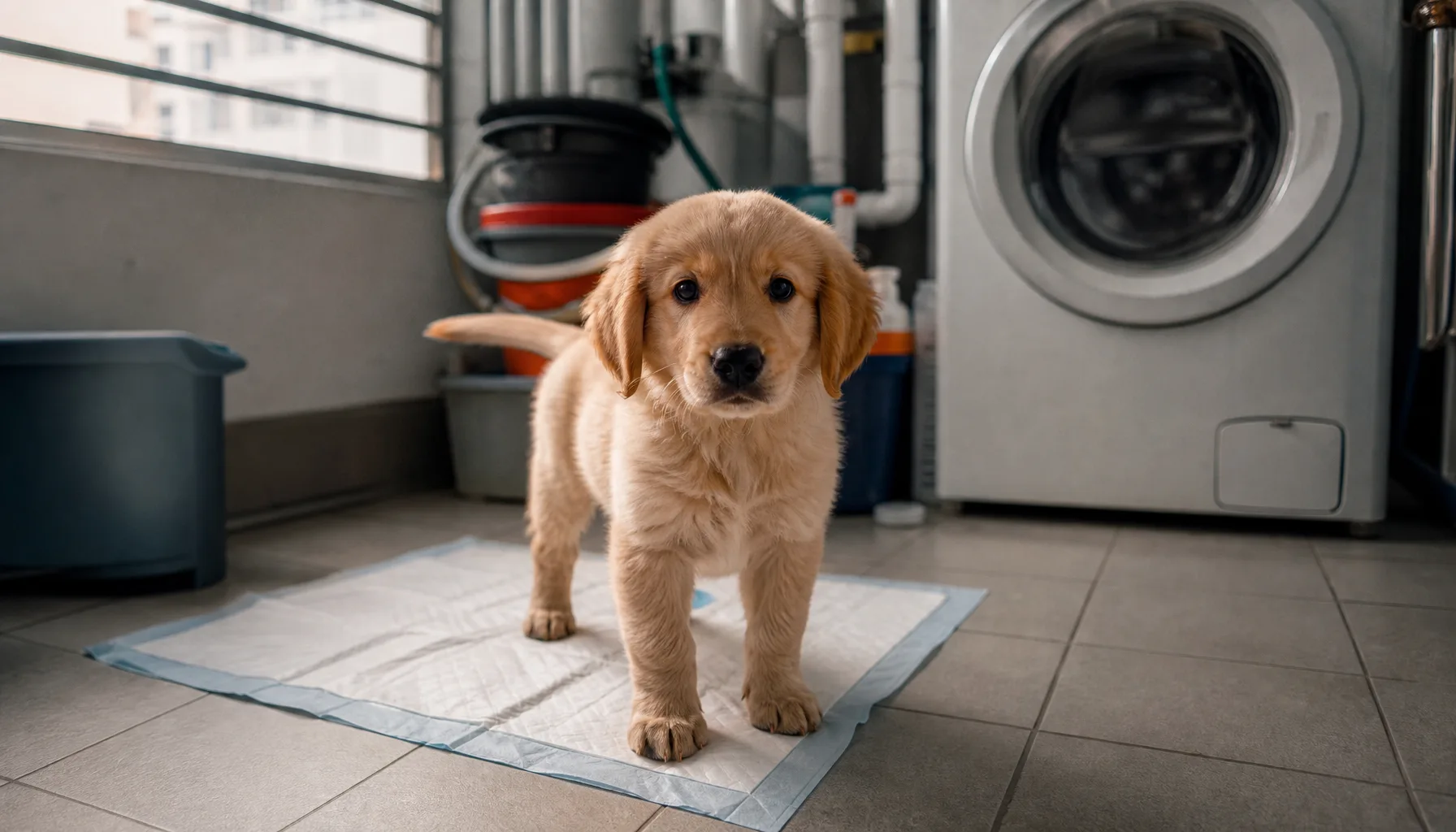
Indoors: place a pad or tray in a consistent, easy-to-clean area, separate from food, water and bedding. Supervise while your puppy explores. If using a pen, allow enough room for comfortable movement and distinct resting and toilet areas.
Service yard or balcony: secure openings and keep the toilet spot sheltered and accessible. Check that the surface is comfortable and that laundry, equipment or heat cannot put your puppy at risk. Remove waste promptly and clean the tray regularly. Check building rules before installing a permanent setup.
Outdoors: ask your vet about appropriate locations while vaccination protection is developing. A particular birthday does not make shared grass safe. Choose a permitted spot away from shared entrances and walkways, and keep your puppy on a lead.
3. Make the routine easy to repeat
- Have the lead, waste bags and small rewards ready before your puppy needs to go.
- Offer the toilet spot after waking, eating, drinking and play, and before sleep or confinement.
- Wait calmly. When your puppy finishes, reward promptly at the spot.
- If nothing happens, return to close supervision and try again soon.
- Arrange help or a suitable indoor toilet area when you cannot provide timely trips.
Keep drinking water available. Toilet trips and exercise walks serve different purposes; a puppy may need a brief toilet opportunity between walks. Keep outdoor trips comfortable in Singapore’s heat and use a safe alternative during storms.
4. Plan for the lift journey
Leave before your puppy becomes urgent. If carrying is comfortable and safe for both of you, it can help you get through a busy lobby, but it cannot prevent every accident. Keep an indoor backup if the route is too slow or outdoor access is unsuitable.
If an accident happens, clean it promptly and adjust the next trip. Do not turn a shared corridor or lift lobby into a training spot. When moving from pads to outdoors, keep rewarding the intended location and make changes at a pace your puppy can manage.
5. Clean up and respect shared spaces
Bag and bin faeces immediately, as NParks asks dog owners to do. Follow estate signs and local restrictions. Carry cleaning supplies suitable for the surfaces on your route and avoid leaving slippery residue.
At home, use a pet-appropriate enzymatic cleaner according to its label, including the contact time and surface precautions. Keep your puppy away while cleaning and never mix products. Change soiled pads and clean trays promptly.
6. When progress stalls
Look for patterns before blaming your puppy. Are breaks too far apart, is the location distracting, or has access changed? Return to closer supervision and easier opportunities. Punishment can make a puppy afraid to toilet near you.
Accidents can have several causes. A puppy who toilets again after coming indoors may need more frequent opportunities, a calmer location or a health check. There is no fixed regression period that must resolve within ten days. A qualified reward-based trainer can help with the routine once medical concerns have been considered.
7. When to ask a vet
Contact your vet about a sudden change, discomfort, blood in urine or repeated small amounts. Repeated attempts with little or no urine need urgent veterinary attention. These signs should not be treated as a training problem.
Use the vet directory to find a clinic, or read what to ask when choosing a vet.
Sources and review
Editorially checked on 16 September 2026. This is not a veterinary review.
- RSPCA: toilet training
- VCA: housetraining puppies and dogs
- Blue Cross: vaccination and your vet’s advice
- NParks: responsible visits with dogs
- VCA: urinary concerns requiring veterinary attention
Frequently asked questions
How long will it take to toilet train my puppy in an HDB flat?
Pee pads or straight to outdoor?
Can I use the void deck or HDB common grass?
My neighbour complained about the dog peeing in the lift. What now?
What about a balcony tray for life?
When will my puppy reliably signal before going to the toilet?
Puppy starter kit on Shopee SG

Wellness CORE Grain-Free Formula Dry Dog Food
High protein, no grain, and sized for HDB puppies who are eating their body weight in curiosity every day.
Affiliate link. UDO earns a small commission if you buy.
Start with a quiet moment together →A small idea to try, with progress kept in your Pack.