

8 min read
Last updated First published 2 June 2026
A clicker is a timing tool, nothing more and nothing less. Learn to use it well in a small Singapore flat and you will have the clearest, most efficient communication method available for teaching your dog almost anything.
What a marker actually is
A marker is a signal that tells your dog, at the exact moment it happens, that a specific behaviour has earned a reward. The clicker is the most common tool for this, but a short verbal word like "yes" works on the same principle. What makes the clicker useful is that it produces a sound that is consistent every single time, which your voice cannot reliably do when you are tired, distracted, or crouching in a narrow HDB corridor trying not to knock over your shoe rack.
A marker makes clear which behaviour you are rewarding. Mark the moment you want, then deliver the reward promptly. A clicker is one option; a consistent word or visual signal can also work.
Choose a marker you can use consistently. You do not need an expensive device, and a spoken marker may suit a sound-sensitive dog better.
Charging the clicker: the first session
First pair the marker with a reward in short, calm sessions. Move on when your dog shows they expect a reward, without treating a fixed number of sessions as a deadline.
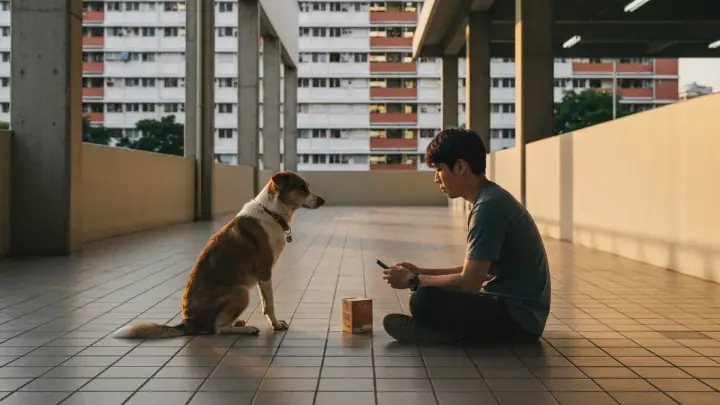
Sit on your living room floor with your dog loose in front of you. Click once, then immediately deliver a treat. Do not ask for any behaviour. Do not say "sit" or "good boy". Simply click, then treat, in that order, about fifteen to twenty times. Watch your dog's face. After several repetitions, most dogs will turn their head or perk up the moment they hear the click. That response tells you the association has formed.
A few things to keep in mind during charging:
- Click once per event. A single, clean click. Clicking multiple times in a row confuses the signal.
- Always follow the click with a treat, even if you clicked by accident. The click has to be a reliable promise. Break that promise and you erode the value of the marker.
- Keep the clicker behind your back or at your side at first. Waving it near your dog's face can startle some dogs, especially smaller or more sensitive breeds.
If your dog is sound-sensitive, a muffled click through a pocket or a softer button clicker is a reasonable adjustment. You are looking for a consistent signal, not a loud one.
Timing: why it beats everything else
Aim to mark the behaviour as it happens. If you miss it, reset and make the next repetition easier. There is no need to turn training into a half-second pass/fail test.
A useful exercise: ask for a sit. The moment your dog's backside touches the floor, click. Not when it is settled and comfortable. Not when it looks up at you. The instant contact is made. Then deliver the treat. This precision is what separates clicker training from general praise, and it is why owners who practise their timing in advance get faster results than those who wing it.
You can actually practise your clicker timing without your dog. Drop a ball, and try to click the exact moment it hits the floor. Watch a video and try to click the moment a person sits down or a door closes. These drills feel silly but they genuinely improve your accuracy, and better accuracy means clearer communication with your dog.
Clicking late is the most common error. The second most common is clicking for the approach to a behaviour rather than the behaviour itself. If you are teaching a down and you click when your dog begins to lower its front end rather than when its elbows reach the ground, you will end up with a dog that offers a half-hearted crouch and waits for its treat.
Treat choice in Singapore heat and humidity
This is one area where generic overseas training advice falls apart quickly. Singapore sits at around 27 to 33 degrees Celsius for most of the year, with humidity that rarely drops below 70 percent. Soft training treats that hold together in an air-conditioned pet shop in Melbourne or London will turn into a moist, sticky paste in your pocket by the time you reach the void deck.
Treats that hold up reasonably well in our conditions:
- Freeze-dried meat treats, such as chicken, salmon, or liver. These are low moisture and stay dry and separate even after twenty minutes outside. Zeal and Absolute Holistic both sell versions widely available here.
- Small cubes of dried fish skin. Messy on the fingers but extremely high value to most dogs, and they do not melt.
- Commercial training treats with low fat content and a firm, baked texture, such as small Zuke's Mini Naturals or similar. Test them on a humid afternoon before you commit to a training session.
- If using cooked meat your dog already tolerates, keep it appropriately chilled and follow food-storage guidance. Do not treat a fixed time outdoors as proof that it remains suitable.
Avoid anything with a high cheese or butter content in local conditions. They turn greasy fast. Also avoid large treats; you want your dog to consume the reward in under two seconds and return its attention to you. A treat the size of a 50-cent coin is too large for a training session.
Keep your treat pouch or pocket stash small and refresh it frequently. Carrying a full bag of treats for a 40-minute walk and a training session in this humidity guarantees a compressed, unappetising lump by the end.
Practising in a small flat before going outside
Most HDB flats are somewhere between 80 and 110 square metres for a four-room or five-room unit. That is enough space to run useful training sessions. The advantage of starting indoors is that distraction is low and your dog can focus on you without the competition of a neighbour's cooking smells, a passing cyclist, or another dog three void decks away.
Start every new behaviour in the smallest, quietest room available. A bedroom with the door closed is ideal. Once your dog is responding reliably there, move to the living room, then the kitchen, then the corridor outside your unit, and only then to the lift lobby and void deck below. This progression is not overcautious; it reflects how dogs actually learn. A behaviour learnt in one context does not automatically transfer to another. Practising in multiple locations within your flat before you go outside shortens the work once you get there.
Start in a quiet, safe place with room to move away. Shared lift lobbies can become crowded without warning; keep access clear and leave if the dog becomes uncomfortable.
Sessions at home should be short, typically five to ten minutes. If you have a Border Collie or a working breed with high focus capacity, you might stretch to fifteen minutes, but most dogs, and most owners, do better with two five-minute sessions spread across the day than one long, wandering effort.
Common mistakes worth knowing in advance
Clicking late is covered above. Here are the others worth naming directly:
- Double-clicking. Clicking twice in rapid succession because you were excited or surprised by a good response. Your dog hears two signals and learns that sometimes the marker comes in pairs. Keep it to one clean click per event.
- Running out of rewards. Prepare suitable rewards before starting. Do not use unknown food from a lunch bag to fulfil a click. End the session and prepare better for next time.
- Using the clicker as an attention tool. The clicker is a marker, not a recall cue. Clicking to get your dog to look at you when it is distracted in the void deck is a misuse that dilutes what the sound means.
- Sessions that run too long. You will notice your dog's responses slow down, become sloppy, or stop altogether. This is not stubbornness; it is cognitive fatigue and diminishing appetite for treats. Stop before this point, not after.
- Marking the wrong thing. If you ask for a sit and your dog sits then immediately stands and you click while it is standing, you have marked the stand. Review your timing and, if necessary, slow your criteria down until you can click cleanly and consistently.
Fading the clicker once a behaviour is solid
The clicker is a teaching tool, not a permanent accessory. Once your dog is offering a behaviour reliably across multiple locations and distraction levels, you can begin to phase it out for that behaviour. The process is gradual rather than abrupt.
Start by reinforcing the behaviour every other time rather than every time, using a verbal marker or just the treat delivery on the off-clicks. Over several sessions, reduce the click frequency further while maintaining your reward rate. Your dog should continue performing the behaviour because it has been well-reinforced, and the verbal praise or intermittent treat keeps it worthwhile.
You do not need to fade the clicker for every behaviour simultaneously. Many owners keep the clicker active for new skills being learnt while using only verbal markers or treats for behaviours their dog has thoroughly consolidated. That is sensible and practical. Carry the clicker when you are actively teaching something new, leave it at home when you are just going for a walk around the reservoir.
One realistic note: in Singapore's condo and HDB environment, you will likely return to the clicker for proofing behaviours around lifts, near dog runs at places like Bishan-Ang Mo Kio Park or East Coast Park, or when introducing your dog to new contexts like a pet-friendly café. Fading is not discarding. The clicker stays in your toolkit. You just use it with purpose rather than habit.
Editorial check, 14 September 2026: Primary guidance used for this correction. Individual needs and current local rules still apply.
Notice one little habit together →A small idea to try, with progress kept in your Pack.
More training guides
-
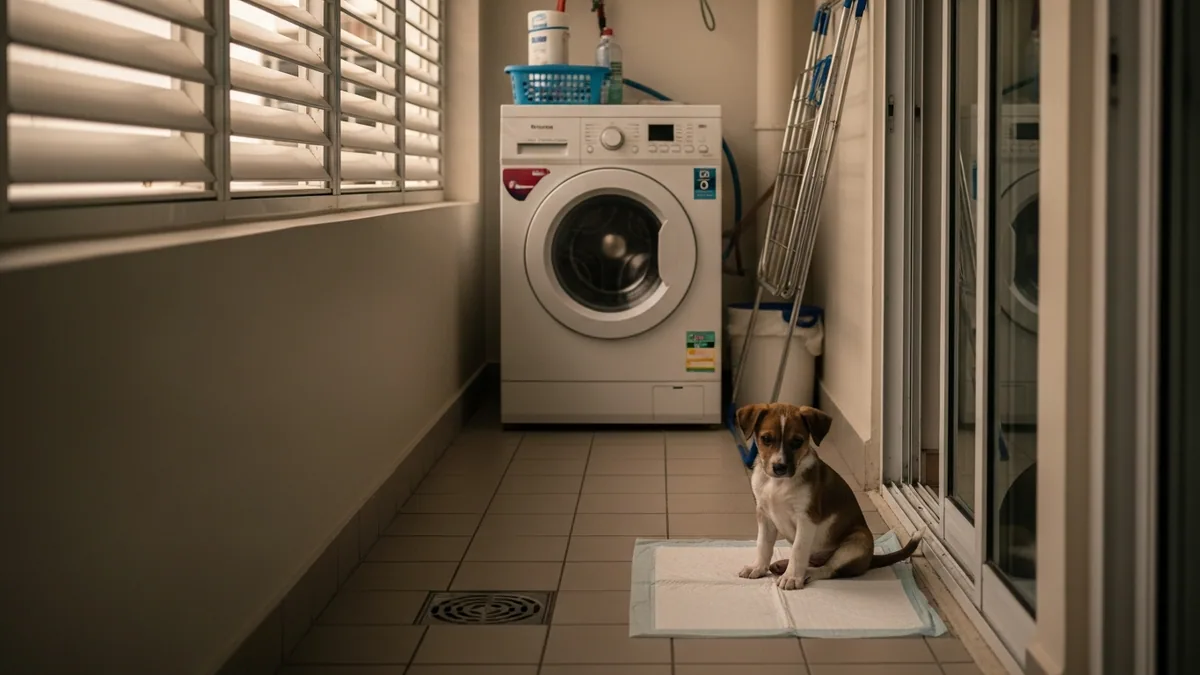 Toilet training the apartment way No garden, no driveway, just a tiled floor and a lift that takes two minutes to arrive. Here is how to toilet train a puppy in a Singapore flat without losing your mind.
-
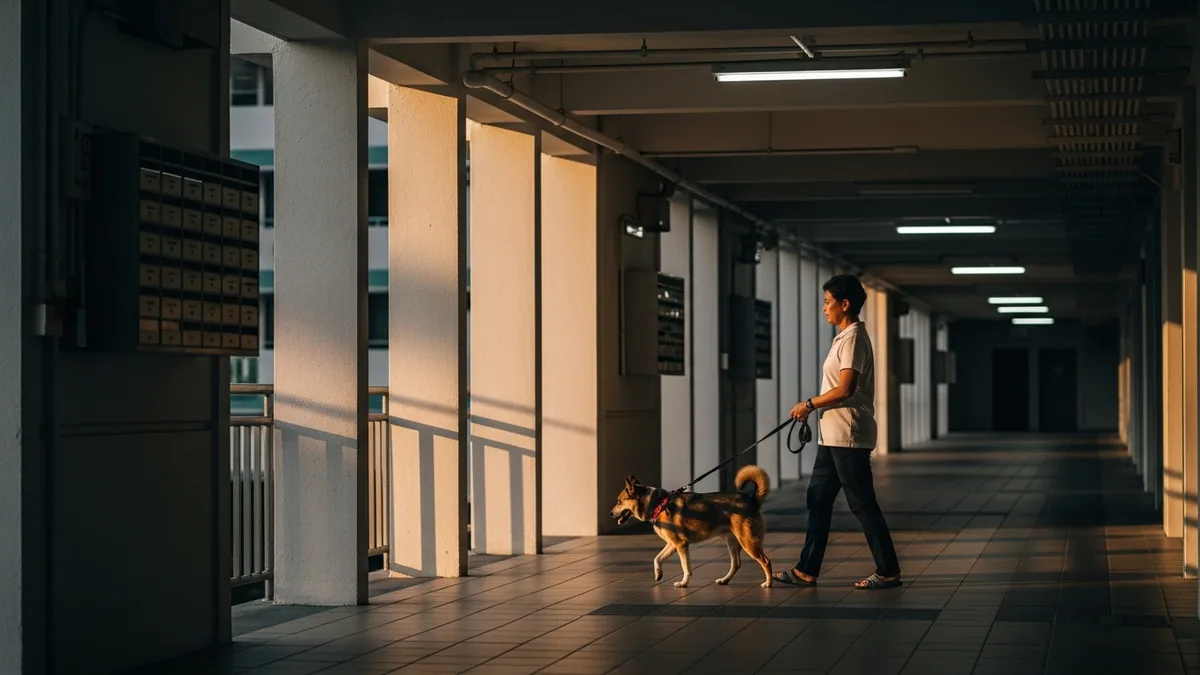 Loose-leash walking in Singapore’s shared spaces Start with room, reward a slack lead and make the task easier when your dog struggles. Lift lobbies, narrow pavements and crossings need practical choices, not a perfect heel or a fixed timetable.
-
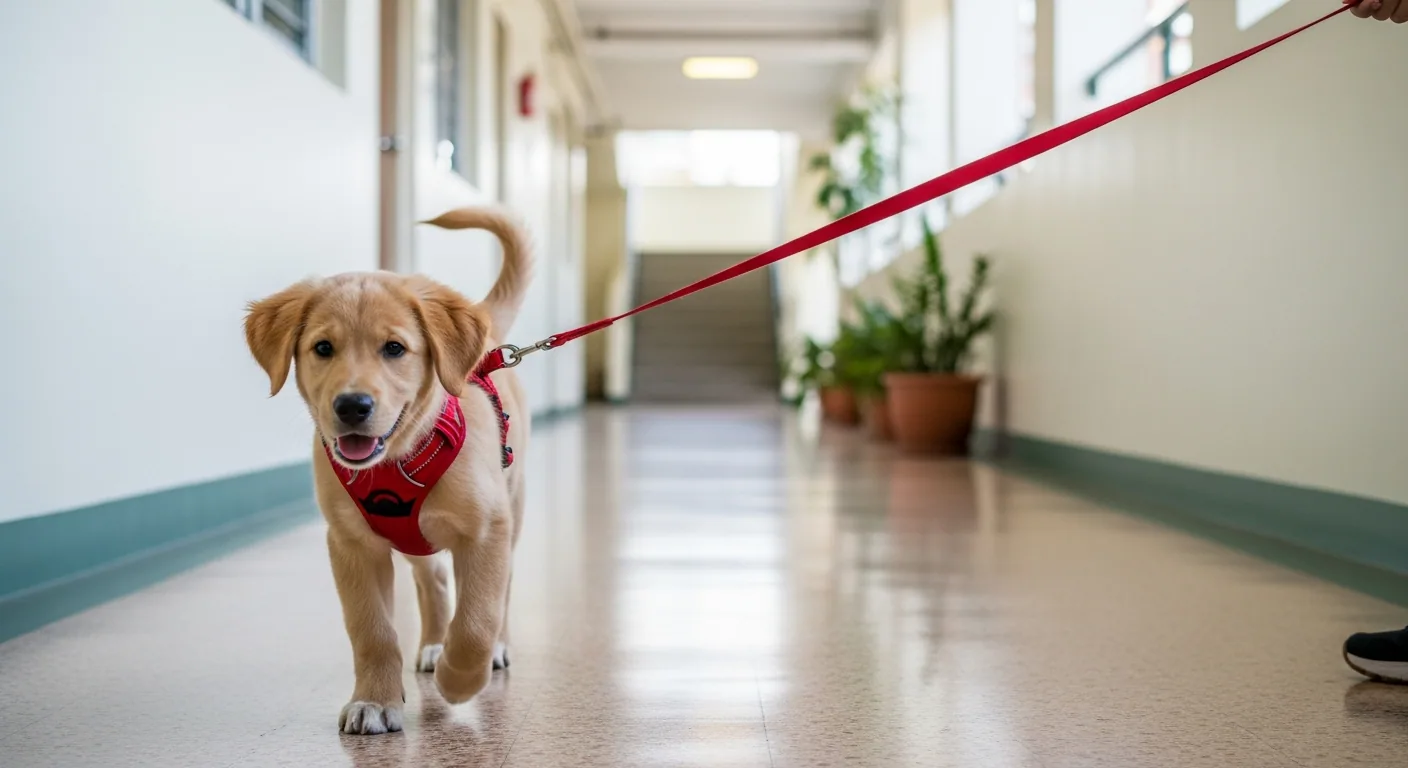 Leash Training a New Dog or Puppy in Singapore Getting a brand-new dog or puppy happy on a leash is a gentle, gradual job, not a one-session fix. Start indoors, reward the position you want, and let your dog set the pace through HDB corridors, lifts and the Singapore heat. This starter guide covers collar and harness choice, first steps, and how to handle pulling and lunging kindly.
-
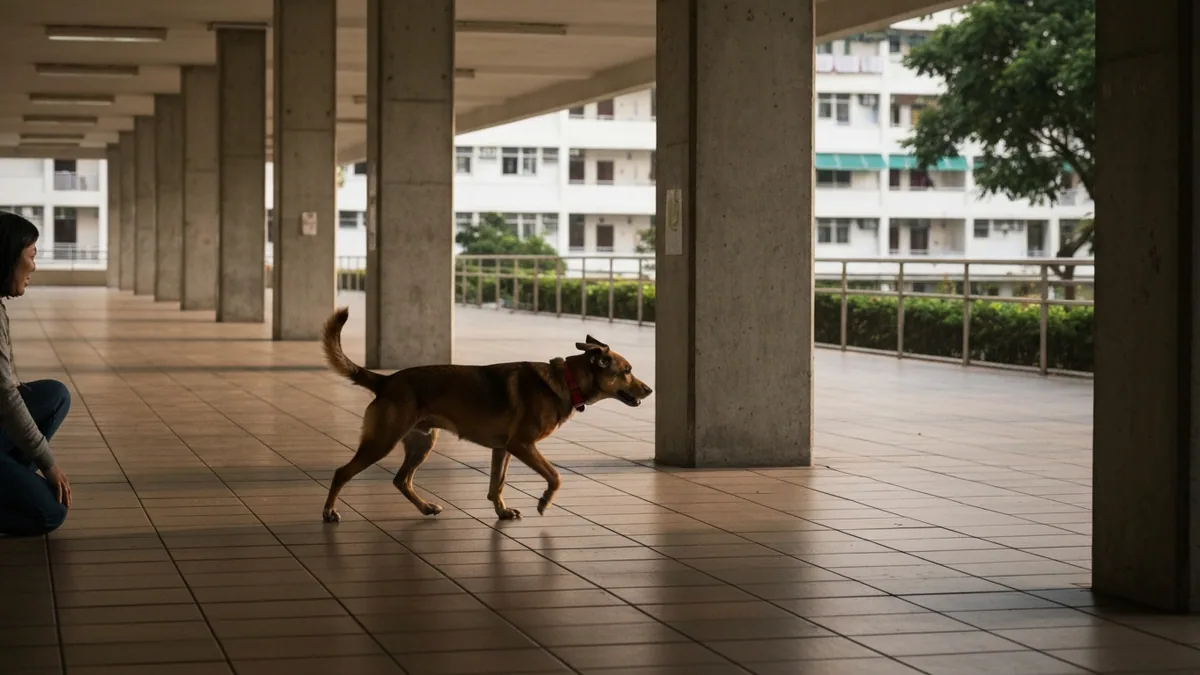 Recall, and where to practise it safely in Singapore Recall is the most important thing you can teach your dog, and Singapore gives you almost nowhere legal to practise it off-leash. Here is how to build it anyway, in the spaces you actually have.