
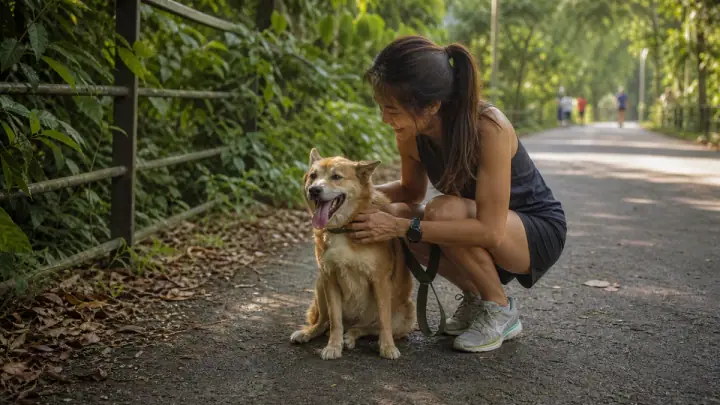

A walk in Singapore carries hazards that temperate-climate guides never mention. Pavements that burn paws by mid-morning, monsoon drains that fill in minutes, and forest-fringe encounters with monkeys and boars all belong on the same checklist.
8 min read
The most dangerous thing about a Singapore dog walk is how ordinary it feels. The risks are not dramatic predators. They are heat, water, traffic and a handful of wildlife encounters that catch owners off guard because nothing in a typical dog book prepares them for the tropics.
How hot is too hot to walk a dog in Singapore?
Ground temperature is the hazard owners underestimate most. On a clear day, asphalt and dark pavement can reach 50 to 60 degrees by late morning, hot enough to blister paw pads within a minute. Air temperature of 33 degrees translates to a far higher surface reading.
Check the ground before walking: a surface that is too hot for your hand is unsuitable for paws. A comfortable surface does not rule out heat illness from air temperature, humidity or exertion. Use the RSPCA hot-weather advice alongside current conditions and your dog’s health. Our walking window tool is a planning aid, not a guarantee of safety.
Surfaces vary more than people expect. Open tarmac car parks and dark pavers hold heat long after the sun dips, while shaded grass and the rubberised paths in some parks stay far cooler, so route choice can buy you an extra hour at the margins of the safe window. Carry water on anything beyond a quick toilet trip, because a dog overheats from the inside as readily as from the paws up, and offer small drinks rather than letting it gulp a bowl dry at the end. If your dog stops, lies down or plants itself in shade and refuses to move, do not drag it on. That is the dog telling you it has had enough heat, and the right response is to head home, not to finish the planned loop.
Heavy panting, weakness, drooling, unsteadiness or collapse in the heat need urgent attention. Do not wait for a temperature threshold or a particular gum colour. Move to shade, start cooling with water and airflow and call a vet for urgent care. Keep your regular and emergency clinic details accessible before leaving home.
Monsoons, puddles and paw care
The wet season brings its own list. Avoid walking near monsoon drains and canals during and after heavy rain, where water levels rise fast and the current is stronger than it looks. Standing puddles and floodwater carry leptospirosis, a bacterial disease spread through rat urine that spikes in the wet months and can be fatal, so steer your dog clear of stagnant water and ask your vet about the lepto vaccine.
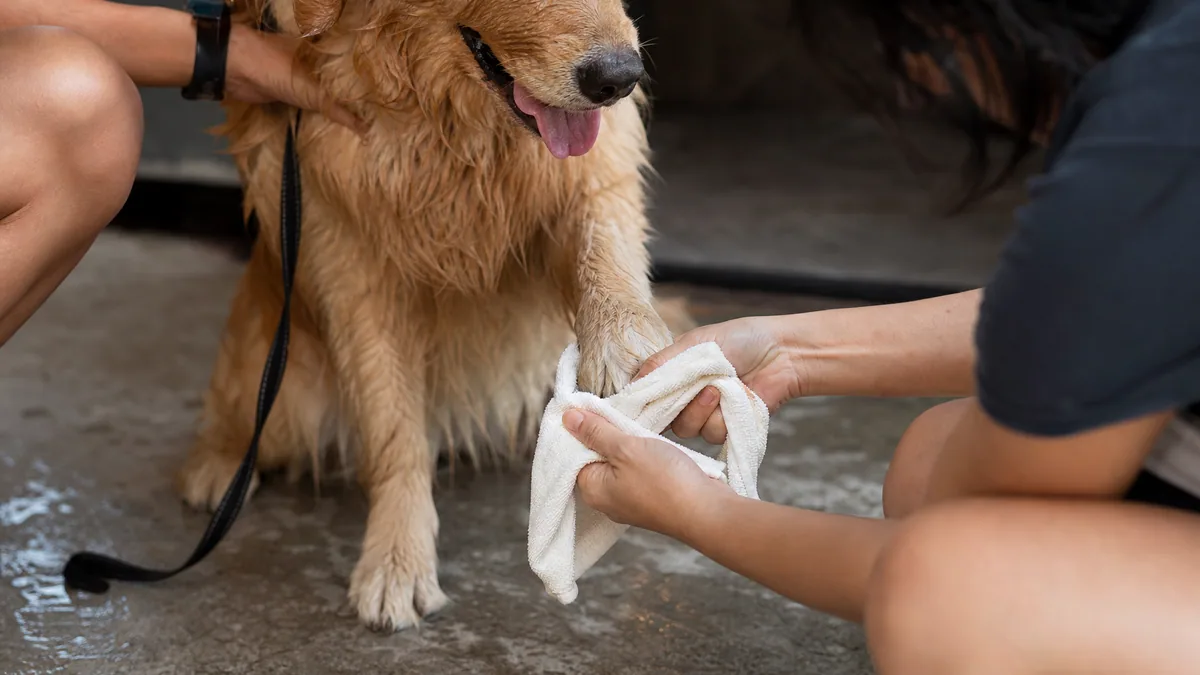
After every wet walk, towel the dog down, dry between the toes and the skin folds, and check the paws. Singapore's humidity makes damp fur a breeding ground for yeast and hot spots within a day, and grass seeds lodged between pads turn into painful abscesses if missed.
Traffic, wildlife and what dogs eat
Traffic blackspots cluster where park connectors cross roads and where covered walkways meet junctions. Keep your dog on a short lead near roads rather than a flexi-lead, which gives you no real control if the dog lunges.
Wildlife is the genuinely Singaporean part. Along the forest-fringe park connectors near Bukit Timah, the Central Catchment and Lower Peirce, dogs can encounter long-tailed macaques, wild boar and the occasional snake. Note first that dogs are not permitted inside the nature reserves themselves under NParks rules, but the surrounding connectors are fair game and so is the wildlife. Macaques will defend food, so never let your dog approach a troop, and do not carry visible snacks. If you meet a wild boar, keep your distance, do not let the dog bark or charge, and back away slowly. For safer routes, our places directory and the walk route picker lean towards open, dog-friendly parks.
Is it safe to walk a dog after dark in Singapore?
When you choose a cooler early or late period, a lot of Singapore dog walking happens in low light, and visibility becomes its own hazard. Park connectors and the paths around reservoirs are poorly lit in stretches, cyclists move fast and quietly, and a dark-coated dog on a long lead is nearly invisible to a rider until the last second. Fit a reflective harness or a small clip-on light, keep the dog close on shared paths, and carry a torch or use your phone so you can see what your dog is about to put its nose into.
Keep your dog away from wildlife, including toads and snakes. NParks identifies the Common Asian Toad locally; the previous reference to cane toads imported the wrong regional example. If your dog mouths a toad or has suspected snake contact, call a vet urgently. Do not force water down its throat or attempt to catch the animal.
Heat hits some dogs much harder
The pavement test protects every dog, but the heat danger is not evenly shared. Flat-faced breeds such as French Bulldogs, Pugs and Shih Tzus cannot move air efficiently and overheat far faster than a longer-nosed dog, so they need the coolest windows and the shortest daytime exposure. Black or thick-coated dogs absorb and trap more heat, puppies and seniors regulate temperature poorly, and an overweight dog struggles more than a lean one. If your dog sits in any of those groups, treat the safe-hours rule as a hard floor rather than a guideline, and lean on the indoor routines in our other guides on the worst days.
Build a safe-walk kit
A small, consistent kit removes most of the panic from a bad moment. Carry water and a collapsible bowl on every walk longer than ten minutes, because a dog cannot wait for home in this heat. Pack a few poop bags, a clean towel for wet days, and a basic first-aid pouch with saline, gauze and a tick remover. Keep your dog on a fixed-length lead of about 1.5 metres near roads and crowds rather than a retractable one, which offers no real control at the moment you need it most.
Save two phone numbers before you ever need them: your regular vet and a 24-hour emergency clinic, both of which you can pull from our emergency vet page. Lightning is the hazard owners forget entirely. Singapore records one of the highest lightning rates in the world, and the National Environment Agency issues warnings worth heeding, so when you hear thunder, cut the walk short and get under cover rather than finishing the loop.
Crowds, other dogs and the lift
The social hazards matter as much as the physical ones. Void decks, wet markets and crowded park connectors on a weekend evening are dense with people, food smells and other dogs, and a dog that is nervous or reactive can tip into trouble fast. Give other dogs space rather than forcing nose-to-nose greetings on a narrow path, and watch for the early body language, a stiff posture, a hard stare or a tucked tail, that says your dog wants out.
The HDB lift is the most concentrated version of all of it: a small steel box where your dog may meet a stranger, a child or another dog with no room to retreat. Teach a calm sit-and-wait at the lift from the start, step aside to let nervous neighbours travel alone when you can, and reward composure every time. If your dog already reacts in tight spaces, a trainer from our directory can rebuild the habit, and the responsible-ownership and Safe Walking guidance from the SPCA sets the baseline for shared spaces. A confident lift dog makes every other part of HDB life easier.
Prevent scavenging of unknown plants, discarded food and rubbish. If you suspect a harmful ingestion, contact a vet promptly even before symptoms appear. Keep a safe photograph or packaging if available and describe the amount and time. Do not induce vomiting without veterinary instructions. The former rain-tree-seed toxicity claim was not established here.
None of this should keep a dog indoors. Walks are the best part of a dog's day and the social heart of city ownership, and the point of the list is not fear but preparation. Learn the hazards once, build them into your timing and your kit, and they fade into the background of an ordinary, enjoyable walk. The owner who knows the safe hours, carries water, checks the paws and keeps an emergency number saved is free to simply enjoy the morning loop, which is exactly the point.
For a month-by-month view of the heat, haze, monsoons and festival fireworks, see the seasonal calendar for Singapore dog owners.
Related guides: Getting around Singapore with your dog, taking your dog to Sentosa, whether dogs can swim at East Coast Park, bringing your dog to Gardens by the Bay.
More from The Block
-
 Dog supplements in Singapore: what helps and what to skip Most healthy dogs on a complete diet need no supplements. A few have real evidence; many are marketing. How to tell them apart, and why to ask your vet first.
-
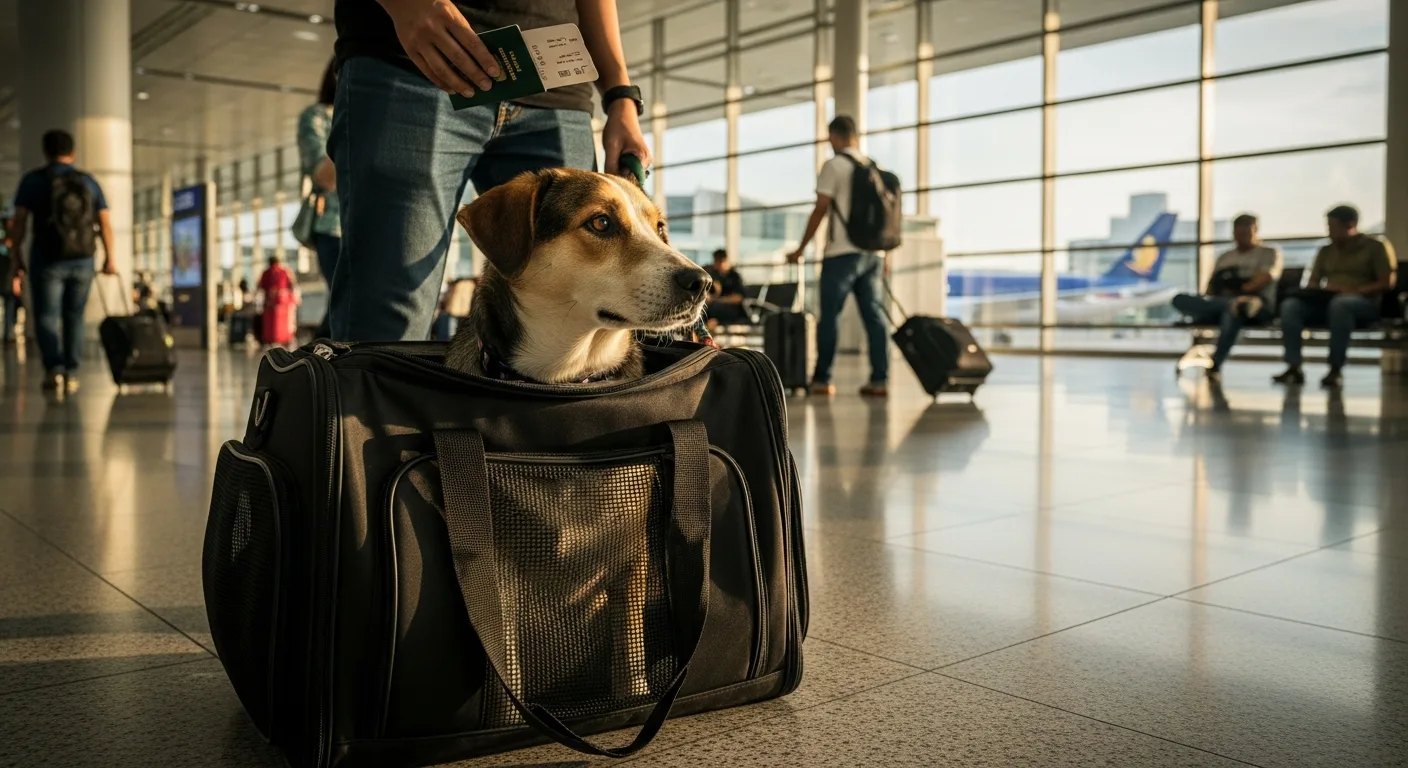 Flying with your dog from Singapore: cabin, cargo and relocation (2026) Start with the operating airline and exact route. A pet may travel in the cabin, as checked baggage or through a cargo arrangement depending on the carrier and journey. Confirm acceptance before buying equipment or treating your own flight booking as a pet booking.
-
 Raw feeding for dogs in Singapore: a safe, honest guide Raw feeding is not proven to be healthier than an appropriate balanced cooked diet. CDC advises against raw pet food because of risks to animals and people. Nutritional formulation, cold storage and careful cleaning do not remove every infection hazard. A complete cooked diet is a practical starting point for discussing your dog's needs with your vet.
-
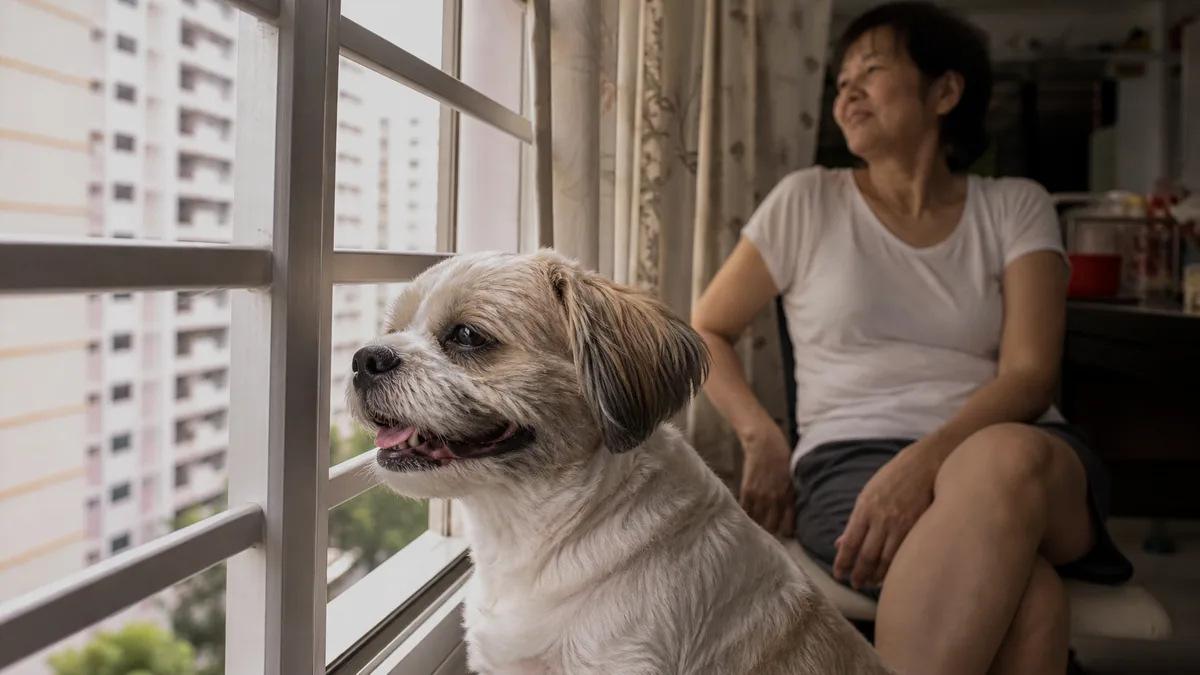 Choosing a dog for an HDB flat: eligibility, adoption and everyday care A dog can become a much-loved part of flat life. Start by checking eligibility for your actual home, then choose for the individual dog’s needs and the daily care you can offer. A small body or a seller’s assurance is not proof of HDB approval.