
Socialising an adult dog is not simply a continuation of puppyhood play. Adult dogs carry their history with them, and a session that goes wrong can set back confidence for weeks. Singapore's climate adds another layer of complexity: with afternoon temperatures regularly reaching above 32 degrees Celsius and mean annual humidity around 82 percent, even a short outdoor session demands careful timing and venue choice. This guide walks through every stage of arranging a successful adult dog playdate, from finding the right partner to knowing when to call it a day.
By the numbers
- 31 to 33 degrees Celsius Typical daily maximum temperature in Singapore (1991-2020 Changi average), Meteorological Service Singapore. Plan playdates for early morning or evening to reduce heatstroke risk.
- 171 days per year Average number of rainy days in Singapore (1991-2020 average), Meteorological Service Singapore. Build wet-weather backup plans into every outdoor playdate.
- Up to S$4,000 Fine for failing to comply with HDB dog-ownership rules, Animal and Veterinary Service (AVS). Ensure any playdate host's home meets the one-dog limit for HDB flats.
Why Adult Dog Playdates Are a Different Proposition Entirely
Puppy socialisation classes in Singapore fill up quickly, and for good reason. The early weeks of a young dog's life are a critical window for learning how to read and respond to other dogs. But once that window closes, the social life of a dog does not simply freeze. Adult dogs still need companionship, stimulation and the opportunity to interact with their own kind. The difficulty is that arranging those interactions requires considerably more thought than booking a spot in a puppy class.
Adult dogs carry history with them. They have established ways of communicating, things they find alarming, and play styles that may not suit every partner. An adult dog that greets a stranger with a stiff posture and a hard stare is not being unfriendly out of nowhere. It is drawing on years of learned experience. Respecting that complexity is the starting point for arranging playdates that are genuinely enjoyable rather than merely tolerated.
Singapore's Climate and the Timing Question
Before the practicalities of matchmaking, there is a logistical reality that every dog owner in Singapore lives with: the heat. According to the Meteorological Service Singapore's Climate of Singapore data (1991 to 2020 averages), the daily maximum temperature usually does not rise above 31 to 33 degrees Celsius, and hot afternoons with a maximum above 32 degrees Celsius are common. Mean annual relative humidity sits at around 82 percent, which means even a modest temperature feels oppressive once a dog is moving around.
These conditions have a direct bearing on when and where playdates should happen. A midday session in an exposed dog run is genuinely risky for most dogs, particularly flat-faced breeds or heavier-coated ones. Early mornings, typically before eight o'clock, and evenings after five thirty give the ground time to cool and the sun time to drop to a more manageable angle. Plan your introductions around this rhythm and you remove one variable that can turn an already tense first meeting into a distressing one.
Singapore also averages 171 days of rain per year, so having a covered backup location in mind is simply sensible planning rather than pessimism.
How to Vet a Potential Play Partner
The single most important step in arranging an adult dog playdate is the preliminary assessment, and it should never be skipped in favour of convenience. The process begins long before two dogs are ever off-lead together.
Start by talking to the other owner in detail. Ask about the dog's history with other dogs, any incidents that have caused concern, and what the dog's play style tends to look like. A dog that has spent most of its adult life as the only pet in a household will have a very different social toolkit from one that has attended group training sessions or lived alongside another dog. Neither background is better, but knowing which you are dealing with sets expectations correctly.
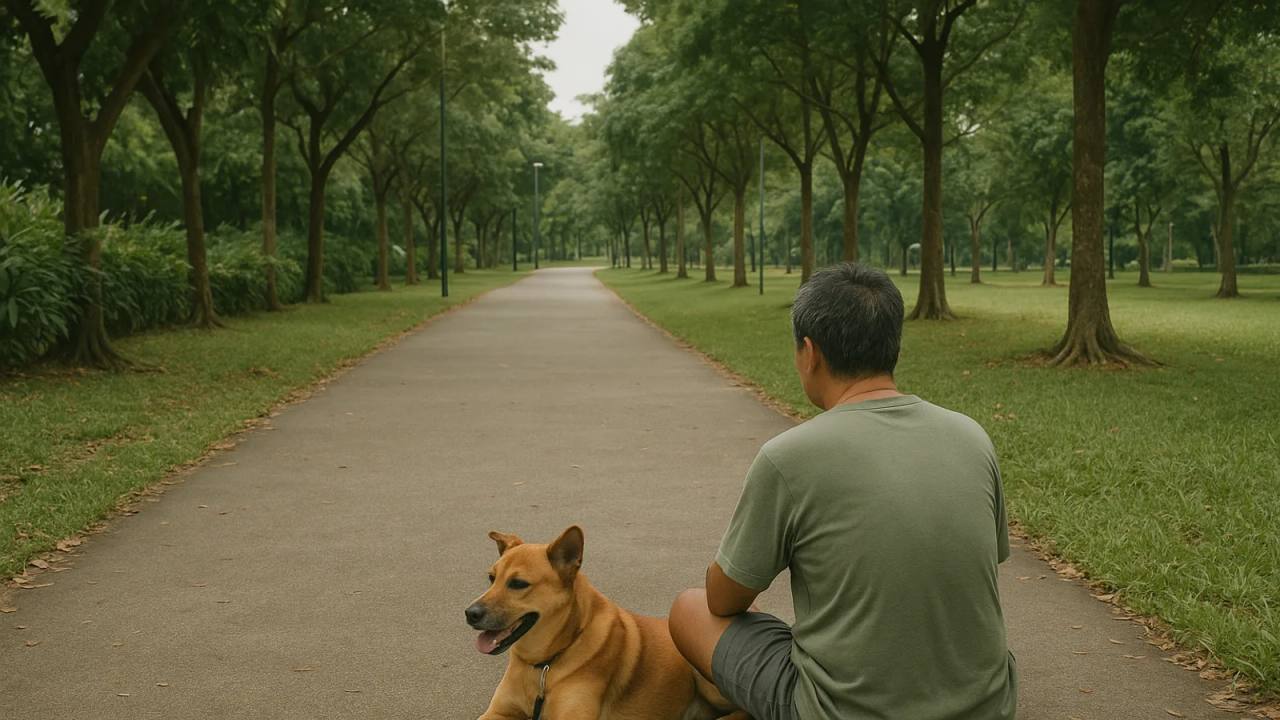
The first physical introduction should happen on neutral ground. A quiet stretch of park path that neither dog visits regularly works well. Both dogs should remain on lead but with enough slack to move naturally. Walk them in the same direction, parallel but with distance between them, and allow them to become aware of each other gradually. This parallel walk approach reduces the social pressure of a face-to-face introduction and gives both dogs something to do other than stare.
Watch for sustained stillness, prolonged direct eye contact, a high rigid tail, or hackles raised along the spine. Any of these signals from either dog is a reason to slow down, create more distance, and reassess. Conversely, loose wiggly body movement, play bows and soft eyes are encouraging signs. Only after two or three of these neutral-ground walks go smoothly should you consider any off-lead contact, and even then, choose an enclosed space with clear sightlines.
Telling Good Play from Rehearsed Conflict
One of the most common mistakes owners make is assuming that because two dogs are moving energetically together, everything is fine. High energy and play are not the same thing. Learning to distinguish the two is a skill that takes time, but there are some reliable markers to look for.
Reciprocal play involves role reversal. The dog that is chasing becomes the one being chased. The dog on the bottom of a wrestling pile ends up on top. Both dogs take breaks willingly and return to the interaction, which signals that both parties are enjoying themselves rather than enduring the situation. Loose, almost exaggerated movements, bouncy gaits and what is sometimes described as a play face, with an open relaxed mouth, are all positive indicators.
One-sided play, where one dog is consistently the chaser, the mounter or the one doing the pinning, is worth interrupting. It does not necessarily mean a fight is imminent, but it does mean one dog is practising assertive behaviours without the other dog having much input. Over repeated sessions, this kind of dynamic can shift from tolerated roughhousing into something more problematic. Step in calmly, separate the dogs briefly, and allow both to settle before deciding whether to continue.
Growling during play is not automatically a warning sign. A playful growl has a rising and falling quality, and the dog producing it will typically have loose body language. A low, sustained growl with a stiff body is a different matter and should be taken seriously. If you are ever uncertain, end the session on a positive note rather than pushing further and risking a deterioration.
HDB Life and the Logistics of Hosting
Most dog owners in Singapore live in HDB flats, and that affects playdate logistics in ways that are easy to underestimate. Under the Housing and Development (Animals) Rules 2024, as detailed by the Animal and Veterinary Service, HDB residential units may keep a maximum of one dog of an approved small breed. That means many owners are accustomed to their dog being the sole animal in the home, which can make a visiting dog feel like a significant intrusion into an established territory.
Hosting a playdate in a small flat is rarely a good idea for a first meeting between adult dogs. Even when both dogs are generally sociable, the novelty of a strange dog appearing inside one dog's home environment adds a layer of stress that outdoor introductions avoid entirely. Reserve indoor meetups for pairs that have already demonstrated genuine comfort with each other over multiple outdoor sessions.
For owners on private premises, where the AVS ownership rules allow up to three cats or dogs per premises, a private garden offers something genuinely valuable: a contained, relatively quiet space where you can supervise closely without the unpredictability of other dogs or strangers passing through. If you have access to such a space, or know someone who does, it is worth prioritising over a public dog run for early off-lead sessions.
Quieter Alternatives to the Busy Dog Run
Singapore's public dog runs are a useful resource, but they are not always the right venue for adult dog socialisation, particularly for dogs that find large groups overwhelming. A busy run on a weekend morning can involve a rotating cast of dogs in an unfamiliar and often overstimulating environment. For a socially confident dog with a broad play vocabulary, that may be fine. For a dog that is selective about its companions or that finds chaotic play stressful, it is a recipe for a bad experience.
Low-traffic parks during off-peak hours offer a middle ground. A long on-lead walk with a familiar companion dog, where the dogs can sniff, explore and occasionally interact, provides social enrichment without the pressure of a group setting. Many dogs thrive on this kind of low-intensity companionship and do not actually need or want the boisterous energy of group off-lead play.
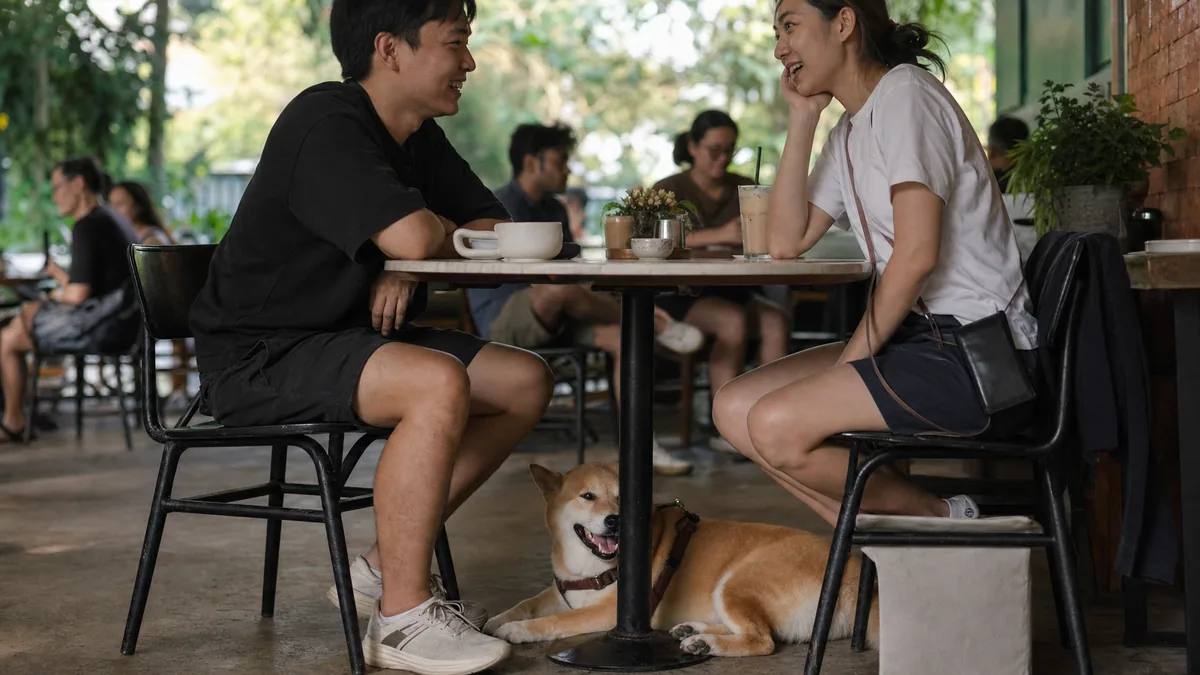
Dog-friendly venues that allow calm, structured visits can also serve a social function. Sitting under a shade structure with another owner and their dog, allowing the dogs to settle and interact at their own pace, teaches dogs that the presence of another dog predicts calm and pleasant experiences rather than excitement or conflict.
All dogs in Singapore must be licensed under the Animals and Birds (Licensing and Control of Cats and Dogs) Rules 2024, with licences applied for through the Pet Animal Licensing System (PALS). Before arranging any playdate, it is worth confirming that the other dog is licensed and up to date with vaccinations, since these are the basic conditions that make group interactions responsible rather than risky.
Practical Takeaways for Getting Started
Arranging a successful adult dog playdate in Singapore is not complicated, but it does require patience and a willingness to let the dogs set the pace rather than the owners' social calendars.
- Begin every new pairing with two or three neutral-ground parallel walks before any off-lead contact is attempted.
- Schedule sessions for early morning or early evening to avoid the peak heat that the Meteorological Service Singapore records as common on most Singapore afternoons.
- Watch for role reversal and willing breaks as the clearest signs that play is genuinely reciprocal.
- Keep first off-lead sessions short, around ten to fifteen minutes, and end them before either dog shows signs of fatigue or overstimulation.
- Choose quiet, enclosed spaces over busy public dog runs until a solid rapport is established.
- Do not introduce a visiting dog into a home environment until multiple outdoor sessions have gone smoothly.
- Confirm that any play partner is properly licensed through the AVS Pet Animal Licensing System and vaccinated before the first meeting.
Adult dogs are fully capable of forming meaningful friendships, sometimes even late in life. The process simply asks owners to slow down, observe carefully, and resist the temptation to declare success before the dogs themselves have indicated they are comfortable. A playdate that ends with both dogs relaxed and willing to greet each other again next time is the only result worth having.
Common questions
- Why is adult dog socialisation different from puppy socialisation?
- Puppies are in a developmental window during which novel experiences are processed with relative openness. Adult dogs have already formed preferences, trigger responses, and communication habits, meaning that a poorly matched introduction is more likely to result in a negative association than it would be for a young puppy. Progress with adult dogs tends to be measured in weeks and months rather than days, and patience with slow introductions pays dividends.
- How do I vet a potential play partner for my adult dog?
- Begin by asking the other owner about their dog's history with greetings, play style, and any known triggers. Arrange a neutral-ground parallel walk before any off-lead contact, watching for relaxed body posture, loose tail wags, and willing disengagement on both sides. If either dog shows sustained stiffness, prolonged staring, or hard freezing, that pairing may not be suitable regardless of how well-intentioned both owners are.
- How can I tell good play from rehearsed conflict?
- Healthy play is reciprocal: roles reverse, both dogs disengage voluntarily, and pauses are frequent. Warning signs of rehearsed conflict include one dog consistently chasing without the other choosing to be chased, mounting that the recipient cannot interrupt, or vocalisations that shift from bouncy play-barks to a lower, sustained tone. When in doubt, calmly interrupt with a recall and assess whether both dogs re-approach willingly.
- What are quieter alternatives to a busy public dog run in Singapore?
- A private garden, a low-traffic corner of a large park visited in the early morning, or a fenced-off shared terrace in a landed estate can all give adult dogs off-lead time without the overstimulation of a crowded dog run. Some owners arrange small two-dog sessions at a host home with outdoor space, which keeps the social group predictable and easy to manage. Scheduling around Singapore's heat means targeting sessions before 8 am or after 6 pm to reduce heatstroke risk.
- Are there any Singapore regulations I should know before arranging a playdate?
- All dogs in Singapore must be licensed under the Animals and Birds (Licensing and Control of Cats and Dogs) Rules 2024, applied for through the Pet Animal Licensing System (PALS). Specified dogs such as German Shepherds and Rottweilers must be muzzled in public spaces as a licensing condition. If you live in an HDB flat, your household is limited to one dog of an approved small breed, so confirm that any dog invited to your home complies with that rule and that the visit does not breach HDB's housing regulations.
Sources
- Singapore mean annual relative humidityweather.gov.sg
- 82%
- 31 to 33
- 171
- Maximum fine for breaching HDB pet-ownership rulesavs.nparks.gov.sg
- S$4,000
Try a little play, then save the moment →A small idea to try, with progress kept in your Pack.
How we verify content Fact-checking policy How we stay free