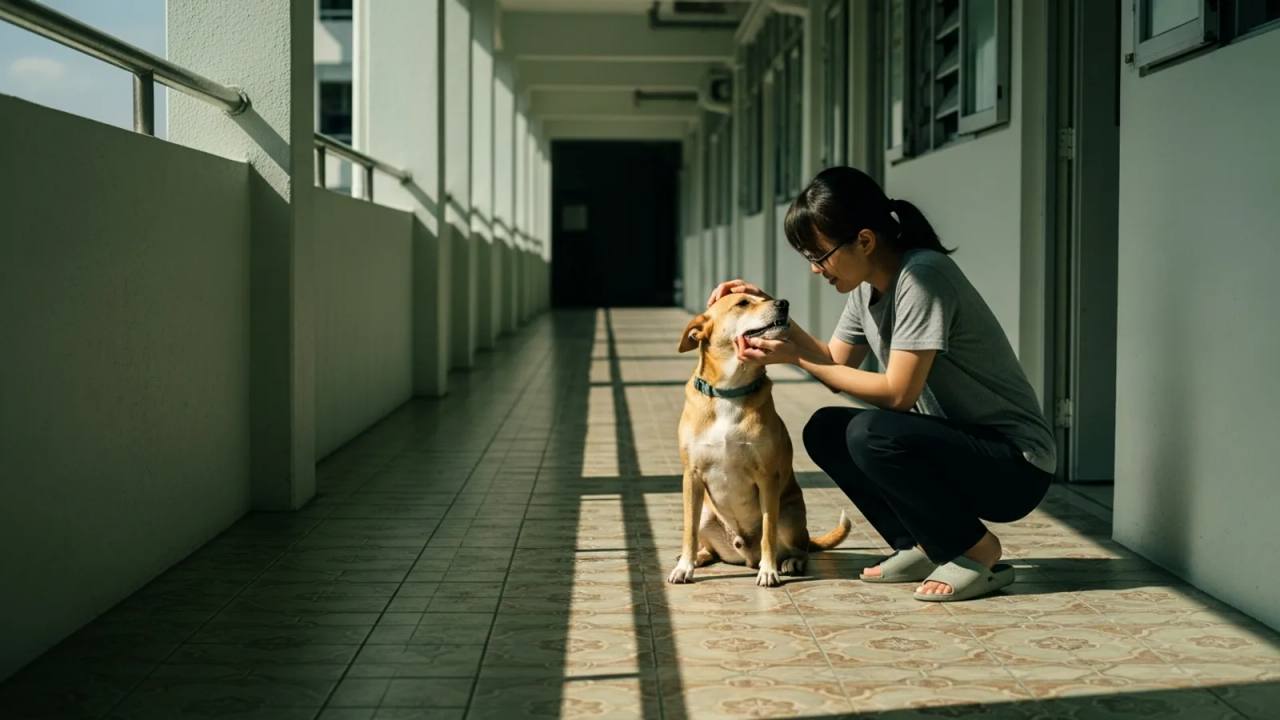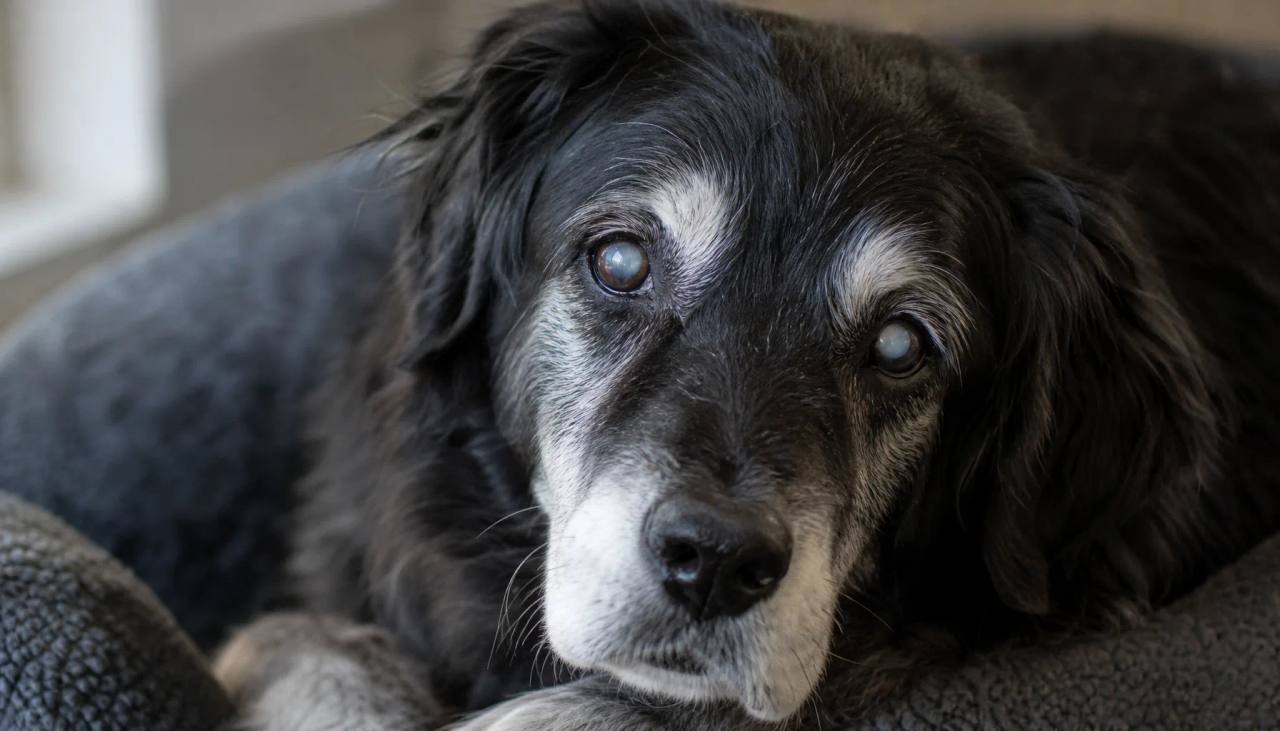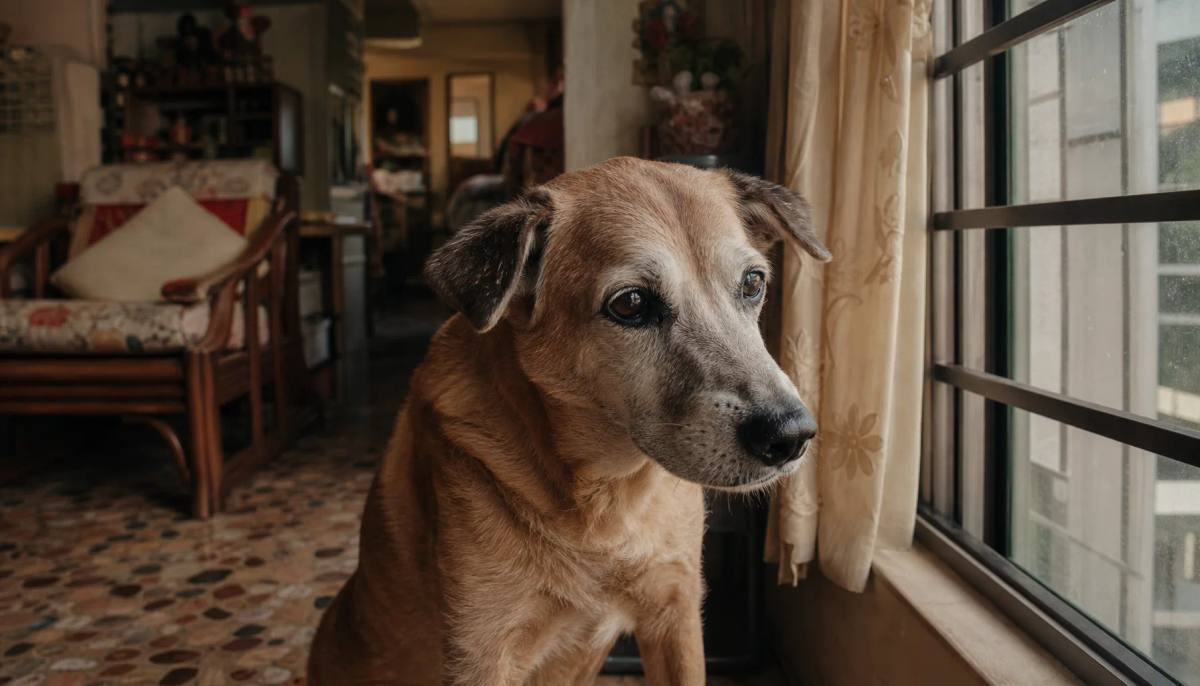

Watching an older dog slow down is something most owners expect, but disorientation in a familiar home, changed sleep patterns, or a dog that suddenly forgets house training can mean something more specific is happening. Canine cognitive dysfunction, often called doggy dementia, is a genuine and increasingly recognised condition in ageing dogs, and knowing the early signs makes a real difference to how well it's managed.
By the numbers
- 14.2% Estimated CCD prevalence in the analysed older-dog sample in Salvin et al. 2010; not a Singapore rate or individual diagnosis.
Watching an older dog slow down is something most owners brace themselves for, but the signs of canine cognitive dysfunction go further than a stiffer walk or a greyer muzzle. A dog that gets stuck behind furniture, stares blankly at a wall, or forgets that the back door leads outside is showing something more specific than ordinary ageing. Doggy dementia is a real, studied condition, and the earlier owners recognise the pattern, the sooner they can get support in place.
What Is Canine Cognitive Dysfunction, and How Common Is It?
Canine cognitive dysfunction is a progressive decline in brain function that comes with age, affecting memory, learning, spatial awareness and normal sleep patterns. Vets often describe it as the dog equivalent of dementia in people, since the changes in behaviour and the underlying brain changes follow a broadly similar pattern.
Research estimates vary with age, questionnaire and diagnostic method. A 2010 cross-sectional study estimated cognitive dysfunction in 14.2% of its analysed older-dog sample, while prior veterinary diagnosis was much less common. This is not a Singapore prevalence estimate. A reported behavioural sign is not itself a confirmed dementia diagnosis.
None of this means every slow, sleepy senior dog has cognitive dysfunction. But it does mean the odds are high enough that owners of ageing dogs should know what to watch for, rather than assuming every change is simply old age catching up.
What Are the Early Signs of Doggy Dementia Owners Often Miss?
The early signs of cognitive dysfunction are usually quiet rather than dramatic, which is exactly why they get missed. A dog that used to greet you at the door might just look up from the sofa. A dog that always slept through the night might start pacing at 3am. These small shifts are easy to explain away individually, but together they build a picture.
- Getting lost or stuck in familiar rooms, or standing at the wrong side of a door
- Staring at walls, floors or empty corners for long stretches
- Pacing, whining or wandering at night instead of settling
- Toileting indoors despite being reliably house trained for years
- Seeming less interested in greetings, play, walks or family members
- Appearing anxious, clingy or, in some cases, unusually irritable
If you track how a dog is ageing over time, changes like these are easier to spot early. Tools such as our dog years calculator can help owners think in terms of a dog's real life stage rather than just its number of birthdays, which is a useful frame when deciding whether a change is worth flagging to a vet.
How Do Vets Group the Symptoms Under DISHA?
Vets commonly organise the signs of cognitive dysfunction under the acronym DISHA, which stands for disorientation, interaction changes, sleep wake cycle changes, house soiling and activity level changes. It's a useful checklist because it covers the full spread of what cognitive decline can look like, rather than just the most obvious symptom.
Disorientation covers confusion in familiar spaces. Interaction changes cover a dog becoming more withdrawn from, or occasionally more clingy toward, people and other pets. Sleep wake cycle changes cover restlessness at night and extra sleeping during the day. House soiling covers accidents from a dog that was previously reliable. Activity level changes cover a drop in interest in play or walks, or in some cases repetitive, purposeless movement.
Our senior dog care guide goes into more depth on how these signs fit into wider care for an ageing dog, including diet, joint support and general comfort alongside cognitive changes.
Why Do So Many Cases of Cognitive Dysfunction Go Undiagnosed?
The same study illustrates why owners should bring changes to the vet, but it does not prove that every missed diagnosis was caused by an owner failing to mention symptoms. Pain, sensory loss and other illnesses can resemble cognitive dysfunction. An assessment needs that wider picture, not a percentage from a questionnaire.
Part of the issue is that the signs develop slowly and get folded into a general sense that a dog is "just getting old". Without a specific conversation at a vet visit, a gradual change in sleep or a few indoor accidents rarely gets flagged as a possible sign of cognitive decline on its own.
The takeaway for owners is straightforward: if you notice an unexplained or persistent change in any of these areas, it is worth raising directly rather than waiting to see if it settles.
What Can You Do at Home to Support a Dog With Cognitive Decline?
There is no cure for cognitive dysfunction, but there is a lot owners can do to support a dog once it has been identified. Keeping a consistent daily routine helps reduce confusion, since a predictable structure asks less of a declining memory. Night lights in hallways and keeping furniture in the same place can also reduce disorientation after dark.
Gentle mental enrichment, such as sniff based games, short training refreshers or slow feeders, can help keep a dog's mind engaged without overtiring it. Regular, moderate exercise also supports overall brain health in older dogs, provided it is adjusted to what the dog can comfortably manage.
A vet visit remains the right starting point before making changes, since they can also check for other conditions, such as joint pain or vision loss, that can look similar to cognitive decline from the outside. You can find a suitable clinic through our vets directory.
Most owners write off a slower, more confused senior dog as simply getting old, when what they're often watching is an undiagnosed and manageable brain condition.
Common questions
- What is canine cognitive dysfunction?
- Canine cognitive dysfunction, or CCD, is an age related decline in a dog's brain function that affects memory, awareness, learning and sleep. It's often compared to dementia in people, and it tends to develop gradually as dogs move into their senior years.
- At what age do dogs start showing signs of doggy dementia?
- Risk rises with age, but age and a single behavioural sign do not diagnose it. Research populations and methods differ. Ask the vet about new confusion, sleep changes or toileting problems rather than applying a prevalence percentage to your dog.
- What are the main signs of cognitive dysfunction in dogs?
- Vets group the signs under the acronym DISHA: disorientation, changes in interaction with people or other pets, altered sleep wake cycles, house soiling in a previously trained dog, and changes in activity level. Most dogs show a combination rather than a single sign.
- Why do so many cases of doggy dementia go undiagnosed?
- Gradual changes can be mistaken for ordinary ageing, and other conditions can cause similar signs. Research has found a gap between questionnaire estimates and prior diagnoses, but that does not explain every case or establish owner fault.
- Can canine cognitive dysfunction be treated?
- There is no cure, but a vet can suggest management steps such as a consistent routine, mental enrichment, environmental adjustments and, in some cases, diet or medication that may help slow the progression and ease symptoms.
- Should I see a vet if my senior dog seems more confused than usual?
- Yes. A properly licensed vet can assess your dog and rule out other causes, such as pain, vision loss or an unrelated illness, before confirming whether cognitive dysfunction is the reason for the change.
Sources
- Salvin et al., The Veterinary Journal, 2010pubmed.ncbi.nlm.nih.gov
- 14.2%: Questionnaire-based estimate in the analysed older-dog sample
How we verify content Fact-checking policy How we stay free