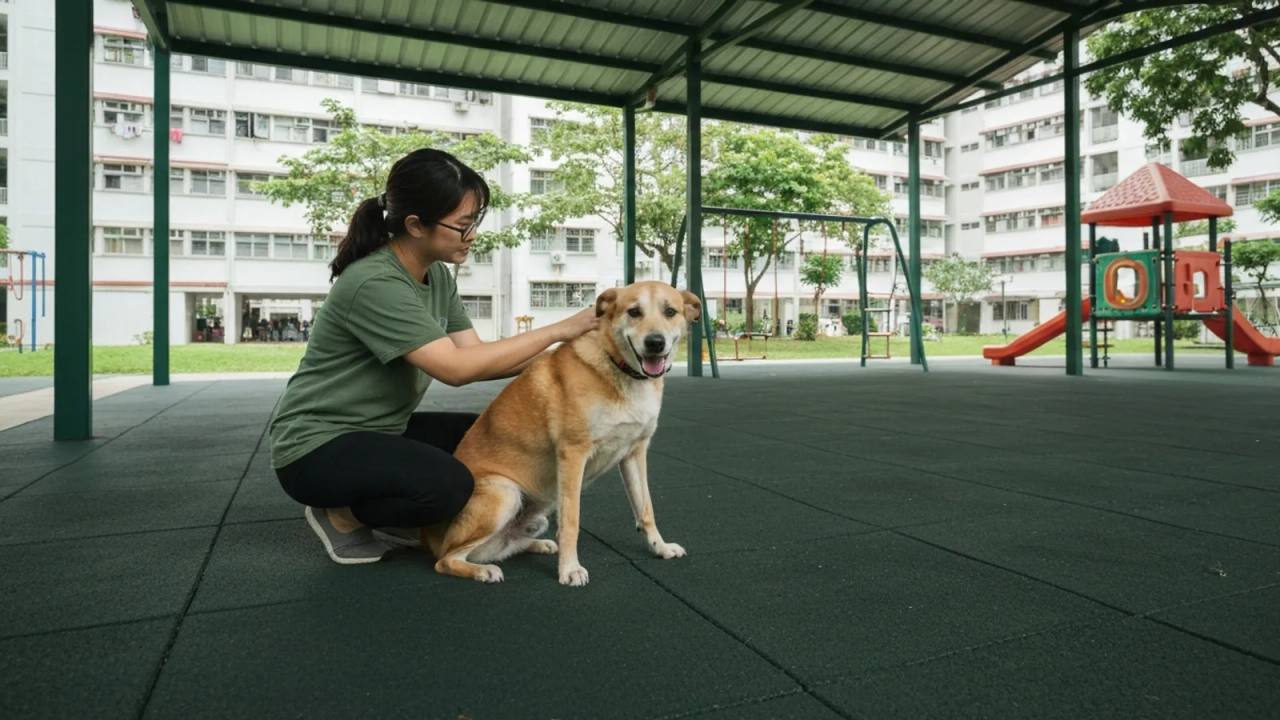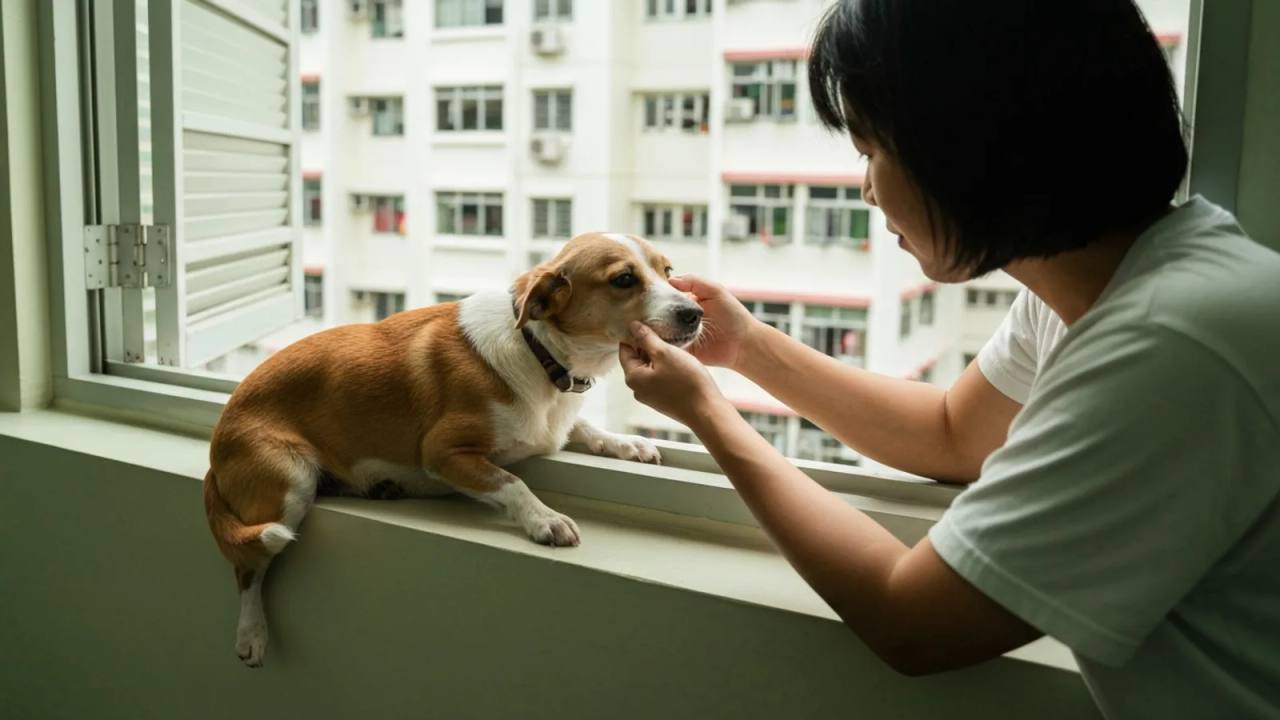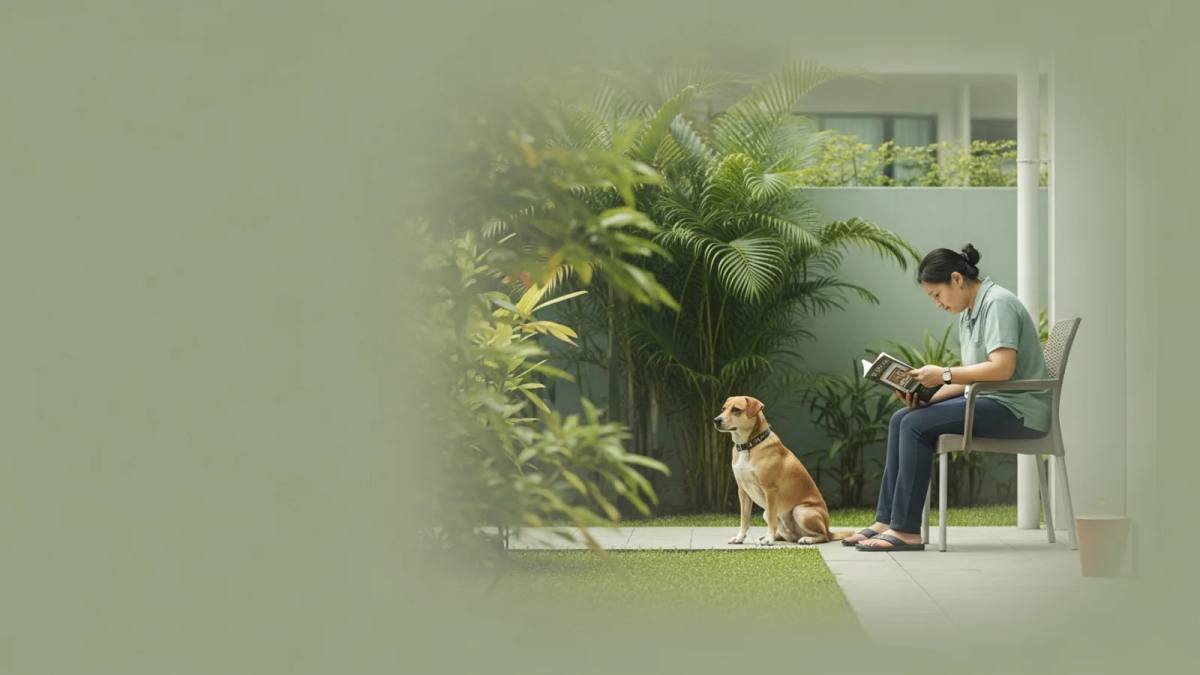

The first two weeks after a puppy comes home set the pattern for everything that follows, long before the first proper walk down the block. In a Singapore flat, that window has to cover name recognition, toilet habits, crate comfort and early handling, all while working around the lift, the corridor and a vaccination schedule that is not yet complete. A simple day-by-day structure keeps new owners from missing anything important during the busiest fortnight of a puppy's life.
By the numbers
- First three months of life Primary socialisation window for puppies, per AVSAB
- S$15/year AVS dog licence fee for a sterilised dog
What Should a New Puppy Learn in the First Three Days?
The first three days are about settling in, not cramming in lessons. A puppy that has just left its littermates needs a quiet space, a consistent feeding schedule and a chance to decompress before anyone expects sit or stay. Even so, three habits can start immediately without adding stress: name recognition, a toilet routine and light handling.
Name training is the simplest of the three. Every time the puppy looks toward the sound of its name, even by accident, a small treat and a warm word tell it that responding pays off. The AKC notes that short, upbeat sessions of a few minutes work better than long ones for young puppies, and name recognition is a good place to start because it requires no equipment and almost no coordination from the puppy.
Toilet training should begin the moment the puppy walks through the door. In an HDB flat, that usually means a designated pee pad or a spot on the balcony, with the puppy carried or guided there after every nap, every meal and every play session. Accidents in the first three days are expected and should never be punished. A consistent spot and a consistent word said at the right moment build the association faster than any correction. For the fuller month-by-month picture of what settling in involves, see UDO's first-month guide for new Singapore puppies.
Handling can also start gently on day one. A few seconds of touching paws, ears and the edge of the mouth, followed by a treat, teaches the puppy that being handled is unremarkable. This matters more in Singapore than owners often expect, because grooming and vet visits happen in small, sometimes cramped rooms, and a puppy that already tolerates handling makes those visits shorter and calmer for everyone.
How Do Days Four to Seven Build on That Foundation?
By day four, most puppies have settled enough to handle a bit more structure. This is the window to introduce the crate properly, not as a punishment tool but as a den the puppy chooses to enter. Start with the door open, toss treats inside, and let the puppy wander in and out on its own terms. Feeding meals near or inside the crate speeds up the association considerably.
Crate training carries extra weight in an HDB flat, where space is limited and a crate often doubles as the puppy's safe corner during deliveries, visitors or renovation noise from neighbouring units. A step-by-step approach that respects the size of a typical flat is covered in UDO's crate training guide for HDB homes, which walks through placement, sizing and the pacing that keeps a puppy from associating the crate with isolation.
Handling exercises should get slightly more deliberate during this stretch. Beyond paws and ears, gently opening the mouth to look at the teeth and lifting each paw as if trimming a nail prepares the puppy for actual grooming sessions a few weeks later. The ASPCA recommends pairing this kind of handling with food rewards so the puppy files the experience under pleasant rather than tolerable.
- Continue the toilet schedule from days one to three, extending the gap between breaks slightly as bladder control improves.
- Add five-minute crate sessions two or three times a day, always ending on a calm note rather than when the puppy is already fussing.
- Practise name recall in a different room each day so the response generalises beyond one familiar spot.
- Keep handling sessions under a minute each, several times a day, rather than one long session that risks overwhelming the puppy.
What Does Week Two Socialisation Look Like in an HDB Flat?
Week two is where Singapore's housing layout becomes part of the training plan. Full vaccination is usually not yet complete, so ground walks outside the block are still off limits, but carried exposure to the building itself is both safe and valuable. The goal is a calm, curious puppy that has already met the lift, the corridor and the void deck before it ever sets a paw on the pavement.
Carrying the puppy through these spaces, rather than letting it walk, avoids contact with surfaces that may carry pathogens from unvaccinated or unwell dogs while still delivering the sounds, smells and sights that matter for early development. The lift alone offers a lot to process: the hum of the motor, the door alert chime, and the sensation of the floor moving. Short, frequent trips work better than one long outing, and treats delivered calmly during each stage keep the experience positive rather than overwhelming.
This period sits inside what the AVSAB describes as the primary socialisation window, roughly three to fourteen weeks of age, when puppies form lasting impressions of what is normal and safe. Missing this window is difficult to fully make up for later, which is why carried exposure matters even before vaccination is complete. UDO's dedicated piece on the socialisation window in Singapore covers how to pace this exposure against the vaccination timeline in more detail.
Void deck visits deserve particular care. These are often busy, echoing spaces with strollers, cyclists, other residents' dogs and the occasional loud delivery trolley. A puppy carried through at a quiet hour, allowed to watch from a safe distance without being forced to interact, absorbs the environment without being flooded by it. By the end of week two, most puppies show visibly less startling at the lift chime or the corridor door than they did on day eight.
The first two weeks set the pattern a Singapore puppy will carry for life, long before the first proper walk outside the flat.
Common questions
- When can a new puppy start proper walks outside the flat?
- Most vets clear a puppy for full outdoor walks a week or two after the final core vaccination, which usually lands around 16 weeks. Before that, carried outings to the lift, corridor and void deck are the safer way to build familiarity with the building.
- Should the puppy sleep in the crate on the first night?
- Yes, but keep the crate close to the owner's bed for the first few nights so the puppy is not left alone in a strange room. Short, calm sessions during the day help the crate feel safe before it becomes the overnight spot.
- How soon should name training start?
- Name recognition can start on day one. Saying the puppy's name in a warm tone and rewarding any glance toward the owner builds a reliable response within the first few days, and it becomes the foundation for recall later.
- What if the puppy cries in the lift or corridor?
- Crying usually means the exposure moved too fast. Carry the puppy rather than setting it down, keep sessions short, and pair the lift or corridor with treats and a calm voice until the crying stops on its own.
- Is it too early to handle paws and mouth in week one?
- It is not too early at all. Gentle daily handling of paws, ears and mouth in the first week, paired with treats, makes future vet visits, nail trims and grooming appointments far less stressful for the dog.
- How many toilet accidents are normal in the first two weeks?
- Several accidents a day are normal at first, especially overnight and after meals. A fixed schedule with breaks every couple of hours during the day should bring the number down steadily by the end of week two.
Sources
- AVS (Animal & Veterinary Service, NParks): supports "S$15/year"avs.nparks.gov.sg
- S$15/year
- American Veterinary Society of Animal Behavior: supports "First three months of life"avsab.org
- First three months of life
Start with a quiet moment together →A small idea to try, with progress kept in your Pack.
How we verify content Fact-checking policy How we stay free