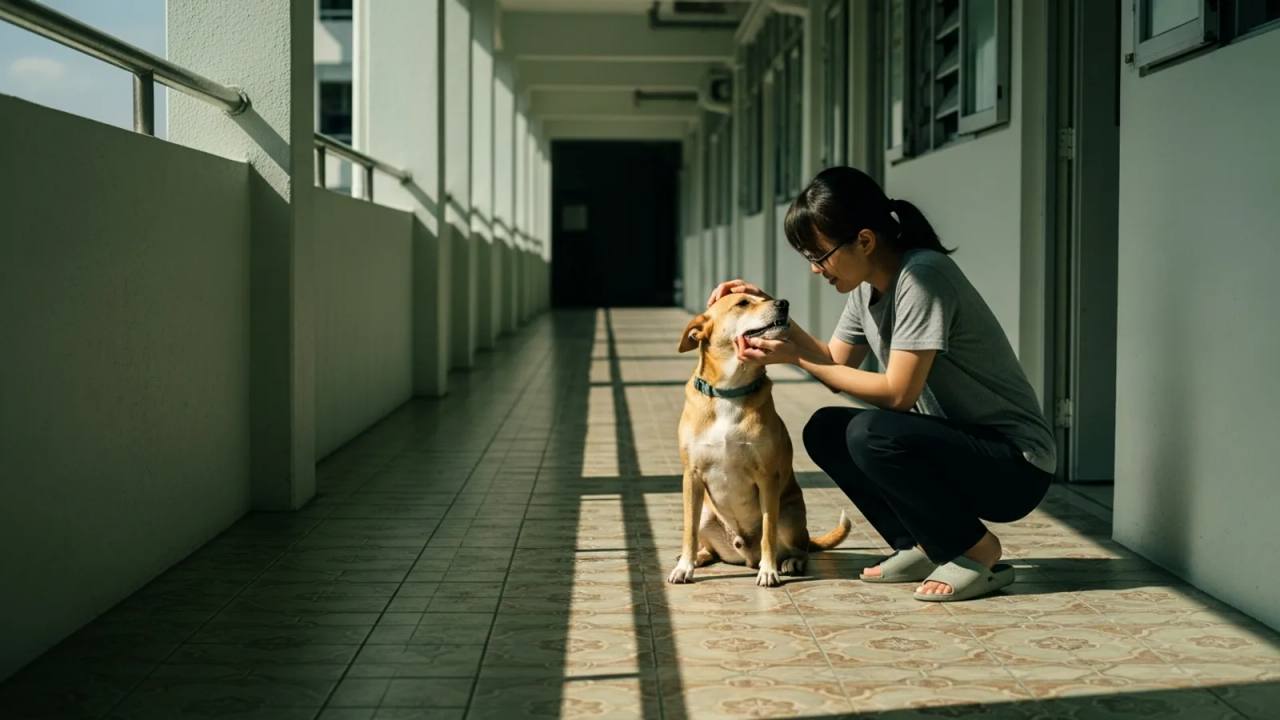

The idea that an old dog cannot learn new tricks is one of the most persistent myths in dog ownership, and veterinary behaviourists have long since dismissed it. Singapore's senior dogs, many living well into their teens in HDB flats and condos, can keep learning throughout their lives provided training adjusts to their sensory and physical reality. The method needs to change, not the goal.
By the numbers
- Any life stage Dogs can keep learning when the task and reward suit the individual
- Last 25% AAHA definition of the senior stage within a dog's estimated lifespan
- Brief sessions Stop while the dog remains comfortable, focused and willing
- Several practices Short repetitions can be easier than one long session
- Hand signals A useful communication channel as hearing fades
- Mental enrichment Part of veterinary guidance for supporting ageing dogs
Why Does the Old Dog Myth Persist?
The saying is centuries old, and like most folk wisdom about animals, it survives because it sounds true rather than because it is. Owners watch a ten-year-old dog take longer to sit on cue, or seem to ignore a recall it once nailed, and conclude the window for learning has closed. What is actually happening is usually something far more fixable: reduced hearing, stiffer joints, or a slower processing lag between hearing a word and acting on it. None of that is the same as an inability to learn.
Veterinary behaviourists have been pushing back on the myth for years. The AVSAB has repeatedly stated that reward-based training remains effective across a dog's entire life, and that age itself is not a barrier to acquiring new behaviours. What changes with age is not the dog's capacity to form new associations, it is the speed and the physical comfort with which those associations get built. Singapore owners raising a senior dog in a flat or condo, often managing the same animal for twelve or thirteen years, are well placed to see this shift happen gradually rather than as a sudden shutdown of ability.
There is also a practical reason the myth sticks around in a market like Singapore's. Many owners adopt or rehome an older dog through shelters, and the assumption that training is pointless this late can lower expectations rather than adjust methods. Older dogs can still learn house manners, leash skills and useful cues when training accounts for their sensory and physical reality. For a broader look at what senior dogs need day to day, the guide on senior dog care in Singapore covers health monitoring alongside behaviour.
What Actually Changes in an Ageing Dog's Learning?
Three things shift with age, and understanding each one changes how training should be run rather than whether it should happen at all. The first is sensory decline. Hearing loss becomes more common with age, and it tends to arrive gradually, so an owner may mistake a dog's fading response to the word sit for stubbornness or disinterest when the dog genuinely cannot hear the cue anymore. Vision can dim too, particularly in low light, which matters for a dog navigating a dim HDB corridor or a poorly lit park path at dusk.
The second is joint stiffness. Arthritis affects a large share of senior dogs, and a cue that once meant an instant, springy sit now involves real discomfort. A dog that hesitates before lowering itself onto tile or pavement is not disobeying, it is managing pain. Training that ignores this and repeats a physically demanding cue over and over will teach the dog to associate training itself with discomfort, which works against the goal.
The third is processing time. Cognitive speed slows with age in dogs much as it does in people, so the gap between a cue being given and a response happening often lengthens. This is not the same as forgetting how to do it. Owners who repeat a command impatiently, or add a second cue before the first has landed, often confuse a slower dog rather than helping it. The AKC's training guidance makes the same point for dogs of any age: clarity and patience produce better results than repetition and pressure, and that principle applies with even more weight to a senior dog working through a genuine physical or sensory limitation.
How Should Training Adapt for a Senior Dog?
The core adjustment is switching from a hearing-dependent cue system to a visual one, well before hearing loss is total. Hand signals paired consistently with existing verbal cues let a dog transition smoothly as its hearing fades, rather than losing the ability to respond at all once sound stops registering. A raised palm for stay, a downward sweep for down, introduced now while a dog can still hear the verbal cue alongside them, means the signal is already familiar by the time it becomes the primary channel.
Session length matters just as much. A senior dog's joints and concentration both hold up better across several short sessions than one long one. Keep sessions brief enough that the dog finishes comfortable and engaged. Several short practices can be easier on ageing joints and attention than one long block, particularly on tiled or hardwood floors where a dog worries about footing. Training on a yoga mat or rug reduces the slip risk that makes many older dogs reluctant to engage in the first place, and it is worth choosing a soft surface deliberately rather than defaulting to wherever training happened when the dog was younger.
Reward-based methods, the kind taught through certified programmes such as Karen Pryor Academy's clicker-based courses, work particularly well for older dogs because they mark the correct behaviour precisely rather than relying on a dog catching a fast-moving verbal cue. A clicker or a consistent marker word tells the dog exactly what earned the reward, which shortens the guesswork a slower-processing brain has to do. Owners newer to structured training, or wanting a refresher on the basics before adapting them for a senior dog, will find a full walkthrough in the dog training guide for Singapore.
Patience with slower responses is not optional here, it is the method. Giving a cue once, waiting a genuine three to five seconds, and rewarding any correct attempt even if it arrives slowly, teaches the dog that trying still pays off. Rushing the same cue, or escalating volume, teaches the opposite lesson, that training is stressful and confusing, which is exactly the outcome that reinforces the myth in an owner's mind.
Why Bother Training a Dog This Late?
Age slows a dog's joints and hearing, not its ability to learn something new.
Common questions
- Can an older dog really learn new commands?
- Yes. Veterinary behaviourists agree that a dog's ability to form new associations does not switch off with age. What slows down is processing speed and physical comfort, both of which training can accommodate rather than avoid.
- My dog is going deaf. How do I train without sound?
- Introduce hand signals alongside verbal cues as early as possible, ideally before hearing loss is complete. A raised palm for stay or a downward sweep for down becomes familiar to the dog while it can still hear the verbal cue paired with it, so the transition to a visual system is smooth.
- How long should training sessions be for a senior dog?
- Five to ten minutes, run two or three times a day, generally works better than one long session. Shorter sessions respect a senior dog's joints and concentration span while still building consistent progress.
- Is it too late to house-train or crate train an elderly dog?
- No. Older dogs, including newly rehomed seniors, learn house manners and routines regularly. The process may take a little longer than it would with a puppy, but patience and consistent reward-based methods still work.
- Will training help with my senior dog's anxiety?
- It often helps. Structured training builds confidence and predictability, and the mental engagement it provides is linked to better cognitive function in ageing dogs, which can ease some age-related anxiety.
- Should I get professional help for training an older dog in Singapore?
- It is worth considering, especially if the dog has significant joint pain, a diagnosed cognitive condition, or a fear response that is not easing with gentle handling at home. A vet check first can rule out pain as the underlying cause of any sudden change in behaviour.
Sources
- AAHA Canine Life Stage Guidelinesaaha.org
- Last 25%: senior status begins in the last quarter of estimated lifespan and varies by breed and size
- AAHA Senior Care Guidelinesaaha.org
- senior care should be tailored and include management of cognitive, sensory and pain changes
- American Kennel Clubakc.org
- pairing hand signals with known verbal cues supports dogs with hearing loss
- Merck Veterinary Manualmerckvetmanual.com
- ageing can slow learning and sensory processing, while enrichment and environmental adaptation remain useful
How we verify content Fact-checking policy How we stay free