
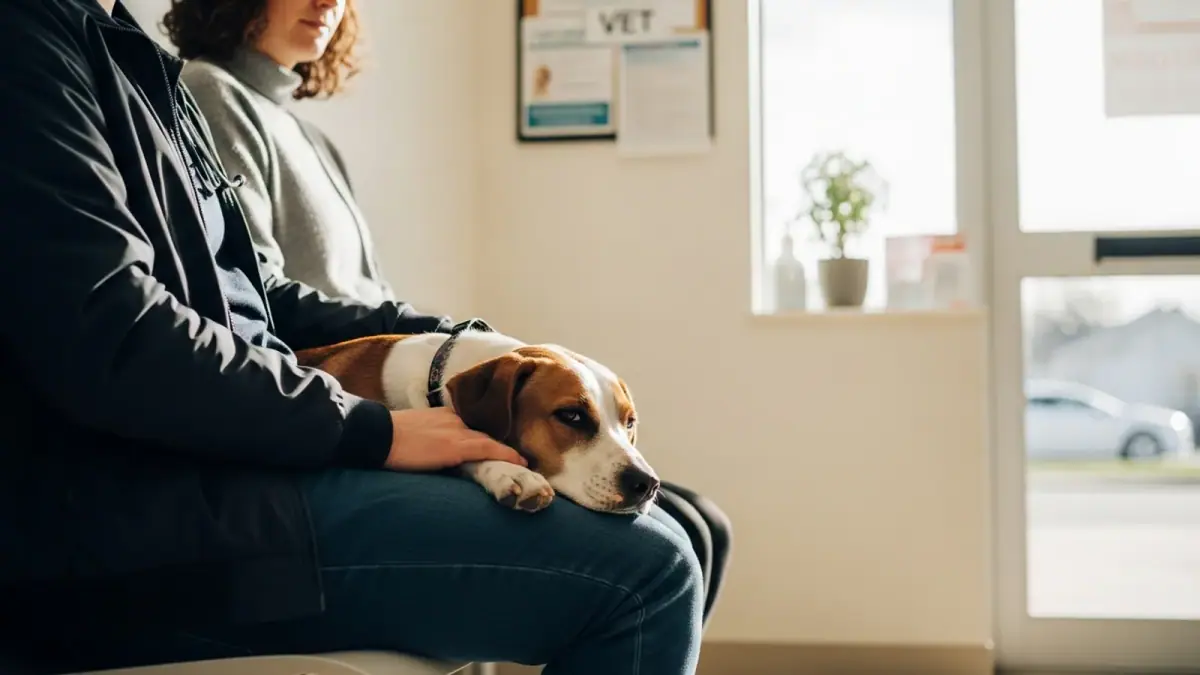

Neutering is an individual health decision as well as a way to prevent unwanted litters. You do not need to arrive at the vet with the answer already chosen. Arrive with your dog's history, your questions and a clear picture of daily life at home.
3 min read
Neutering is an individual health decision as well as a way to prevent unwanted litters. You do not need to arrive at the vet with the answer already chosen. Arrive with your dog's history, your questions and a clear picture of daily life at home.
Start with the benefits and trade-offs
Sterilisation prevents breeding and can reduce some reproductive-health risks and hormone-related behaviours. It is not a guarantee of lower lifetime veterinary bills or a cure for every behaviour problem. Ask the vet to explain the relevant benefits, surgical risks and timing considerations for this dog.
The AAHA canine life-stage guidance distinguishes sex and expected adult size. Evidence about particular breeds should not become a universal rule for all large dogs. If you and the vet decide to wait, plan how to prevent mating and manage care safely in the meantime.
Separate the licence from the clinical decision
AVS offers reduced licensing fees for sterilised pets, and eligible one-time licences exist alongside shorter options. Use the current AVS information and PALS record for your category. Do not assume that every licence renews annually or that an old price quoted in an article still applies.
Project ADORE has specific requirements, including sterilisation and training. Check scheme and adoption conditions separately; those requirements should not be presented as a blanket rule for every HDB dog. Keep the certificate after surgery and update the sterilisation status in PALS.
Make the quote useful
Ask what the estimate includes: assessment, tests if recommended, anaesthesia and monitoring, operation, pain relief, wound protection and follow-up. Ask about possible extras and GST. The cheapest headline figure does not show which services are included, while a higher price alone does not establish better care.
Get patient-specific instructions for food, water and medicines before admission. Tell the clinic if your dog has eaten unexpectedly or developed symptoms. Do not improvise a longer fast or change regular medicine to make the appointment fit.
Plan the first evening home
Confirm transport, supervision, the first medicine time and the out-of-hours number. Prepare a quiet area and follow the clinic's activity and wound-protection instructions. A recovery suit or collar must stop access to the incision while allowing necessary eating, drinking and toileting.
Recovery arrangements and discharge timing vary. Call for advice about worsening pain, poor appetite, vomiting, unusual lethargy or a wound that is swelling, bleeding, opening or discharging. Breathing difficulty or collapse needs urgent veterinary help. Do not wait out a fixed number of days simply because an article describes surgery as routine.
After recovery
Review feeding and body condition with the vet, retain the procedure record and finish the licensing update. If behaviour concerns continue, investigate their causes rather than assuming the operation failed. You can use our vet directory to find a practice and discuss an appropriate plan.
Frequently asked questions
When should I discuss sterilisation with the vet?
Discuss it early. The appropriate timing depends on the animal and should include a plan to prevent unwanted mating.
Should every pet fast overnight before surgery?
No. Follow the treating clinic’s patient-specific instructions for food, water and medicines.
Does every HDB pet have the same sterilisation requirement?
No. Ordinary licensing, adoption agreements and specific schemes have different conditions. Check the rules that apply to your pet.
Where do I update sterilisation status?
Use PALS and the current AVS instructions, keeping the veterinary certificate and correct microchip details.
When should I call after surgery?
Call for worsening recovery, poor appetite, repeated vomiting, significant pain or a wound problem. Breathing difficulty, collapse or uncontrolled bleeding needs urgent help.
Sources and editorial review
AVS sterilisation; AVS licensing and PALS; AAHA patient-specific anaesthesia preparation; AAHA 2019 canine timing; AVS Project ADORE. Editorial source review: 12 September 2026. Follow the treating veterinary team’s individual instructions.
More from The Block
-
 Dog supplements in Singapore: what helps and what to skip Most healthy dogs on a complete diet need no supplements. A few have real evidence; many are marketing. How to tell them apart, and why to ask your vet first.
-
 Flying with your dog from Singapore: cabin, cargo and relocation (2026) Start with the operating airline and exact route. A pet may travel in the cabin, as checked baggage or through a cargo arrangement depending on the carrier and journey. Confirm acceptance before buying equipment or treating your own flight booking as a pet booking.
-
 Raw feeding for dogs in Singapore: a safe, honest guide Raw feeding is not proven to be healthier than an appropriate balanced cooked diet. CDC advises against raw pet food because of risks to animals and people. Nutritional formulation, cold storage and careful cleaning do not remove every infection hazard. A complete cooked diet is a practical starting point for discussing your dog's needs with your vet.
-
 Choosing a dog for an HDB flat: eligibility, adoption and everyday care A dog can become a much-loved part of flat life. Start by checking eligibility for your actual home, then choose for the individual dog’s needs and the daily care you can offer. A small body or a seller’s assurance is not proof of HDB approval.