
Does my puppy need a crate in a Singapore flat?
A crate is an optional resting and management tool. It is not a treatment for every barking, toileting or chewing problem, and a puppy does not automatically feel safe behind a closed door. A secure pen or puppy-proofed room may suit your household better. The useful question is whether your puppy can rest comfortably in the arrangement you choose.
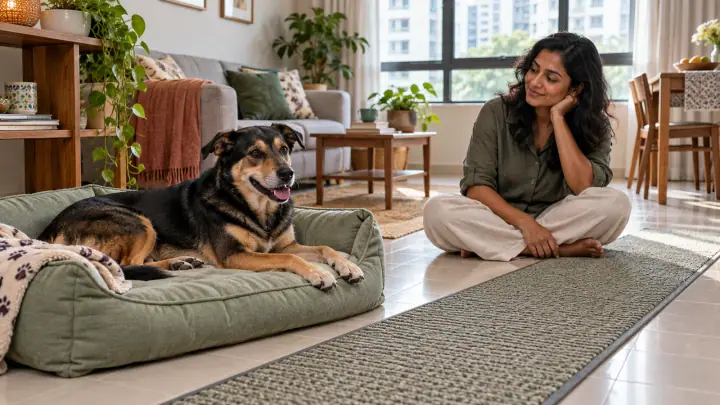
In a flat, the setup also has to work for people moving through the home. Sketch where the bed, water, toilet area and walking route will go before buying equipment. A crate that blocks a door or sits in the only sunny patch is not a good fit merely because the dimensions suit your puppy. An open crate inside a larger pen can separate a resting place from an appropriate indoor toilet area.
Choose equipment for comfort, not a holding-time promise
Dogs Trust’s crate and pen guidance says the dog should have room to stand, turn, sit and stretch fully, with fresh water available. Recheck the fit as your puppy grows. A divider must not make the resting space too small or block access to water.
Check the assembled frame, door catches and floor before use. Follow the manufacturer’s instructions and remove loose parts or damaged material. Choose bedding your puppy does not swallow. Secure nearby cables and blind cords out of reach. A washable surface can make cleaning easier, but cleaning convenience must not determine how little space the puppy receives.
Our earlier blanket claim that plastic carriers rapidly become unsafe in Singapore was too broad. Ventilation, sunlight, room conditions, fit and the dog’s health matter. A wire crate can offer airflow; it does not make a hot room safe. Choose travel equipment for its intended use rather than assuming a household wire crate is an appropriate vehicle restraint.
Introduce the space while you are home
Blue Cross recommends a gradual, positive introduction. Begin with the door secured open and let your puppy explore without being pushed inside. Build pleasant experiences around the space, then practise very brief door closures only when the puppy is comfortable. Open it again before the puppy becomes worried.
For example, a successful first session might simply be your puppy investigating the bedding and walking out again. Later, you might sit nearby while they enjoy part of a normal meal. Neither session has to end with the door shut. Write down what the puppy comfortably managed, rather than setting a target based on how much time you need to free up.
Change one difficulty at a time. Closing the door, standing up, moving across the room and leaving the flat are different experiences. Doing all four together makes it harder to know what worried the puppy. If a step does not work, return to an easier setup rather than repeating it until the puppy stops protesting.
What should I do if my puppy cries?
Check what your puppy needs. They may need the toilet, water, company, a cooler environment or help with pain or illness. Crying accompanied by frantic escape attempts, trembling, heavy drooling or inability to settle needs a response, not a rule that the door stays shut until a silence timer expires.
The RSPCA advises against leaving distressed dogs to cry it out. Calmly help the puppy and change the training plan. Our previous instruction to wait for three to five seconds of quiet was unsafe as a blanket response: it could delay helping a frightened puppy or one urgently needing to toilet.
Do not use the crate as punishment after an accident or chewed slipper. If confinement itself causes panic, stop using that arrangement and ask your vet or a suitably qualified reward-based behaviour professional about alternatives.
A daily plan should follow needs, not rigid crate blocks
Offer toilet opportunities after waking, meals, drinks and play, and whenever your puppy signals a need. Age-based bladder formulas are not a guarantee. A sleeping puppy’s pattern does not tell you how long the same puppy can comfortably remain confined while awake.
Build the day around care periods: waking and toileting, food, gentle interaction, short learning opportunities, rest and another toilet opportunity. Record the actual pattern for a few days. If accidents repeatedly occur before the next planned break, bring that break forward and consider whether a health check is needed.
A midday visitor cannot make an entire working day in a crate appropriate. Arrange enough company, supervision and toilet access for the puppy’s current needs, including before and after that visit. Share a simple handover with anyone helping: when the puppy last ate, drank, toileted and slept, and what signs mean the plan should change.
A crate is not a substitute for a varied day outside it. Appropriate play, social learning and movement remain necessary, alongside plenty of rest. Our earlier minimum-hours formula implied that meeting one number made the rest of the day acceptable; that is not a sound welfare assessment.
First nights: make the arrangement easier
Dogs Trust describes starting with the puppy’s bed near you, or sleeping near their bed, then increasing distance gradually. There is no compulsory four-to-eight-week bedroom period or five-to-seven-day moving schedule. Respond to this puppy’s comfort and toilet needs.
Prepare the night routine before everyone is tired. Keep the toilet supplies accessible, agree which adult responds and make the route safe in low light. A brief, calm toilet trip can be followed by settling nearby again. You are teaching security in a new home, not testing whether a small puppy can outlast the household.
Heat, ventilation and when to call the vet
Keep the resting area out of direct sun and reassess it as sunlight moves during the day. Do not cover a crate in a way that traps heat. A fan does not cancel out unsafe room conditions, and an open window must still be secure against falls or escape.
If your puppy is unusually distressed, panting heavily at rest, weak, vomiting or struggling to breathe, stop the session and contact a vet urgently. Suspected overheating needs prompt active cooling and veterinary care, not simply a move onto tiles while you wait. Do not force drinking or delay help to complete a training exercise.
Persistent distress, new toileting problems or reluctance to move deserve veterinary assessment. Take a short video if it is safe, but never prolong an unsafe situation to obtain footage. The measure of success is comfortable rest and a workable care routine, not a closed door for the longest possible time.
Frequently asked questions
Is crate training compulsory?
No. A secure pen or puppy-proofed room may be more suitable. Any arrangement must meet your puppy’s needs.
Should I wait for quiet before helping a crying puppy?
Do not apply a silence rule to a distressed puppy. Check toilet, water, temperature, health and need for reassurance, then make the training easier.
Can a puppy stay crated through my working day if a walker visits at lunch?
A single visit does not make prolonged crating appropriate. Arrange care and space that meet the puppy’s needs throughout the day.
Should there be water in the crate?
Yes. Keep fresh water accessible in a safe, stable container.
Is a wire crate automatically safe in hot weather?
No. Ventilation, sunlight and room conditions still matter. A hot room can be unsafe regardless of crate material.
How quickly should I move the puppy’s bed away from me?
Gradually, at the puppy’s pace. There is no fixed number of nights that works for every puppy.
Sources and editorial review
Dogs Trust: crate size, pens and water; Blue Cross: positive crate introduction; RSPCA: distress and cry-it-out warnings; Dogs Trust: first nights. Editorial source review: 12 September 2026. Singapore household examples are practical adaptations, not a prescribed clinical schedule.
Common questions
- Is crate training compulsory?
- No. A secure pen or puppy-proofed room may be more suitable. Any arrangement must meet your puppy’s needs.
- Should I wait for quiet before helping a crying puppy?
- Do not apply a silence rule to a distressed puppy. Check toilet, water, temperature, health and need for reassurance, then make the training easier.
- Can a puppy stay crated through my working day if a walker visits at lunch?
- A single visit does not make prolonged crating appropriate. Arrange care and space that meet the puppy’s needs throughout the day.
- Should there be water in the crate?
- Yes. Keep fresh water accessible in a safe, stable container.
- Is a wire crate automatically safe in hot weather?
- No. Ventilation, sunlight and room conditions still matter. A hot room can be unsafe regardless of crate material.
- How quickly should I move the puppy’s bed away from me?
- Gradually, at the puppy’s pace. There is no fixed number of nights that works for every puppy.
Sources
- Dogs Trust: crate size, pens and waterdogstrust.org.uk
- Dogs Trust: crate size, pens and water
- Blue Cross: positive crate introductionbluecross.org.uk
- Blue Cross: positive crate introduction
- RSPCA: distress and cry-it-out warningsrspca.org.uk
- RSPCA: distress and cry-it-out warnings
- Dogs Trust: first nightsdogstrust.org.uk
- Dogs Trust: first nights
Start with a quiet moment together →A small idea to try, with progress kept in your Pack.
How we verify content Fact-checking policy How we stay free