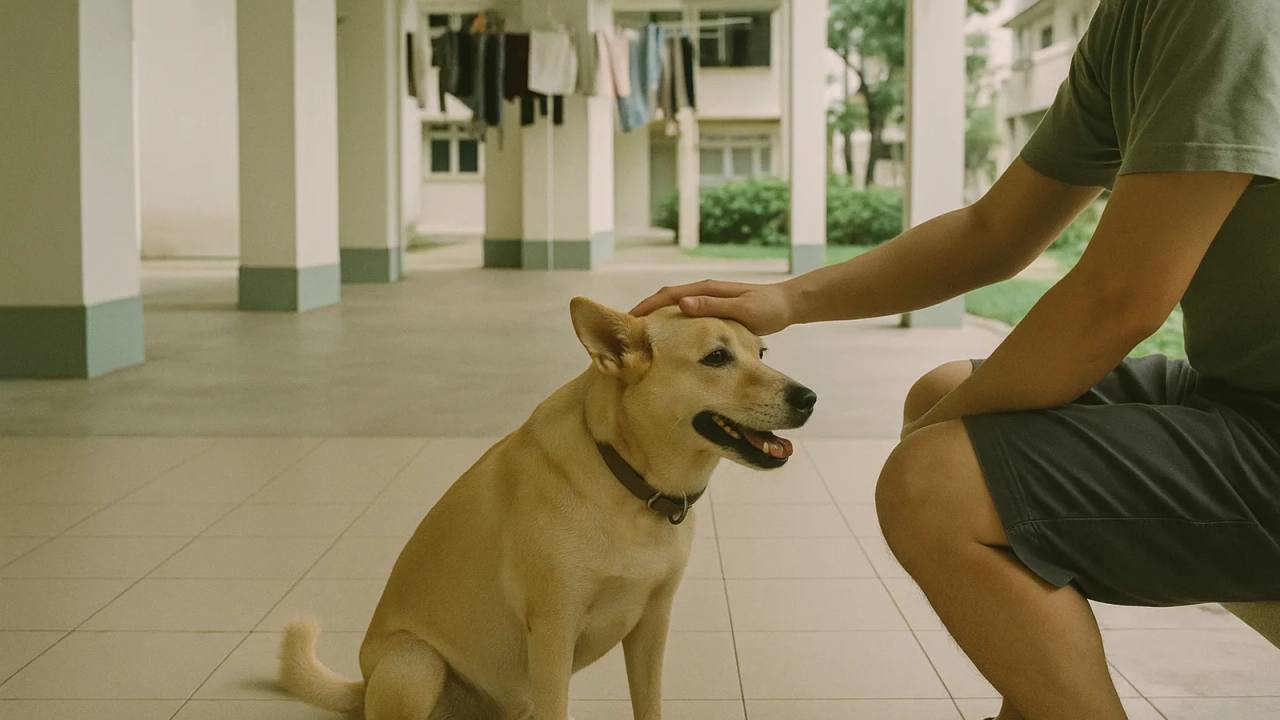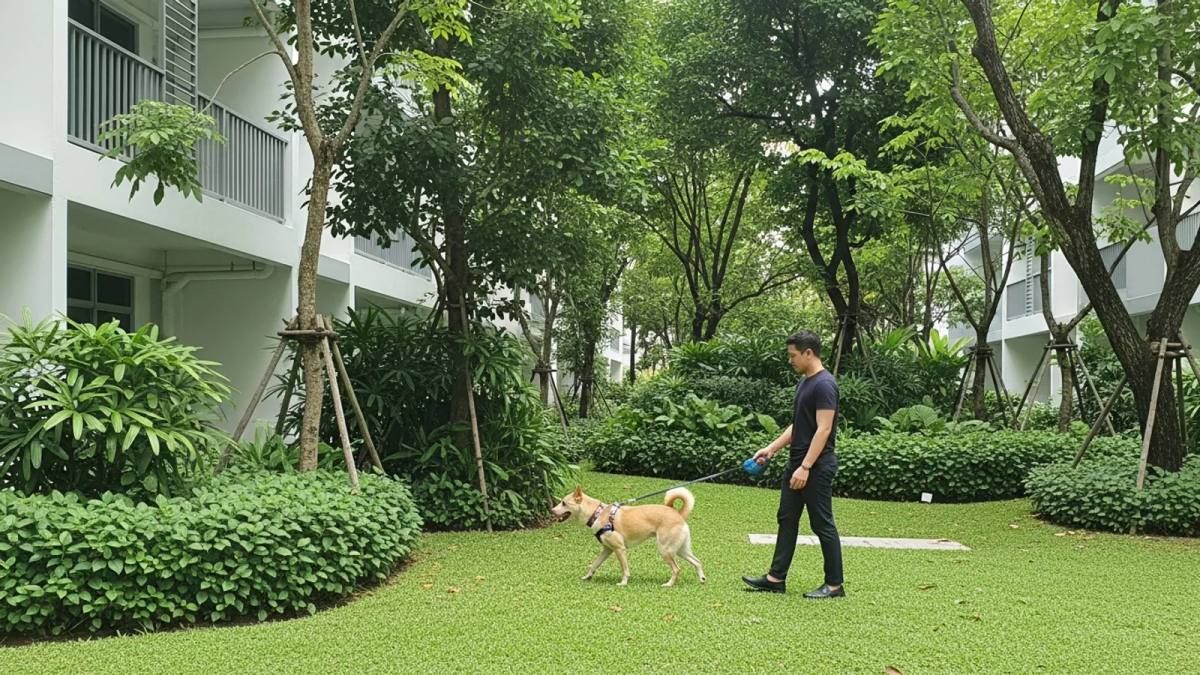

If your older, smaller dog has started drinking more, panting for no obvious reason, or developing a rounder belly even though its appetite has not changed, it is easy to put it down to age or our heat. Sometimes it is exactly that. Sometimes it is Cushing's syndrome, a common hormonal condition that is very manageable once it is properly diagnosed, and this guide walks through what Singapore owners actually need to know.
By the numbers
- 7 to 12 years old the age range the Merck Veterinary Manual gives for typical onset of Cushing's disease in dogs
- 0.28% (95% CI 0.25-0.31%) estimated prevalence of hyperadrenocorticism diagnosis among UK dogs attending primary-care veterinary practices (2009-2014), per VetCompass/RVC study
- only 5-8% of dogs with PDH show false-negative LDDST results the false-negative rate of the LDDST in dogs with pituitary-dependent hyperadrenocorticism, per the Merck Veterinary Manual (i.e., roughly 92-95% sensitivity)
- 10 to 14 days when the first monitoring recheck happens after starting or adjusting trilostane treatment
What Is Cushing's Syndrome and Why Does It Happen?
Cushing’s syndrome involves excessive exposure to cortisol, a hormone that normally has essential ongoing roles in the body as well as responding to stress. Naturally occurring disease commonly involves a pituitary tumour stimulating the adrenal glands, or an adrenal tumour producing cortisol. Long-term corticosteroid treatment can also cause a related syndrome. This is not simply a normal stress response, and diagnosis requires veterinary assessment. The MSD Veterinary Manual explains the causes and investigation.
Which Singapore Dogs Are Most at Risk?
Cushing’s is more often diagnosed in middle-aged and older dogs, with breed associations reported in studies abroad. That does not establish which breeds are most frequently affected in Singapore, where no local dataset is cited here. Any breed can be affected. Discuss new thirst, urination, skin or activity changes with your vet rather than using breed or age as a diagnosis.
How Do I Tell Cushing's Apart From Normal Ageing?
This is where Cushing's catches owners out. The early signs, a slower dog, a bit more sleep, a coat that is not quite as glossy, look exactly like ordinary ageing, and Singapore's warm, humid climate does not help: heavier panting can plausibly be blamed on the heat rather than the hormone. A few signs together are worth flagging with your vet rather than filing under "getting older". Watch for a dog drinking noticeably more water and needing to urinate more often, sometimes having accidents indoors for the first time in years. Watch for panting at rest, even in air-conditioning, not just after a walk. Watch for a pot belly that develops even though the dog is not eating more, this is muscle wasting pulling the abdominal wall out of shape, not simple weight gain. And watch the coat: thinning, dulling, sometimes symmetrical hair loss along the flanks, with skin that bruises or heals more slowly than it used to. Any one of these alone could be nothing. Several together, in an older small-breed dog, is a genuine reason to book a vet visit rather than wait it out.
How Is Cushing's Diagnosed at the Vet?
The vet combines clinical signs, medication history, blood and urine testing and selected hormonal tests. No single result should be interpreted in isolation. Abdominal ultrasound assesses the adrenal glands and other abdominal structures; it does not image the pituitary gland inside the skull. Specialist brain imaging may be relevant in selected cases. Your vet will choose tests and timing for the individual dog rather than promising a fixed number of visits.
What Does Daily Treatment and Monitoring Actually Look Like?
Trilostane is commonly used for Cushing’s, but dose, frequency and monitoring must be prescribed for the individual dog. Give it exactly as instructed and keep scheduled examinations and blood tests. Ask for written advice on what to do if the dog becomes unwell and whether to withhold the next dose while contacting the clinic. Budget for ongoing monitoring rather than assuming the medicine alone completes treatment.
What's the Outlook for a Dog on Treatment?
Many dogs gain useful quality of life with treatment, but the outlook varies with the cause, complications and other illnesses. Improvements in thirst or appetite may occur before coat or muscle changes. Cushing’s can have serious consequences, so it should not be described as rarely affecting lifespan or as merely a harmless background condition. Ask your vet how they will judge response and what changes require an urgent call.
A pot belly on an older, thirstier dog is not always just weight gain, it can be Cushing's syndrome quietly changing how the body handles cortisol.
Common questions
- Is Cushing's syndrome painful for my dog?
- Cushing's syndrome itself is not typically painful, but the changes it causes, thinning skin, muscle loss, a weakened immune system, can lead to secondary problems such as infections or slow wound healing that are uncomfortable. Most dogs feel noticeably better once treatment brings cortisol back into a normal range.
- Can Cushing's syndrome be cured?
- Pituitary-dependent Cushing's, the most common form, is not cured but it is very manageable with lifelong daily medication. Some adrenal tumour cases can be surgically removed, which your vet would discuss if imaging points that way, but for most dogs medical management is the long-term plan.
- How much does Cushing's treatment cost in Singapore?
- Costs vary by clinic, your dog's size and how often rechecks are needed, so it is genuinely a conversation to have with your own vet rather than a figure we would want to guess at. Budget for it as an ongoing cost, medication plus periodic bloodwork, rather than a one-off bill.
- What is the difference between Cushing's syndrome and diabetes in dogs?
- Both can cause a dog to drink and urinate more, which is why they get confused, but they involve completely different hormones. Diabetes is a problem with insulin and blood sugar, while Cushing's is a problem with excess cortisol. Bloodwork and urine tests distinguish between the two fairly quickly.
- Can diet help manage Cushing's syndrome in dogs?
- Diet will not reverse Cushing's on its own, but keeping your dog at a healthy weight supports the joints and organs that are already under extra strain. Talk to your vet before changing food, especially if your dog also has any kidney or pancreas concerns.
- Is Cushing's syndrome hereditary in dogs?
- There is a breed pattern, with Poodles, Dachshunds and several terrier breeds turning up more often, which suggests a genetic component rather than pure chance. That said, it is not a simple single-gene inheritance the way some other conditions are, and any older dog of any breed can still develop it.
- What happens if Cushing's syndrome is left untreated?
- Untreated Cushing's tends to progress gradually: thirst and urination worsen, the coat and skin continue to deteriorate, and the weakened immune system leaves the dog more prone to infections and slow healing. Quality of life declines slowly rather than dramatically, which is exactly why catching it early through a vet visit matters.
Sources
- Merck Veterinary Manualmerckvetmanual.com
- 7 to 12 years old: the age range the Merck Veterinary Manual gives for typical onset of Cushing's disease in dogs
- only 5-8% of dogs with PDH show false-negative LDDST results: the false-negative rate of the LDDST in dogs with pituitary-dependent hyperadrenocorticism, per the Merck Veterinary Manual (i.e., roughly 92-95% sensitivity)
- 1 to 3 mg/kg: the typical starting dose range for trilostane, given by mouth twice daily with food
- O'Neill et al. 2016, Journal of Small Animal Practicepubmed.ncbi.nlm.nih.gov
- 0.28% (95% CI 0.25-0.31%): estimated prevalence of hyperadrenocorticism diagnosis among UK dogs attending primary-care veterinary practices (2009-2014), per VetCompass/RVC study
- Today's Veterinary Practicetodaysveterinarypractice.com
- 10 to 14 days: when the first monitoring recheck happens after starting or adjusting trilostane treatment
- AVS, NParksavs.nparks.gov.sg
- S$350/year: the AVS licence fee a Singapore veterinary centre must hold to legally treat your dog
How we verify content Fact-checking policy How we stay free