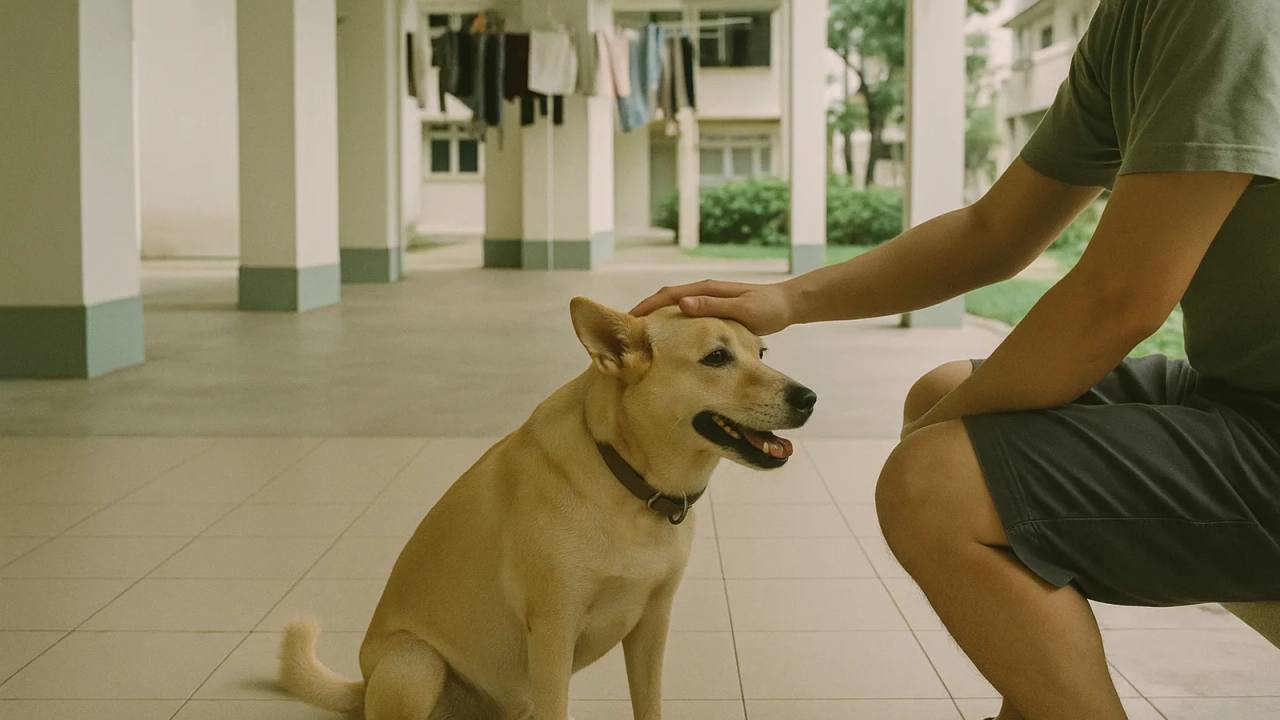


Pull up the HDB approved-breed list and one thing jumps out: terriers are everywhere. Twenty-five of the 61 named breeds are terriers or terrier types, from the Yorkshire and the West Highland White to the German Hunting Terrier and the Wire-Haired Fox Terrier. That proportion tells you something useful about how the list was built, but it tells you nothing about whether a terrier will suit your flat, your neighbours or your lifestyle. HDB sets and maintains the list based on named breeds, not on a dog's actual size or character, which means the decision about whether a terrier works for your home is entirely yours to make.
A Named-Breed List, Not a Size or Temperament Test
The official approved-breed list includes several terriers, including the Jack Russell and Yorkshire Terrier. Check the named breed directly rather than relying on an editorial count of “terrier types”. Some breeds with terrier in their name have different histories and classifications, so the earlier 25-of-61 statistic was not a reliable description of the official list.
The first thing to understand is what that list actually represents. HDB sets and maintains the approved-breed list, and approval sits with the authority, not with the dog. Being on the list means the breed's name appears there. It does not mean the breed has been assessed for temperament, for noise levels, or for how well it copes with a tenth-floor corridor. There is no published weight ceiling attached to the list. A dog can be physically small and still not appear on it. A dog can appear on it and still be a genuinely challenging flat companion. Those are two separate questions, and conflating them causes a lot of avoidable frustration for new owners.
Why So Many Terriers Are on the List
The honest answer is probably historical rather than behavioural. Terriers as a group were bred across Britain and Europe to be small enough to go to ground, to follow quarry into burrows and dens, and to work in conditions where a larger dog simply could not fit. That working brief produced dogs with compact frames. When regulatory bodies around the world began drawing up lists of breeds considered suitable for apartment or urban living, small body size was a natural proxy, and terriers fitted that proxy well.
Small body size is a plausible reason that many terriers appear on apartment-breed lists, but this is an interpretation, not an official explanation of how HDB selected each breed. Approval establishes eligibility under the rules; it does not guarantee that an individual dog will be quiet or easy to settle.
Separate two questions: is this dog permitted in your home, and can you meet this particular dog’s needs? Working history can provide context, but temperament, previous experience, health and the household routine also matter.
What Terriers Were Actually Bred to Do
Terrier breeding history is fairly consistent across the group. These dogs were developed to locate and pursue quarry underground or in dense cover, to bark persistently to signal their position, to work without direction from a handler once they were underground, and to be tenacious enough that neither resistance nor discomfort would make them give up. Every one of those traits was a virtue in the field. Every one of them lands differently in a flat.
Digging translates into scratching at floors, door frames, furniture and garden patches. Barking at intrusion translates into alarm barking at every lift arrival, every footstep in the shared corridor, every neighbour closing a door. Independent working translates into a dog that does not naturally defer to human instruction when something interesting is happening. High prey drive translates into a dog that fixes on cats, pigeons, lizards and small dogs in the void deck and pulls hard toward them.
None of this is the dog misbehaving. It is the dog doing exactly what centuries of selective breeding shaped it to do. The environment has changed; the dog's wiring has not. That distinction matters because it shifts the owner's job from correction to management and genuine outlet provision.
How Flat Life Amplifies Terrier Traits in Singapore
Singapore's housing density makes the terrier's natural alert response almost constant. In a typical HDB block, a dog on a middle or upper floor is surrounded by neighbours on every side, above and below. Lifts arrive, children run along corridors, deliveries happen at all hours. For a breed that was hardwired to bark at the approach of anything unfamiliar to its territory, that environment is essentially a continuous trigger loop.
The climate adds another layer. The Meteorological Service Singapore's climate normals for 1991 to 2020 show that daytime temperatures at Changi regularly reach 31 to 33 degrees Celsius, with relative humidity sitting around 82 percent as an annual mean and rising above 90 percent in the early morning. That heat profile limits the kind of prolonged outdoor exercise that burns through a terrier's physical and mental energy. You cannot walk a Jack Russell for two hours at noon in Singapore without risking heat stress for the dog and for yourself. Morning and evening windows are real but finite.
Afternoon thunderstorms, which arrive frequently during both the Northeast and Southwest monsoon seasons, can cut outdoor time further without warning. Sumatra squalls in particular arrive fast and heavy. All of this means that exercise opportunities are genuinely compressed, which makes enrichment inside the flat more important, not less.
Meeting the Drive Without Suppressing It
The practical goal is to provide suitable activity and help your individual dog settle. Terriers vary; breed history does not mean every one will bark, chase or dig in the same way, or that a calm terrier is impossible.
Scent games offer a useful way to explore and make choices indoors. Try easy food searches or suitable puzzle feeders, supervise closely and count food rewards within the daily allowance. Do not assume a short sniffing game replaces a walk or has a proven fatigue advantage.
Controlled digging outlets, such as a dedicated sandbox or a digging pit in a ground-floor garden if you have access to one, address one of the most persistent flat complaints about terriers. A dog that has a sanctioned place to dig is less likely to work on the sofa cushions.
Barrier management matters for alert barking. Positioning the dog's resting area away from the front door, using white noise near the corridor-facing wall, and training a positive interrupter rather than relying on punishment all reduce the frequency and intensity of alarm responses over time. None of these are quick fixes, but they compound.
Socialisation to lift sounds, corridor smells and the general noise profile of a block is most effective when started early, but it is never entirely too late to work on it systematically through counter-conditioning.
The Practical Checklist Before You Commit
HDB rules allow one dog from the approved-breed list per residential flat, and owners who breach the keeping rules can be fined up to $4,000. That rule applies regardless of which breed you choose, terrier or otherwise. Beyond the housing rule, owning any dog in Singapore requires a licence from AVS, the Animal and Veterinary Service under NParks. You will need a microchip number before you can apply, and you must complete a Pet Ownership Course before a new licence application goes through. The full licensing process is explained on the AVS licensing a pet page, and the detailed requirements are set out on the AVS licensing requirements page. If your registered address changes, AVS needs to be informed within 28 days.
If you live in an HDB flat and are drawn to the idea of a local mixed breed rather than a pedigree terrier, Project ADORE is a separate route that allows one Singapore Special up to 55 centimetres at the shoulder. The height restriction replaced the old weight ceiling, which NParks removed formally on 18 July 2022. The two schemes are not interchangeable, and you still cannot keep more than one dog per unit under either route.
Before you choose a terrier from the approved list, ask yourself honestly whether you can provide structured mental work every single day, not just on weekends. Whether your flat's layout gives you any genuine sound buffering from the main corridor. Whether you have a reliable morning and evening walk window that the monsoon seasons will not regularly erase. Whether you are prepared to invest in training from the start rather than hoping the drive settles on its own. If the answers are yes, a terrier in a Singapore flat is entirely workable. If several of the answers are uncertain, that is worth sitting with before you commit, because the dog will be living with the consequences of that decision for a decade or more.
The approved-breed list tells you which breeds HDB has named as permitted. It does not tell you which breed suits your flat, your schedule or your tolerance for noise and persistence. That part is yours to work out, and working it out honestly before you bring a dog home is the most useful thing this list can prompt you to do.
Common questions
- Why does HDB's approved list include so many terriers?
- Several terrier breeds appear on the official list. Their generally compact size is a possible explanation, not a published HDB selection rationale. Check the current named breed and assess the individual dog’s needs separately; the old 25-of-61 count was not reliable.
- Is there a weight limit for dogs in HDB flats?
- No. HDB's approved-breed list is a named-breed list, not a size or weight test. There is no published weight ceiling attached to it. A dog can be physically small and still not appear on the list, and a dog on the list is not guaranteed to be small. Never rely on a figure sometimes cited online as a weight ceiling because no such figure appears in current HDB rules.
- What were terriers bred to do, and why does that matter in a flat?
- Terriers were developed to hunt vermin and small game, which means digging, chasing, barking at movement and making independent decisions underground without a handler's direction. In a high-density flat with shared corridors, lifts and thin walls, those same instincts translate to reactive barking at passing neighbours, frustration without sufficient outlets and persistent digging or chewing if boredom sets in. The drives are not faults, they are the point of the breed, and a flat owner needs a plan to meet them constructively.
- Can I keep a mixed-breed dog in my HDB flat?
- Yes, through a separate route. Project ADORE allows one local mixed-breed dog, specifically a Singapore Special, up to 55 cm at the shoulder to be kept in an HDB flat under its own set of conditions. The old weight restriction under ADORE was removed and the updated rules were formalised by NParks on 18 July 2022. ADORE is a distinct scheme from the named-breed approved list, so the conditions and application process differ.
- What do I need to do before bringing a terrier home to an HDB flat?
- First, confirm the specific breed appears on HDB's current approved-breed list, because HDB sets and maintains that list and it can be updated. You may keep only one dog per flat. You'll also need a dog licence from NParks' Animal and Veterinary Service applied for through the PALS system, which requires a microchip number and completion of a Pet Ownership Course before a new licence application. Beyond the paperwork, assess honestly whether you can meet the breed's exercise, mental stimulation and socialisation needs given your working hours, flat size and access to outdoor spaces.
Sources
- Terrier or terrier-type breeds among HDB's 61 approved breedsweb.archive.org
- 25 of 61
- Maximum fine for breaching HDB pet-ownership rulesavs.nparks.gov.sg
- Up to $4,000
- Maximum height for a Singapore Special under Project ADOREavs.nparks.gov.sg
- 55 cm
- Singapore mean annual relative humidityweather.gov.sg
- 82 percent
- 90 percent
Notice one little habit together →A small idea to try, with progress kept in your Pack.
How we verify content Fact-checking policy How we stay free