How do I start toilet training in a Singapore flat?
Choose an appropriate toilet place, help your puppy reach it often and reward them when they use it. Expect accidents while they learn. A puddle is information about timing, access or a possible health problem, not proof that your puppy is stubborn or that you are a bad owner.
Living above ground level changes the logistics. The puppy may wake ready to go while you are finding your keys and waiting for a lift. Prepare the route and supplies in advance, and choose an indoor option if getting outside reliably is not practical. The goal is a routine that meets this puppy’s needs in your home, not a contest to finish faster than another household.
Choose the toilet arrangement before the next accident
For outdoor training, identify a safe, permitted area you can reach promptly. Ask your vet about suitable exposure while your puppy’s vaccination course is underway. Keep the puppy controlled in shared areas and away from unknown animal waste. A quiet patch that is easy to reach is more useful than a destination that requires a long walk every time.
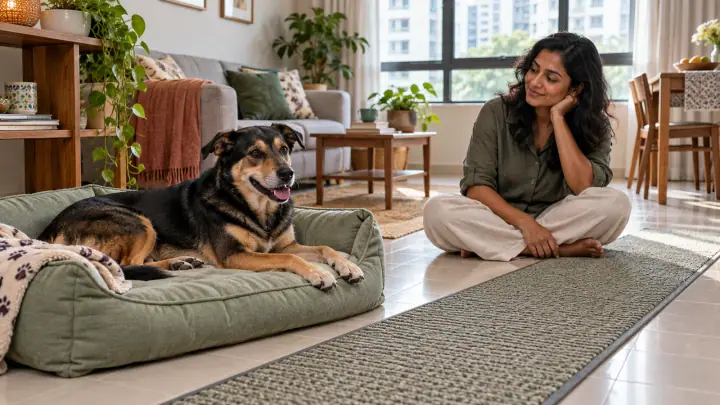
Indoor toilet training can be a valid choice. The AKC specifically discusses indoor arrangements for apartment dwellers and owners with mobility constraints. Use a stable, accessible toilet area with a suitable surface, away from the resting and feeding areas. Keep it clean and watch for chewing or swallowing parts of pads or trays.
Our earlier version treated pads as an owner’s shortcut that would inevitably prolong training. That was too absolute. A consistent indoor arrangement can work; if you later want to move toileting outside, teach that change gradually. Indoor toileting does not replace appropriate exercise, social experiences or companionship.
How often should I offer a toilet break?
Start with frequent opportunities and respond to your puppy’s signals. Useful times include waking, eating, drinking and active play. Sniffing, circling, restlessness or pausing an activity can mean that a trip is needed. Do not wait for a scheduled alarm when the puppy is already asking.
VCA’s veterinary guidance includes breaks every one to two hours while awake, with more frequent opportunities during energetic activity. These are starting points, not a promise of bladder capacity. A young puppy may need to go sooner. Their comfort and actual pattern take precedence over a formula based on age.
Keep a simple note for a few days: wake time, food and drink, toilet opportunities, successful toileting and accidents. For example, if an accident repeatedly happens while you prepare breakfast, arrange the first toilet opportunity before breakfast preparations begin. Change the routine rather than demanding that the puppy wait longer.
Make the lift journey easier
Keep the lead, waste bags, keys and cleaning supplies in one place. Decide who handles the puppy and who opens doors when two people are available. Carry the puppy only if you can do so securely and comfortably; that is a practical option, not a requirement for every household.
If the lift is unreliable or your puppy cannot yet reach the outdoor spot in time, use the planned indoor toilet. Do not designate a communal lift lobby, void-deck corner or carpark as a toilet simply because it is sheltered. Respect shared-space rules and keep routes clean. The answer to a difficult journey is a workable arrangement, not leaving urine where the smell will encourage another visit.
What should I do at the toilet spot?
Stay with your puppy and allow a calm opportunity to sniff and settle. When they finish in the intended place, reward promptly there rather than waiting until you are back upstairs. A consistent verbal cue can be introduced without repeatedly demanding that the puppy perform.
Blue Cross advises patient, repeated opportunities. If nothing happens after a short attempt, return to close supervision and try again soon or when signs appear. Do not leave the puppy outside alone to work it out. Allow enough time in your own schedule for repeat trips; one unsuccessful attempt does not mean they will now be comfortable until the next planned break.
What about rain and overnight toileting?
Plan a wet-weather option before the first storm. That may be your indoor toilet or a genuinely safe and permitted sheltered outdoor area. Do not force an outdoor trip in dangerous weather to preserve a training streak. If a change of surface is difficult, introduce it gently in suitable conditions rather than waiting until the puppy is desperate.
Young puppies may need toilet opportunities overnight. Prepare a safe route with enough light, respond calmly and keep the trip low-key. Dogs Trust advises access to fresh water day and night. Withholding water to avoid a puddle is not an appropriate training method.
Share night duties where possible. A household note saying who takes the next check can prevent both people assuming the other has done it. If you must be away, arrange care and an appropriate toilet opportunity; a crate does not extend the puppy’s physical ability to wait.
How should I respond to an accident?
Clean up calmly. Do not shout, rub the puppy’s nose in it or punish them after finding a puddle. If you notice them about to toilet, guide them gently to the intended spot when you can do so without frightening them. Reward completion there.
Use a suitable pet-waste cleaning product according to its instructions and keep your puppy away while the area is being cleaned. Review what happened just beforehand: a nap, play, a missed signal or an inaccessible toilet can help you improve the next opportunity. Blame does not provide that information.
When do accidents need a vet?
A sudden change in a previously reliable dog, unusual thirst, pain, blood, repeated small urinations or ongoing difficulty warrants veterinary advice. Training cannot rule out a urinary or digestive problem. Do not postpone a vet call until the puppy reaches a particular age or completes a fixed training programme.
PDSA identifies inability to pass urine as an emergency. Repeated straining with little or no urine, especially with pain, vomiting or collapse, needs immediate veterinary attention. Tell the clinic what you have observed; do not keep retrying the toilet-training routine instead.
How do we know the plan is working?
Look for fewer accidents, more comfortable use of the intended spot and clearer signals you can respond to. Increase freedom gradually when the puppy is reliable in the current setup. There is no single accident-free countdown that certifies every puppy as trained.
If progress stalls, review health, access and the schedule with your vet or a reward-based trainer. A plan that works when one person is home all day may need adjusting when work resumes. Successful toilet training should make life more comfortable for both of you.
Frequently asked questions
Are puppy pads always a bad idea?
No. A consistent indoor toilet can be appropriate in a flat or when outdoor access is difficult. Teach any later change gradually.
How often should I take my puppy to the toilet?
Offer frequent opportunities, including after waking, food, drink and play. Respond sooner to signals rather than treating an age-based schedule as a guarantee.
Should I remove water overnight?
No. Keep fresh water available and plan suitable toilet opportunities.
Can I use the void deck as the regular toilet?
Do not assume a shared lobby, void deck or carpark is an appropriate toilet. Use a permitted outdoor location or a hygienic indoor arrangement.
What if my puppy keeps trying to pee but nothing comes out?
Contact a vet immediately. Inability to pass urine can be a life-threatening emergency.
Does an accident mean training has failed?
No. Review timing, access and health; clean calmly and continue a suitable reward-based plan.
Sources and editorial review
VCA: toilet opportunities and training; AKC: indoor toilet arrangements; Blue Cross: patient reward-based toilet training; Dogs Trust: accidents, health and water access; PDSA: inability to urinate. Editorial source review: 12 September 2026. Flat-living examples are practical suggestions; veterinary guidance does not replace an assessment of your puppy.
Common questions
- Are puppy pads always a bad idea?
- No. A consistent indoor toilet can be appropriate in a flat or when outdoor access is difficult. Teach any later change gradually.
- How often should I take my puppy to the toilet?
- Offer frequent opportunities, including after waking, food, drink and play. Respond sooner to signals rather than treating an age-based schedule as a guarantee.
- Should I remove water overnight?
- No. Keep fresh water available and plan suitable toilet opportunities.
- Can I use the void deck as the regular toilet?
- Do not assume a shared lobby, void deck or carpark is an appropriate toilet. Use a permitted outdoor location or a hygienic indoor arrangement.
- What if my puppy keeps trying to pee but nothing comes out?
- Contact a vet immediately. Inability to pass urine can be a life-threatening emergency.
- Does an accident mean training has failed?
- No. Review timing, access and health; clean calmly and continue a suitable reward-based plan.
Sources
- VCA: toilet opportunities and trainingvcahospitals.com
- VCA: toilet opportunities and training
- AKC: indoor toilet arrangementsakc.org
- AKC: indoor toilet arrangements
- Blue Cross: patient reward-based toilet trainingbluecross.org.uk
- Blue Cross: patient reward-based toilet training
- Dogs Trust: accidents, health and water accessdogstrust.org.uk
- Dogs Trust: accidents, health and water access
- PDSA: inability to urinatepdsa.org.uk
- PDSA: inability to urinate
Start with a quiet moment together →A small idea to try, with progress kept in your Pack.
How we verify content Fact-checking policy How we stay free