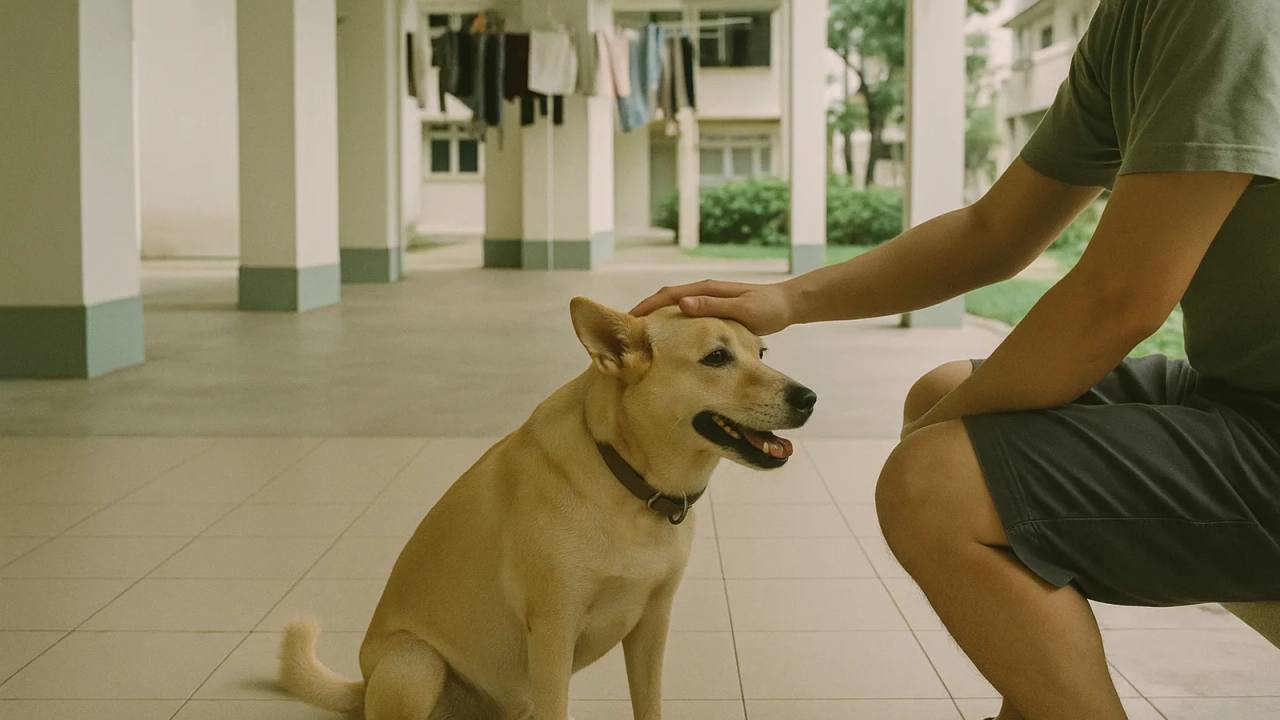

Owners who describe their dog as untrainable are usually describing a training approach that has not worked yet, not a dog that cannot learn. Genuine untrainability is rare in behaviourally healthy dogs. What looks like a stuck case is more often a mismatch between method and dog, a missed pain signal, or inconsistent rules at home.
By the numbers
- Five patterns Method, timeline, household consistency, pain and medical causes can stall progress
- Vet first Sudden behaviour change can be a health or pain signal
- Three steps Rule out, reassess and refer provides a practical order
- Every household member Consistent cues and rules help a dog understand what works
- 3+ years Age after which adult personality is generally stable, making sudden change a health signal to investigate
- Qualified help A reward-based trainer or veterinary behaviour professional can assess a stuck case
Why Does Training Seem to Fail Even When Owners Are Trying Hard?
Most owners who reach the point of calling a dog untrainable have already tried the obvious things: treats, repetition, patience. The training rarely fails because the owner is not putting in effort. It fails because one or more of five common gaps go unaddressed, and any single one can stall progress no matter how consistent the effort looks from the outside.
- Wrong method for the dog's temperament. A soft, sensitive dog often shuts down under firm corrections, while a high energy, easily bored dog can seem defiant when the real issue is sessions that are too long or too repetitive.
- Unrealistic timelines. Reliable recall or a calm greeting at the door usually takes weeks of repetition across real situations, not a handful of sessions at home.
- Inconsistent rules across the household. If one family member allows jumping on the sofa and another does not, or cues shift depending on who is asking, the dog is not being stubborn. It is getting mixed signals.
- An unaddressed pain or medical cause. Sudden non-compliance in a previously reliable dog is one of the more overlooked reasons training appears to collapse.
- A genuine underlying medical or neurological issue. This is rare, but it exists, and it is the one owners are least likely to consider on their own.
A structured, temperament aware approach, like the one outlined in UrbanDogOwner's guide to dog training in Singapore, closes most of these gaps on its own by matching method to dog rather than applying one generic script to every case.
Could Pain Be the Real Reason Your Dog Stopped Listening?
When a dog who used to sit, come, or walk nicely on a leash suddenly stops complying, the shift is often physical before it is behavioural. Joint pain, dental disease, ear infections and gastrointestinal discomfort can all make a previously easy cue feel unbearable. A dog with a sore hip will not sit on command not because it is being difficult, but because sitting hurts. A dog with an ear infection may stop responding to its name simply because sound has become uncomfortable.
The AVSAB has long flagged that pain and underlying medical conditions are frequently misread as behavioural noncompliance, and its position statements stress ruling out physical causes before assuming a dog is being deliberately difficult. This matters most when the change is sudden. A dog that has always struggled with recall is likely a training gap. A dog that used to come every time and now will not is a different situation entirely.
A visit to one of the vets UDO owners trust locally is the fastest way to rule this out, and it should happen before any training plan gets reworked, not after weeks of frustration. Reworking a method around a dog that is actually in pain wastes time and can make the dog warier of training sessions altogether.
What's the Difference Between a Hard Dog and a Genuinely Untrainable One?
Hard to train and untrainable are not the same thing, and confusing the two is where a lot of owners get discouraged. Even dogs with significant fear, reactivity, or a history of neglect can usually learn new, calmer patterns of behaviour given the right method, enough repetition, and time. The AKC's training guidance is built on this premise: consistency and technique, not the dog's supposed personality, decide the outcome in the overwhelming majority of cases.
Genuinely untrainable dogs are vanishingly rare among behaviourally healthy animals. What is far more common is a case that is stuck, not unsolvable, and stuck cases usually need a professional set of eyes rather than more effort at home. Credentialed behaviour consultants, the kind listed by bodies such as the IAABC, are trained to spot the gap between what an owner is doing and what the dog actually needs, a gap that is often invisible from inside the situation. A dog labelled untrainable by one household frequently turns out to be entirely workable once a qualified trainer adjusts the plan.
How Do You Tell Whether the Plan Is Working?
Replace the label untrainable with an observable description. Instead of writing that the dog is bad at recall, record the setting, distance, distraction and response. A dog that returns indoors but not beside a busy path has already learned part of the skill; the missing step is practice at manageable levels of distraction. This kind of record also helps a trainer see whether the exercise is too difficult or the reward is too weak.
Progress can be small without being meaningless. Look for a shorter recovery after a trigger, one successful response at a slightly greater distance, or fewer prompts needed for a familiar cue. Change one variable at a time and keep the environment easy enough for the dog to succeed. Repeating a cue while the dog is overwhelmed usually rehearses ignoring it. Management such as distance, barriers and a lead protects everyone while the skill is being built.
A sudden change deserves different treatment from a lifelong training gap. AVSAB notes that abrupt behavioural change can be an early sign of altered physical health, and pain may be subtle even when a dog is not limping. If a previously reliable dog becomes reluctant to move, reacts when approached at rest or changes temperament, pause the training experiment and arrange a veterinary assessment. Once medical causes are addressed, a reward-based professional can help rebuild the behaviour without blaming the dog.
Almost no dog is untrainable. Most are simply being trained the wrong way, at the wrong pace, or with rules nobody in the house applies consistently.
Common questions
- My dog was easy to train as a puppy but now ignores every command. What changed?
- A sudden drop in responsiveness, especially after a dog was previously reliable, is a common sign of pain or an underlying medical issue rather than a behaviour problem. A vet visit should come before any change to the training plan. Once a medical cause is ruled out, the household can reassess method and consistency.
- Could my dog's sudden refusal to sit or come actually be pain, not stubbornness?
- Yes, this is one of the more overlooked causes of what looks like stubbornness. Joint pain, dental disease, and ear infections can all make a familiar cue physically uncomfortable to perform. A vet check is the fastest way to confirm or rule this out.
- How long should I try a training method before deciding it isn't working?
- A well-matched method usually shows some early progress within a couple of weeks of consistent, correctly applied practice. If there is genuinely no movement after a fair trial with everyone in the household applying the same rules, it is time to bring in a qualified trainer rather than persisting alone.
- Is my dog too old or too set in its ways to learn anything new?
- Age slows the pace of learning slightly but does not prevent it. Older dogs can and do learn new cues and habits, often faster than expected once pain, hearing changes, or vision changes are ruled out or accommodated by a vet.
- When should I stop trying at home and call a trainer or behaviourist?
- Once pain has been ruled out by a vet and the method and household consistency have been honestly reassessed, a stuck case that still is not improving is the clearest signal to bring in professional support. Waiting longer usually just adds frustration on both ends of the leash.
- Are some breeds just untrainable?
- No breed is untrainable, though some breeds are more independent, more sensitive, or more easily bored, which changes what method works best. A trainer familiar with the breed's typical temperament can usually adapt the approach rather than write the dog off.
Sources
- American Veterinary Society of Animal Behavioravsab.org
- 3+ years: sudden behavioural change can be an early sign of a physical health problem and warrants veterinary assessment
- AVSAB humane dog training position statementavsab.org
- reward-based methods, management and professional referral are recommended for behaviour problems
- Merck Veterinary Manualmerckvetmanual.com
- pain, sensory decline and medical conditions should be excluded as contributors to behaviour problems
How we verify content Fact-checking policy How we stay free