
Puppy play can look dramatic. Learn when to allow it, when to pause, and how to choose safe social experiences for your Singapore puppy.
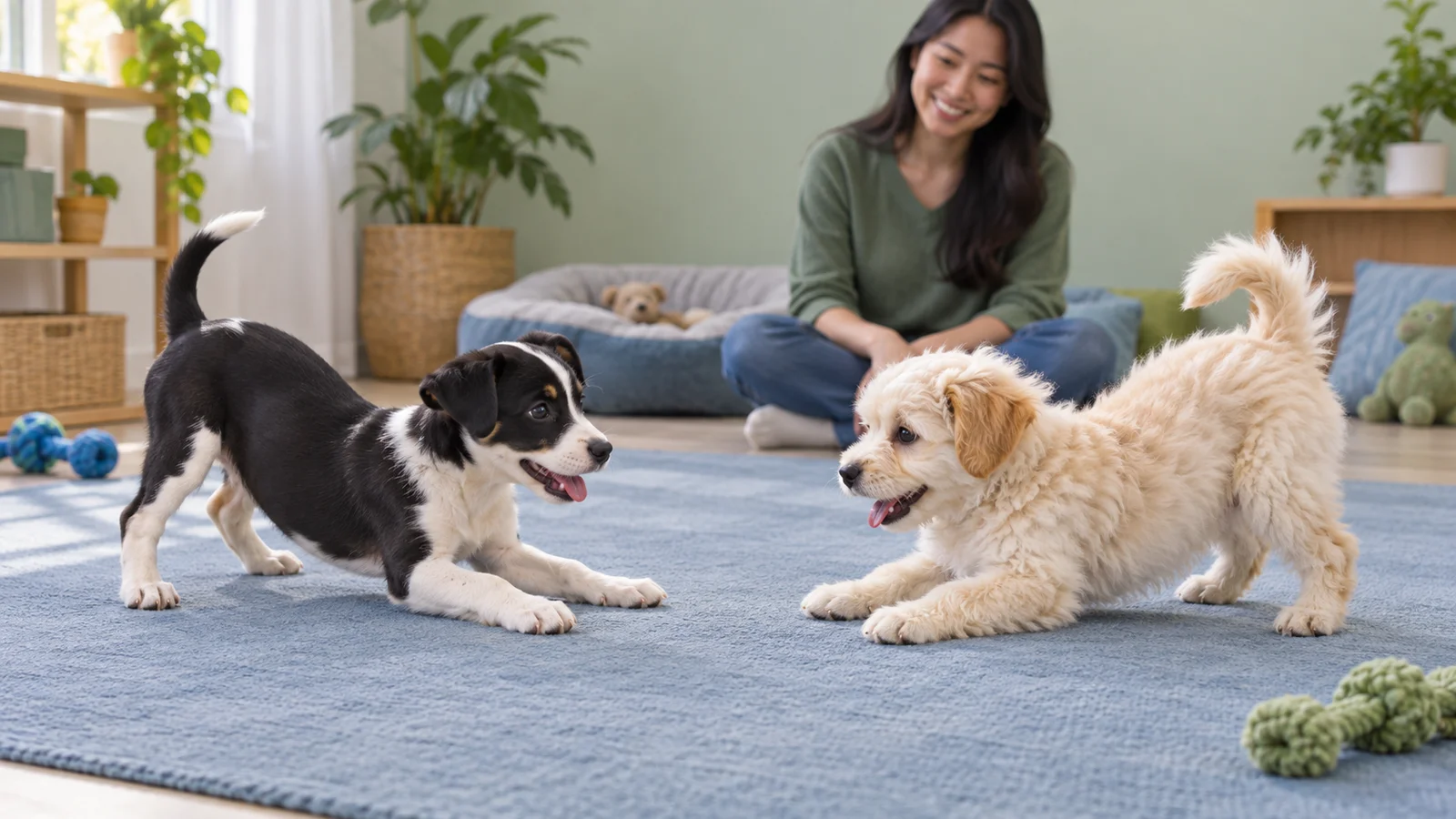
Puppy play can include chasing, pouncing and gentle mouthing, but noise alone cannot tell you whether both dogs are comfortable. Watch the whole interaction, provide breaks and stop when either puppy wants distance. A successful playdate leaves room for a puppy to say no. You do not need to wait for a fight before helping.
What can puppies learn through play?
Comfortable interaction gives a puppy opportunities to experience another dog's movements and responses. Dogs Trust's puppy-introduction guidance describes positive encounters as part of learning about canine body language. Start with enough distance for your puppy to remain comfortable, and progress gradually. A meeting can begin with watching another dog rather than immediately wrestling with one.
That does not make every encounter a useful lesson. Being overwhelmed is not a socialisation achievement, and another dog should not be expected to discipline your puppy. Think of yourself as arranging an experience, watching how it goes and adjusting it. There is no prize for finishing a playdate exactly as planned.
Read the whole puppy, not just the tail
Dogs Trust's body-language guidance stresses context and the whole body. A wagging tail is not proof of happiness. Notice movement becoming stiff, repeated attempts to move away, or a puppy seeking shelter behind you. Do not explain away discomfort because the other owner says their dog is friendly.
For your own observations, describe what happened rather than assigning a personality. “She moved behind my chair and he followed” is more useful than “she is dramatic”. It gives you something concrete to change next time. You are allowed to end the interaction without first deciding which dog was responsible.
Breaks are part of supervision
Dogs Trust's mouthing guidance explains that repeated nipping, excessive excitement or a dog no longer enjoying the game calls for a break. Some dogs need their people to create those pauses. Do not assume that every rough session will settle itself.
When it is safe, use a familiar recall cue and give the puppies separate space. Avoid putting your hands between dogs that are fighting. If you cannot interrupt safely, seek immediate help rather than improvising a physical restraint technique. Once separated, check for injury. A puppy trying to escape does not need another invitation to the same game.
If biting changes suddenly, arrange a veterinary check because pain or illness can contribute. For repeated fear or difficult interactions, ask your vet about appropriate behaviour support. Injury or persistent distress is a reason to stop the playdate, not a training exercise to push through.
Choose the partner before choosing the venue
VCA's veterinary enrichment guidance recommends healthy, known dog-friendly partners matched for size and temperament. It also recognises that dogs differ in the companionship they enjoy. An adult dog is not automatically a patient puppy tutor, and a large group is not automatically better socialisation.
Our practical suggestion is to speak with the other owner before arranging the meeting. Ask how their dog responds to puppies, what makes them uncomfortable and whether they are happy to pause or leave early. Agree who will supervise each dog. If the answer is “they will sort it out”, choose a different arrangement.
A compatibility tool can help organise preferences, but it cannot certify that two dogs will be safe together. Keep observing the dogs you actually have in front of you. Quiet companionship may be a better outcome than energetic play, and a puppy who prefers time with you still has worthwhile ways to learn.
Vaccination changes the plan
The American Veterinary Society of Animal Behavior's socialisation statement supports carefully managed early experiences before the full vaccination course is complete. It distinguishes suitable supervised classes from busy dog parks where other dogs' health and vaccination histories are unknown. It recommends avoiding those high-traffic, unsanitised settings for young puppies.
Ask your Singapore vet which experiences fit your puppy's vaccination history and local disease risk. Ask a prospective class about vaccination requirements, cleaning, illness exclusions and supervision. Do not treat an early-socialisation recommendation as permission to visit any dog run. Equally, do not assume socialisation must mean physical contact with unfamiliar dogs.
Keep the vet's advice with your puppy's records so another family member does not accidentally follow a different plan. Before booking a class, send the organiser the relevant vaccination details privately and confirm eligibility. A website's general age range is not a substitute for that conversation.
Singapore's AVS dog-training guidance also advises balancing socialisation with vaccination. Its examples include carrying a puppy in busy areas, inviting vaccinated dogs to your home and using classes run by qualified trainers with appropriate hygiene. This gives you practical alternatives to taking a young puppy straight into a crowded off-lead group. Discuss the particular option with your vet before arranging it.
Plan a comfortable session, not an endurance test
VCA's play and exercise guidance bases activity on a dog's age, development and health. It cautions against demanding jumps, sudden stops and repeated sharp changes of direction for growing puppies. There is no universal play duration that this article can prescribe for your dog.
For a Singapore home playdate, our planning checklist is straightforward: a secure space, a surface with grip, water, a way to separate the puppies and an adult who is watching rather than filming throughout. Clear the route to the exit before starting. If the setting is uncomfortable or the dogs cannot take space, rearrange the meeting.
Afterwards, note what worked: the partner, setting, moments of calm and what prompted a break. Keep the note short enough that you will actually use it when planning another visit. A quieter next meeting is a sensible adjustment, not a step backwards.
Keep the learning kind
AVSAB's current humane-training position recommends reward-based methods. Do not punish a puppy for communicating discomfort or use frightening corrections to force a greeting. Practise simple cues away from the excitement first, then use them to help your puppy move with you.
UDO's take: a lovely playdate can end while everybody still wants another one. Pack up without apologising for your puppy's limits. The friendship worth building is one your dog can enjoy at their own pace.
Play fighting teaches a puppy how hard is too hard, and reading the answer correctly can matter more than any command it learns later.
Common questions
- Should I let puppies sort out rough play themselves?
- No. Supervise and provide breaks. Stop when either puppy wants distance or seems distressed, and seek help for injury or repeated difficult interactions.
- Is a dog run suitable before puppy vaccinations are complete?
- Do not assume it is. Ask your vet about local disease risk and suitable controlled experiences. A busy dog run with unknown dogs is different from a carefully managed puppy class.
- Does my puppy have to wrestle with other dogs?
- No. Plan experiences around your puppy and suitable partners. Watching calmly, spending time with you and other comfortable activities can also be valuable.
Sources
Try a little play, then save the moment →A small idea to try, with progress kept in your Pack.
How we verify content Fact-checking policy How we stay free