
Off-leash time at a Singapore dog run can be genuinely enriching for your dog, but only if a solid recall underpins every visit. Too many owners mistake an enthusiastic park sprint for a trained behaviour, then find themselves chasing a delighted Labrador past other startled dogs. Beyond the training challenge, NParks enforces strict rules about where dogs may legally run free, and falling foul of these carries real fines. This guide walks you through a proven recall method, the most common places it falls apart, and the situations where keeping the lead on is simply the right call.
Why Recall Training Matters More in Singapore Than You Might Think
Singapore is not a forgiving environment for a dog that ignores its owner's call. The island's dog runs are compact, often bordered by busy roads or dense vegetation, and the legal framework governing where dogs may roam off-leash is strict. Under NParks regulations, off-leash activity is permitted only within designated dog run areas. Outside those boundaries, your dog must remain on a leash at all times, including on park connectors, open lawns, and void decks. A dog that bolts and does not return on command is not simply an embarrassment. It is a liability.
The good news is that a reliable recall is one of the most trainable behaviours in a dog's repertoire. The bad news is that most owners attempt off-leash freedom far too early, in environments far too distracting, with rewards far too weak. This article covers the method, the common failure points, and the specific Singapore rules you need to know before you ever unclip that lead.
Understanding Singapore's Off-Leash Rules Before You Train
Training your dog's recall without first understanding where you are legally permitted to use it is putting the cart before the horse. Singapore currently has more than 20 designated dog runs managed by NParks across various parks and green spaces. Each facility has its own posted rules, but several conditions apply universally.
Dogs using any NParks dog run must be licensed. Licensing is administered through the Animal and Veterinary Service (AVS), a cluster of NParks. Dogs must be licensed by the time they reach 3 months of age, and licences must be renewed annually. Current fees and renewal procedures are listed on the AVS portal, as these figures are subject to change. Dogs must also be microchipped and, depending on the breed, may be subject to additional conditions. Certain breeds classified under the Animals and Birds (Dog Licensing and Control) Rules require muzzling even within dog runs, so check the current breed-specific requirements on the AVS site before assuming your dog may run freely.
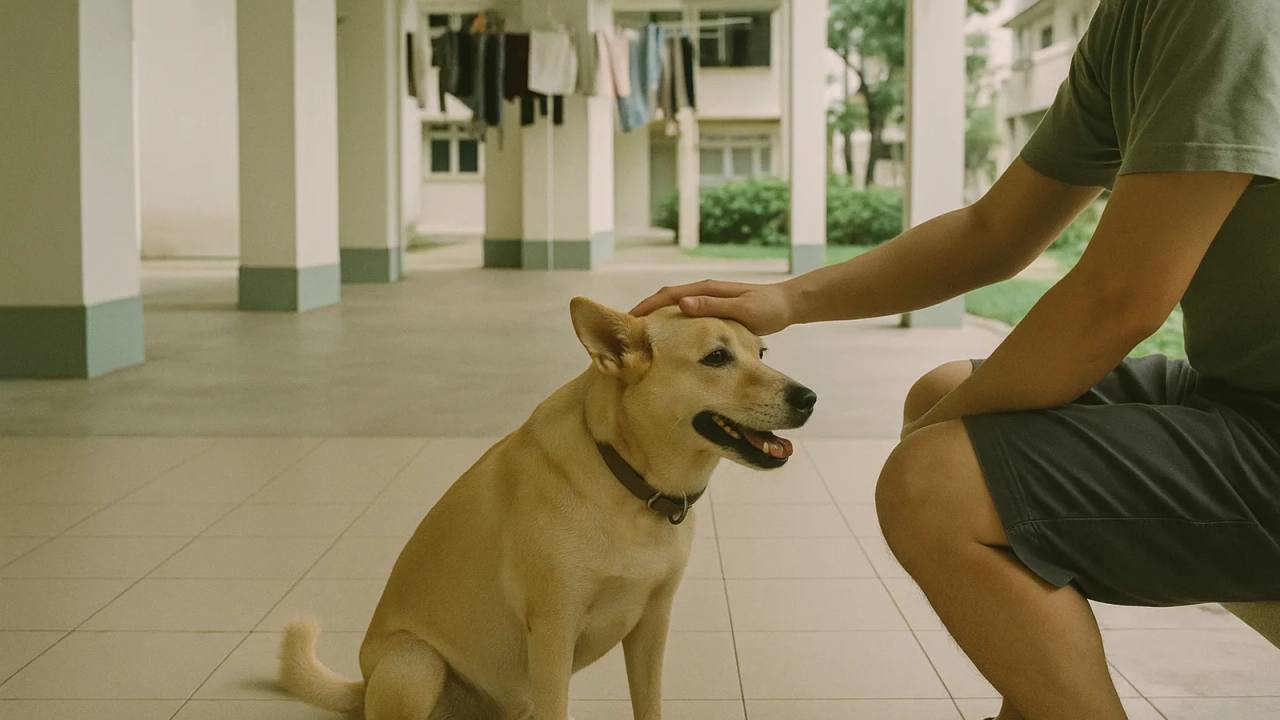
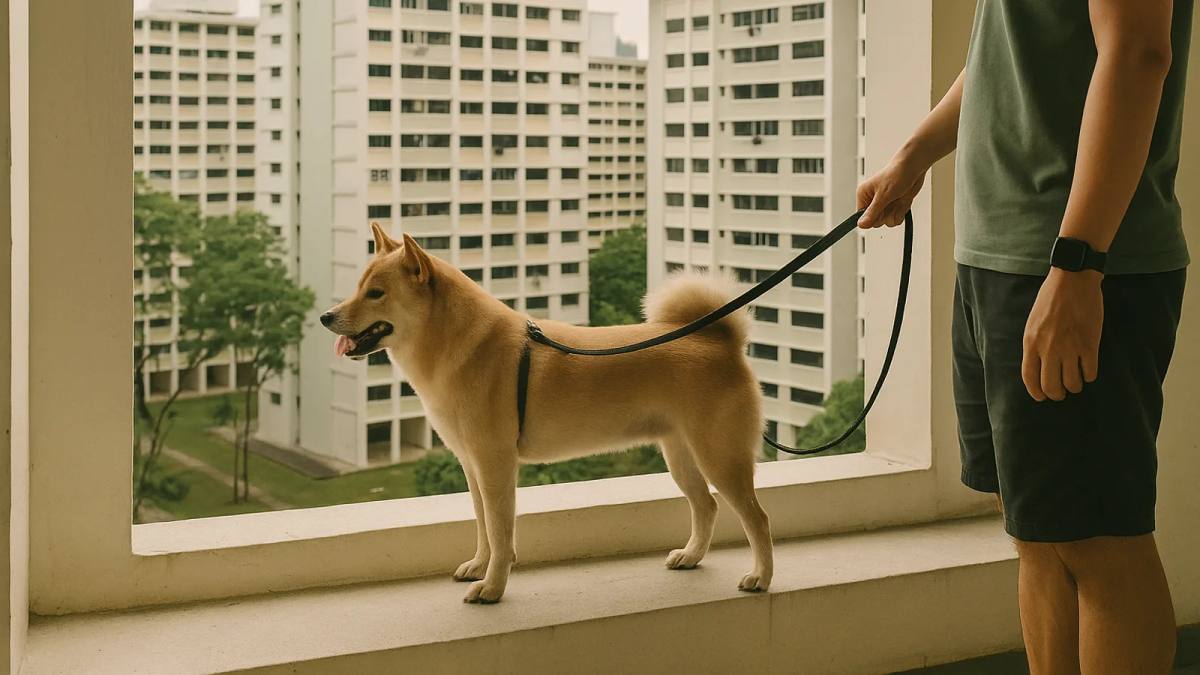
Within HDB estates, the rules are even more defined. HDB guidelines specify that dogs must be leashed in all common areas, which includes corridors, lifts, void decks, and multi-storey car parks. There is no off-leash exception within HDB common property, regardless of how well-trained your dog is. Recall training at home in a corridor is not a substitute for a proper dog run environment.
The Science Behind a Reliable Recall
A recall command works through a process called conditioned reinforcement. You pair a cue, typically a word like "come" or a whistle, with a consequence the dog finds strongly motivating. Over hundreds of repetitions, the cue itself begins to predict that consequence, and the dog moves toward you because experience has taught it that doing so produces something valuable.
The critical variable is the value of the reward relative to the competing environment. At a Singapore dog run on a weekend morning, your dog is surrounded by other dogs, novel smells, movement, and social opportunity. All of these are intrinsically rewarding. If your standard training reward is a piece of dry kibble, you have already lost before you started. High-value rewards for recall training should be reserved exclusively for recall practice. Cooked chicken, cheese, or commercial training treats your dog rarely receives outside recall sessions are appropriate. The exclusivity of the reward maintains its motivational value.
Training convention, consistent across professional animal behaviour literature, recommends beginning recall training at distances of no more than 1 to 2 metres in a low-distraction indoor environment. You only increase distance and distraction once the dog is achieving a success rate of at least 9 out of 10 repetitions at the current level. Rushing this progression is the single most common reason recalls fail at the dog park.
A Step-by-Step Progression for Singapore Conditions
- Indoor foundation, weeks 1 to 2: Begin in your flat. Say your recall cue once in a clear, upbeat tone. The moment your dog moves toward you, mark the behaviour with a clicker or a consistent verbal marker such as "yes," then deliver the high-value reward at your body, not thrown to the floor. Practice 10 repetitions per session, 2 sessions per day. Do not repeat the cue if the dog does not respond. Simply wait, reset, and try again at a shorter distance.
- Garden or corridor, weeks 2 to 3: Move the practice to a slightly more distracting setting such as a void deck during a quiet time of day. Maintain short distances. Add mild distractions such as another person walking past. Continue the 9-out-of-10 success rule before progressing.
- Long-line work, weeks 3 to 6: Attach a 5-metre or 10-metre long-line lead and move your practice to a quieter park area where leashed exercise is permitted. The long-line allows the dog to move away from you without being off-leash. Call the dog, reward heavily, and allow it to return to exploring. Never use the long-line to reel the dog in mechanically. The dog must choose to come.
- Dog run visits on-leash, weeks 4 to 8: Visit the dog run while your dog is still on leash. Practice recall against the backdrop of the dog run environment. This is deliberate exposure to the distraction before the consequence of failure becomes a loose dog near traffic.
- Off-leash in a dog run only after passing the above stages: Enter the dog run, allow your dog a few minutes to settle, then begin calling it from short distances. Reward every correct response. Never call your dog when you are about to leave. Go to the dog and leash it. If the dog learns that the recall cue predicts the end of fun, its reliability will deteriorate.
Common Failure Points at Singapore Dog Runs
The most frequently observed failure at local dog runs is the owner who calls the dog repeatedly without response, then walks over to clip the lead. This sequence teaches the dog two things. First, the recall cue carries no real consequence because the owner will come to the dog anyway. Second, recall predicts the end of the session. Both lessons actively undermine training.
A second failure point is environmental timing. Singapore's tropical climate means dog run visits are most popular in the early morning before 9 a.m. and in the evening after 6 p.m. These peak periods are when distraction levels are highest and when an undertrained dog is most likely to fail. If your dog is mid-way through the training progression, visit the dog run during off-peak weekday hours when fewer dogs are present.
Heat is also a practical factor. The Meteorological Service Singapore records mean daily temperatures typically ranging between 25 and 32 degrees Celsius throughout the year, with humidity levels frequently exceeding 80 percent. Dogs that are heat-stressed show reduced impulse control and reduced food motivation, both of which impair recall performance. A dog that will not take a treat at the dog run on a hot afternoon is not being stubborn. It is physiologically stressed. Shorten sessions and carry water.
A third failure point is inconsistent cue use. If multiple household members use different words, or if the same word is used casually in conversation, the cue loses its trained meaning. Designate one recall word, communicate it to all family members, and protect it from casual overuse.
When You Should Not Attempt Off-Leash at All
There are situations in which off-leash time is inadvisable regardless of how well trained your dog is. Dogs that are unwell, in season, or recovering from illness or surgery should not be in a shared dog run, both for their own welfare and to protect other dogs. Dogs that have shown any history of predatory aggression toward smaller dogs require a careful, separately assessed approach before off-leash time in a mixed environment is considered.
Dogs under 4 months of age should not be in public dog runs at all. Their vaccination schedules are incomplete and the risk of infectious disease transmission in shared soil environments is significant. Consult your veterinarian on the specific timing of your puppy's vaccination course before any dog run visit. This is not a training consideration. It is a health one.
Finally, if you are ever uncertain whether a site is a designated dog run or simply an open grassy area within a park, verify through the NParks website before removing the lead. The distinction matters legally, and the responsibility is the owner's.
Practical Takeaway
Reliable recall is built in controlled conditions before it is tested in the real world. Begin indoors, progress slowly, protect the value of your reward, and never let your dog learn that coming to you ends the fun. Understand the NParks and AVS licensing rules that govern where and how your dog may go off-leash in Singapore, and verify that your dog's paperwork, vaccination records, and microchip details are current before your first dog run visit. The environment will always be more exciting than you are. Your job is to make yourself more rewarding than the environment, one repetition at a time.
Common questions
- Which Singapore dog parks allow dogs off-leash legally?
- NParks designates specific fenced dog runs where off-leash activity is permitted, including sites at West Coast Park, Bishan-Ang Mo Kio Park, Sembawang Park, and several others. Dogs must remain on a leash everywhere outside these fenced enclosures. Check the NParks website for the current list, as locations are updated periodically.
- What is the most effective method for teaching a reliable recall?
- The most reliable approach combines a consistent recall cue (a whistle or distinct word), high-value food rewards used exclusively for recalls, and a progression from low-distraction indoor practice to gradually busier outdoor environments. Never call your dog to end fun or to do something unpleasant, as this poisons the cue. Build a history of recalls being the best thing that happens to your dog, every single time.
- Why does my dog's recall fail at the dog run even though it works at home?
- Dog runs are extremely high-distraction environments filled with novel smells, moving dogs, and social opportunities that your dog finds far more rewarding than most treats you carry. Recall reliability is environment-specific until generalised through hundreds of repetitions across many different settings. If you have not proofed the recall in progressively distracting environments before the dog run, the behaviour has not truly been trained for that context.
- When should I keep my dog on-leash even inside a designated dog run?
- Keep your dog leashed inside the run if it is showing signs of fear, over-arousal, or aggression; if it is recovering from illness, surgery, or an injury; if it is an intact male or female in season; if it has not yet had full vaccination coverage; or if the run is overcrowded with unknown dogs. A fenced enclosure does not automatically make off-leash safe for every dog on every day.
- What are the fines for letting a dog off-leash outside a designated area in Singapore?
- Under the Animals and Birds Act and park regulations enforced by NParks and the National Environment Agency, owners can face fines for failing to keep dogs on a leash in non-designated public areas. First-time fines can reach S$5,000 for certain offences, though on-the-spot composition fines are typically lower. Enforcement has increased in recent years, so always verify current penalties on the NParks and NEA official websites.
How we verify content Fact-checking policy How we stay free