
A nose boop. A little paw. A happy turn towards you. Learning a trick together can make an ordinary afternoon feel like your own tiny celebration.
You don't need a garden or a cupboard full of equipment. Start with a quiet patch of floor, a few small rewards and a dog who's happy to join in. Pick one trick today. The others can wait.
Before the fun starts
Choose a familiar space with secure footing and room to move. Keep sessions short and let your dog walk away. If either of you gets frustrated, take a break rather than repeating the cue louder.
Have small, dog-appropriate rewards ready. A marker is a brief signal, such as “yes”, that tells your dog which action earned the reward. If it's new to your dog, say it and immediately give a treat a few times before practising. Keep rewarding after the marker when you use it during training.
Count food rewards as part of the day's food, and choose activities your dog can do comfortably. Skip any movement that looks uncomfortable. If your dog has pain, stiffness or movement restrictions, ask your vet which activities are suitable.
1. Touch: the little nose boop
The goal: your dog voluntarily touches your open palm with their nose.
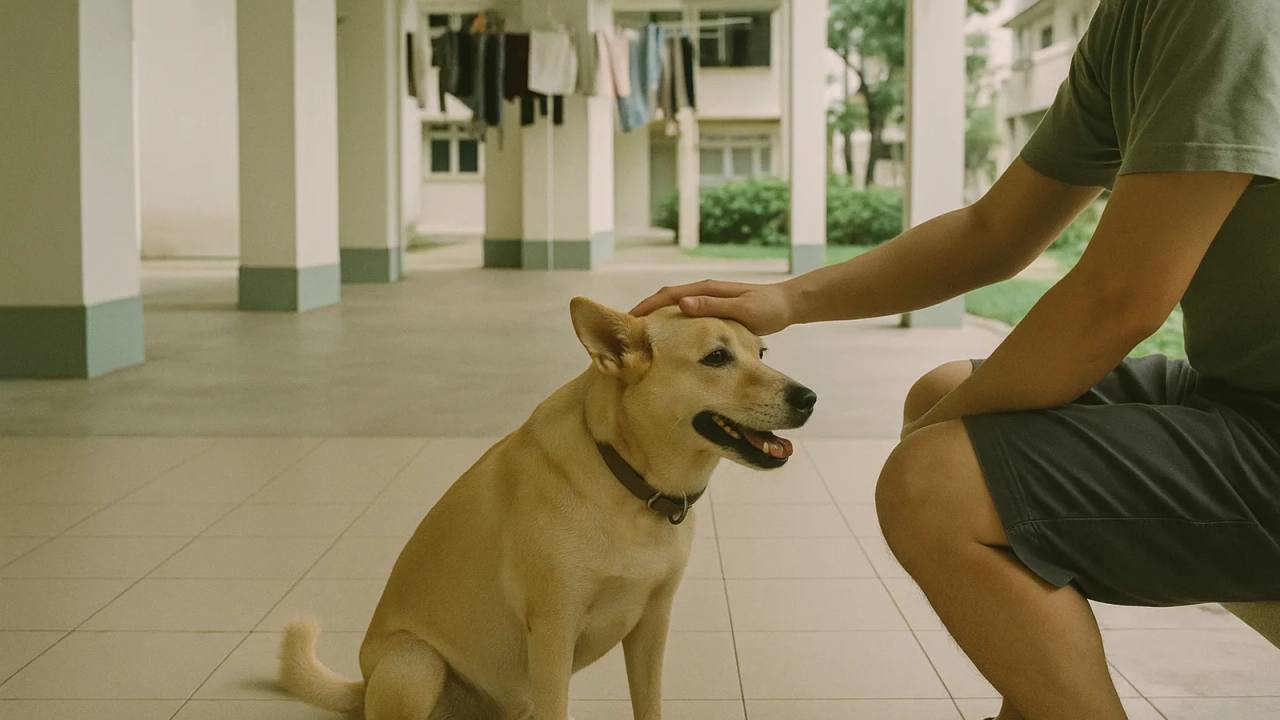
- Hold an empty, flat hand a few centimetres from your dog's nose, at nose height. Keep it still and let them investigate.
- As their nose contacts your palm, say “yes”, then give a small reward with your other hand near the target palm.
- Lower your hand to reset. Repeat a few easy attempts, with a reward for each successful touch.
- Once your dog reliably approaches and touches, say “touch” just before offering your palm. Mark the contact and reward.
- Later, move your hand a little farther away. Change one thing at a time.
If your dog seems unsure, reward looking or moving towards the hand first. Don't push your palm into their face. If they paw or mouth at it, reset or take a break.
Method checked against AKC's nose-targeting guide.
2. Paw: a tiny hello
The goal: your dog chooses to rest a paw briefly on your hand.
Offer your hand low enough that your dog doesn't have to stretch or lose balance. Wait quietly for a voluntary paw movement. Mark and reward it, then gradually reward a gentle touch to your hand. Don't lift their leg into position.
Once your dog understands the action, work towards a brief, soft paw rest. Add “paw” just before the familiar movement when you're confident they'll offer it. Reward, release and let them put their foot down. There's no need to grip or shake their paw.
If they keep offering their nose instead, they're remembering another successful game. Change the hand position, make the task easier or leave paw for another day. No paw offered today? That's fine too.
Method checked against AKC's shake-hands guide.
3. Spin: a gentle turn, not a race
The goal: your dog follows a hand signal around one comfortable circle.
Begin with your dog standing on a surface that won't slip. Hold a small treat near their nose and slowly guide it around a roomy circle at nose height. Reward a small part of the turn if a full circle is confusing. Build gradually and stop if your dog looks uncomfortable.
Once following the circle is familiar, introduce a cue such as “spin” during the movement. Progress to the same gesture with an empty hand, then reward from your other hand or pocket. Gradually make the gesture smaller as your dog understands it. Teach the other direction separately with a different cue if you choose.
Keep this to a few gentle turns, with breaks. Don't lure upwards into a jump or ask for repeated fast spins.
Method checked against Purina's spin-training guide.
What if my dog isn't interested?
Try an easier step, a quieter room or another time. A dog who turns away doesn't need persuading into a performance. Keep the invitation open and let the session end kindly.
Short, enjoyable practice and going at your dog's pace are central to Dogs Trust's target-training advice.
Your tiny plan for today
Choose one trick. Set up one comfortable space. Notice one small success and reward it. You don't have to finish a lesson in one sitting.
Come back to the next step when you're both ready. The lovely bit isn't a perfect trick. It's that little moment when your dog looks at you and thinks, “Again?”
A few questions before you start
How long will it take my dog to learn a trick?
There's no fixed timetable. Repeat an easy step across short sessions and move on when your dog looks comfortable with it. A few successful attempts are a good place to finish.
Should I move my dog's paw or face into position?
No. Reward a voluntary movement. If the step isn't happening, make it easier or choose another game.
Can we practise all three today?
You don't need to. Start with one and keep it enjoyable. A relaxed dog who wants to come back matters more than finishing a list.
For another small activity to try together, explore Little Moments.
UrbanDogOwner. Your dog-side guide.
How we verify content Fact-checking policy How we stay free