
- SG regulation
- Expat guide
- Curated pick
A good care arrangement fits your dog’s needs and gives you a clear account of what happens while you are away. Compare a walker, home visit and daycare before checking the provider’s handling, records, insurance and emergency plan.
Walker, home visit or daycare?
A walker usually provides an agreed visit and outing, with the dog resting at home between visits. A home sitter may offer company and care without a long walk. Daycare provides care at another location, but the amount of group play, individual attention, rest and supervision varies. Ask for the actual daily routine rather than assuming every daycare means constant social play.
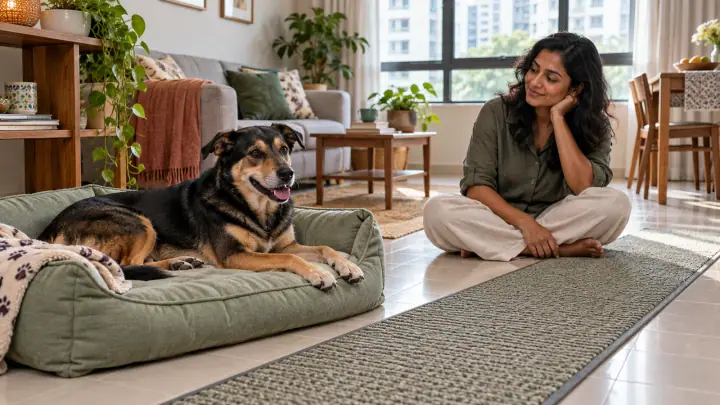
For a dog comfortable resting at home, a suitable visit may meet the need for company and a toilet opportunity. A dog who enjoys appropriate group settings may do well with a carefully matched daycare. A dog who finds travel or other dogs difficult may need a quieter arrangement. Age, mobility and medical restrictions matter more than a label such as “high energy”.
Do not treat barking as a daycare prescription
Barking or destruction when left alone can have several causes. Daycare may reduce time alone for a dog who is comfortable there, but moving distress to a different setting is not a cure. A single midday walk may also leave much of a difficult day unchanged. Discuss persistent distress, sudden changes or self-injury with your vet and a qualified reward-based behaviour professional. RSPCA guidance explains why health concerns and distress need individual assessment.
Ask what happens when a dog does not settle at the trial, needs a break from the group or cannot travel on the planned day. A provider should be able to explain alternatives and when they would stop the service, rather than promising that every dog will learn to enjoy it.
Check the person and the setting
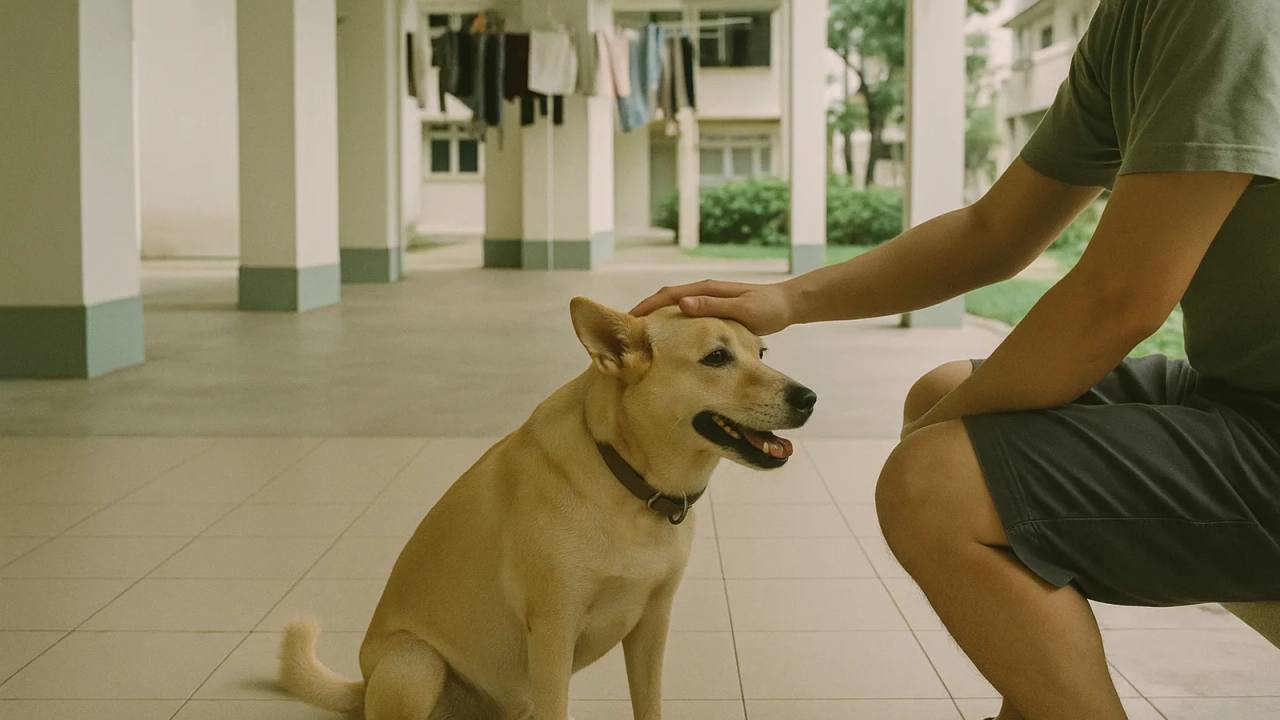
Use Dogs Trust’s walker-selection guidance to structure questions about experience, suitable handling, group compatibility, emergency arrangements and insurance. Meet the person who will actually care for the dog and discuss a supervised introduction. Ask whether substitutes are used and how they are briefed.
For a facility, inspect the relevant licence and conditions where licensing applies. AVS publishes information for animal businesses and boarding operators; a trainer accreditation, a platform profile and a boarding licence are not interchangeable credentials. Do not accept a logo or an unexplained “certified” badge as the whole check. Ask what it covers and verify it with the issuing body.
Build the Singapore handling plan
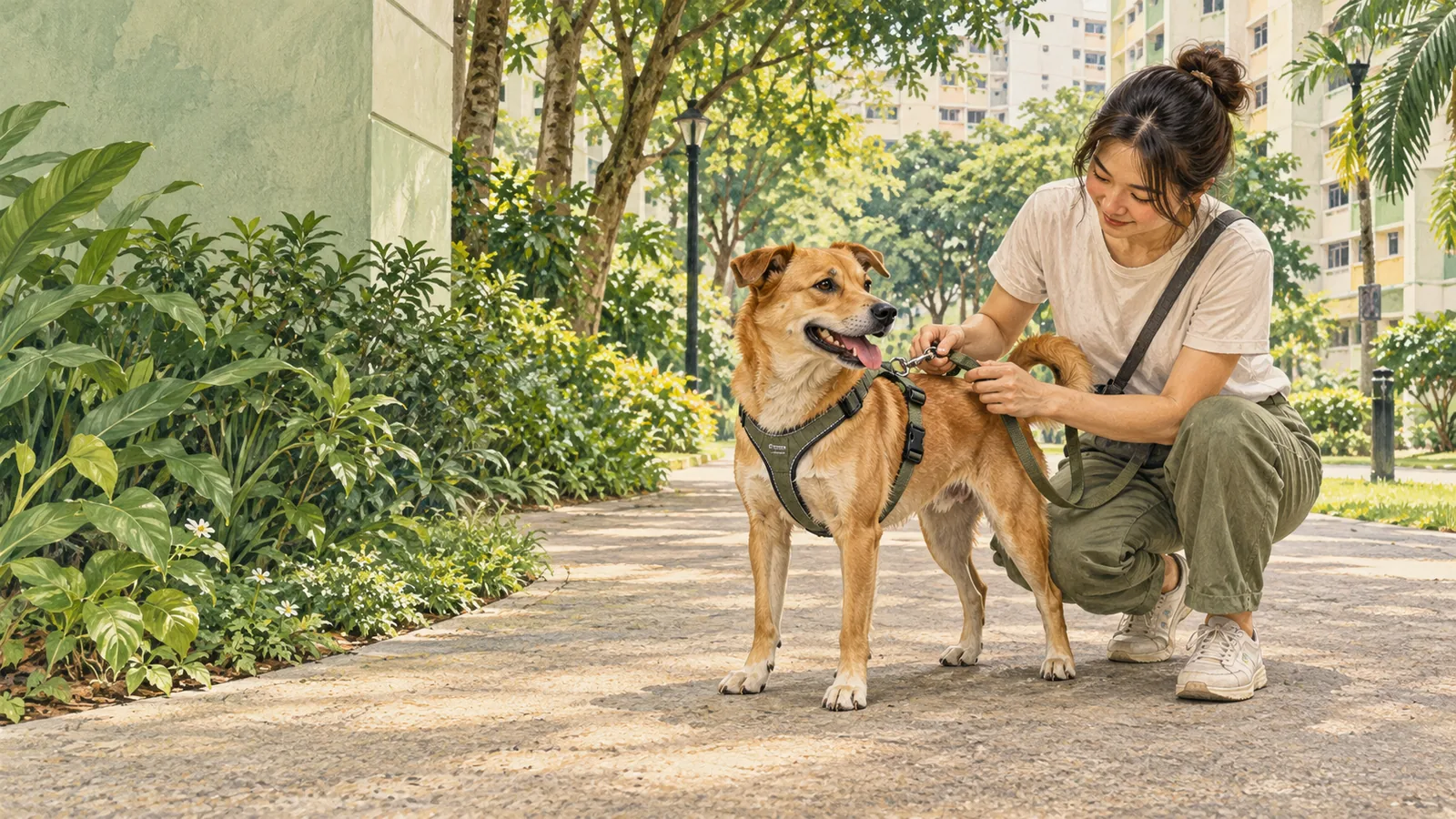
Keep your own AVS licensing records current and tell the provider about the dog’s actual licence conditions. Specified dogs have additional public-place conditions, including leash and muzzle requirements. Agree appropriate equipment, route and control before any outing. Check your dog’s applicable renewal term, current fee category and conditions with AVS.
Ask how walks change with heat, humidity, heavy rain or an uncomfortable surface. A clock time alone is not a safety guarantee. Agree access to water, breaks and an early-return plan. For group walks, ask which dogs are grouped, how introductions are handled and what happens if one dog becomes distressed or unwell.
Compare the whole cost
Get a written quote for the actual schedule. A visit price and a daycare day rate are not directly comparable until you include pickup, drop-off, extra visits, public holidays, cancellation terms and any minimum package. Ask how unused sessions expire and who covers a missed pickup. We have not established a universal cheaper option or a current market-wide price.
For a walker entering your home, agree key or access-code handling and whether anyone else may attend. For daycare transport, ask about restraint, vehicle conditions, travel duration and handover. These practical details can matter as much as the advertised session length.
Insurance, incidents and written instructions
Ask to see current insurance information and clarify who and what it covers. Platform protection may have conditions, exclusions and a different scope from the provider’s own policy. Do not assume an independent walker is uninsured, that a platform guarantees cover, or that a service agreement transfers every legal responsibility. Ask the insurer or platform for a written answer about the scenario that concerns you.
Write down emergency contacts, preferred vet, medical information, handling needs and who can authorise treatment if you cannot be reached. Agree how escapes, injuries, bites or missed visits are reported. For an actual dispute or liability question, the relevant facts and agreement matter; this guide cannot assign liability in advance.
Agree a short care brief before the first walk
Meet the person who will actually collect your dog. Walk through a handover together and use the headings below for private written instructions. These are editorial preparation questions informed by Dogs Trust's walker checklist, not an endorsement of a provider.
- Contacts and authority: who should be called, which vet you use, and what the carer may authorise if you cannot be reached.
- Collection and access: agree the handover, who may enter, how the property is secured and how keys are returned. Share access instructions privately.
- Equipment and handling: identify the agreed harness, lead and cues. Discuss situations to avoid and when the carer should stop and contact you.
- Route and conditions: agree permitted areas and an alternative or early return for unsuitable weather. Check applicable leash, muzzle and venue requirements.
- Food and care instructions: record permitted treats, relevant restrictions and the owner's or vet's instructions. Resolve unclear medical instructions with the vet.
- Timing and backup: agree collection and return, any transport arrangements, and what happens if the usual carer cannot attend.
- Handover afterwards: ask for a factual account of activity, toileting, difficulties and incidents, then revise instructions when circumstances change.
Keep phone numbers, health details, keys and access codes out of public profiles and share links. Give the agreed carer only the information needed for the arrangement.
Next useful step: review your dog's care records in Your Pack. Use the headings above for your private handover instructions. Keep the agreed brief in a private place you and the carer can access.
Review the arrangement through your dog
After a trial, look at comfort, recovery and behaviour rather than only a happy-looking photograph. Ask for a factual account of toileting, activity, rest and any difficulty. Let the provider know about changes in health or routine. A service that worked previously may need adapting.
You can combine suitable care options, but keep instructions consistent and share information with each carer. Do not commit to a large package before you know that the arrangement meets the dog’s needs. The useful outcome is a comfortable dog and a reliable plan, not simply the most hours away from home.
Sources and review
Dogs Trust: choosing a walker; AVS: licensing requirements; AVS: specified dogs; AVS: animal businesses. RSPCA: separation-related behaviour. Sources and care-brief update checked 29 October 2026. Original publication date preserved. Image credit: Udo’s publisher-generated editorial illustration, not a photograph of a named dog, owner or provider. No independent walker endorsement or clinical peer review is claimed.
Common questions
- Is daycare always better for a dog that barks alone?
- No. Assess the cause and whether the dog is comfortable in daycare. Ask for veterinary or behaviour support for distress.
- Which option is cheaper?
- Compare the full written quote, including frequency, transport, packages and cancellations. There is no universal answer.
- Does a platform booking guarantee insurance cover?
- No. Read the current terms and ask who is covered, for which incidents, and under what exclusions.
- What should the care agreement include?
- Scope, schedule, fees, access arrangements, handling needs, emergency authorisation, incident reporting and cancellation or backup plans.
Sources
- Dogs Trust: choosing a walkerdogstrust.org.uk
- AVS: licensing requirementsavs.nparks.gov.sg
- AVS: specified dogsavs.nparks.gov.sg
- AVS: animal businessesavs.nparks.gov.sg
- RSPCA: separation-related behaviourrspca.org.uk
- urbandogowner.com
How we verify content Fact-checking policy How we stay free