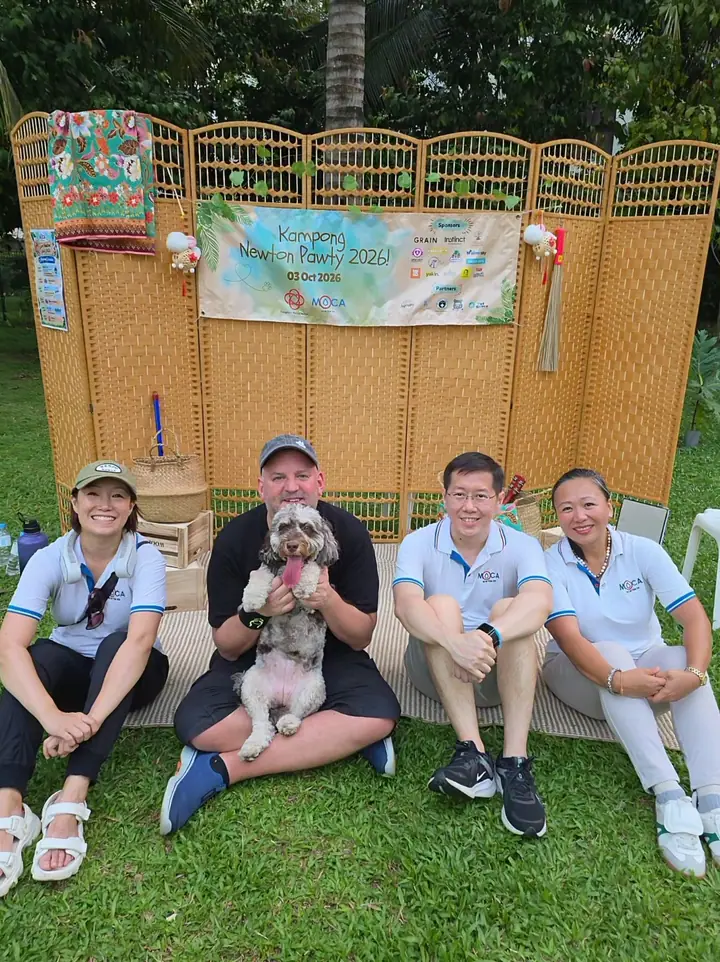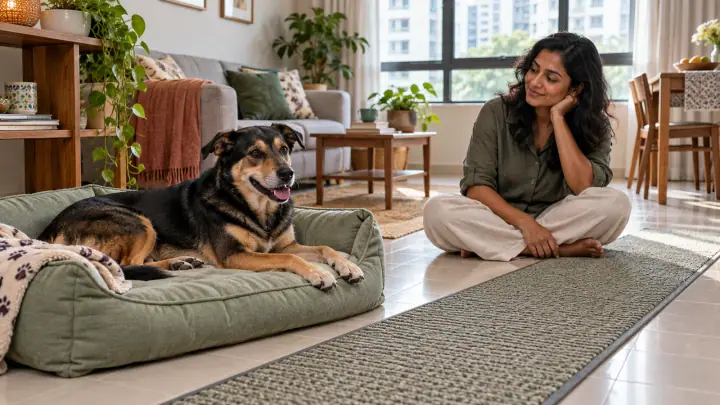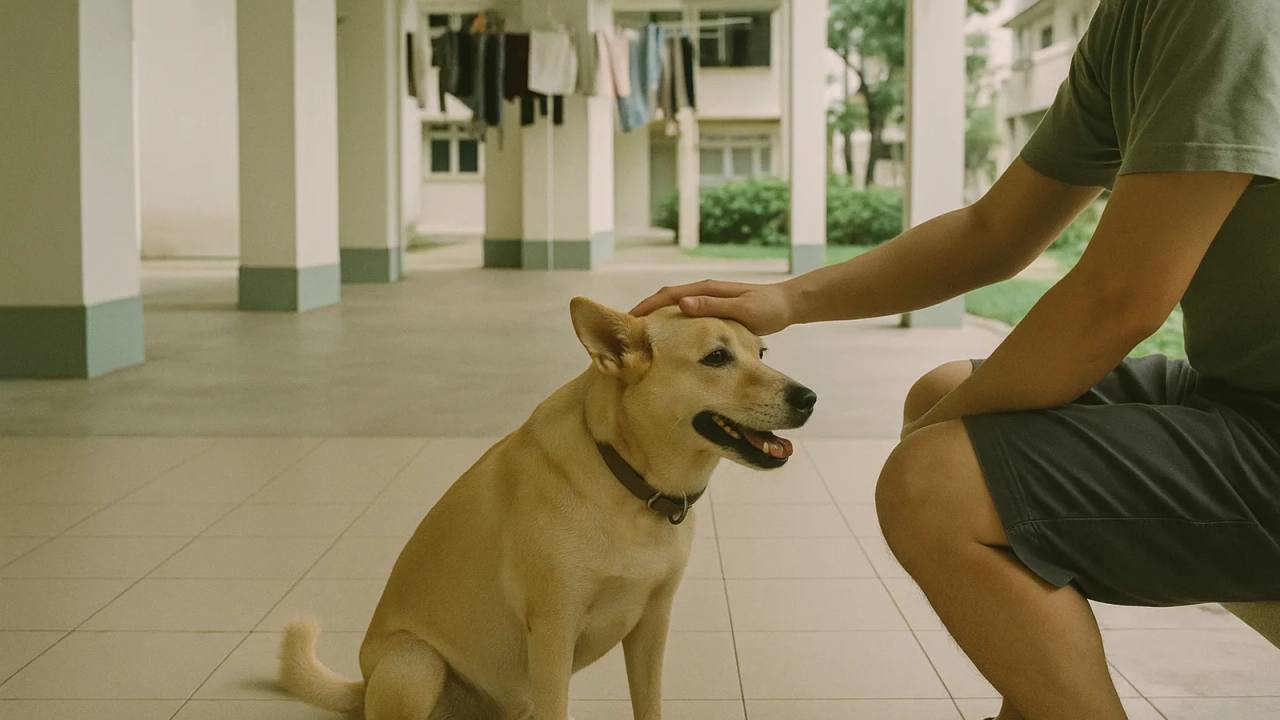

Shelters in Singapore screen adopters harder than most people expect, and adopters often read that as gatekeeping. It is not. It is a response to what happens when the match is wrong. Action for Singapore Dogs says it is facing unprecedented numbers of returned and abandoned dogs alongside rising medical bills. Here is what actually causes a return, and what the screening steps are really testing for.
By the numbers
- 2 weeks ASD homestay trial for an adult dog, before the adoption is finalised
- 55cm Project ADORE height limit for a local mixed-breed dog in an HDB flat
- 600 dogs Dogs ASD has rehomed under Project ADORE to date
- 5 families Families who may reserve the same SPCA animal at once
Adoption applications in Singapore ask questions that feel intrusive. Who lives in your household. What your working hours are. Whether your helper is comfortable with dogs. Photographs of your flat. People assume it is bureaucracy. It is the shelter trying to avoid the outcome it sees most often, which is a dog coming back.
Returns are the problem the screening exists to solve
Action for Singapore Dogs states on its No Dog Left Behind appeal that shelters are facing unprecedented numbers of returned and abandoned dogs alongside exponentially increasing medical bills, and that the result is more dogs turned away and longer stays in kennels. SOSD frames its own process the same way on its adoption process page: careful screening helps prevent impulse adoptions, which often lead to dogs being returned or abandoned again.
A return is not a neutral event for the dog. It loses a home, goes back into a kennel it has already left once, and usually comes back harder to place than it went out. That is why the process front-loads friction.
The steps, and what each one is testing
ASD's adoption procedure runs in sequence, and each stage checks something specific. You browse the listing and complete an application form, which establishes lifestyle and prior experience with dogs. The rehoming team assesses whether any dog suits you, and if not, you are not shortlisted at all. Shortlisted adopters are contacted within 2 weeks. There is then a viewing and bonding session where your interaction with the dog is assessed.
Then comes the part people underestimate: ASD requires photos and videos of your house before the dog goes over, to assess the security and suitability of the residence, and may ask for changes such as window grills. It states plainly that it has rejected applicants at this stage for being unwilling to comply. SPCA runs a parallel model on its adoption page, where all household members must be present during the visit, a premises check may be required, visits take about 1 hour with slots opening 7 days ahead, and an approved animal can be held for up to 3 days. Note that up to 5 families can reserve the same animal, so a dog you have set your heart on is rarely uncontested.
The homestay is the real test
For adult dogs ASD builds in a 2 week homestay period under a signed Homestay Agreement, with no homestay for puppies, and your adoption counsellor in constant contact throughout. At the end of the fortnight the counsellor checks whether you want to proceed, and only then is the adoption agreement signed and the fee collected.
This is the mechanism that converts a would-be return into a decision made early, with support, before paperwork. If you decide during the period not to adopt, the dog is removed from your care. That is a materially better outcome than the same realisation arriving in month four. Use the fortnight properly: leave the dog alone for the length you would actually leave it, walk the real route at the real time of day, and let the household live normally rather than performing.
The mismatches that cause returns
Four recur. The first is energy level. SOSD notes that an adopter who is mostly out of the house or very busy is not suited to a dog needing a lot of daily exercise, and may be better paired with an older or more sedentary dog. Choosing a dog on appearance rather than on daily needs is the single most common route to a return.
The second is hours alone. A dog that has spent its life in a kennel with constant company does not automatically handle eight hours in a quiet flat. The third is a household that was not unanimous. SOSD says it needs to speak to the entire household to be sure everybody is agreeable, and ASD explicitly asks adopters to consult a domestic helper before adopting if the helper will be caring for the dog, since she may be frightened of dogs. An adoption carried by one enthusiastic person against passive resistance from everyone else is fragile.
The fourth is size, and it is the one that is purely structural.
The size trap, and why puppies are not rehomed to HDB flats
Project ADORE lets HDB residents own local mixed breed dogs, and AVS states on its Project ADORE page that the scheme permits a dog up to 55cm in height, with only one dog per residential unit. It was first piloted by the Ministry of National Development in April 2012 and became a permanent scheme in May 2014. NParks announced in 2022 that the height limit had been increased by 10% from 50cm to 55cm and that the weight restriction of 15kg was removed. ASD says it has rehomed more than 600 dogs under the scheme.
The trap is growth. ASD notes on its Project ADORE page that a dog's full-grown size can only be ascertained when it reaches seven to eight months of age, and for that reason it does not rehome puppies to HDB residents under ADORE. A puppy adopted into a flat that later exceeds the limit creates a problem with no good ending, and AVS states that failing to comply with HDB's rules carries a fine of up to S$4,000. Check the dog qualifies as an adult, not as a puppy you hope stays small.
What to do when it starts to wobble
Call the shelter the same day. Not next week, and not once you have decided. During an ASD homestay the counsellor is in constant contact specifically to guide and advise, and after adoption most shelters still take the call. The problems that arrive in the first fortnight, toileting regression, refusing food, hiding, barking at the corridor, are overwhelmingly settling behaviour rather than the dog's settled temperament.
Give the dog a defined quiet space and a fixed routine before you try to fix anything else. Walk at the ends of the day rather than the middle, because a stressed dog in Singapore heat is a dog with less tolerance for everything. If the issue is behavioural and persists past the settling period, get a trainer in early: under Project ADORE, basic obedience training with an approved trainer is compulsory anyway, so budget for it whether or not the scheme applies to you. If you spot a dog in distress elsewhere, SPCA runs a 24/7 emergency rescue hotline on 6287 5355, and the AVS Animal Response Centre takes animal-related enquiries on 1800 476 1600.
The honest version of the takeaway
Sometimes returning the dog is right, and shelters would rather have it back than have it neglected or passed on privately. But most returns are avoidable, and they are avoidable at the application stage rather than the crisis stage. Answer the intrusive questions honestly, including the ones about hours away from home. Bring every household member to the viewing. Use the whole homestay rather than deciding on day three. Confirm the dog fits your housing type as an adult. And when something goes wrong in week one, treat it as information rather than a verdict.
Common questions
- Why is the application process so long?
- Because it is doing the work that prevents a return. ASD contacts shortlisted adopters within 2 weeks of application, then runs a discussion, a viewing and bonding session, a review of photos and videos of your home, and a 2 week homestay for adult dogs.
- What is the homestay period for?
- It is a trial. ASD requires a signed Homestay Agreement and stays in contact throughout, and if you decide at any time during the period not to adopt, the dog is removed from your care rather than returned later.
- Can a puppy outgrow the HDB rules?
- It can, which is why ASD does not rehome puppies to HDB residents under Project ADORE. It notes that a dog full-grown size can only be ascertained when it reaches seven to eight months of age, and the ADORE limit is 55cm in height.
- Does everyone in my household really need to agree?
- Shelters treat it as decisive. SOSD says it needs to speak to the entire household to be sure everybody is agreeable, and ASD asks adopters to consult a domestic helper before adopting if the helper will be caring for the dog.
- What should I do if it is going badly in week two?
- Call your adoption counsellor that day rather than waiting. During an ASD homestay the counsellor is in constant contact specifically to guide and advise, and most early problems are settling behaviour rather than the dog you have adopted.
Sources
- ASD homestay trial period for an adult dogasdsingapore.com
- 2 weeks
- Project ADORE height limitavs.nparks.gov.sg
- 55cm
- 2012
- 2014
- Dogs ASD has rehomed under Project ADOREasdsingapore.com
- 600 dogs
- Families who may reserve the same SPCA animalspca.org.sg
- 5 families
- 3 days
- 7 days
- 1 hour
- Minimum age to foster through SPCAspca.org.sg
- 18
- SPCA 24/7 emergency rescue hotlinespca.org.sg
- 6287 5355
- How long ASD takes to contact a shortlisted adopterasdsingapore.com
- within 2 weeks
- Maximum fine for breaching HDB pet rulesavs.nparks.gov.sg
- S$4,000
- Project ADORE weight cap that was removednparks.gov.sg
- 15kg
- 50cm
- AVS Animal Response Centre, 24 hoursavs.nparks.gov.sg
- 1800 476 1600
- Named breeds on the HDB approved listhdb.gov.sg
- 61
- $4,000
Start with a quiet moment together →A small idea to try, with progress kept in your Pack.
How we verify content Fact-checking policy How we stay free