
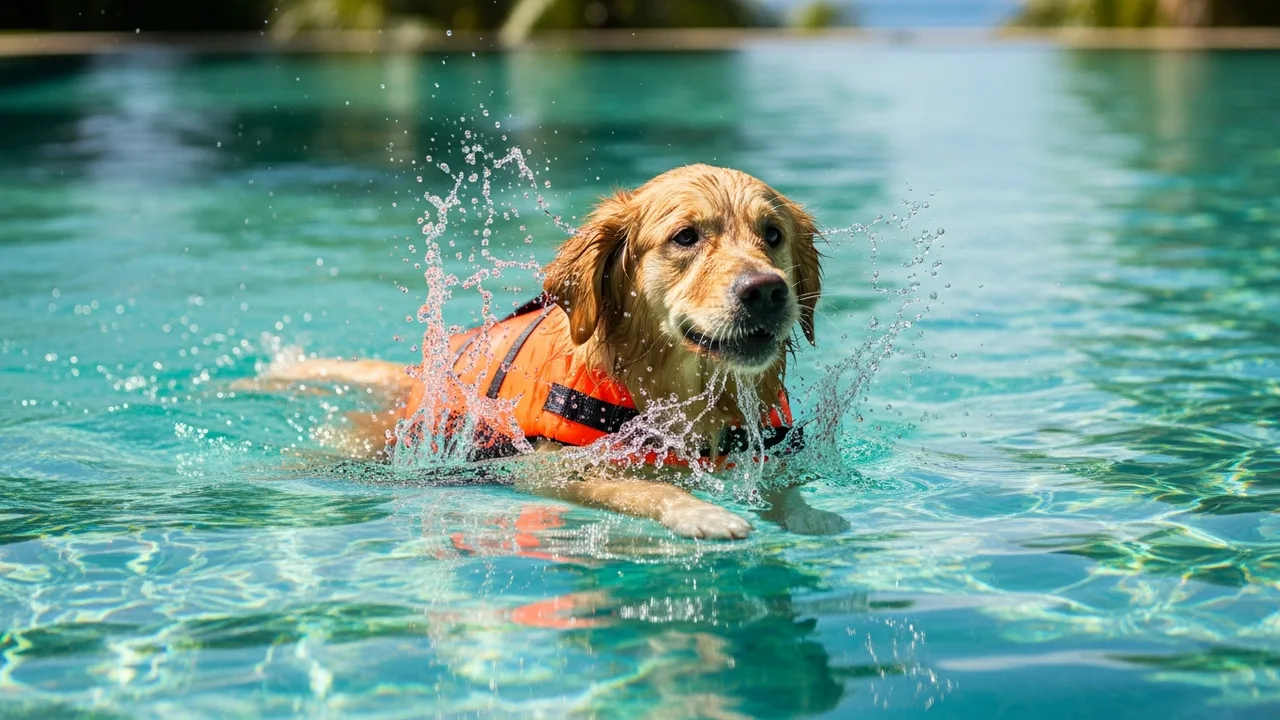

Water is one of the best answers to Singapore’s heat. A swim cools a dog down, builds fitness without hammering the joints, and delights the many dogs that love the water, which makes it ideal for older dogs, recovering dogs and any dog that overheats on land. The island gives you two routes to it: the coast, where dogs are welcome on-lead at several beaches, and dedicated dog pools built for swimming and rehabilitation. This guide covers both, along with the rules and the safety habits that keep a water session happy.
Why water is the tropics’ best exercise
In a climate where the heat limits so much of what a dog can safely do on land, water is a gift. A swim works the whole body hard while the water carries the dog’s weight, so it builds fitness and muscle without the pounding that running and jumping give the joints. And unlike almost every other form of exercise here, it cools the dog down instead of heating it up, which sidesteps the heatstroke risk that shadows land sports in Singapore. For a great many dogs it is also pure joy, a chance to do something instinctive and fun.
That combination makes water activities especially useful for the dogs that struggle elsewhere. An older dog with stiff joints, a dog recovering from surgery or injury, an overweight dog easing back into shape, and any dog that overheats quickly can all benefit from swimming when harder land exercise is off the table. It is worth saying that not every dog loves the water, and that is fine; a dog should never be forced. But for the many that do, and for the many that need a low-impact outlet, water is one of the most valuable activities on the island.
Taking your dog to the beach
The coast is the free, open-air route to the water, and several of Singapore’s beaches welcome dogs. Spots that dog owners use regularly include Sentosa’s Tanjong Beach, East Coast, Changi Beach Park and Pasir Ris, and our beaches directory gathers the coastal locations we hold. The one rule that applies everywhere is the leash: under NParks regulations, dogs must be kept on the lead at all times on public beaches, and there is no off-leash public beach in Singapore. The single exception by the sea is the fenced Palawan Dog Run on Sentosa, where a dog may legally be off-lead within the enclosure.
A good beach trip is a well-timed and well-prepared one. Go early or late to avoid the fierce midday sun and the hottest sand, both for comfort and to protect paw pads. Bring plenty of fresh drinking water, shade if you can, and poo bags, and keep the leash on as the law requires. Be mindful of currents and depth, since a beach is not a controlled pool, and keep a novice or weaker swimmer in a life jacket and close to shore. Always check the rules for the specific stretch you are visiting, because access can vary and some areas restrict dogs entirely; the NParks guidance on where dogs are and are not allowed is the reference.
Dedicated dog pools and hydrotherapy
For controlled, year-round swimming that does not depend on the tide or the weather, Singapore has dedicated dog pools, and they fall into two broad types. The first is recreational swimming, a safe, enclosed pool where a dog can swim for fitness and fun under supervision. Fort Canine Swimming Club runs a large indoor pool geared to recreational swims, and Hydro Canine offers recreational sessions alongside its rehabilitation work in a heated indoor pool. These are ideal for a dog that loves to swim but has no safe open water, or an owner who wants a controlled environment for a first-time swimmer.
The second type is clinical hydrotherapy, which is swimming as rehabilitation rather than recreation. Facilities such as Hydro Paws Plus, and the rehabilitation side of Hydro Canine, use water to help dogs recover from surgery or manage conditions such as hip dysplasia and arthritis, often with a water treadmill and a trained therapist guiding each session. If your dog has a medical need, hydrotherapy should be arranged in consultation with your vet, who can refer you and advise on what the dog needs. For any pool, book directly, confirm current sessions and pricing, and let the facility know if your dog is nervous or has never swum, so they can introduce it gently.
Swimming safely: the habits that matter
Whether at the beach or in a pool, a handful of habits keep water time safe and enjoyable. Start with a canine life jacket for any dog that is a beginner, an older or weaker swimmer, or simply unsure, since it keeps the dog afloat and builds confidence while you both learn. Introduce water gradually and never force a hesitant dog in; a bad early experience can put a dog off water for good, whereas a patient, low-pressure introduction often turns a nervous dog into an enthusiast. Let the dog choose to go deeper in its own time.
During and after the swim
During and after the session, watch and tend to the details. Dogs tire in water faster than they show, so watch constantly for fatigue and get your dog out before it is exhausted rather than after. Offer fresh water throughout so the dog is not tempted to drink sea or pool water, which can make it ill. When you are done, rinse the coat to wash off salt, sand or pool chemicals, and dry the ears properly, because trapped moisture is a common cause of ear infections in dogs that swim.
Get these basics right and water becomes what it should be: the safest, most refreshing exercise your dog can get in this climate. If anything seems off afterwards, our first aid guide and a call to your vet are the right next steps.