
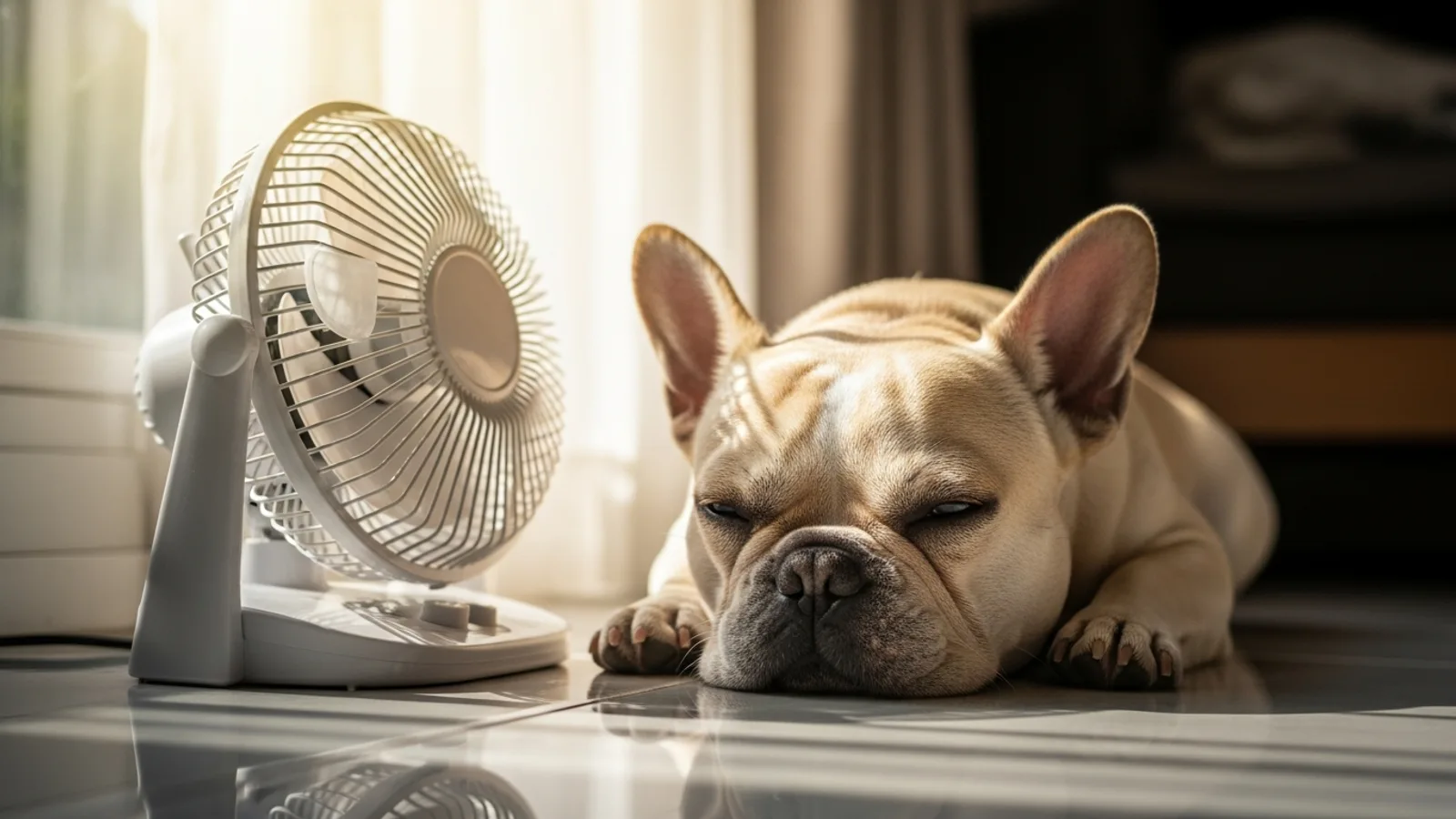

Pugs, French bulldogs, English bulldogs and shih tzus are among the most popular dogs in Singapore, and they are affectionate, characterful companions. They also carry a real disadvantage in this climate, one worth understanding rather than glossing over: the flat face that makes them so appealing also makes it harder for them to cool down. This guide sets out why, what the research says, how to care for a flat-faced dog well if you have one, and what to weigh honestly if you are choosing. It is written to inform, not to vilify any breed or judge any owner.
By the numbers
- ~2x Heat-related illness risk for flat-faced dogs versus longer-muzzled dogs (RVC VetCompass)
- BOAS Brachycephalic obstructive airway syndrome: the airway condition behind the risk
- 38.3 to 39.2 C A dog normal core temperature; flat-faced dogs reach the danger zone faster
- Cool bookends The only safe exercise windows for a flat-faced dog here: early morning and after dark
- RFG scheme The Kennel Club Respiratory Function Grading scheme for bulldogs, frenchies and pugs
- Weight first Excess weight worsens airway function; a lean dog copes better with heat
Why the flat face matters in the heat
A dog cools itself mainly by panting, which moves air across the moist surfaces of the nose, mouth and airway to lose heat through evaporation. A brachycephalic dog has been bred for a shortened skull, which packs the same soft tissue into a smaller space and narrows the nostrils and airway. The result, often described as brachycephalic obstructive airway syndrome, or BOAS, is that panting is simply less efficient, so a flat-faced dog does more work to move less air. In a temperate climate a dog can often compensate. In Singapore, where the air already sits at 30 to 34 degrees with humidity above 80 percent, the margin is thin, and a flat-faced dog reaches the danger zone faster than a long-muzzled one.
What the research says
This is not folklore. Large-scale veterinary research from the Royal Veterinary College's VetCompass programme has found that brachycephalic dogs are at around twice the risk of heat-related illness compared with dogs that have longer muzzles, and that exertional heat illness, brought on by activity, is a major pathway. The British Veterinary Association has campaigned for years for prospective owners to prioritise a dog's ability to breathe over a fashionable flat-faced look. None of this is a reason to think less of the dogs themselves; it is a reason to care for them, and choose them, with the climate in mind.
If you already have a flat-faced dog
Most owners of flat-faced dogs are here, and the message is simple: you can absolutely care for one well, it just takes a bit more deliberate management. The essentials:
- Exercise only in the cool bookends. Before about 8am and after sundown, and skip walks entirely on the worst days for indoor play instead.
- Keep the weight off. Excess weight worsens airway function and heat tolerance directly, so a lean dog copes far better.
- Avoid humid exertion and stress. Excitement and heat stack up; a flat-faced dog that gets over-excited in warm air can tip into trouble quickly.
- Learn the airway signs. Noisy or laboured breathing, gagging, and blue-tinged gums warrant a vet conversation, and some dogs benefit from corrective airway surgery.
- Know the heatstroke steps cold. Flat-faced dogs give you less time, so act at the very first sign, using our first-aid page.
If you are still choosing
This is where an honest word helps most. If you are open to any breed, a longer-muzzled dog simply has an easier time in Singapore's heat, and that is worth weighing alongside size, energy and temperament in our wider breed guides.
If your heart is set on a flat-faced breed, the single most protective choice you can make is to favour healthier conformation over an extreme flat face: more open nostrils, a slightly longer muzzle, a fitter build. Ask the breeder about health testing, and for French bulldogs, bulldogs and pugs, about the Kennel Club and University of Cambridge Respiratory Function Grading scheme, which grades how well a dog breathes. A good grade is a genuine signal. Breed name alone tells you little; how the individual dog breathes at rest tells you a lot.
A fair word on the dogs themselves
None of this is the dogs' fault, and it is not a verdict on the people who love them. Flat-faced dogs are gentle, funny and devoted, and a well-bred, well-managed one can live a happy life here. The point of this guide is not to steer you away from a breed you love, but to make sure the decision, and the daily care, are made with the climate understood rather than discovered the hard way. Informed owners keep these dogs safest, and that is the whole aim.
Frequently asked questions
What does brachycephalic mean, and which breeds are affected?
Why do flat-faced dogs struggle in Singapore heat specifically?
Does this mean I should not get a flat-faced dog?
I already have a flat-faced dog. How do I care for one well in the heat?
What is the Kennel Club respiratory grading scheme?
Are some flat-faced dogs better off than others?
Notice one little habit together →A small idea to try, with progress kept in your Pack.