
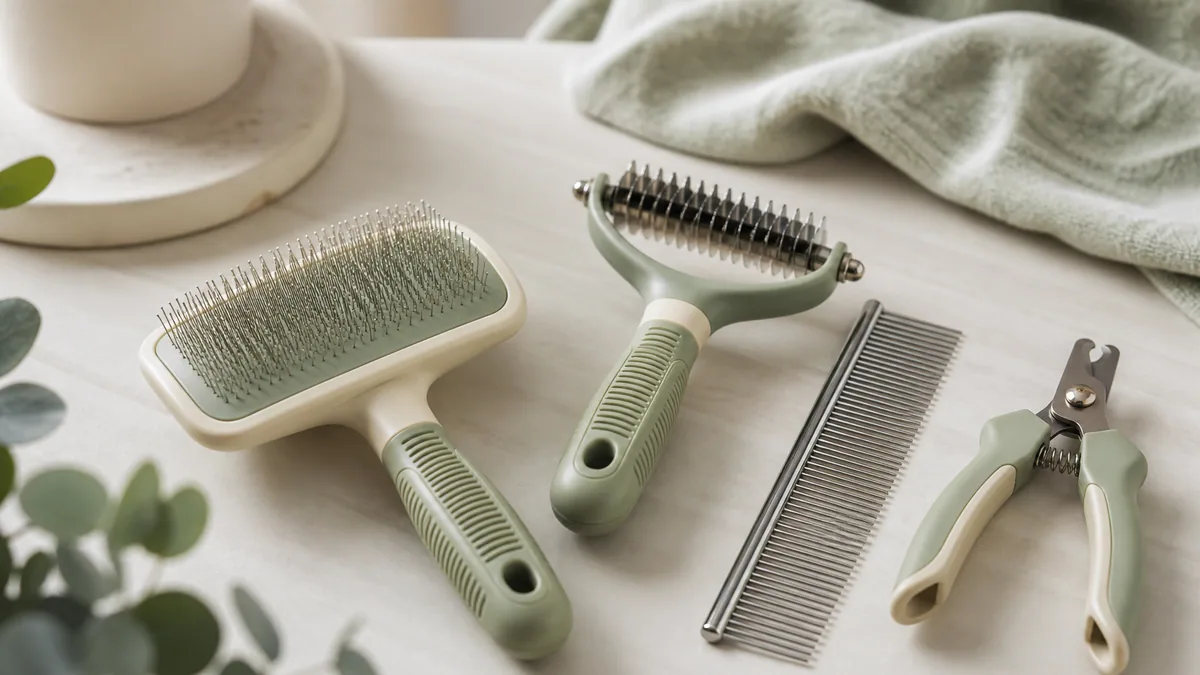

Walk into any pet shop and the grooming wall offers fifty brushes, most of which your dog does not need. The thing that decides your kit is not the breed on the label or how the dog looks, but the coat: a husky, a poodle and a beagle need almost entirely different tools, and buying the wrong brush is both a waste and, in the case of a shaved double coat, actively harmful. Add Singapore's humidity, which turns a slow-drying coat into a skin problem, and the local routine looks different from the one in a grooming video filmed somewhere cooler. This is how to buy for the coat and the climate you actually have.
By the numbers
- 5 coat types Double, curly/wool, silky, smooth and wire, each needs different tools
- 64 to 95% Singapore humidity range, why fast drying is a grooming essential here
- Never shave A double coat should not be shaved; it insulates and protects the skin
- 3 shared basics A metal comb, nail clippers or grinder, and a gentle shampoo suit any dog
- 4 to 8 weeks Typical professional grooming cycle for a clipped or wool coat
- S$30 to 80 Typical starter home-grooming kit for one dog
Start with the coat, not the dog
Every sensible grooming decision starts with identifying the coat, and there are broadly five. A double coat has a dense soft undercoat under a coarser topcoat and sheds in tufts; huskies, shibas and retrievers wear it. A curly or wool coat is springy and keeps growing rather than shedding; poodles and their crosses. A silky coat is long and fine. A smooth coat is short and close-lying. A wire coat is coarse and bristly. The American Kennel Club sets out these types and the care each needs, and the coat, not the breed name, is what you buy tools for. Our grooming by coat type explainer goes deeper on each.
The kit each coat needs
Three basics suit any dog: a metal comb to find tangles and check your work, nail clippers or a grinder, and a gentle dog shampoo. On top of those, buy the brush the coat demands. A double coat needs an undercoat rake to lift the dead undercoat and a slicker brush for the topcoat, and it must never be shaved, because, as the AKC's double-coat grooming guidance explains, the coat insulates against heat and protects the skin from sun. A curly or wool coat needs a slicker and a comb and regular clipping to prevent matting. A silky coat wants a pin brush and comb. A smooth coat needs little more than a rubber curry and a bristle brush. A wire coat may need occasional hand-stripping, usually a job for a groomer. Buy the coat-specific brush well and keep everything else simple.
What the humidity changes
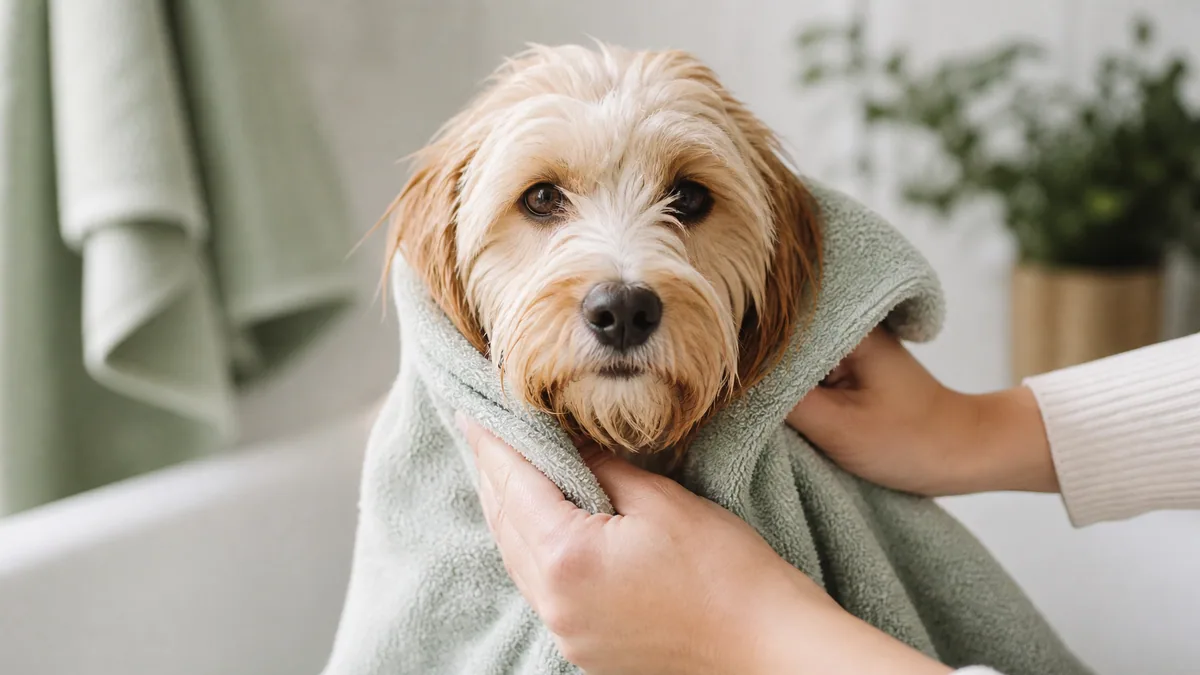
Here is where Singapore rewrites the routine. Daily relative humidity commonly sits in the 80s and swings from the mid-60s to the mid-90s per cent, which means a coat left damp after a bath, a rainy walk or a swim dries slowly, and slow-drying fur close to the skin is where trouble starts: mats, hot spots, and fungal or bacterial skin infections. The tool that matters most locally is therefore a good drying setup, a high-velocity or stand dryer for a thick or curly coat, plus thorough towelling, and a habit of drying the dog properly every time it gets wet.
The humidity also raises the stakes on matting. A mat is not just untidy; in this climate it traps moisture against the skin and becomes a hot spot fast. Regular brushing to the coat's schedule prevents mats forming, and prevention is far kinder than de-matting a tight one, which is uncomfortable and sometimes has to be clipped out. Keep ears dry and checked too, since warm damp ears are prone to infection in the tropics.
DIY versus the professional groomer
Split the work by skill and risk. Do the regular maintenance at home: brushing to the coat's schedule, nail trims, ear checks, and baths with proper drying afterwards. This is the routine that keeps the coat healthy between appointments, and it is where your home kit earns its keep. Leave the skilled jobs to a professional: clipping a wool coat to the right length, hand-stripping a wire coat, safely de-matting, and full baths and dries for large or heavily coated dogs that are hard to manage at home.
A clipped or wool coat typically needs a groomer every four to eight weeks; a smooth-coated dog may never need one. When you do book, our groomers directory lists salon and mobile options across Singapore, and the wider grooming picture, including the health reasons behind the routine, sits in our grooming explainer. Get the home kit right for the coat, dry thoroughly every time, and the professional visits become a top-up rather than a rescue.
Frequently asked questions
How do I know what coat type my dog has?
What grooming tools does every dog owner need?
Should I shave my double-coated dog in the heat?
Why does grooming matter more in Singapore's humidity?
What can I do at home and what needs a professional?
How often should I bath and brush my dog?
Grooming kit on Shopee SG
Furminator Deshedding Tool for Dogs (Medium, Short Hair)
The one tool that makes living with a shedding dog in an HDB actually manageable.
Affiliate link. UDO earns a small commission if you buy.