
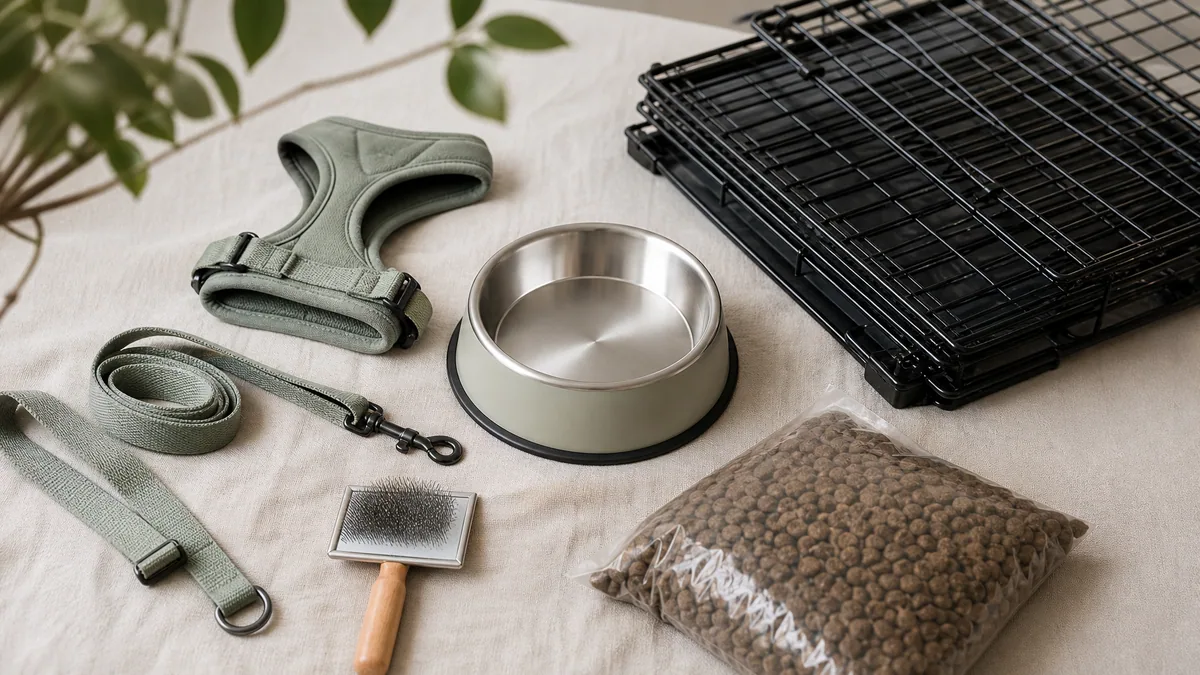

Getting a dog turns you into a shopper overnight, and the market is happy to help. The trouble is that the loudest products (matching outfits, gadget feeders, designer collars) sit at the bottom of what actually keeps a dog well, while the things that carry the real weight (a harness that fits, a food that meets a proper nutrient standard, a crate the right size) are easy to get wrong in a rush. This guide maps the categories, sorts them by what to buy first, puts honest Singapore cost ranges on them, and flags where a bargain is a bargain and where it is a liability.
By the numbers
- S$300 to 600 Typical first outfitting for a new dog, before food and vet care
- 9 categories The shopping map: food, treats, gear, grooming, health, toys, bedding, bowls, safety
- 18% / 22.5% AAFCO minimum crude protein (dry matter): adult vs puppy food
- Y-shaped The harness shape welfare bodies recommend, clear of the throat and shoulders
- 3 buys first Harness, food and crate carry the most weight; the rest can wait
- 64 to 95% Singapore daily humidity range, which drives coat, storage and gear choices
What are the dog product categories that actually matter?
Strip the market back and a dog needs nine kinds of thing. Food is the biggest recurring cost and the one worth getting right, since it does more for health than anything else you buy, and the WSAVA nutrition guidelines are the standard to judge it by.
Treats double as training currency, so they matter more than their price suggests. Gear means the harness, lead and identity tag that get you out the door safely. Grooming tools keep a coat healthy between salon visits, which the humidity here makes non-optional. Health and parasite prevention covers the monthly tick, flea and heartworm products your vet recommends, plus a small first-aid kit. Toys are enrichment, not decoration, and the right one saves your furniture. Bedding and a crate give the dog a place that is theirs. Bowls want to be stainless steel, not plastic. And a handful of safety items (a seatbelt clip, a cooling mat, a well-fitted muzzle for vet trips if needed) round it out.
Notice what is not on that list: clothing, perfume, most gadgets, and anything sold mainly on how cute it looks. None of it is wrong, exactly, but none of it is a need, and a new owner spending on the extras before the essentials is the most common way to overspend and under-equip at the same time.
What should a new owner buy first?
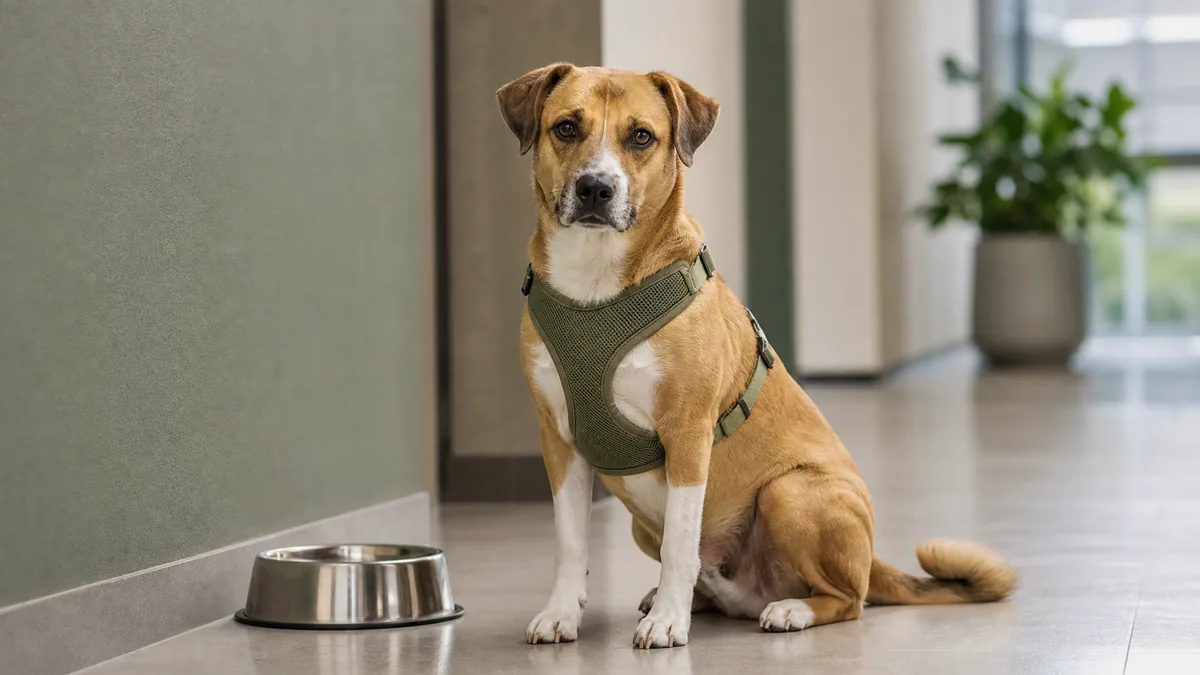
Buy in order of how much each item has to do. Three things carry the load. First, a well-fitted harness and a plain lead, because getting the dog outside safely is day one and a badly fitting harness either chokes or slips. Second, the right food, matched to the dog's life stage against the AAFCO nutrient profiles, since a growing puppy and a senior have genuinely different needs and the wrong food shows up in the dog months later. Third, a crate or bed sized to the dog, which does more for settling and toilet training than any gadget. Our harness, food and crate guides each go deep on the decision.
Around those three, add the cheap-but-essential layer: stainless steel bowls, an identity tag engraved with your number (the legal microchip is separate, and our microchipping guide explains why you want both), poo bags, puppy pads if you are toilet training in a flat, a couple of safe toys, and the grooming basics for your dog's coat. That is a complete, sensible starting kit. Resist the urge to buy the deluxe version of everything before the dog has told you what it actually likes.
What do dog supplies cost in Singapore?
Prices move and vary by brand, so treat these as typical market ranges rather than quotes, and always check the current price before you buy. A one-off first outfitting usually lands around S$300 to S$600, weighted toward the larger dog because the crate, bed and harness all scale with size. Within that, a decent harness is typically S$20 to S$60, a crate S$60 to S$200 depending on size and whether it folds for travel, a proper bed S$30 to S$120, stainless bowls a few dollars each, and a starter grooming kit S$30 to S$80.
The recurring numbers matter more than the one-off. A mid-range complete dry food for a medium dog is commonly S$40 to S$90 a large bag, lasting several weeks; wet and fresh feeding cost more. Monthly parasite prevention runs a modest but real sum your vet will price. None of this is the expensive part of dog ownership, which is healthcare over a lifetime, and our lifetime cost calculator puts the whole picture in one place. The point of spending well on gear is not to save money up front but to avoid buying the same thing twice.
Where should you buy, and what are the red flags on cheap imports?
Split your buying by what the item has to survive. For consumables and repeat buys (food, poo bags, pads, simple mats) online is convenient and usually cheaper, and Shopee SG carries most of the mainstream brands. For anything where fit or sizing decides whether it works (harnesses, crates, beds, muzzles) a physical pet shop where you can measure and try the item on the dog will save you the most common wasted purchase there is: the thing that does not fit.
Cheap imported gear is where care pays off. A harness is only as good as its stitching and buckles, and a very cheap one can give way at the worst moment near traffic, which is why welfare bodies such as the RSPCA stress well-fitted, secure walking gear; a crate is only as safe as its door latch and frame; a chew or a toy that splinters or sheds small parts is a choking and blockage risk.
The red flags are familiar once you know them: no size chart or a vague one, stitching that looks sparse in the photos, buckles that are thin plastic, reviews that mention breakage, and no clear returns. For load-bearing safety items, buy quality and inspect it when it arrives. For everything low-risk, cheap is fine.
When should you skip a category entirely?
Plenty of the market is optional, and a few parts of it you can ignore outright. Clothing is the clearest: a dog in Singapore's heat does not need a coat, and most outfits are for the owner, not the dog. Scented sprays and perfumes can irritate skin and mask a problem you would rather notice. Novelty gadgets mostly solve problems you do not have. Automatic feeders, pet cameras and GPS trackers are the sensible exceptions: genuinely useful if they fix a real constraint in your household, a waste if bought on impulse.
The honest rule is to buy for the dog and the household you actually have, not the one in the listing photo. When you are unsure, wait. A week or two of living with the dog tells you far more about what it needs than any product page, and the money you did not spend on the wrong bed is money toward the right one.
The four buying guides
Each of these takes one category and turns it into a decision you can make with confidence, not a brand you have to trust. They are frameworks, not product reviews.
-
How to choose dog food
A decision framework by life stage, breed size, activity and allergen screening, anchored to the WSAVA and AAFCO standards rather than a brand league table.
Read the guide → -
How to choose a dog harness
Pull and reactivity, chest fit, the Y-shape welfare bodies favour, breathable fabric for the heat, and exactly how to measure your dog.
Read the guide → -
How to choose a dog crate
HDB-flat realities, travel-mode dual use, cooling airflow, and sizing to the breed so the crate is a den rather than a cage.
Read the guide → -
Grooming tools for the climate
How coat type dictates the kit, what the humidity changes, and where the line sits between the home routine and the professional groomer.
Read the guide →