By UrbanDogOwner Editorial . Last reviewed 2026-07-06
A crate is one of the most misunderstood things you can buy for a dog. Bought and used well, it is a den: a quiet, safe place the dog chooses for rest, a tool that makes toilet training click, and the safest way to travel. Bought or used badly, it is a cage, and the difference is entirely in the size, the placement and the training. This guide is about getting the purchase right so the training can do its work, and it is a decision, not a brand.
By the numbers
Stand, turn, lieThe three moves a correctly sized crate must allow
1 dividerGrows a puppy crate to adult size while keeping the space den-sized
Wire vs plasticOpen wire ventilates better than enclosed plastic in the heat
IATA rulesA crate for flying must meet stricter airline live-animal container standards
1 dogThe HDB limit per flat, which shapes how many crates you plan for
S$60 to 200Typical crate price here, by size and whether it folds for travel
Why a crate at all?
A crate earns its place by doing three jobs. It gives the dog a den, a defined safe space to retreat to, which matters in a busy flat with visitors, children or noise. It makes toilet training work, because a dog will not usually soil the small space it sleeps in, so a correctly sized crate teaches bladder control faster. And it is the safest way to travel, in a car or on a plane. Training bodies such as the American Kennel Club treat the crate as a positive-association tool built up gradually, never a punishment. Used that way, most dogs come to like it. Used as a place you shut a dog away for hours, it fails, and welfare guidance from the likes of the RSPCA is clear that a crate is short-term and voluntary, not a dog's living quarters.
Size it to the dog, with room to grow
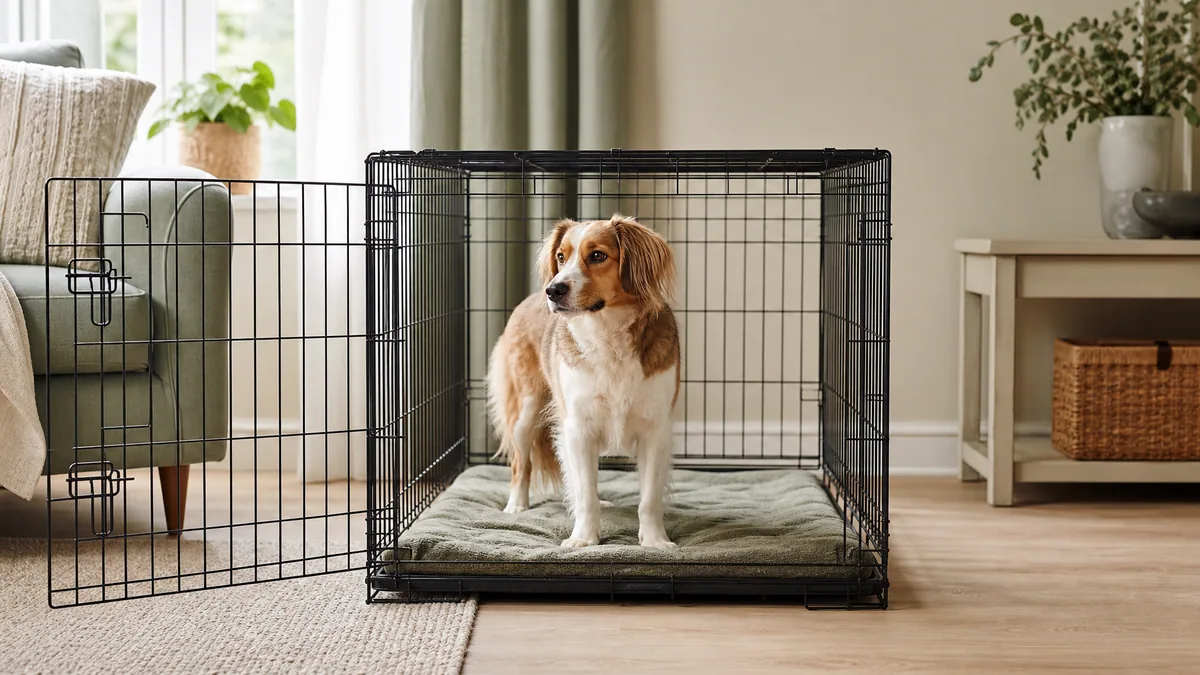
The rule is simple and it is the whole decision: the dog must be able to stand up without ducking, turn around, and lie fully stretched on its side, with a little room to spare and no more. Too small is cramped and unkind. Too big quietly breaks toilet training, because a dog is happy to toilet at one end of a roomy crate and sleep at the other, which is the opposite of what you want. Measure your dog rather than trusting a breed chart, since two dogs of the same breed can differ by a size.
For a puppy, do not buy small and replace it later. Buy the crate for the dog's adult size and use a divider panel to keep the usable space den-sized while the puppy is little, sliding the divider back as it grows. One crate then lasts the dog's life and the toilet-training logic holds the whole way through. Pair the crate with the routine in our puppy toilet-training guide, which is written for exactly the HDB-flat case.
HDB flats: footprint, placement and the one-dog rule
Space is the constraint that shapes everything in a flat. A large-breed crate has a real footprint, so measure the floor space against the crate's dimensions before you buy, and pick a quiet, shaded corner away from the front door, the busiest walkway and direct afternoon sun, so the dog can settle without being startled or cooked. If floor space is genuinely tight, a folding wire crate that packs flat between uses can be what makes a crate viable at all.
Keep the wider rules in view too. HDB flats allow one dog, which sets how many crates you will ever plan for, and the approved-breed and licensing picture sits in our HDB dog rules hub. Planning the crate corner alongside the rest of the flat, the food storage, the bed, the pee-pad station, is worth ten minutes before the dog arrives, because moving a settled dog's den later is harder than placing it well the first time.
Travel-mode dual use: the car and the plane are different
Many owners want one crate to do double duty, and it can, up to a point. For the car, a crate is the safest way for a dog to travel, provided it is secured so it cannot slide or tip in a stop, and a folding wire or a sturdy fabric crate handles local trips well.
Flying is a different standard entirely. Airlines require a rigid, well-ventilated container that meets the IATA live-animal container rules: specific size (the dog must be able to stand and turn), ventilation on multiple sides, a secure door and no wheels, among other requirements. A soft home crate will not be accepted at check-in. If you expect to fly the dog, treat the travel container as a separate purchase to the airline's exact specification, buy it early so the dog can get used to it, and follow the export and import steps in our cross-border guide.
Cooling and airflow in the heat
In Singapore's climate, ventilation is a safety feature, not a nicety. An open wire crate lets air move freely around the dog, while an enclosed plastic carrier traps warmth and can become uncomfortably hot in a still room, so for home use in the heat, wire generally wins. Keep the crate out of direct sun and off a hot exterior wall, skip the thick fleece bedding that holds heat against the dog, and use a thin mat or a cooling mat instead.
Heat-sensitive and flat-faced dogs need this care most, and no dog should be left crated in a warm, poorly ventilated room. Airflow, shade and a cool surface turn a crate from a hot box into the comfortable den it is meant to be, and it works alongside the wider hot-weather care in our heatstroke first-aid guide.
Frequently asked questions
Is it cruel to crate a dog?
Not when it is done properly. A crate introduced gently becomes a den the dog chooses for rest and security, and it helps with toilet training, safe travel and giving a dog somewhere to decompress. It becomes unkind only when it is misused: as a punishment, or to confine a dog for hours on end, or forced on a distressed dog with no build-up. The rule welfare bodies set is that a crate is a short-term, positive space, not a place a dog lives.
What size crate does my dog need?
Measure the dog standing and lying, then choose a crate that lets it stand without ducking its head, turn around comfortably and lie fully stretched on its side, with a little room to spare and no more. Too small is unkind; too big undermines toilet training, because a dog will happily toilet in one end of a large crate and sleep in the other. Size to the dog, not to a generic breed chart, since dogs of the same breed vary.
How do I crate-train a puppy that is still growing?
Buy the crate for the adult size and use a divider panel to keep the usable space den-sized while the puppy is small, moving the divider back as it grows. That gives you one crate for the dog's life and keeps the toilet-training logic intact throughout. Pair it with the routine in our puppy toilet-training guide, and never use the crate as a place you send the puppy when you are cross with it.
Where should I put a crate in an HDB flat?
A quiet corner, out of direct sun and away from the front door and the busiest walkway, so the dog can settle without being startled or overheating. Measure the footprint before you buy, since a large-breed crate takes real floor space in a flat. Keep in mind the HDB one-dog rule when planning, and if space is tight, a folding crate that packs away between uses can be the difference that makes it work.
Can I use the same crate for travelling?
For the car, yes, if it is secured so it cannot slide or tip, and a folding wire or sturdy fabric crate works for local trips. For flying, no: airlines require a rigid, ventilated container that meets the IATA live-animal rules, with specific fixings, door and size requirements, and a soft home crate will not be accepted. If you plan to fly the dog, buy the travel container to the airline's spec separately and check it well ahead, as our cross-border guide explains.
How do I keep a crate cool in Singapore?
Ventilation is everything in the heat. An open wire crate lets air move around the dog far better than an enclosed plastic carrier, which traps warmth. Keep the crate out of direct sunlight and away from a hot wall, skip the thick fleece bedding that holds heat, and use a thin mat or a cooling mat instead. For a flat-faced or heat-sensitive dog, position matters even more, and never leave a dog crated in a warm, poorly ventilated room.