

A first dog brings affection, companionship and daily responsibility. A good match depends on the dog's health and behaviour, your home and routine, and the support available to both of you. Take time to explore those questions before committing.
Be honest before you commit
You are committing for the dog's remaining lifetime, potentially 10 to 15 years or longer for a young dog. Senior adoption also requires a lifetime commitment, although the period differs. Plan daily company, grooming, training and walks around cooler conditions rather than expecting exercise during Singapore's heat.
Picture an ordinary working day. Who provides care, toilet breaks and companionship? Who can help when you travel, become ill or work late? Check your budget with the calculator, then housing eligibility, tenancy conditions and household agreement. If daily care cannot be provided, waiting is a responsible choice.
Choosing a first dog: the individual matters
Ask rescue staff what they have observed about the dog's behaviour and needs. Those observations help guide the match, but a new home can change how a dog responds. Discuss handling, other pets, children, visitors, time alone and the support you can realistically provide.
An older dog may be a good match, but age does not establish house-training, calmness or low care needs. Ask for medical records, current medication, outstanding treatment, vaccination and sterilisation arrangements, grooming needs, mobility, toileting and behavioural observations. Discuss likely follow-up costs and who provides support. Age, size and an adoption health check do not guarantee easy care or future health. The aim is to understand this dog rather than choose a reassuring category.
The real commitment, in time and money
Fees vary by organisation and dog. SPCA publishes dog fees from S$25 to S$350 by category. ASD lists S$400 for a local cross-breed and S$600 for a pedigree. SOSD charges S$150 for homestay plus S$250 when adoption is finalised, S$400 across those stages. Ask separately about training, licensing, ongoing care and what the package includes. See SPCA, ASD and SOSD for their terms. The adoption fee is one part of lifetime cost, not necessarily the smallest bill.
Budget for food, grooming, routine veterinary care, licensing, equipment and any services such as boarding. Insurance may cover some eligible costs, subject to its limits, exclusions and owner contributions. Keep a separate contingency for unexpected illness, injury or long-term treatment. The calculator gives editable planning estimates, not a verified market average.
Fostering also requires suitable housing, time, daily care and the ability to meet the animal's needs. It is not a low-risk alternative if those basics are unavailable. Discuss the specific foster role, duration, costs and support with the organisation.
Let the adoption process work for you
Processes vary. ASD provides a two-week homestay for adults, while puppies have no homestay and are not rehomed by ASD to HDB residents. SOSD has a homestay of at least one week with a S$150 fee. SPCA uses an online application followed by arranged visits. Do not assume a universal trial period.
A homestay agreement carries responsibilities. Read it, ask what happens if difficulties arise, and contact the counsellor early. Check your housing eligibility before applying. An HDB flat ordinarily allows one dog from the approved list, which contains 61 named breeds plus crosses of any two listed breeds. Small size alone does not establish eligibility. Eligible local mixed-breed dogs, often called Singapore Specials, have a separate route through Project ADORE.
Owner course, licensing and veterinary care
First-time cat or dog licence applicants must complete the free online Pet Ownership Course before applying through PALS. Allow about 20 to 30 minutes. This course is separate from dog obedience training. See the AVS course page.
For a sterilised animal within the first three cats and/or dogs owned, AVS lists S$15 for one year, S$25 for two years or S$35 for a lifetime licence, before the 10% rebate for GIRO, online or AXS payment. A lifetime licence does not need annual renewal. Renew time-limited licences before expiry. See current AVS fees. Follow the rescue's instructions for the relevant licence application or ownership transfer through PALS and ensure the microchip and licensee details are correct.
Arrange a vet for the first health check, review of records and ongoing care. A veterinary visit does not itself transfer the AVS licence. Ask which procedures the adoption package already includes and which appointments remain necessary.
The first weeks at home
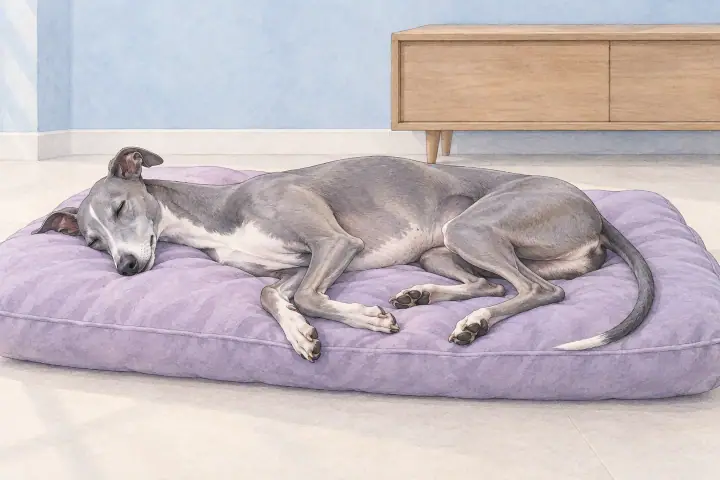
The 3-3-3 rule is a rough reminder to allow time and space, not a timetable or prediction. Adjustment varies and may take months or longer. Keep routines predictable, provide a quiet resting place and introduce people and activities gradually. Contact the rescue early if difficulties arise, and seek veterinary or qualified behavioural support when needed.
Secure windows, balconies and entryways and move climbable furniture away from windows. Provide clean drinking water, a comfortable resting space, appropriate movement and routine grooming. Keep introductions manageable and give the dog room to retreat.
Training should help the dog learn safely. Ask how a trainer handles fear, what they do when a dog struggles, and how you will be involved. Our training guide and the rescue's support can help you choose. There is no promised point at which every dog becomes settled; seek support early when you need it.
A daily welfare and home-safety check
Check that your dog has fresh water, a clean comfortable resting space, ventilation, safe housing, opportunities for movement and interaction, and grooming suited to their coat and condition. Restricted space or a quiet dog should not be mistaken for needs being met. Discuss persistent changes in behaviour, mobility, eating or toileting with your veterinarian.
Secure windows, balconies, gates and other exits with barriers suitable for the individual dog. Move sofas and other climbable furniture away from openings. SPCA's 2025 welfare report describes a fatal dog fall through an ungrilled window, probably reached from a sofa. High-rise safety matters for dogs as well as cats.
Before engaging a trainer, ask what rewards they use, how they respond to fear or unwanted behaviour, whether you can observe the handling, and when they would refer to a veterinarian or behaviour professional. Ask for a clear explanation of methods and stop a session if handling causes distress. SPCA's report supports reward-based training.
Frequently asked questions
Is a rescue dog a good choice for a first-time owner?
How do I choose my first dog?
What does it really cost to own a dog in Singapore?
Can a first-time owner adopt into an HDB flat?
What should I expect in the first weeks?
Do I need to train an adopted dog?
Start with a quiet moment together →A small idea to try, with progress kept in your Pack.