
When the afternoon heat or a monsoon downpour cancels the walk, a flat-bound dog still needs to burn energy. The good news is that a tired brain tires a dog faster than tired legs, and most of the work fits inside 800 square feet.
7 min read
Singapore weather sabotages exercise routines more than any other factor. Pavements hit dangerous temperatures by mid-morning, and the wet months bring downpours that can park you indoors for hours. A dog that misses its walk does not simply nap it off. It paces, barks, chews and finds its own entertainment, usually at the cost of your skirting boards.
The answer is a small library of indoor routines that drain energy without a single step outside, plus an understanding of why mental work punches above its weight.
Why 30 minutes of thinking beats an hour of walking
Scent and problem-solving are metabolically expensive for dogs. A structured nose-work session or a hard puzzle feeder can leave a dog as satisfied as a walk two or three times its length, because sniffing and decision-making engage the brain in a way that a familiar loop around the block does not. Behaviourists often estimate that 30 minutes of focused mental work tires a dog as effectively as 60 minutes of physical exercise.
That ratio is gold for flat dwellers. It means you can meet a dog's needs in a living room when the outdoors is off limits, and it explains why the tools below lean heavily on the nose and the brain.
It also reframes what a walk is for. Outdoors, the tiring part is rarely the distance, it is the hundred small decisions a dog makes reading scent, choosing where to sniff and processing the novelty of the world. A treadmill of laps around the same void deck delivers steps without that richness, which is why some heavily walked dogs still seem restless. When you bring the work indoors, you are recreating the thinking, not the mileage, and that is a target a flat can actually hit. Lean into variety and difficulty rather than repetition: a puzzle the dog has solved a hundred times is a chore, while a fresh one genuinely occupies it, so rotate and gently raise the challenge as your dog gets sharper.
Routines that fit a flat
None of these need more than a corridor's worth of space, and most use things you already own.
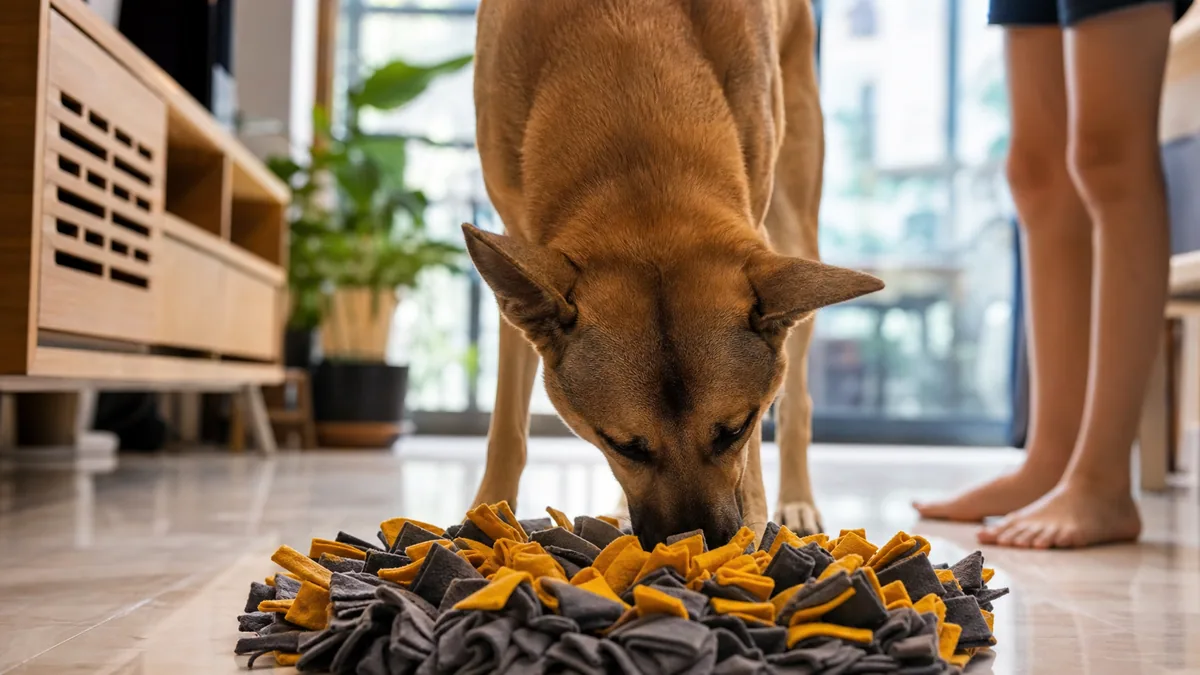
- Snuffle mat feeding. Scatter your dog's kibble through a snuffle mat and let it forage. A meal that took two minutes from a bowl now takes 15 to 20, and the dog works for every piece.
- Hide and seek. Have your dog wait, hide treats around the flat, then release it to find them. Three rounds is a proper workout and it sharpens recall at the same time.
- Stair climbs. If you have access to the HDB stairwell, ten to fifteen supervised climbs builds real cardiovascular load in a small footprint. Skip this for puppies under a year and for long-backed breeds.
- Puzzle feeders and frozen Kongs. A stuffed Kong frozen overnight keeps a dog occupied for half an hour. Our recipe tool has vet-sane fillings built from safe ingredients.
- Trick training. Five focused minutes teaching spin, place or a hand target is mentally exhausting. Short sessions, high-value rewards, and stop while the dog still wants more.
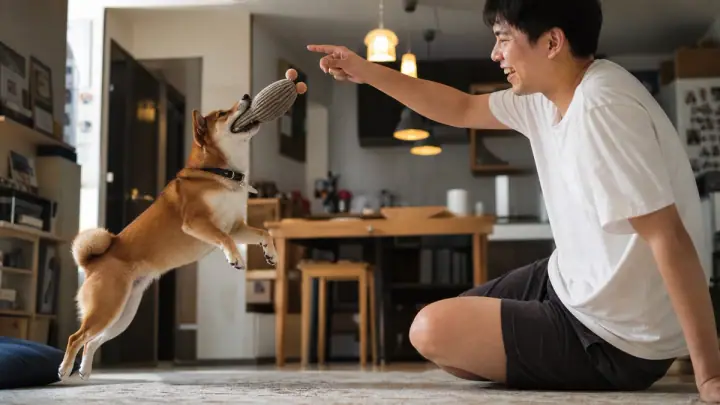
- Tug and flirt-pole. Controlled tug is excellent indoor cardio. Keep rules clear so it stays a game and not a free-for-all.
What can you do to exercise a dog indoors during the monsoon?
During the northeast monsoon from December to early March, plan for whole days indoors. Rotate the routines so the dog does not habituate: snuffle-mat breakfast, a midday puzzle feeder, an evening trick session and a frozen Kong at night spreads the load across the day and prevents the boredom spiral.
Build a small kit and keep it by the door: two snuffle mats, three puzzle feeders of different difficulty, a tug toy and a stock of frozen Kongs in the freezer. When the rain starts, you reach for the kit instead of scrambling. The Playtime tools can help you plan walk windows around the weather, and our wider guides on The Block cover the training side in more depth.
A rained-out day, hour by hour
It helps to see the routines stitched into a real day rather than listed in the abstract. On a washout, a workable shape looks like this. Breakfast comes out of a snuffle mat rather than a bowl, which turns a two-minute feed into a 20-minute foraging session and starts the day with the nose engaged. Mid-morning, run three rounds of hide-and-seek through the flat, then let the dog settle with a chew. After lunch, bring out a medium puzzle feeder while you work, and follow it with five minutes of trick training when you next get up. Late afternoon is the slump most owners feel as restlessness, so that is the moment for the hardest puzzle of the day or a short tug session on a non-slip mat. The evening closes with a frozen Kong that buys you a calm hour.
The pattern matters more than the specific games. You are spreading small bursts of mental work across the day so the dog never sits idle long enough to invent its own job. Swap the components around so a clever dog does not memorise the sequence, and keep sessions short and successful rather than long and frustrating. Two or three genuinely engaging 15-minute blocks will out-tire a single grudging half-hour every time, and they fit around a workday far more honestly than a guilt-driven marathon does.
None of this replaces walks for good. Dogs need the outdoors, the novel smells and the social contact that only a real walk provides, and the indoor menu is a bridge across the days when the weather or the heat makes walking unsafe. Used that way, it keeps a flat-bound dog genuinely content rather than merely contained.
Match the routine to your dog's energy
A terrier and a senior lapdog need different plans, and copying a routine off the internet without adjusting for your own dog is how people end up convinced that indoor work does not tire their pet. Watch what your dog does after a session. A well-matched workout ends with a dog that drinks, finds a cool spot and sleeps. A poorly matched one ends with a dog that grabs a toy and starts again, which tells you it needed more, or that the work was arousing rather than draining.
High-drive breeds need the harder end of the menu: scent work with the treats genuinely hidden, longer puzzle feeders, and trick chains that ask for several behaviours in a row. Low-energy and brachycephalic dogs do better with gentle foraging and short trick sessions, and they should never be pushed into stair work or fast games in the heat. The breed pages on our directory flag energy level for exactly this reason, and the welfare guidance from the SPCA is a sound primer on enrichment for any dog.
Puppies, seniors and the dogs in between
Puppies under a year need their joints protected. Skip the repeated stair climbs and high-impact jumping, because the growth plates have not closed and the damage is cumulative. Channel a puppy's energy into short, frequent bursts of training and gentle foraging instead, three or four times a day rather than one long session. The responsible-ownership resources on NParks set out the basics of early socialisation, which matters as much as physical exercise at this age.
Senior dogs swing the other way. They tire faster and their joints stiffen, so favour low-impact scent work and slow puzzle feeders over anything that loads the knees. If an older dog suddenly loses interest in games it used to enjoy, treat that as a possible health signal and mention it to your vet rather than pushing harder. For dogs in their prime, the full menu is fair game, and rotating it keeps a clever dog from solving the same puzzle on autopilot. Singapore's own veterinary community, including members of the Singapore Veterinary Association, increasingly frames enrichment as preventive healthcare rather than a luxury.
What not to do indoors
Avoid repetitive fetch on slippery tiles. The hard stops and pivots on a smooth floor are a common cause of cruciate ligament and knee injuries, especially in small breeds whose kneecaps already tend to slip. Lay down a rug or a yoga mat if you are going to throw anything.
Do not let rough play become the default. Wrestling and high-arousal games wind a dog up rather than tiring it, and an over-aroused dog in a small flat is harder to settle, not easier. If your dog struggles to switch off after play, a trainer from our directory can show you how to build a reliable off switch. Channelled properly, an 800 square foot flat is plenty of room to raise a calm, satisfied dog. The owners who manage it tend to keep a small kit by the door and reach for it on instinct, well before the boredom has a chance to set in. A flat dog given that, day in and day out, is every bit as fulfilled as one with a garden it never uses.
More from The Block
-
 Dog supplements in Singapore: what helps and what to skip Most healthy dogs on a complete diet need no supplements. A few have real evidence; many are marketing. How to tell them apart, and why to ask your vet first.
-
 Flying with your dog from Singapore: cabin, cargo and relocation (2026) Start with the operating airline and exact route. A pet may travel in the cabin, as checked baggage or through a cargo arrangement depending on the carrier and journey. Confirm acceptance before buying equipment or treating your own flight booking as a pet booking.
-
 Raw feeding for dogs in Singapore: a safe, honest guide Raw feeding is not proven to be healthier than an appropriate balanced cooked diet. CDC advises against raw pet food because of risks to animals and people. Nutritional formulation, cold storage and careful cleaning do not remove every infection hazard. A complete cooked diet is a practical starting point for discussing your dog's needs with your vet.
-
 Choosing a dog for an HDB flat: eligibility, adoption and everyday care A dog can become a much-loved part of flat life. Start by checking eligibility for your actual home, then choose for the individual dog’s needs and the daily care you can offer. A small body or a seller’s assurance is not proof of HDB approval.