

5 min read
Last updated First published 29 July 2026
A microchip identifies the dog; an accurate licensing record connects that identity to its owner. Have the chip scanned, check the documents and use PALS for licensing and ownership changes, without assuming an extra two-month grace period.
Your dog's microchip number is worth treating like an important reference number: record it accurately, keep it with the documents, and check it when ownership changes. The chip and the licence work together. A chip alone is not a completed licence, and a saved photograph of a vaccination card is not an ownership transfer.
Start with AVS's microchipping guidance and licensing requirements. Pet dogs need microchipping and licensing. There is no extra two-month allowance established by those pages after a puppy turns three months or after a dog arrives from overseas. Do not plan around the old claim that there is.
1. Establish whether the dog already has a chip
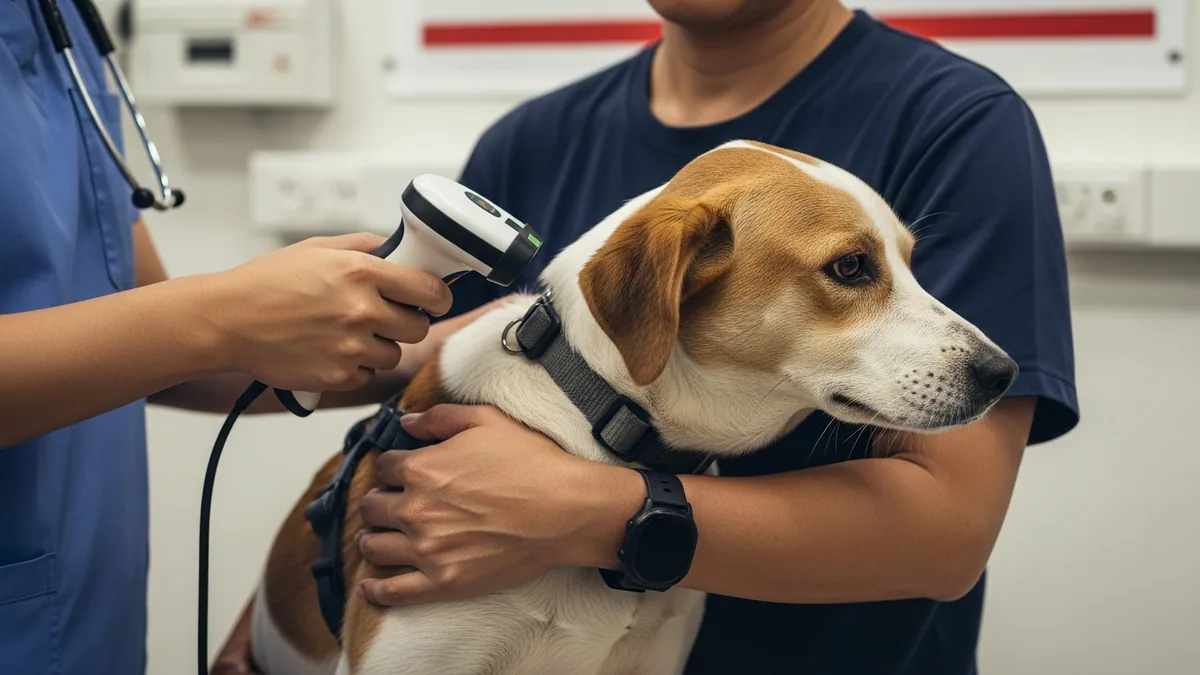
Ask the previous owner, rescue group, seller or vet for the number and records. Have the dog scanned at a veterinary appointment and compare what the scanner reads with the documents. Resolve any mismatch before creating or transferring a record.
If the dog was chipped overseas, do not assume a second chip is needed. Give the vet the existing records and discuss compatibility. AVS recommends ISO 11784 or 11785 standards for identification; imports have their own specified requirements. Check the official import instructions before travel, not after landing.
2. Arrange microchipping through a vet if needed
A microchip is a small identifier placed under the skin and read with a scanner. AVS says microchipping should be performed by a licensed veterinarian. Ask the clinic how it will handle the procedure for your dog's age, condition and comfort.
Obtain the recorded number and ask the clinic to confirm that it scans. Keep a readable copy. If the chip is difficult to locate or does not read as expected later, ask a vet to investigate instead of assuming the record or implant has disappeared.
The practical point is identification when the dog is found and scanned. It is not a substitute for a secure home, a lead or supervision. A current collar tag can help a finder contact you without a scanner, while the microchip provides another identification route.
3. Match the identity to the right PALS record
Use PALS for dog licensing. First establish whether this is a new application or a transfer of an existing licence. The AVS application guide explains both.
For a transfer, the existing licensee starts the process with the new person's details. The new licensee must respond in PALS. Keep the completion confirmation and check the resulting record. Do not assume that changing a clinic's client name automatically updates AVS.
For a new application, prepare the microchip number and relevant supporting documents. Complete the required Pet Ownership Course if this is your first cat or dog licence application. If a record is missing or linked to someone who cannot be contacted, ask AVS how to proceed rather than making up details.
4. Check fees, duration and housing separately
Refer to the AVS fee table for the dog's age, sterilisation status, household category and chosen licence duration. Licensing is not universally calendar-year or annual. Eligible sterilised dogs have a one-time licence option.
A licence is not permission to keep any breed in any home. Confirm HDB eligibility, including any applicable Project ADORE arrangement, or the conditions of your other housing. The first-year licensing guide puts the application steps together.
5. Keep the information usable
Store the licence, chip record and key care documents together. Use a filename that helps you find the current version without opening every attachment. Avoid leaving the only copy inside an old chat with a seller.
Review the owner's name, telephone details and the address where the dog is kept when circumstances change. AVS requires address changes to be notified within 28 days. Check the current licensing conditions for other changes such as rehoming, export or loss.
If your dog goes missing, follow the official reporting instructions promptly and give the chip number and recent photographs. An accurate record improves the chance of reaching the right person; it is not a guarantee that a found dog can be returned immediately.
Common questions
Does my overseas-chipped dog automatically need another chip?
No. Have the existing chip and documents checked, and confirm the applicable import requirements before travel. A vet can advise if a compatibility or identification problem needs resolving.
Does the vet update ownership with AVS for me?
Do not assume so. Confirm what the clinic handles and check that the relevant application or transfer is complete in PALS.
Can a short visit avoid licensing and import requirements?
Do not rely on a supposed two-month tourist exemption. Check the official requirements with AVS for the actual trip before bringing the dog to Singapore.
What if the number on the documents is wrong?
Have the chip scanned and contact the issuer of the incorrect record. Keep the evidence and ask AVS for help where its record needs correction; do not guess a replacement number.
Official guidance checked 15 September 2026. For a difficult record or ownership situation, contact AVS directly.
Microchip versus GPS tracker: different jobs
A microchip identifies a dog when it is scanned; it does not show the animal’s location on your phone. A GPS tracker is a separate device that can report location through its supported network. The manufacturer explanation of microchips and trackers illustrates the distinction, not an endorsement of a particular model or confirmation that it is supported in Singapore. A tracker does not replace the AVS chip and licensing requirements.
Before buying a tracker in Singapore
Ask the manufacturer whether the exact model and subscription work in Singapore on the supported networks. Check charging, attachment, fit, water resistance, the reporting delay and what happens when coverage is lost. Bluetooth finding tags and cellular GPS products are not interchangeable. Do not assume that an overseas listing, an “unlimited range” slogan or an app screenshot proves local operation.
Keep both identification and prevention working
A tracker may help a search if it remains attached, powered and connected. It cannot stop a dog escaping or guarantee an immediate location. Test the setup on ordinary supervised walks, keep emergency contact details accessible and ask any walker before using a device that also records their route. A collar tag, secure doors and gates, a controlled lead and current microchip records remain useful even if you buy a tracker.
Tracker questions
- Does the microchip have live GPS?
- No. Identification by scanning and remote location tracking are different functions.
- Can a tracker replace the licence?
- No. Complete the microchip and AVS licensing steps separately.
- Will any imported tracker work here?
- Not necessarily. Obtain explicit confirmation for the model, local coverage and subscription.
- Can I rely on a tracker alone?
- No. Battery, signal, attachment and reporting limitations still apply.
Migration comparison review: 17 September 2026. Existing publication date preserved. This is an editorial source check, not a new clinical peer review.
More for potential dog owners
-
 What owning a dog actually costs in year one Plan your first year around the dog you are bringing home. Separate setup purchases, regular care and emergency savings, check what adoption fees already cover, and replace estimates with current quotes before committing.
-
 HDB approved dog breeds: what you need to know before you choose HDB ordinarily permits one dog from its approved list, including crosses of two listed breeds. Project ADORE and written-permission provisions cover separate cases. Check housing eligibility, AVS licensing and the individual dog’s care needs before committing.
-
 Adoption or buying in Singapore: fees, care and questions to ask Compare the written arrangement: what care has already happened, what your payment includes and what remains to arrange. Neither route guarantees health, temperament or a match for your household.
-
 How long can you leave a dog alone in an HDB flat? Plan time alone around your individual dog's comfort, toilet needs and reliable care. A full working day needs a support plan, not a blanket six-to-eight-hour allowance.