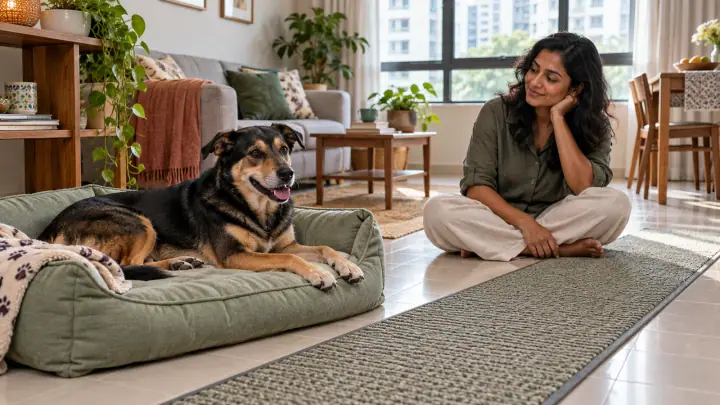

Adopting an older dog can be a good choice when the individual dog's needs fit the care your household can provide. Age alone does not establish housetraining, comfort when alone, temperament or future health. Ask the rescue what it has observed, what is unknown and what support is available, then plan an ordinary workday as carefully as arrival day.
Make your adoption and ownership decision worksheet. Leave unresolved questions open, include everyone providing care and take the worksheet into a conversation about a particular dog.
Start with the dog, not a promise attached to age
Ask what the rescue means by older or senior in this listing. A fee category is not a veterinary assessment. The RSPCA's older-dog guidance stresses that dogs age differently and care should reflect the individual. There is no single age that tells you exactly how a dog will manage your home.
Request examples rather than a label such as easy or settled. Where has the dog lived recently? What toilet arrangements were available? What happens around visitors, handling, other animals and departures? Ask who observed the behaviour and in which setting. A foster home's observations are useful context, not a guarantee about a different household.
Do not assume an older dog is already housetrained or finished needing support. Ask how you would manage toilet opportunities, safe rest and gentle introductions from the start. A change in toileting, movement or behaviour is also a question for the veterinary team, rather than something to dismiss as age or disobedience.
If you work full-time, map the care before committing
Write down an ordinary day from leaving home to returning, then a day when a meeting or commute runs late. Identify who can provide the care this dog needs at each point. Working from home is not automatically a care plan either: calls, school runs and travel can still leave gaps.
- Daytime care: who provides toilet opportunities, meals and any individually advised care while you are occupied?
- Absences: what is actually known about this dog being alone, and what support is available while you learn more?
- Backup: who can step in during illness, travel or an unexpected overnight absence, and have they agreed?
- Access: can the dog comfortably use the building entrance, lift, floor surfaces and resting area, including when someone else provides care?
These are questions for the household and rescue, not a test that produces approval. Do not use age as permission to leave a dog alone for a fixed number of hours. If distress, aggression or difficulty being alone is reported, ask the rescue and your vet about appropriate individual behaviour support. Udo's professional-support pathway can help you prepare those questions.
Separate available records from unknown health needs
Ask for the veterinary records the rescue actually holds, current care instructions and details of any continuing arrangements. Identify what has been assessed, what is still being investigated and what history is unavailable. Neither youth nor older age guarantees health, and even a detailed record cannot predict every future need.
Arrange a discussion with your chosen veterinary team about the individual dog's comfort, mobility, nutrition, preventive care and follow-up. The RSPCA guidance above recommends accessible essentials, comfortable rest and veterinary advice for changes. It does not justify prescribing one vaccination, exercise, supplement or feeding schedule for every senior dog.
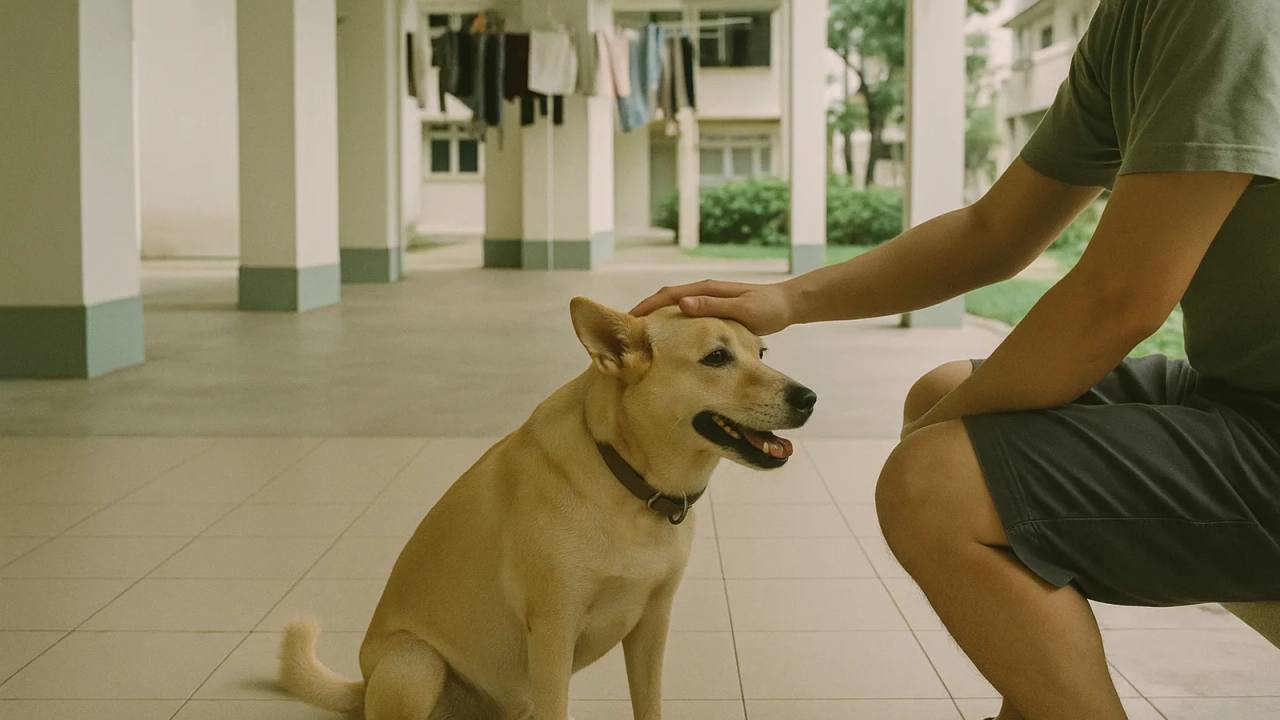
In a Singapore flat, make a practical walkthrough of the route from the sleeping area to the lift and outdoors. Look for slippery surfaces, awkward steps and places where the dog could be crowded. Ask about suitable changes for this individual rather than buying equipment from a generic age checklist. Do not make the dog repeat a difficult movement to demonstrate that it can cope.
Ask what the fee includes, then plan ongoing care separately
The AVS adoption page explains that fees can contribute to medical and administrative costs and directs prospective owners to the animal group for its process. Ask the actual rescue for a current itemised fee, available records, completed care and anything left to arrange. A fee from another shelter is not your quote.
Use the existing dog cost planner for setup, recurring care and contingencies, replacing estimates with dated quotes. Ask about follow-up consultations, ongoing care, transport and backup support where relevant. Do not treat a lower adoption fee as funding for a particular period of veterinary care, or assume every older dog's costs are uniformly higher.
Check housing and licensing with the relevant authority
Age does not certify housing eligibility. Check the current AVS ownership limits and linked HDB guidance for your intended home. If a rescue proposes a placement through a specific scheme, ask it to explain the applicable process and verify the requirements before committing. This article cannot approve a particular dog for a particular flat.
The AVS licensing requirements cover dog licensing and the Pet Ownership Course for first-time licence applicants. Agree who handles the application or transfer, and follow the current official instructions. A pet licence does not itself approve the premises.
Clarify the arrangement and prepare for arrival
Ask whether the rescue offers a supported homestay for this dog, its written responsibilities, any charges and who to contact if the placement struggles. Do not assume every rescue offers a trial or the same duration. Get support and return terms in writing and ask what happens if an important need becomes clear after arrival.
Use the first-month companion and select senior rescue, whether you are preparing or already home. Its before-arrival, first-days and routine tasks are an organisational aid, not a deadline for settling. You can change, pause or mark tasks not applicable. Keep actual care records in Your Pack, and follow individual professional advice where needed.
When you are ready to enquire, browse current rescue listings and confirm availability directly with the named group. It is reasonable to pause while a care gap or important question remains unresolved. The aim is an informed conversation and a workable arrangement, not a verdict based on age.
Sources and review status
Primary sources checked 29 October 2026 by UrbanDogOwner Editorial. General preparation and attributed welfare guidance, not a named veterinary or behaviour-professional review. No shelter, professional or authority has endorsed this article or approved an individual placement.
Common questions
- Does an older dog arrive housetrained and comfortable alone?
- Age alone cannot establish either. Ask what has been observed in which setting, what is unknown and how care or behaviour support would be arranged.
- Can I adopt a senior dog while working full-time?
- Work through the individual dog's needs, daytime care, unexpected absences and agreed backup support with the rescue. Working hours or age alone do not approve a placement.
- Is an older dog's adoption fee a guide to ongoing costs?
- No. Ask for a current itemised fee and actual care records, then plan recurring care and contingencies using dated quotes. Neither a lower fee nor age predicts the total.
- Does being a senior dog make it eligible for my HDB flat?
- Age does not certify housing eligibility. Check the applicable current AVS, HDB or scheme requirements for the intended home and individual dog.
- Is a trial or homestay guaranteed?
- No. Ask the actual rescue whether one is offered for this dog, its written responsibilities and costs, and what support or return arrangements apply.
Sources
Start with a quiet moment together →A small idea to try, with progress kept in your Pack.
How we verify content Fact-checking policy How we stay free