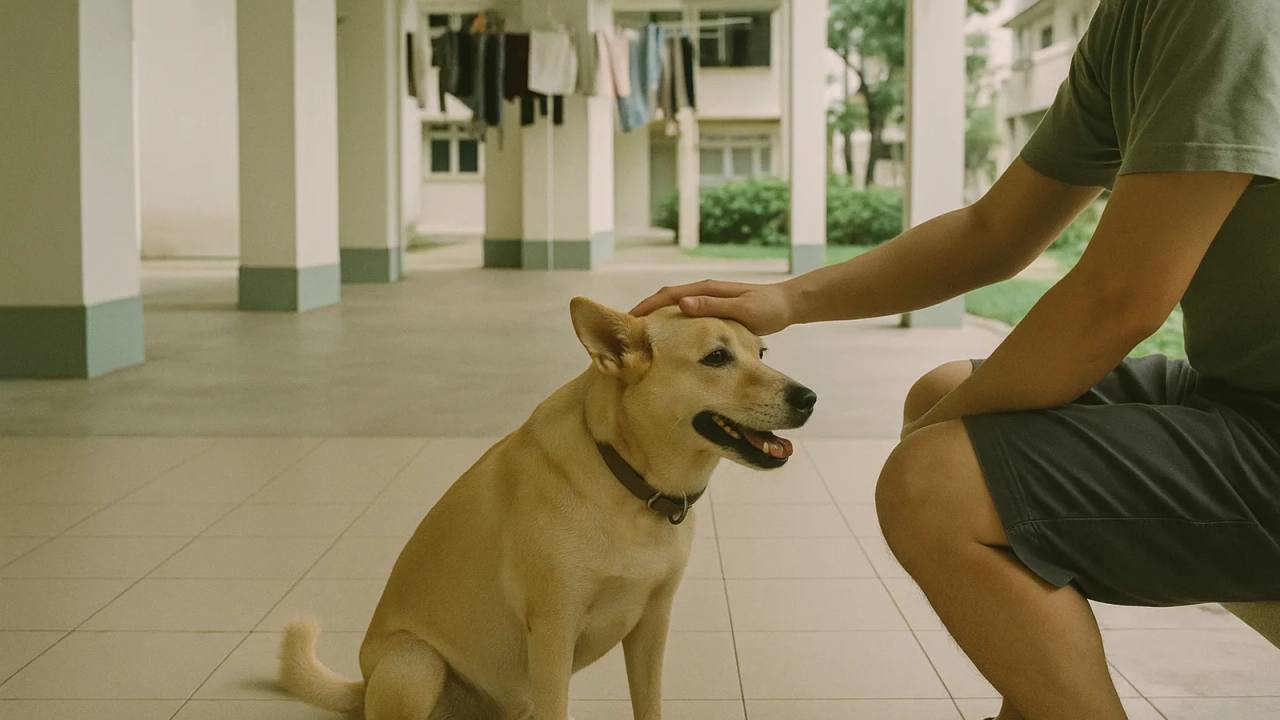

Dog DNA testing has moved from novelty to a genuine research tool, promising owners a look at both ancestry and inherited health risk from a simple cheek swab. The science behind the technology is sound, but the results it produces are statistical estimates shaped heavily by which dogs happen to be in a company's reference database. For Singapore owners, especially those raising a Singapore Special, that distinction matters more than the marketing usually lets on.
By the numbers
- Check current price Delivered cost and return postage vary by provider and market
- 2 to 4 weeks Embark's stated typical results window after a sample reaches its laboratory
- 1 cheek swab A common at-home sample method for consumer canine DNA testing
- Several generations Ancestry depth and reporting format vary by provider
- Free Cost of UDO's photo-based assess-my-dog tool as an informal first guess
- Screen, not diagnosis Health variants need veterinary interpretation and sometimes confirmation
- Database dependent Ancestry estimates depend on the reference populations available to the provider
How Does Dog DNA Testing Actually Work?
A dog DNA kit starts with a simple cheek swab, sent to a lab that extracts genetic material and reads thousands of specific points, known as markers, across the genome. That pattern of markers is then compared against a reference database built from thousands of dogs of known, verified breed. The software looks for the closest statistical matches and reports the result as an estimated percentage breakdown, usually going back three or four generations.
The laboratory methods are real, but the result still depends on the provider's marker set, reference dogs and interpretation method. Veterinary genetics guidance describes these consumer panels as screening tools and recommends independent confirmation before an irreversible or medical decision. That distinction matters because detecting a variant reliably and interpreting what it means for one dog are separate questions. Owners should compare the provider's published validation, reference populations and update policy rather than relying on the largest number printed on the box. The canine clinical genetic testing quality guidelines explain why transparent methods and confirmatory testing matter.
Collection and turnaround vary by provider. Cheek-cell collection is common in direct-to-consumer canine testing, and Embark says its results are typically ready two to four weeks after a sample reaches its laboratory. Singapore owners should check the current delivered price, return-postage requirements and whether the company accepts samples from Singapore before ordering, because those commercial details change. The useful comparison is the evidence behind the panel and the support available after a result, rather than an old price range.
What Can a DNA Test Tell You About Breed Mix?
For owners who simply want a fun, no-cost first guess, UDO's own assess-my-dog tool uses a photo to suggest likely breeds in a mix, based on visible traits. It is a good starting point and a genuinely enjoyable way to get a rough read before spending anything. A companion tool, which-breed, lets owners explore breed traits and temperaments in more depth once they have a shortlist of candidates.
A paid DNA test goes further because it reads the genome directly rather than guessing from appearance. It can flag a grandparent-level contribution from a breed that left no visible trace in coat colour or ear shape. That said, the result is a probability, not a certificate. A panel reporting a breed percentage is describing the provider's statistical ancestry estimate, not certifying a pedigree. Owners browsing UDO's breed profiles can use a DNA result as a jumping-off point to read up on temperament and health tendencies for whichever breeds turn up.
- Results are strongest when the relevant population is well represented in the provider's reference database.
- Rare breeds, regional village-dog populations and long mixed ancestries can produce broader or less stable estimates.
- For a Singapore Special, check whether the provider explicitly models Southeast Asian village-dog ancestry and how it reports ancestry that does not match a named breed.
This does not make testing useless. It means the result should be read in the context of the provider's database. Research using large dog cohorts notes that breed predictions depend partly on the number and kinds of dogs available to the testing company. Providers also revise estimates as their reference data and algorithms change, so two reports produced at different times can legitimately differ. For a locally mixed dog, an unresolved or regional result can be more honest than a neat list of named breeds.
What Can a DNA Test Tell You About Health Risks?
Beyond ancestry, many kits also screen for genetic markers linked to specific hereditary conditions, such as selected inherited eye disorders, particular drug-sensitivity variants and variants associated with degenerative myelopathy. This is arguably the more practically useful half of what a paid test offers, particularly the drug-sensitivity screening, which can matter before certain anaesthetics or medications are prescribed.
The important caveat is that a marker indicates increased risk, not a diagnosis. A dog can carry a risk marker and never develop the associated condition, and a dog can test clear and still develop a similar problem through injury, diet, or simple bad luck. Canine clinical genetics guidance is clear on this point: screening results should be discussed with a veterinarian and, where relevant, confirmed independently before decisions about treatment, breeding or euthanasia. A result on a printout is a conversation starter with a vet, not a verdict.
It also helps to know what a health panel is not doing. It is not sequencing the entire genome and it is not screening for every possible hereditary disease a dog could carry. Most panels test for a defined, published list of specific mutations that researchers have already linked to a condition through peer-reviewed studies, which the AKC's canine health resources cover in more detail for owners who want the underlying research rather than just the summary on a results page. A clear result across that list is genuinely reassuring, but it covers only the conditions on the list, not every condition a dog could ever develop over its lifetime. General preventive care guidance from bodies such as the ASPCA still applies regardless of what a DNA panel shows, since diet, weight and routine vet visits do more for long-term health than a one-off genetic snapshot.
A DNA result is a probability, not a certificate, and it is only as good as the dogs it has to compare against.
Common questions
- Can a DNA test tell me exactly what breed my dog is?
- It gives an estimated percentage breakdown based on the closest matches in the lab's reference database, not a certified fact. For breeds well represented in that database the estimate tends to be reliable, but it remains a probability rather than a guarantee.
- Are DNA test results accurate for Singapore Specials?
- Accuracy is generally lower because Singapore's community bred mixed dogs are underrepresented in most commercial reference databases. A test will usually return the closest purebred relatives it can find rather than confirm the dog's true regional ancestry.
- Should a positive health marker result worry an owner?
- A flagged marker means increased risk, not a diagnosis, and it should be discussed with a vet rather than acted on alone. Diet, weight, and general care still play a major role in whether a condition ever develops.
- How is a DNA test different from the free assess-my-dog tool?
- Assess-my-dog estimates breed mix from a photo and visible traits, which is free and a good first guess. A DNA test reads the genome directly, which can catch ancestry that never shows up in appearance, at a cost and with its own database limitations.
- What sample does a dog DNA test need?
- Most kits use a simple cheek swab that owners can collect at home, with no blood draw or vet visit required. The sample is then mailed to the lab for processing.
- Is it worth paying extra for a health marker panel?
- It is worth considering if there is a genuine medical reason, such as checking for a drug sensitivity mutation before a procedure. For pure curiosity, the free assess-my-dog tool may satisfy most owners without the added cost.
Sources
- Embark official testing worksheethelp.embarkvet.com
- 2 to 4 weeks: typical results window after a sample reaches the laboratory
- Animals peer-reviewed studypmc.ncbi.nlm.nih.gov
- 1 cheek swab: consumer canine DNA services commonly use owner-collected cheek-cell samples
- Human Genetics peer-reviewed laboratory guidancepmc.ncbi.nlm.nih.gov
- consumer canine panels are genetic screens and consequential results need professional interpretation or confirmation
- Dog Aging Project peer-reviewed studypmc.ncbi.nlm.nih.gov
- breed prediction accuracy depends partly on the number and kinds of dogs in the provider database
How we verify content Fact-checking policy How we stay free