
Every Singapore dog owner already has a training schedule, even if it does not look like one. Lift waits, meal times, ad breaks and the walk to the door happen every day without fail, and each pause offers a natural moment to reinforce good manners. Turning these routine touchpoints into brief training reps builds consistency without demanding a single extra minute.
Formal training sessions help, but most Singapore dog owners struggle to protect twenty free minutes a day for deliberate practice on top of work, family and the usual after dinner walk. The fix is not finding more time. It is putting the time that already exists to better use. A flat in an HDB block is full of pauses, waits and small transitions that a dog experiences every single day, and each one can double as a training rep worth a few seconds. Building a loose routine around a structured training approach gives these ordinary moments a purpose instead of letting them pass as dead time between one task and the next.
What Training Moments Happen Inside the Flat?
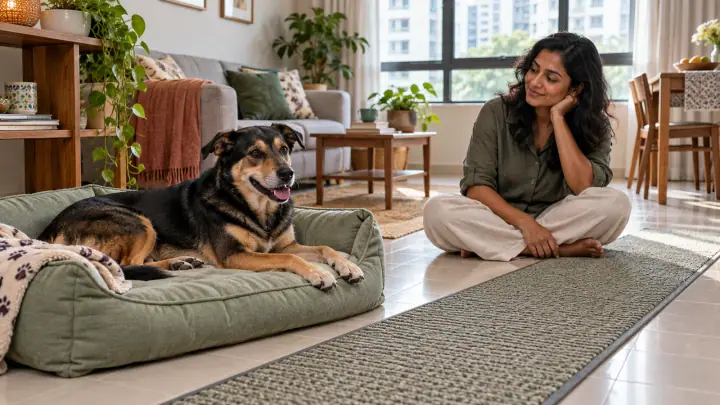
The flat itself offers more training opportunities than most owners realise, mostly because a dog already waits for things there several times a day without anyone asking. The trick is noticing the wait and turning it into a rep instead of ignoring it.
- Before and after meals: Ask for a sit or a short stay before the bowl goes down, then release with a clear word once the dog holds still. Two meals a day means two guaranteed reps without any extra planning, and a dog that learns to wait at the bowl is usually calmer around food in general, including at the door when a delivery arrives.
- Before being let onto the sofa: Rather than letting a dog jump up whenever it feels like it, ask for a sit first and reward the calm approach before inviting the dog up. This teaches impulse control around furniture and guests, which matters more once a dog is fully grown and stronger than it looks.
- During television ad breaks: A three minute ad break is enough time for five or six short reps of sit, down or a hand touch. It turns a passive stretch of evening screen time into something useful for both owner and dog, and it is far easier to remember than a scheduled session that keeps getting pushed back.
How Can Leaving the Flat Turn Into a Training Session?
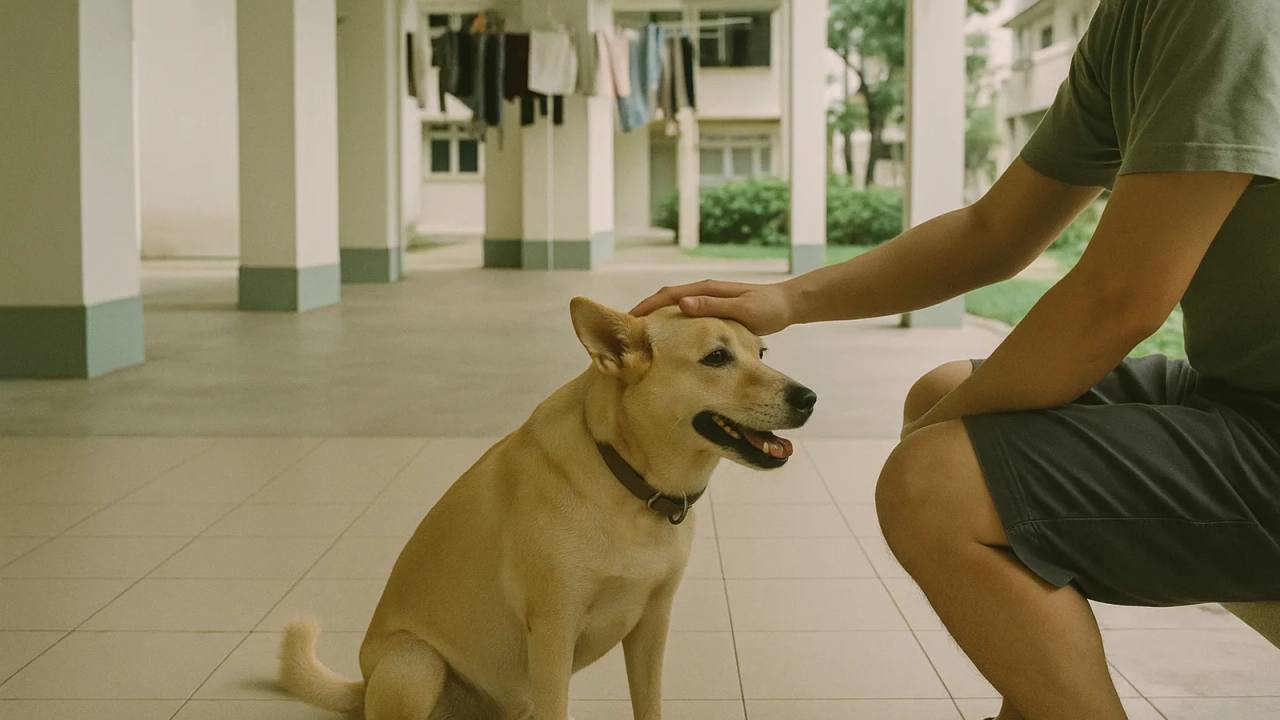
The walk from the front door to the lift lobby and out of the block is where a dog most needs manners, and it happens at least twice a day regardless of the weather or how tired anyone feels.
- Waiting for the lift: A dog that lunges toward an opening lift door is a common complaint in Singapore blocks, especially in buildings with narrow lobbies. Asking for a sit before the doors open, and only stepping in once released, teaches patience in a spot where getting it wrong has real consequences for neighbours and other pets.
- Before crossing the void deck: Void decks bring cyclists, prams, other residents and the occasional cat, often with little warning. A brief stay at the edge of the void deck before moving off gives an owner a moment to check the space and reset a dog's attention before continuing on.
- At the door before a walk: A dog that sits calmly while the leash goes on, rather than spinning, jumping or bolting for the gap, is easier and safer to manage from the very first step outside. This is one of the simplest habits to build using the fundamentals covered in a proper leash training routine, and it pays off every single day the leash comes out.
Which Out and About Pauses Double as Practice?
Outdoors, Singapore's own infrastructure creates natural stopping points that already work in an owner's favour, no extra planning required.
- Waiting at a pedestrian crossing: A red light is a built in stay cue. Ask for a sit at the kerb and release only when the green man appears and the road is clear. Over a few weeks this becomes close to automatic, which matters near busy roads and bus stops where a sudden lunge is genuinely dangerous.
- At the vet clinic waiting room: Clinic waiting areas are loud, unfamiliar and full of other animals, which makes them a real test of a dog's calm behaviour rather than a controlled setting. Rewarding quiet sitting or lying down here, in small doses, teaches a dog that the vet visit is not entirely stressful from the moment the door opens.
A dog does not need a scheduled class to learn manners. It needs the same short lesson repeated at the same door, every single day.
Common questions
- How long should each micro training moment last?
- Most of these reps take between ten and thirty seconds, which is long enough for one or two clear cues and a reward. Keeping each moment short is what makes it possible to repeat throughout the day without it feeling like a chore.
- Can this replace a formal dog training class?
- It works best alongside formal training rather than instead of it, especially early on when a dog is still learning what each cue means. Daily routine reps are ideal for reinforcing skills a dog already knows, not for teaching brand new behaviours from scratch.
- What if my dog is too excited to focus during the day?
- Start with the calmest moments, such as before a meal, rather than high excitement ones like the front door before a walk. Once a dog is reliable in low distraction settings, the same cue can be practised gradually in busier spots like the lift lobby.
- What treats work best for training on the go?
- Small, soft, low mess treats that can be pocketed easily work best for moments like lift waits or crossings. For meal time reps, a portion of the dog's regular food works just as well and avoids adding extra calories throughout the day.
- My dog behaves at home but ignores cues outside, why?
- This is normal and usually means the behaviour was only ever practised in one context. Working through the same cues at the door, in the lift and at the crossing generalises them beyond the living room.
- Is this approach suitable for puppies as well as adult dogs?
- Yes, and puppies in particular benefit from short frequent reps because their attention span is naturally shorter than an adult dog's. The same daily routine moments work at any age, though a puppy will need more repetitions before a cue becomes reliable.
How we verify content Fact-checking policy How we stay free