

7 min read
Last updated
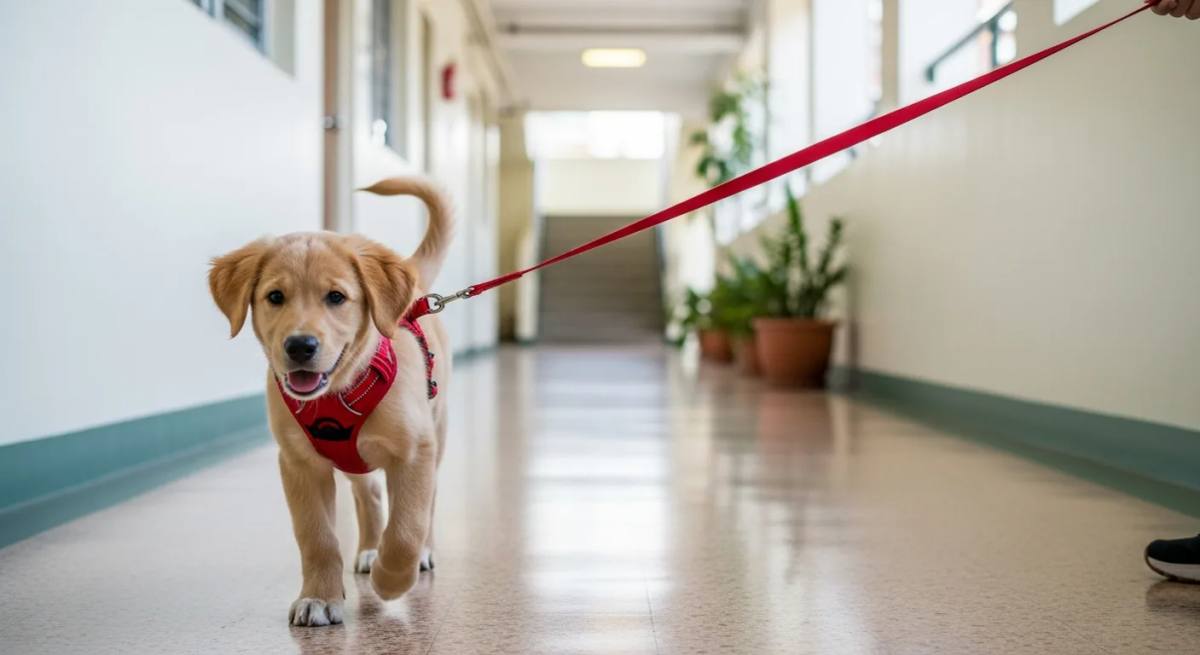
Getting a brand-new dog or puppy happy on a leash is a gentle, gradual job, not a one-session fix. Start indoors, reward the position you want, and let your dog set the pace through HDB corridors, lifts and the Singapore heat. This starter guide covers collar and harness choice, first steps, and how to handle pulling and lunging kindly.
Bringing a new dog or puppy home is a big change for them, and the leash is one of the first strange things they have to make sense of. A collar tightening, a lead trailing behind, a lift door sliding open: none of it means anything to a dog until you teach it, calmly and with rewards. The good news is that leash training does not require force or clever gadgets. It rewards patience, short sessions and good timing far more than it rewards pressure.
Leading veterinary behaviour bodies are clear that reward-based methods are the humane and effective way to teach any dog. The American Veterinary Society of Animal Behavior states plainly that only reward-based training should be used, and that aversive tools such as choke chains, prong collars and leash corrections carry real risks to welfare. You can read their position statements on humane dog training for the full detail. This guide sticks to that positive approach throughout, and it is written for the realities of Singapore living: narrow HDB corridors, shared lifts, and heat that makes timing your walks matter.
Choosing a collar or harness
For a new dog and especially a young puppy, a well-fitted body harness is usually the kinder starting point. A harness spreads any pressure across the chest rather than the throat, which matters a great deal if your dog lunges or startles before they have learned not to. Flat collars are fine for holding an ID tag, and a licence is a legal requirement for dogs in Singapore, but the lead is better clipped to a harness in the early weeks.
Fit is what counts. You should be able to slide two fingers under the straps comfortably, with no rubbing at the armpits or across the shoulders. Let your puppy wear the harness indoors for a few short spells first, paired with treats and praise, so the gear itself becomes a happy signal rather than something to wriggle out of. Skip anything designed to tighten, pinch or deliver a correction. None of it is needed, and it works against the calm association you are trying to build.
Introducing the leash indoors
Start where there are no distractions, which in a flat means a quiet room with the television off. Clip the lead on and simply let your dog drag it around for a minute or two under supervision, so they get used to the small weight without any pressure. Reward them for staying relaxed. Once that feels normal, pick up the lead and follow your dog rather than steering them, keeping it loose and paying out treats whenever the line is slack.
Building calm habits early matters, and the RSPCA's new puppy guidance stresses preparing gently for a puppy's first year rather than rushing them. The next step is teaching your dog that being near your leg is the best place to be. Hold a treat by the seam of your trousers, let your dog come into that position, mark the moment with a cheerful word such as "yes", and feed. Repeat this in short bursts of a few minutes. The RSPCA advises encouraging good behaviour with rewards and never shouting at or punishing your dog, and its guidance on reward-based behaviour training is a useful reference as you build these first habits. Keep sessions brief and end while your dog is still keen.
First steps in the corridor and lift
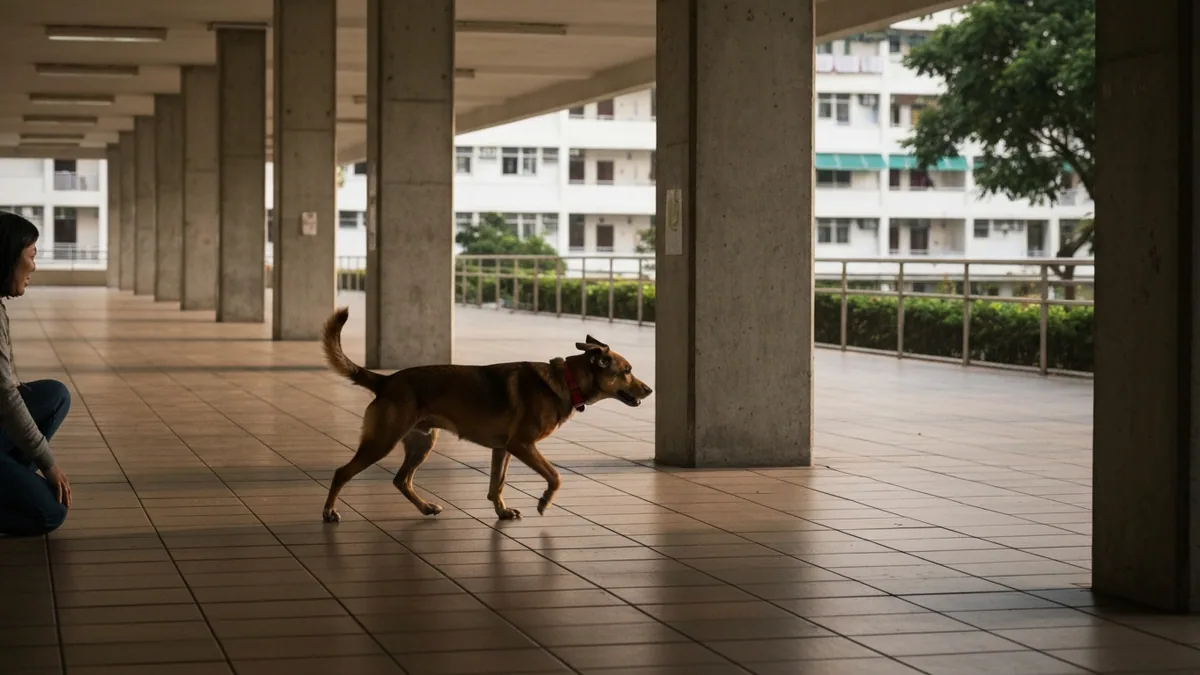
The HDB corridor is your dog's first real-world classroom, and it is a demanding one. Sounds echo, neighbours pass, and the lift is a small moving box that can unsettle a puppy who has never met one. Take it slowly. Walk a few steps along the corridor, reward, then turn and come back before your dog gets overwhelmed. Short, successful trips build confidence far faster than one long, stressful outing.
For the lift, let your dog approach at their own pace. Reward them for stepping in calmly, and do not drag a hesitant puppy across the threshold. If the doors closing worries them, feed a few treats through the ride so the experience earns a happy memory. Keep the lead short but not tight in the lift and at the void deck, where other residents and dogs may appear suddenly. A dog who has learned that good things happen beside your leg will naturally want to stay close in these tight, busy spaces.
Marking and rewarding the position
The heart of loose-leash work is simple: reward your dog for walking where you want them, before they pull. Watch the lead. Every time it goes slack and your dog is near your side, mark and treat. When the lead tightens, stop moving. Stand still like a lamp post and wait. The instant your dog eases the tension, even by turning their head back to you, praise and move on again. Dogs quickly learn that pulling stops the walk while a loose lead keeps it going.
Consistency matters more than perfection. If everyone in the household follows the same rule, your dog is not left guessing. Progress in a young puppy is measured in small wins over weeks, not in a single tidy walk. As your dog matures and these foundations settle, you can move on to our deeper guide on loose-leash walking in HDB settings, which builds directly on what you have started here.
Handling pulling, lunging and distractions
Pulling is normal for a dog who has somewhere they want to be, and it is corrected by rewarding the alternative, not by yanking back. The stop-and-wait method above does most of the work. For lunging at other dogs, joggers or cyclists, the key is distance. Notice what your dog reacts to, then keep enough space that they can still take a treat and stay under threshold. Reward calm looks at the trigger, and gradually the trigger predicts good things rather than tension.
Never punish a lunge or a bark. Punishment tends to raise a dog's stress and can make the reaction worse over time. If a distraction is too much, calmly increase distance and try again another day. Building a solid response to their name and a reliable turn back to you gives you a gentle way out of tight spots, which is exactly what our recall training guide for Singapore covers next. If your dog's reactions feel beyond what home practice can manage, a qualified professional can help, and you can find reward-based help through our list of accredited trainers.
Timing walks around the heat
Singapore's heat and humidity are not a small detail. Pavements and tarmac absorb the sun and can be uncomfortably hot underfoot well into the evening. Press the back of your hand to the ground for a few seconds before you set off; if it is too hot for your hand, it is too hot for paws. Aim for the cooler parts of the day, early morning and after dusk, and keep first outings short so a young puppy does not overheat while also trying to learn.
Carry water on longer walks and watch for heavy panting, lagging or a reluctance to keep going, all signs to head home and cool down. A hot, tired dog cannot learn well, so good timing is part of good training, not separate from it. As your puppy grows, the breed and build of your dog also shape how much heat and exercise suits them, and our breed guides can help you match the routine to the dog in front of you.
Three things to remember
- Reward, do not correct. Every leading behaviour body backs reward-based training, so mark and treat the position you want and skip any tool that tightens or pinches.
- Let the pace be theirs. Short, successful trips through corridors and lifts build a confident walker far faster than one long, stressful outing.
- Mind the heat, then build on it. Walk in the cool hours, keep sessions brief, and when the basics settle move on to loose-leash walking and recall.
Start with a quiet moment together →A small idea to try, with progress kept in your Pack.
More training guides
-
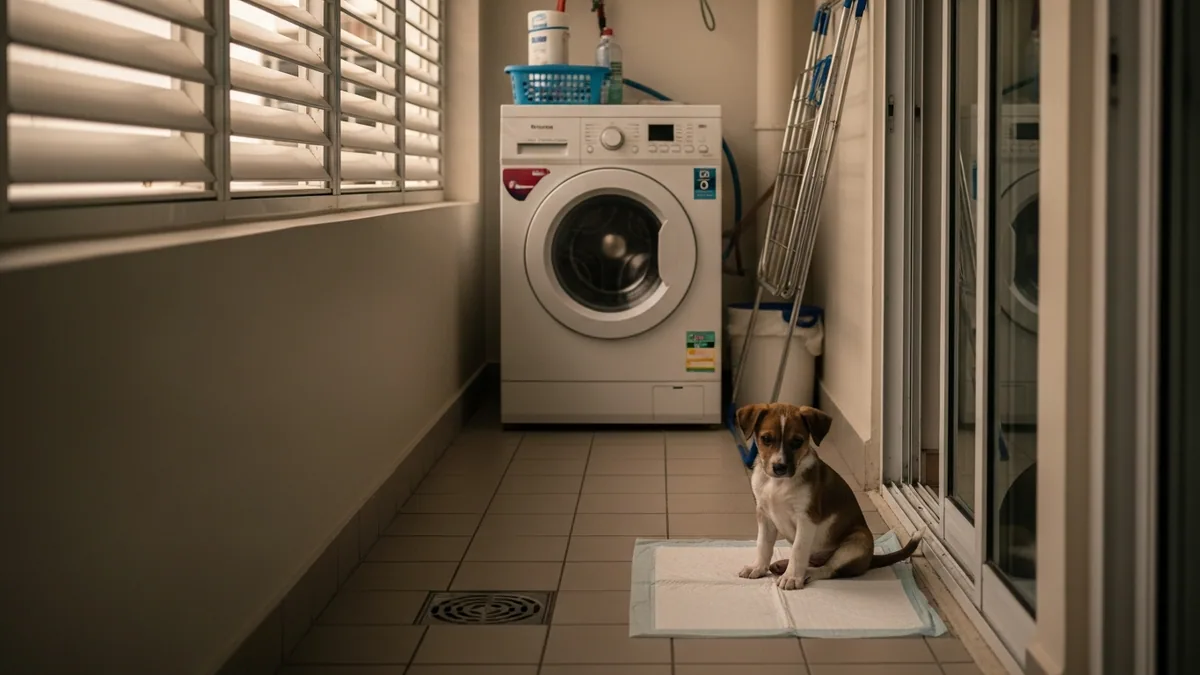 Toilet training the apartment way No garden, no driveway, just a tiled floor and a lift that takes two minutes to arrive. Here is how to toilet train a puppy in a Singapore flat without losing your mind.
-
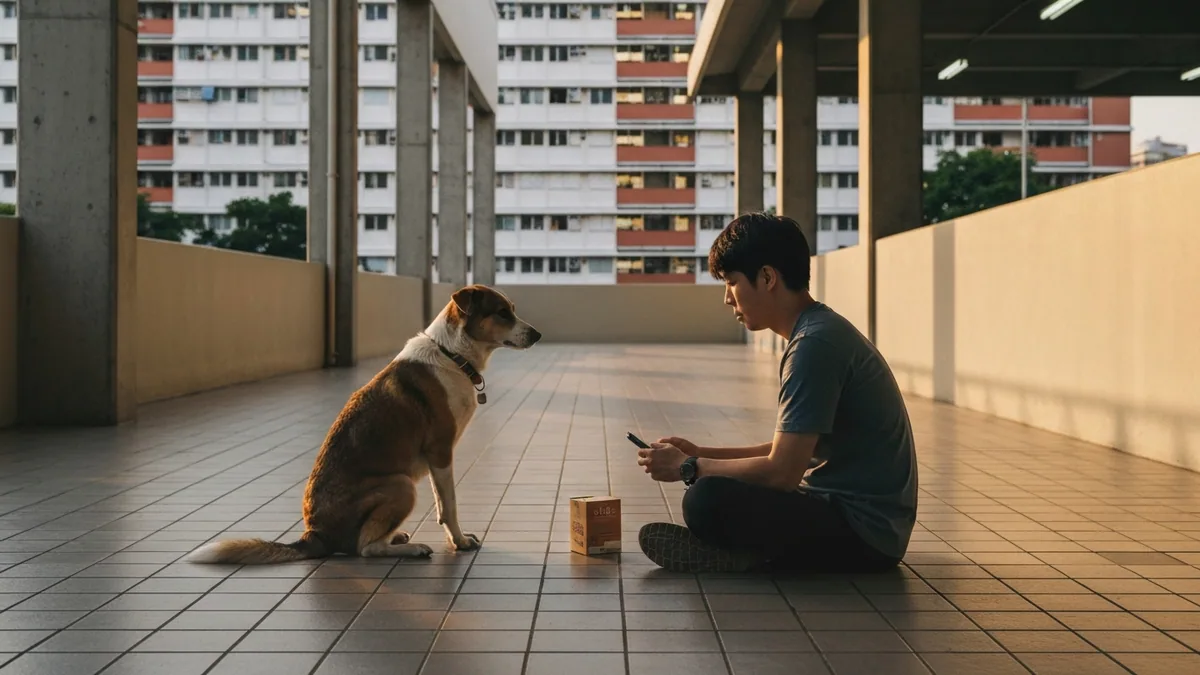 Clicker basics A clicker is a timing tool, nothing more and nothing less. Learn to use it well in a small Singapore flat and you will have the clearest, most efficient communication method available for teaching your dog almost anything.
-
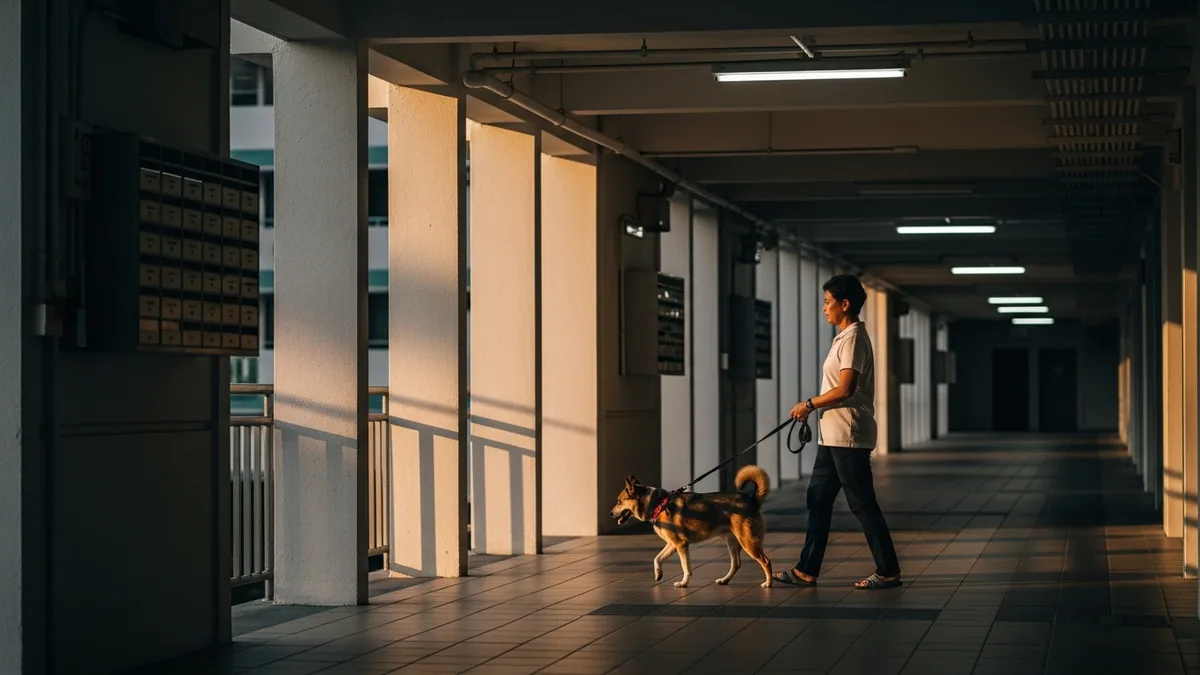 Loose-leash walking in Singapore’s shared spaces Start with room, reward a slack lead and make the task easier when your dog struggles. Lift lobbies, narrow pavements and crossings need practical choices, not a perfect heel or a fixed timetable.
-
 Recall, and where to practise it safely in Singapore Recall is the most important thing you can teach your dog, and Singapore gives you almost nowhere legal to practise it off-leash. Here is how to build it anyway, in the spaces you actually have.