

HDB-APPROVED · DOG BREED GUIDE
Last updated First published 31 May 2026
Notice one little habit together →A small idea to try, with progress kept in your Pack.
Also known as JRT, Jack Russell, Russell Terrier, Parson Russell Terrier (close cousin).
Thinking about adopting a Jack Russell Terrier?
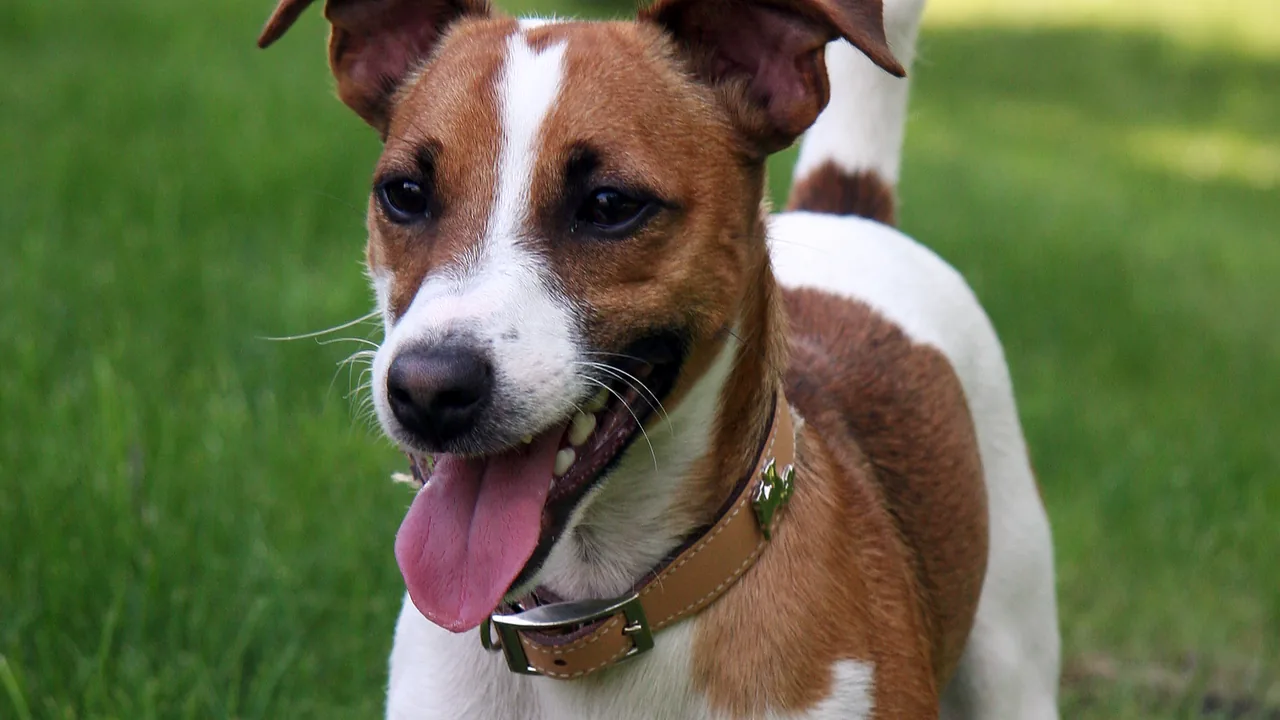
A Jack Russell Terrier can turn chasing its tail into an Olympic sport, and in an HDB flat, every furniture leg becomes either a racetrack barrier or a chewable trophy.
Can a Jack Russell Terrier live in an HDB flat?
YesOn the HDB approved-breed list
Named on HDB's approved small-breed list for flats. Check any listed variety restrictions and confirm the individual dog before committing.
HDB sets and maintains the approved-breed list. Check the current rules at HDB.gov.sg →
Full list of HDB-approved breeds on this site →At a glance
- Size category
- Small
- Weight
- 5 to 8 kg
- Height
- 25 to 38 cm
- Lifespan
- 13 to 16 years
- Energy level
- ●●●●● 5/5 (editorial, unvalidated)
- Shedding
- ●●●○○ 3/5 (editorial, unvalidated)
- Heat tolerance
- ●●●○○ 3/5 (editorial, unvalidated)
- Barking
- ●●●●○ 4/5 (editorial, unvalidated)
- Trainability
- ●●●●○ 4/5 (editorial, unvalidated)
- Grooming needs
- ●●○○○ 2/5 (editorial, unvalidated)
- Origin
- England (Devon)
Editorial climate-care note
Short coat and wiry build cope with SG heat reasonably well, though its high energy needs shaded, well-timed exercise.
This score is not a safe temperature or exercise limit. Any dog can develop heatstroke.
Plan activity around your dog, not a timer
A breed score cannot tell you how many minutes are safe today. Avoid hot conditions, watch your dog's breathing, and agree an activity plan with your vet.
Read PDSA's heatstroke guidance →Common health issues in Singapore's climate
Build a care budget
- Year 1
- S$2,652 to S$3,588
- Over 10 years
- S$24,544 to S$33,207
Illustrative planning assumptions for food, grooming and routine vet care, with inflation and a year-one setup uplift. These are not verified provider quotes or a lifespan prediction. Adjust the calculator to current quotes; add insurance, boarding and emergencies separately.
Run the full lifetime cost calculator →The Jack Russell Terrier is a working fox terrier developed by an English clergyman in the 1800s for the specific job of going to ground after foxes. Roughly nothing about that job description has been bred out. The Jack Russell is fast, focused, fearless, vocal and absolutely convinced that the next squirrel, gecko or rustling leaf is its personal responsibility.
In Singapore it is HDB-approved on weight and height, which makes the breed legally allowed in a flat. That is not the same as being well matched to one, and this page rates it not beginner-friendly for exactly that reason.
Personality and temperament
A Jack Russell is one of the most rewarding small dogs to live with if you want an active partner, and one of the most difficult if you wanted a lapdog. Energy is rated 5 out of 5 and trainability 4 out of 5: this is a clever dog with a strong work ethic and no off switch supplied as standard.
- Prey drive is the defining trait. A dog bred to pursue quarry underground will chase cats, birds, geckos and anything else that moves fast. This is not trainable away, only manageable.
- It is an escape artist. Jack Russells jump, climb and dig with real determination, and a gap that looks impossible is worth checking twice.
- Vocal. Barking is rated 4 out of 5, and a terrier's bark is sharp and carries.
- Not recommended with young children on this page, and reactivity appears on its health-and-behaviour list. A terrier with a low tolerance for rough handling and a fast reaction time is a poor mix with a toddler.
A Jack Russell that gets two real walks, a daily training or scent session and weekend off-lead time is a wonderful companion. One that gets a fifteen-minute walk before work will redecorate your skirting boards for entertainment.
Exercise in Singapore's climate
Heat tolerance is rated 3 out of 5, the best of any high-energy breed on this site. The short, wiry coat and lean build cope with Singapore's conditions reasonably well, which removes one constraint that limits most other 5-out-of-5 energy dogs here.
That is genuinely good news and it does not make midday safe. Singapore's daily maximum of 31 to 33 degrees Celsius and average relative humidity around 82% year-round (Meteorological Service Singapore) is demanding for any dog exercising hard, and this is a breed that will keep going well past the point it should stop. Time the sessions early and late, keep to shade, carry water, and be the one who calls it.
The requirement is substantial: two real walks a day, plus a daily training or scent-work session, plus weekend off-lead time in a secure space. The dog runs at Bishan-Ang Mo Kio and West Coast Park, and properly enclosed stretches at Pasir Ris, are the realistic options. Off-lead anywhere unenclosed is a bad idea with this breed regardless of how good the recall looks at home.
Scent work deserves a specific mention because it suits the breed better than distance. A terrier bred to locate quarry underground is engineered for nose work, and twenty minutes of searching indoors satisfies more of the dog than another kilometre of pavement. In a climate this restrictive, that matters.
Coat and grooming in the humidity
Grooming needs are rated 2 out of 5 and the annual grooming line is S$400, the lowest on this site. This is the easiest coat in the guide, and in a hot country that is a real advantage.
Smooth, broken and rough coats all occur in the breed. A weekly brush handles the moderate shedding, rated 3 out of 5, and rough or broken coats benefit from occasional hand-stripping. Bathe when the dog is dirty rather than on a schedule.
The humidity jobs are small: dry the dog properly after rain or a swim, and check the ears and paws after off-lead time in long grass, which is where a working terrier collects things.
Diet and feeding
Food runs about S$1,000 a year on this page's estimate, which is high for a 6 kg dog and reflects the workload. Portions should track the actual week: a Jack Russell that got two dog-run sessions needs more than one that had a wet week indoors.
Keep the dog lean and muscled rather than merely light. Joint and mobility problems are on this page's health-issue list, and a breed that jumps and turns at speed is asking a lot of its joints.
Keep kibble sealed and out of direct heat in a humid kitchen, and keep water available and refreshed often for a dog this active.
Training
Training is not optional with this breed and it is genuinely enjoyable, because the dog is good at it. Short, high-energy, reward-based sessions suit a terrier far better than long formal ones.
Four priorities:
- Recall, worked harder than you think necessary, and still respected as having a ceiling. A terrier in pursuit is not listening, and building recall against a live chase is a losing bet. Manage the environment as well as training the cue.
- "Leave it" and an emergency stop. These are the cues that matter when a gecko crosses the path near a road.
- "Quiet". Alert, come, settle, reward the settle. Start at week ten, before the corridor learns your dog's voice.
- Impulse control games. Wait at doors, wait for food, take it gently. A breed selected for decisiveness benefits enormously from practice at pausing.
Socialise deliberately with other dogs through adolescence. Terrier confidence plus poor social skills is how a 6 kg dog picks a fight it cannot finish.
Health
The UK Kennel Club lists as good practice before breeding a DNA test for primary lens luxation (PLL), and as best practice DNA tests for late onset ataxia (LOA) and spinocerebellar ataxia (SCA), plus eye testing under the BVA/KC/ISDS Eye Scheme. It places the breed in Breed Watch Category 1, meaning no points of concern specific to the breed have been identified for special attention by judges beyond what the breed standard already covers.
Category 1 plus a short, specific DNA list is a good position for a breed to be in, and it makes the buying question simple: three named DNA tests, all available, all cheap relative to a puppy.
Primary lens luxation is the one to insist on. It sits at the good-practice tier rather than the optional one, it affects the eye's lens slipping out of position, and it is painful and sight-threatening when it happens. It is a DNA test on the parents. There is no reason for a serious Jack Russell breeder not to have done it.
The two ataxias are inherited neurological conditions affecting coordination, and both have DNA tests listed. Ask about all three by name.
This page's own health-issue flags are joint and mobility problems, eye conditions and reactivity. Patellar luxation and Legg-Calve-Perthes are both worth raising with a breeder as small-breed orthopaedic concerns. Routine annual vet care is around S$1,000, and lifespan on this page is 13 to 16 years, which is long. None of this replaces your vet's assessment of your own dog.
Housing and space in Singapore
This page records the Jack Russell as HDB-approved. Confirm the current position with HDB before you commit, since HDB maintains and updates the approved list.
Ownership limits come from AVS rather than HDB. Under AVS's rules, an HDB flat may keep a maximum of one dog of an approved small breed plus up to two cats, and no dog on the Specified dogs list; private property may keep up to three cats or dogs in combination. Every dog needs an AVS licence. Licence fees depend on sterilisation status, age and the number of pets. One-time and three-year licences are different options. Check the current AVS fee table before paying.
Two practical housing points specific to this breed. Balconies and windows need proper securing: a dog that climbs and jumps this well, with this much prey drive, and a gecko or bird on the other side of a railing, is a combination worth engineering against rather than supervising. And a flat with a household out from nine to seven is a poor match, not because the breed is clingy but because the energy has to go somewhere and an empty flat is where it goes.
Care and cost in Singapore
On this page's figures: about S$1,000 a year for food, S$400 for grooming and S$1,000 for routine veterinary care. That makes the Jack Russell one of the cheaper dogs on this site to keep, and the real cost is time rather than money. Run the ten-year picture with the cost calculator.
Getting a Jack Russell Terrier: buying and adoption
Ask for the AVS dog farm licence number, the PLL DNA result on both parents, the LOA and SCA results if the breeder has them, eye testing, patella assessment, and a written health guarantee. Because the Kennel Club's list here is short and specific, a breeder's answer to "have you done PLL" is a fast and unambiguous sorting question.
Ask about temperament and noise in the line, and meet the parents if you can. In a working breed, drive and reactivity are heritable tendencies and not purely a product of raising.
Adoption is realistic and worth checking properly. Jack Russells and Jack Russell crosses come through SOSD, Causes for Animals and Mercylight regularly, and the reason is almost always the same: a household that underestimated the exercise and the noise. That means the dogs themselves are frequently sound and the mismatch was the problem, which is a good position for an adopter who has read this page. An adult also arrives with its energy level and its dog-social skills visible rather than theoretical.
Life stages: puppy to senior
Puppy, to about 12 months. Front-load recall, "leave it", "quiet" and impulse control, and socialise deliberately with other dogs. Secure the balcony and the windows before the puppy arrives rather than after the first scare. Keep exercise self-paced while the growth plates are open, and build a daily training habit while the dog is small.
Adolescent, roughly 9 to 18 months. Energy peaks, prey drive sharpens, and recall gets noticeably worse before it gets better. This is when most Jack Russell problems are created and when most are surrendered. Increase the structured work rather than the free running, hold the rules, and do not let the routine lapse.
Adult, roughly 2 to 10 years. Long, good years for an active household. Keep a real job in the week, whether that is scent work, agility or flyball. Keep the dog lean and muscled, and keep the environment managed around the prey drive rather than assuming it has faded.
Senior, from about 11 years. Lifespan is 13 to 16 years, so this is a long stretch. The adjustment is mostly mental: a terrier wants the job after the body has started to object. Shorten and slow the sessions, lean harder on scent work, and keep the brain busy. Move to twice-yearly vet visits, have the eyes checked given the breed's inherited eye conditions, and watch for stiffness or a change in gait. Keep the teeth on the checklist.
See dog-friendly cafes and parks in your region → | Run the 10-year cost of a Jack Russell Terrier in Singapore →
Three things to know
-
Legally allowed in a flat is not the same as suited to one
Energy 5 out of 5, not beginner-friendly, and reactivity on the issue list. Two real walks, a daily training or scent session and secure off-lead time at weekends is the actual requirement, not the ideal one.
-
Ask for the PLL DNA result on both parents
Primary lens luxation sits at the Kennel Club's minimum tier for this breed, it is painful and sight-threatening, and it is a cheek swab. Ask about late onset ataxia and spinocerebellar ataxia in the same breath.
-
Engineer against the escape and the prey drive
This breed jumps, climbs and digs, and no recall survives a live chase. Secure balconies and windows, keep the lead on anywhere unenclosed, and manage the environment rather than trusting the training.
Annual cost in Singapore
Editable planning estimates, not verified provider quotes or a prediction of your dog's bills. Boarding, one-off equipment and emergencies are additional.
- Food
- S$1,000
- Grooming
- S$400
- Routine vet
- S$1,000
- Sum of the three
- S$2,400/year
Run the lifetime cost calculator →
Get a current insurance quote for your dog's age and circumstances. Compare exclusions, waiting periods, excess and cover limits. Compare policy questions here →
Frequently asked questions
Is a Jack Russell Terrier HDB-approved in Singapore?
Yes. The Jack Russell Terrier is on the HDB list of breeds approved for flats. Confirm the current HDB and AVS rules before you commit, as the approved list can change.
Do Jack Russell Terriers bark a lot?
Our current barking assessment is: is fairly vocal (editorial estimate). It has not been independently validated. Ask about this dog's observed behaviour, triggers and time alone; the breed label cannot predict your neighbour's experience.
How much grooming does a Jack Russell Terrier need?
Our current grooming assessment is: is low-maintenance to groom (editorial estimate). Confirm the individual coat-care routine and any professional grooming with the rescue, groomer or vet. The score is not a measured frequency or price.
How does a Jack Russell Terrier cope with Singapore's heat?
An editorial heat score cannot establish a safe temperature or walk duration for an individual dog. Activity, humidity, health, age and body shape matter. Avoid hot conditions, provide shade and water, and ask your vet about an appropriate activity plan.
Is a Jack Russell Terrier a good breed for a first-time owner?
Our household-fit note is: Editorial: may need more support. This is not a validated prediction. Assess the individual dog, your daily capacity, training support and known care needs before deciding.
How much does a Jack Russell Terrier cost to keep in Singapore?
The stored planning assumption is S$2,400 a year for food, grooming and routine veterinary care. It is not a verified typical cost for this breed. Replace it with current quotes and your own usage; add setup, licensing, insurance if chosen, boarding and emergency savings separately.
Other small breeds to consider


A Jack Russell Terrier in Singapore, the short version
A Jack Russell Terrier is HDB-approved, and its small size makes flat living technically straightforward, though its high energy and strong prey drive mean it needs far more daily engagement than its size suggests. Its short coat copes with Singapore's heat reasonably well, but the breed's drive to chase and dig means exercise needs to be genuinely tiring, not just a short stroll. HDB flats and condos work if the owner's realistic about the exercise commitment. Training consistency matters more for this breed than most; a bored, under-exercised Jack Russell in a small space tends to find its own, often destructive, entertainment.
Jack Russell Terrier vs...
Deciding between two breeds? See them side by side.
Find Jack Russell Terrier-friendly spots in Singapore
High-energy breed, so these outdoor venues give Jack Russell Terriers the space they need.
 Find Your Match Meet Jack Russell Terrier first “I'm pure chaos in a small body and I've never once regretted a single jump” Swipe through a dating-profile-style card before you commit. Say hello →
 Breed fit quiz Does a Jack Russell Terrier actually suit your life? Answer a few questions about your lifestyle and see how well this breed matches your real setup. Find out →