
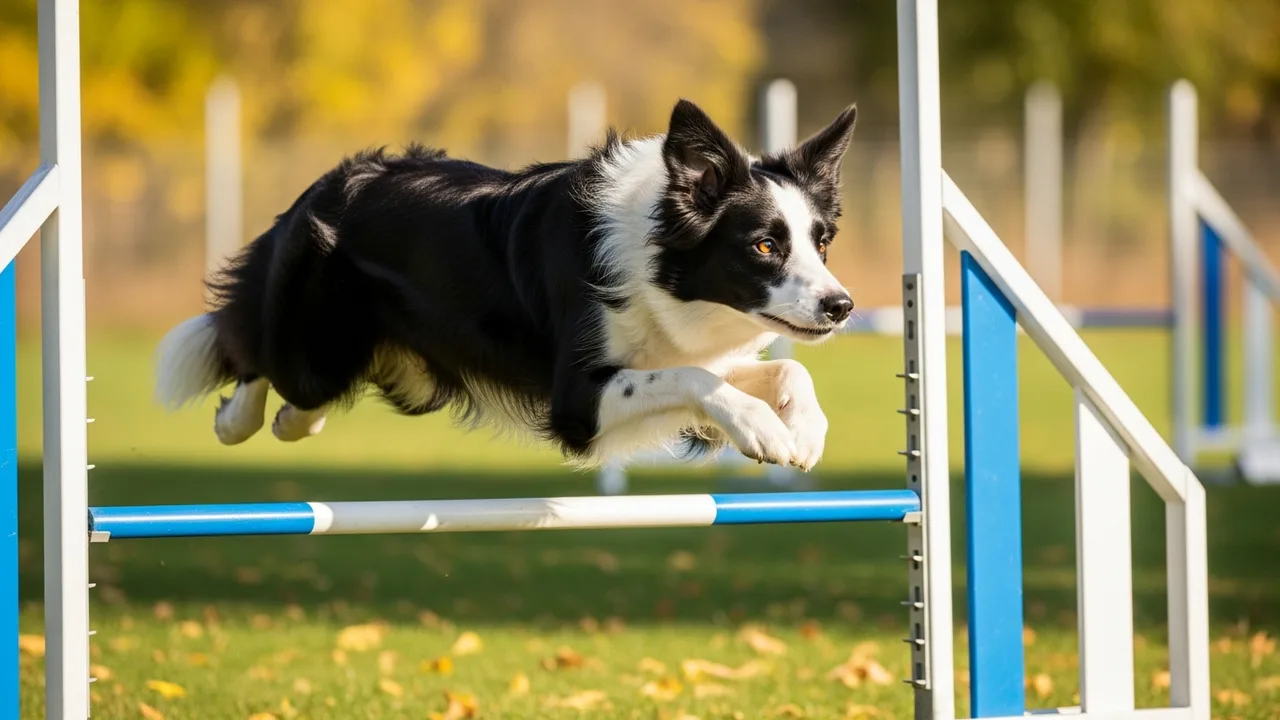

Agility is the sport most owners picture when they imagine doing something serious with a dog: the jumps, the tunnels, the weave poles, a dog and handler moving as one against the clock. The good news for Singapore owners is that it genuinely exists here, with clubs, dedicated indoor facilities and a competition ladder run by the Singapore Kennel Club. This guide covers what agility asks of your dog, where a beginner can start, and how the path runs from a first foundation class to a sanctioned trial.
What agility actually is
Agility is a timed obstacle sport in which a handler directs a dog around a set course of jumps, tunnels, weave poles and contact obstacles such as the A-frame, dog walk and seesaw. The dog runs off-lead, taking the obstacles in a sequence it has never seen before that day, guided only by the handler’s body, voice and timing. Scoring penalises knocked bars, missed contact zones and wrong turns, and the fastest clear round wins. At its best it looks effortless, but that ease is built on months of foundation work, and the partnership between dog and handler is the whole point of the sport.
What makes agility so well suited to a keen dog is that it engages body and brain at once. A dog is running, jumping and turning at speed while also thinking hard about where you are pointing it next, which is far more tiring and satisfying than a plain walk. That combination is why owners of high-energy breeds so often find agility transforms their dog’s behaviour at home: a mind and body that have been properly worked settle far more easily. Even trained recreationally, at low heights and just for fun, it is one of the richest activities you can share with a dog.
Is your dog suited to it?
Most healthy dogs can enjoy agility, but a few things make the difference between a dog that thrives and one that struggles. Sound structure and a healthy weight come first, because the sport involves repeated jumping and tight turning that load the joints; a dog with hip or elbow problems, or one carrying extra weight, is better suited to a lower-impact activity such as swimming. Flat-faced breeds that cannot cool themselves efficiently should not do high-intensity sport in this climate. Beyond the physical, the sport rewards a willing, focused temperament and enough drive to find the game rewarding, though a good instructor can build a lot of that drive over time.
Breed matters less than people assume. Border Collies and other herding breeds fill the winners’ podiums because of their speed and trainability, but agility welcomes every breed and mixed breeds too, and a large share of handlers run purely for enjoyment with an ordinary family dog. The honest test is not your dog’s pedigree but its body and its attitude: a structurally sound dog that likes working with you can learn agility. If you are unsure whether your dog is physically ready, a vet check before you start is a sensible first step, especially for a young or large-breed dog.
Where to start in Singapore
Singapore has a real agility scene, which is not something every activity on this island can claim. The Singapore Kennel Club is the national sanctioning body and the reference point for the sport, and there are dedicated facilities and trainers running beginner courses. Peak Agility Training Centre in Punggol is a large indoor canine-sports venue with a full set of competition equipment that also hosts seminars and competitions, and Singapore Dog Agility organises open events and runs positive-methods classes for dogs from around fifteen months old. Other trainers offer agility as part of a broader class programme; our trainer directory is a place to start comparing.
Whichever route you choose, do the same homework. Contact two or three providers, ask whether you can observe a class before enrolling, and pay attention to how the instructor treats both the dogs and the handlers. You want positive, reward-based methods, sensible attention to jump heights and joint safety, and a class size small enough that you get real coaching. Because schedules, intake dates and fees vary between providers and change over time, confirm the current details directly rather than trusting anything you read second-hand, this guide included.
The heat, and why indoors helps
Agility is strenuous, and strenuous exercise in Singapore’s heat and humidity is exactly the combination that causes heatstroke. A dog sprinting and jumping generates a lot of internal heat and sheds it far less efficiently than a person, so an outdoor course under the midday sun is a genuine risk, not a minor discomfort. This is the single biggest reason the island’s indoor facilities are such an asset: a climate-controlled or well-ventilated indoor venue lets a dog train at full effort without the danger, which is why so much serious agility here happens under a roof.
If you do train outdoors, treat timing as safety equipment. Work in the cool hours before roughly 9am or after 7pm, keep sessions short with plenty of rest and water, and stop at the first sign of trouble: heavy relentless panting, a dog slowing or lying down, or an unsteady gait. Learn the emergency response before you need it; our heatstroke first aid guide sets out the cooling protocol vets recommend. A handler who respects the heat is a handler whose dog has a long, happy agility career.
The path from beginner to competition
The journey usually starts with a foundation course rather than the full obstacle set. Early classes build the pieces: focus and connection with you, flatwork and directional cues, targeting, tunnel entries, and jumping at low or no height to protect young joints. Only as the dog gains skill and physical maturity do the heights rise and the sequences lengthen. This patient progression is not padding; it is what produces a confident, injury-free dog that reads your handling, and rushing it is the most common way people sour a promising dog on the sport.
For those who want more, the competition ladder is there and clearly defined. The Singapore Kennel Club sanctions agility trials under international rules, with a progression through levels and a pathway toward national-team selection for the most committed handlers. Plenty of people never compete and are perfectly happy running agility recreationally, and that is a completely valid way to enjoy the sport. But if you and your dog catch the bug, Singapore gives you somewhere to take it. Check the SKC trials page for the current calendar, and talk to your instructor about when your dog might be ready to enter its first event.