

6 min read
Last updated First published 2 June 2026
Understand mouthy play, create space safely and know when biting needs veterinary or behaviour support, without fixed training deadlines.
Why puppies mouth, and why that is normal
Puppies often explore and play with their mouths, but teeth on skin can still hurt. Do not assume every bite is play: pain, fear, frustration and overexcitement may also be involved. If you are unsure, or contact is intense or injurious, seek help rather than testing the dog further.
Understanding this matters because it shapes how you respond. Puppies are not mouthing you out of malice or dominance. They are practising, and they need a patient teacher, not a disciplinarian.
Start a calm, consistent response now, whatever your dog's age. There is no precise age after which learning stops, and no promise that a particular number of weeks will resolve the behaviour.
Make space and offer an appropriate activity
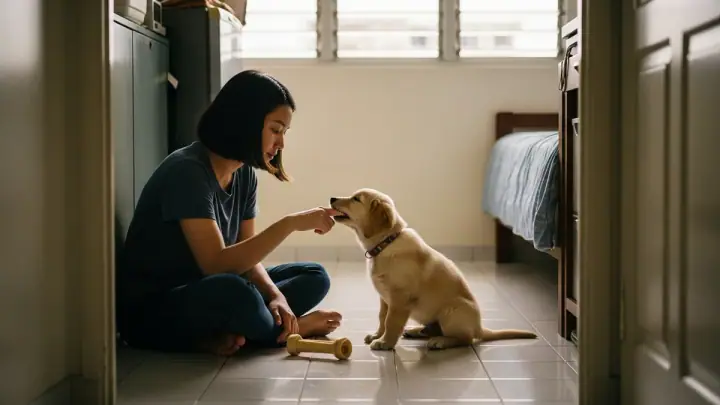
Keep suitable toys within reach and offer one before play becomes too intense. Avoid rapid hand movements that turn your fingers into part of the game. If you need space, calmly separate using a gate or door when safe. Shouting, pushing or deliberately provoking a response can make things worse.
Notice when mouthing happens: after visitors arrive, during play, when handled, or when your dog needs rest. A simple note about the situation is more useful than treating every episode as the same training problem.
Managing a mouthy puppy in a small flat with children nearby
In a three-room or four-room HDB flat, there is almost nowhere to send the puppy that is genuinely separate from family life. The common areas are shared, the rooms are small, and a baby gate across the kitchen entrance is about as much physical separation as most owners can manage. This means your management has to be proactive rather than reactive.
Arrange a comfortable dog-only space before busy family moments. A secure barrier can help an adult separate activities without reaching into the dog's mouth or asking a child to manage the situation.
A few practical rules that help in tight quarters:
- An adult should actively supervise dog-child interactions at every age, staying close enough to intervene. Separate them when that supervision is not possible.
- Use an appropriate toy for play, leaving room between hands and teeth. Stop an activity if either the child or dog becomes uncomfortable.
- Offer opportunities for undisturbed rest. Do not force a crate session because a fixed number of minutes has elapsed; use a comfortable space your puppy already accepts.
- Feed some of the puppy's meals from a Kong or a lick mat to give its mouth something appropriate to do during busy household hours.
Keep children away from a dog who is eating, resting or asking for space. Children should not be responsible for correcting mouthing. If contact is frightening or painful, separate first and seek professional help.
Redirecting onto chews: the practical backbone of the whole plan
Creating space can interrupt an interaction. Offering a suitable activity gives you another option when it is safe to do so.
Keep several appropriate chew items within reach around the flat. Not one rope toy in the corner of the living room. Multiple items in every space where the puppy spends time. When the puppy starts to mouth your hand, calmly swap your hand for a chew. Do this before the biting escalates, not after. The moment you feel teeth on skin that are firmer than you want, the chew comes out.
Choose a toy suitable for your dog's age, size and chewing style, and supervise its use. Remove damaged items. Ask your vet about edible chews if your dog has dental or dietary concerns; a shop shelf is not proof that every chew suits every dog.
The goal is not to distract the puppy forever. The goal is to give the puppy's mouth a legal outlet often enough that mouthing humans simply becomes less interesting than the chew. Over weeks, with consistent redirection, most puppies shift their default mouthing behaviour towards objects and away from hands.
When an adult dog still mouths
If an adult dog mouths, consider the context and whether the behaviour is new. A veterinary check can help identify pain or another health concern. Do not assume a rescue background explains the behaviour or means improvement must take longer.
Start by assessing when and why the mouthing happens. Mouthing may occur during greetings, during play, or when the dog is frustrated and has no other outlet. Each context needs a slightly different response.
For greetings: ask visitors to turn away and withhold attention when the dog mouths. In an HDB lift lobby, where a friendly dog jumping up and mouthing a neighbour can become a complaint, this is a neighbourly matter as much as a training one. Keep the dog on a short lead in communal areas until the greeting behaviour is under control. Practise calm greetings with the dog on lead, rewarding four paws on the floor before any attention is given.
For play mouthing in adults: structured play sessions with a clear start and end help. Pick up the tug toy, play, and when the dog's mouth hits your hand, play stops immediately. Not dramatically, not with a loud reaction. The toy drops, you go still, play resumes only when the dog settles. Again, consistency across everyone in the household is the only thing that makes this work long-term.
Play mouthing versus a genuine warning: reading what the mouth is telling you
This distinction matters, and owners sometimes confuse the two because both involve teeth near human skin.
Play mouthing in a puppy or adult dog has a loose, bouncy quality to it. The dog's whole body is relaxed, often wiggly. The mouth contact is repeated but not intensifying. The dog is easy to redirect. It looks like a game that has gotten slightly out of hand.
Stiffness, freezing, growling or avoidance can indicate discomfort. Body language is not a reliable permission slip to continue an interaction, and a dog can bite without an obvious warning. Create space if you are uncertain.
Do not punish growling. It is information about the situation, and suppressing a signal does not resolve the underlying concern. Avoid forcing contact or taking items to test the response.
Speak with your vet and ask for a suitably qualified reward-based behaviour professional if you are concerned. Injuries to people need medical advice. Biting around children calls for a safety plan, not tougher discipline.
Progress without a deadline
Look for changes in the situations you have recorded: fewer difficult episodes, an easier transition to a toy, or more comfortable rest. There is no reliable universal three-week or six-month timetable.
Agree a simple response with everyone at home and tell your professional adviser what is improving and what is not. Seek help promptly if the behaviour worsens, causes injury or makes anyone feel unsafe. You do not need to wait for a training deadline to ask.
Sources and review
Dogs Trust mouthing and biting guidance; Dogs Trust child and dog safety; Dogs Trust aggression and support guidance. Editorial source check, 14 September 2026. Named businesses are examples, not blanket endorsements. No individual clinical review is claimed.
Start with a quiet moment together →A small idea to try, with progress kept in your Pack.
More training guides
-
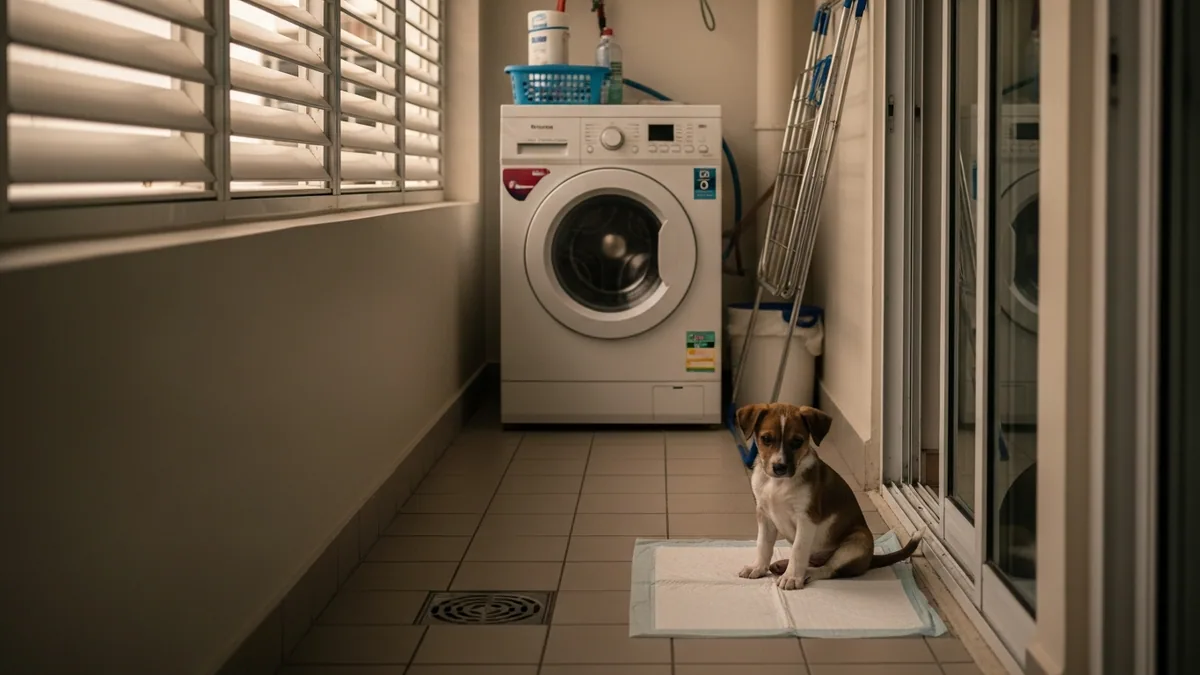 Toilet training the apartment way No garden, no driveway, just a tiled floor and a lift that takes two minutes to arrive. Here is how to toilet train a puppy in a Singapore flat without losing your mind.
-
 Clicker basics A clicker is a timing tool, nothing more and nothing less. Learn to use it well in a small Singapore flat and you will have the clearest, most efficient communication method available for teaching your dog almost anything.
-
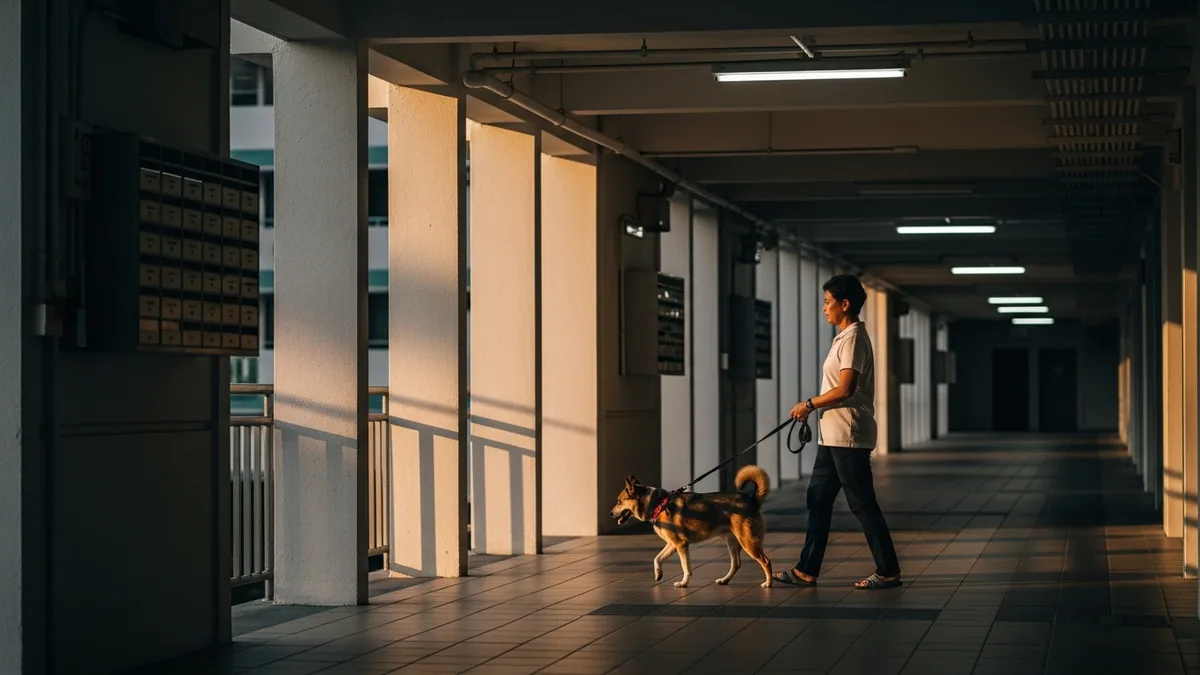 Loose-leash walking in Singapore’s shared spaces Start with room, reward a slack lead and make the task easier when your dog struggles. Lift lobbies, narrow pavements and crossings need practical choices, not a perfect heel or a fixed timetable.
-
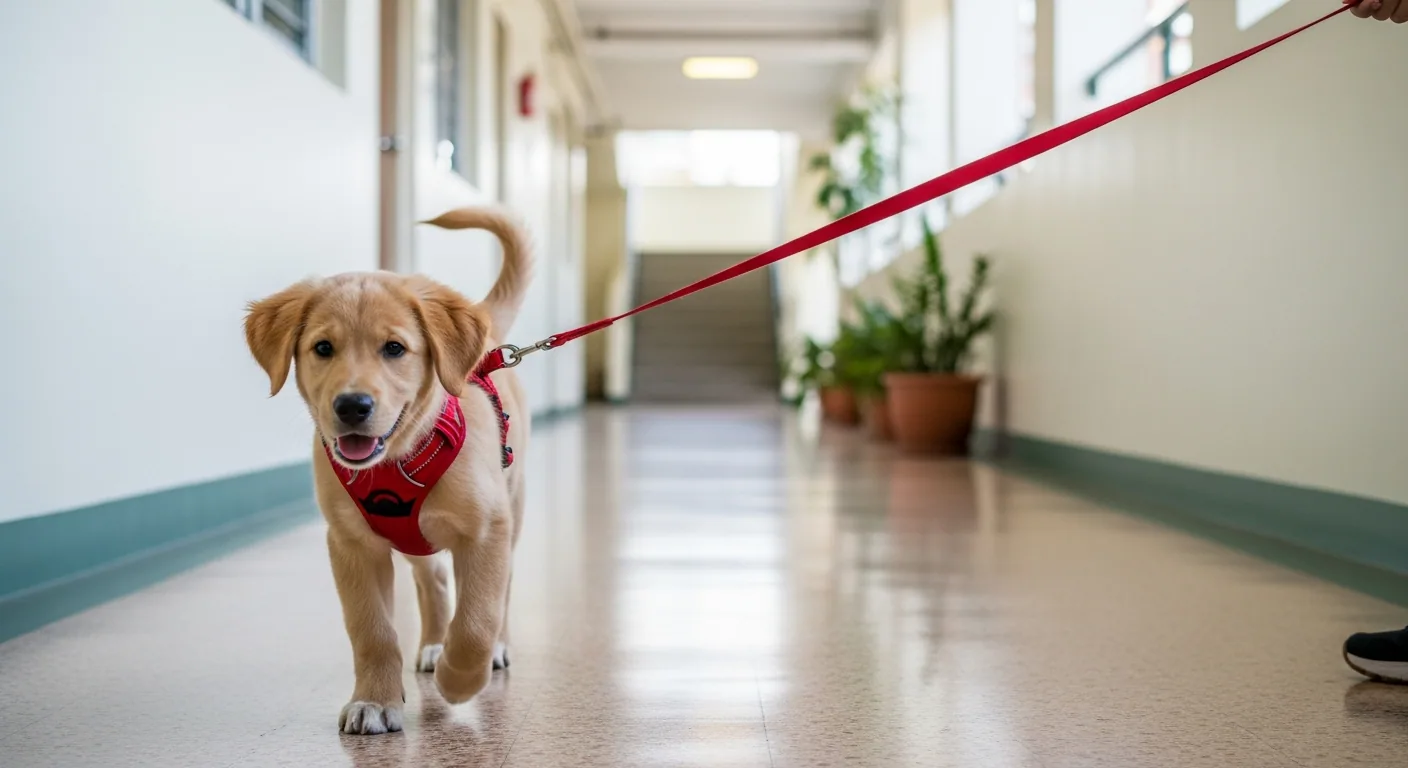 Leash Training a New Dog or Puppy in Singapore Getting a brand-new dog or puppy happy on a leash is a gentle, gradual job, not a one-session fix. Start indoors, reward the position you want, and let your dog set the pace through HDB corridors, lifts and the Singapore heat. This starter guide covers collar and harness choice, first steps, and how to handle pulling and lunging kindly.