

4 min read
Last updated First published 2 June 2026
Plan walks and short training sessions around your dog and the actual conditions, with an indoor backup and clear steps if overheating is suspected.
Choose the conditions, not just the clock
The lead is by the door and your dog has noticed. Before you head out, check what the walk will actually feel like at dog level. An early start or a late evening can offer cooler conditions, but neither is a guarantee. Warm nights, humidity, still air and pavement that has held the day's heat can make a familiar route uncomfortable.
There is no universal safe hour, temperature or session length for every dog. Age, fitness, health, coat, body shape and the amount of exertion all matter. Ask your vet for an individual plan if your dog has breathing or heart problems, has previously overheated, or struggles with ordinary walks.
A quick check before leaving
- Look at the current conditions and forecast, not yesterday's routine. Choose a route with shade and an easy way home.
- Bring drinking water and a bowl. Do not rely on a public tap working.
- Check the surface. If it feels hot to your hand, choose another route. A comfortable hand test does not establish that the whole walk is safe.
- Notice your dog's breathing and willingness to move before starting. A dog already struggling in the doorway should not be encouraged into exercise.
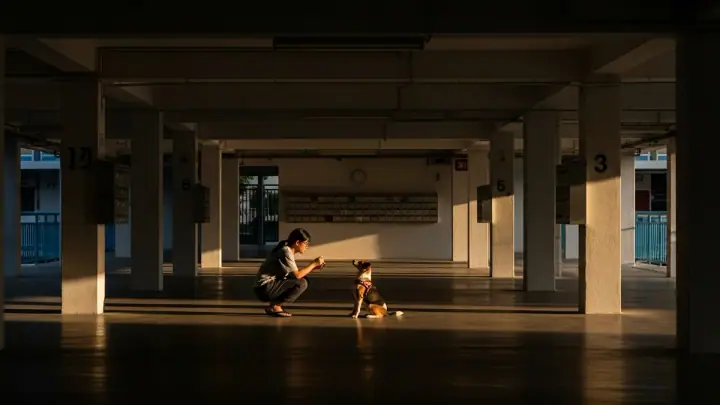
For an HDB or condo walk, think in small loops rather than a long outward journey. A short circuit lets you return home without needing your dog to complete the same distance again. Keep toilet trips separate from the ambition to fit in a training session.
Make the outdoor session easy to shorten
Practise one familiar skill near home, then reassess. A few comfortable repetitions of checking in with you are more useful than finishing a planned number while your dog is tiring. Sniffing stops are an opportunity to observe, not permission to stay out indefinitely.
Shade reduces direct sun exposure but cannot remove heat and humidity. Grass, covered walkways and artificial turf also need checking. Do not assume a shaded dog run or carpark is cool enough for active play.
Flat-faced dogs, older dogs, overweight dogs and dogs with some health conditions can be particularly vulnerable. Noisy or effortful breathing deserves attention, even if it seems familiar for the breed. Avoid treating a breed-specific early-morning cutoff as a safety certificate.
Let the flat do some of the work
On an uncomfortable day, move the training goal indoors. Try a short hand-target game, finding a few pieces of the normal food ration, or settling on a mat while you make a drink. Choose a comfortable room and stop while the activity is still enjoyable.
Indoor enrichment complements suitable exercise. There is no reliable conversion such as ten minutes of sniffing equalling a particular length of walk. Your dog's needs and response matter more than a formula.
Set up a small basket with the lead, bowl and a favourite indoor toy. It makes a change of plan easy: if the outdoor conditions are wrong, you already have something pleasant to offer. UDO's suggestion: make the backup plan feel like a treat, not a cancelled outing.
If you suspect overheating
Heavy panting, unusual breathing effort, drooling, weakness, vomiting, confusion or collapse can signal heat-related illness. Stop activity and begin cooling immediately while contacting a vet. Do not wait for collapse or for every symptom to appear.
Move out of the heat. Wet the body with available water cooler than the dog, keeping water away from the face and airway, and use airflow where possible. Do not wrap the dog in a wet towel. Start cooling before transport, then continue in a cooled, ventilated vehicle under veterinary advice. Do not delay while trying to find water at an exact temperature. Avoid immersion for an unconscious dog.
Arrange urgent veterinary assessment even if your dog appears to recover. Keep the nearest emergency clinic's number saved before you need it.
A routine that can change with the day
Plan a cooler opportunity for outdoor activity, a shorter alternative near home, and an indoor option. Tell anyone else walking your dog that the shorter option is intentional. A dog walker or family member should feel able to turn back without having to complete a promised distance.
Recheck the plan after illness, a change in fitness or any episode of heat distress. The aim is a comfortable routine you can repeat, not a timetable you must follow whatever the weather.
Sources and review
RSPCA: recognising overheating and immediate cooling; Royal Veterinary College: heatstroke prevention and first aid. Editorial source check, 14 September 2026. This guide has not received individual clinical review.
More training guides
-
 Toilet training the apartment way No garden, no driveway, just a tiled floor and a lift that takes two minutes to arrive. Here is how to toilet train a puppy in a Singapore flat without losing your mind.
-
 Clicker basics A clicker is a timing tool, nothing more and nothing less. Learn to use it well in a small Singapore flat and you will have the clearest, most efficient communication method available for teaching your dog almost anything.
-
 Loose-leash walking in Singapore’s shared spaces Start with room, reward a slack lead and make the task easier when your dog struggles. Lift lobbies, narrow pavements and crossings need practical choices, not a perfect heel or a fixed timetable.
-
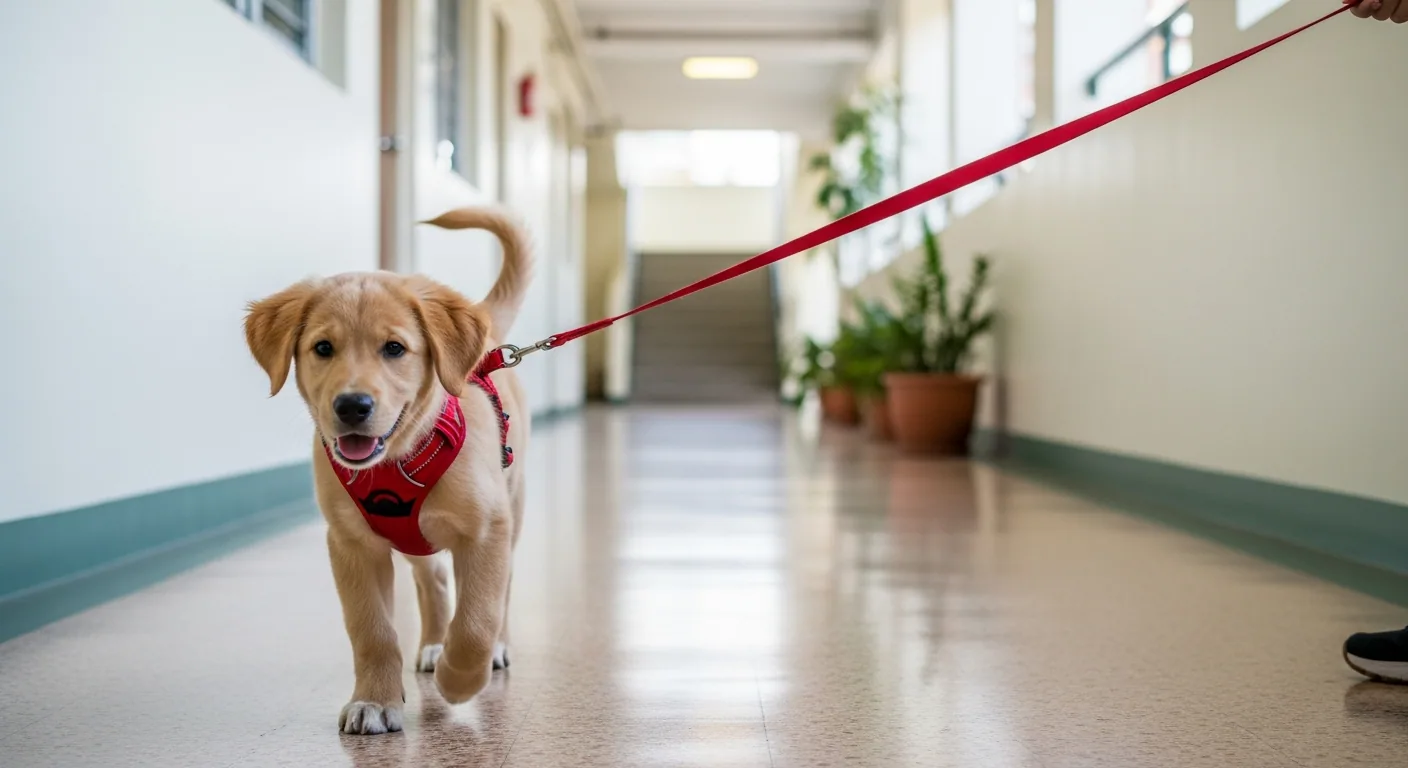 Leash Training a New Dog or Puppy in Singapore Getting a brand-new dog or puppy happy on a leash is a gentle, gradual job, not a one-session fix. Start indoors, reward the position you want, and let your dog set the pace through HDB corridors, lifts and the Singapore heat. This starter guide covers collar and harness choice, first steps, and how to handle pulling and lunging kindly.