
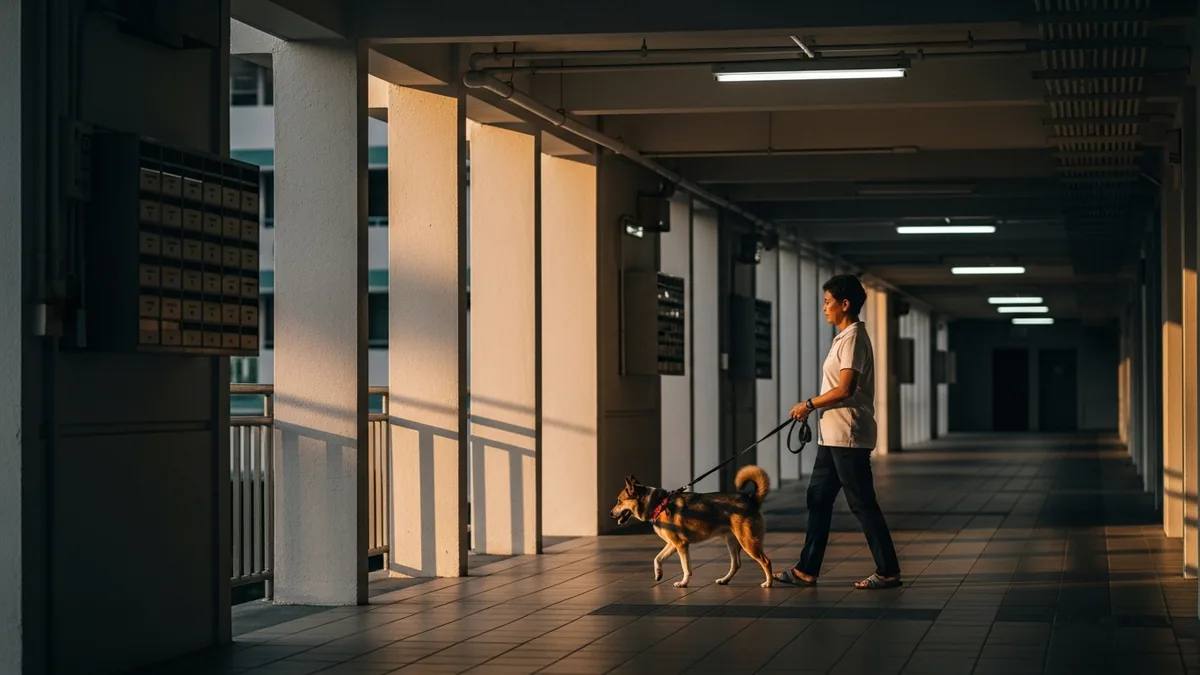

4 min read
Last updated
Start with room, reward a slack lead and make the task easier when your dog struggles. Lift lobbies, narrow pavements and crossings need practical choices, not a perfect heel or a fixed timetable.
Start with a little room and a loose lead
Practise a few comfortable steps in a quiet, permitted space. Reward your dog when the lead is slack, then move on together. If the lead tightens and it's safe to pause, stop gently and invite your dog back towards you. Don't jerk the lead or turn sharply against it. If fear, traffic or another hazard is driving the pulling, create distance instead of waiting for a training response.
Create a loose-leash practice plan.
This is everyday skill practice. It isn't a treatment plan for reactivity, aggression or distress, and there's no deadline for getting it right. An urgent toilet trip takes priority over practising manners.
From the front door to the lift
Begin indoors if the shared corridor is already too busy. Secure the lead before opening the door. Practise a comfortable pause where you won't block neighbours; standing is fine if sitting is uncomfortable. Keep the doorway clear and move through rather than setting up equipment in a common passage.
At the lift, stand aside so people can leave first. Give neighbours the option not to share a small space with your dog. If the car is crowded or another dog is waiting, taking another lift can be the useful choice. You don't need to turn that encounter into a greeting or a training test.
A small practice sequence
- Choose an easier start. Use a quiet area where dogs are permitted, away from traffic, entrances and other dogs. Check equipment fit and carry small rewards your dog already tolerates, allowing for them in their normal food.
- Notice slack. Reward a moment beside you with a loose lead. Take a few steps together and reward another comfortable moment. Sniffing and pauses can be part of a walk; continuous heelwork isn't the goal.
- Respond to tension safely. Where there's room to stop, pause without hauling backwards. Encourage your dog back and continue when the lead slackens. If you need to leave a hazard, move away safely rather than staying still to prove a point.
- Make the next attempt easier. If your dog is repeatedly pulling, unable to respond or trying to escape, reduce the distraction or end the practice. Don't advance because a number of days has passed. A different route or a shorter outing is a useful adjustment.
This adapts Dogs Trust's reward-based loose-lead foundations to shared-space decisions. The lift, corridor and crossing examples are editorial planning suggestions, not a guarantee of progress or rules that apply to every estate.
Void decks, crossings and park connectors
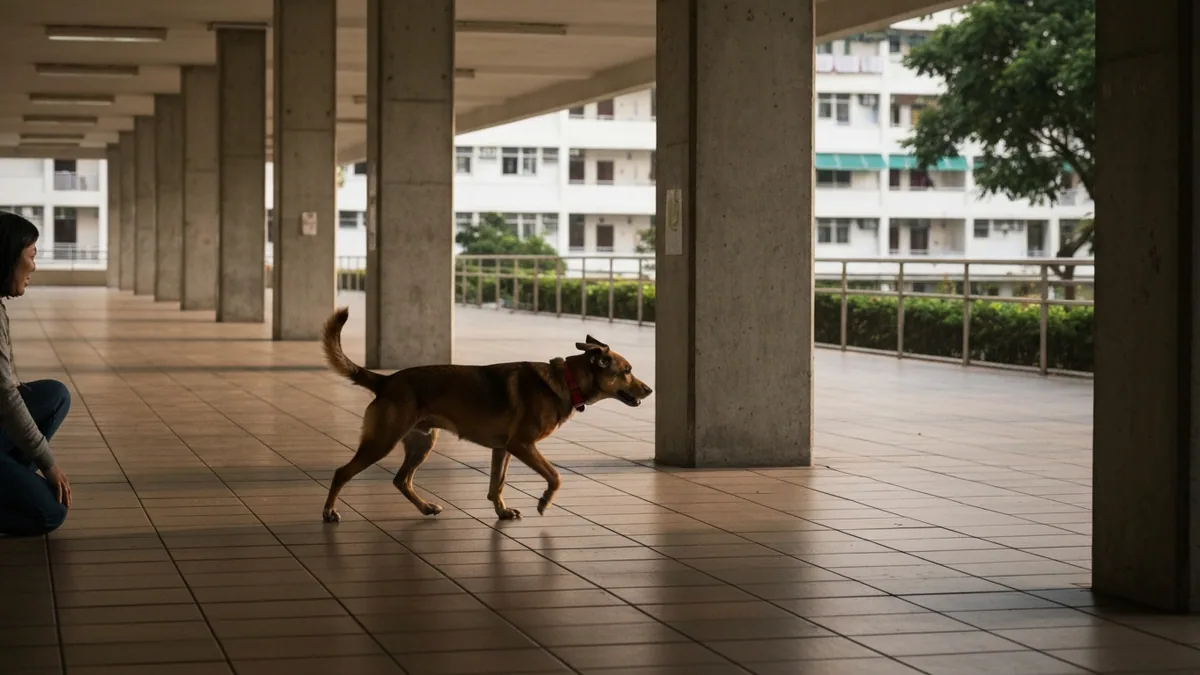
- Blind corners and pillars: keep your dog close enough that the lead won't sweep across someone else's path, while allowing natural movement. Look ahead before stepping around a column. Avoid wrapping a lead around your hand.
- Cyclists, mobility devices and passing neighbours: move into a safe clear space when possible and keep the dog on your side. Don't let a lead stretch across the route. A narrow pavement isn't the place to insist on repetitions.
- Food or busy seating: choose space rather than practising beside occupied tables or food stalls. Ask before approaching another person or dog.
- Roads and carpark entrances: prioritise secure handling and a safe crossing. Practise the skill elsewhere before adding that distraction.
NParks' current dog-access guidance identifies permitted dog-run use and areas where pets cannot go. Keep your dog on lead outside permitted off-leash areas and follow signs and the operator's current rules. A park connector or a pleasant-looking trail isn't permission to enter a nature reserve.
Equipment and the day you're having
Use comfortable, securely fitted equipment and ask a qualified professional for fitting help if your dog pulls strongly or equipment rubs. A harness doesn't teach loose-lead walking by itself. Don't use pain or fear to create a quiet-looking walk: AVSAB's humane-training guidance recommends reward-based methods.
Before leaving, open walking conditions and check whether the readings are current and available. Check permission for your intended route. Don't treat an early hour, tree cover or a saved outing as clearance to go. For a planned outing, open the outing planner, read the stops and distance labels carefully, and confirm the route before travelling.
When to ask for individual help
If pulling is sudden, handling seems painful, or your dog is panicking, lunging or at risk of harming someone, contact your vet and use the professional-support pathway. AVS advises veterinary assessment of behaviour problems. Don't provoke a reaction to test the advice or record a demonstration.
Sources and review status
Sources checked 28 October 2026 by UrbanDogOwner Editorial. This is general editorial guidance, not a named veterinary or behaviour-professional review. A source citation is not an endorsement of Udo or any listed provider.
More training guides
-
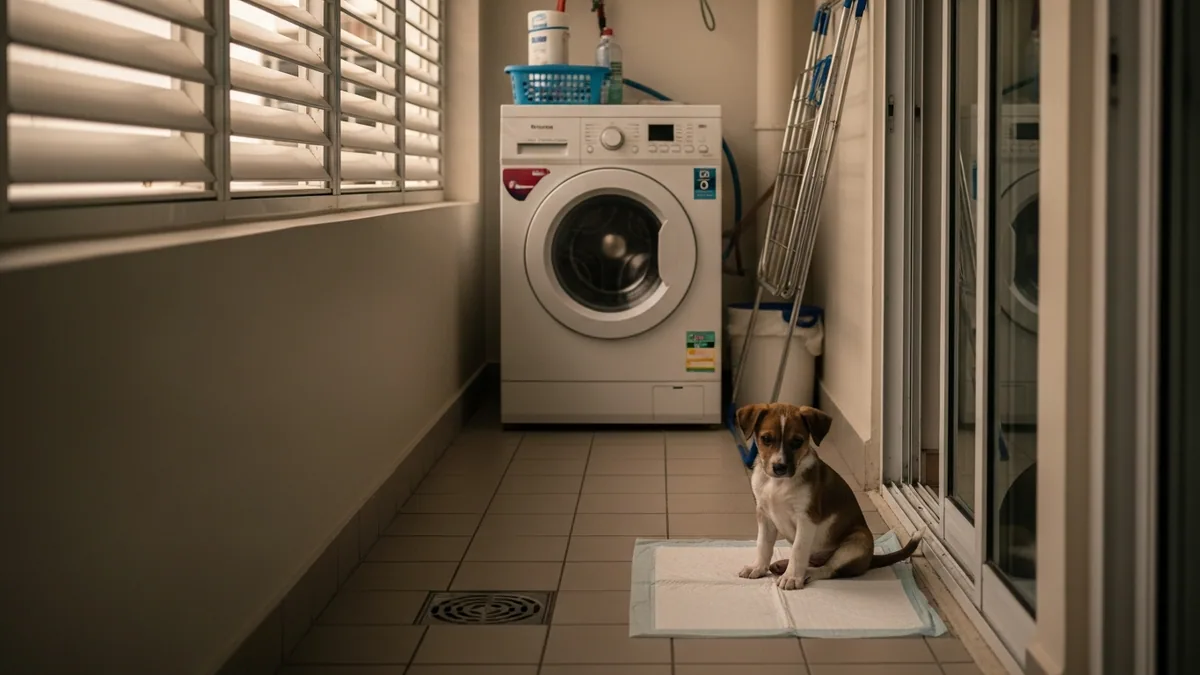 Toilet training the apartment way No garden, no driveway, just a tiled floor and a lift that takes two minutes to arrive. Here is how to toilet train a puppy in a Singapore flat without losing your mind.
-
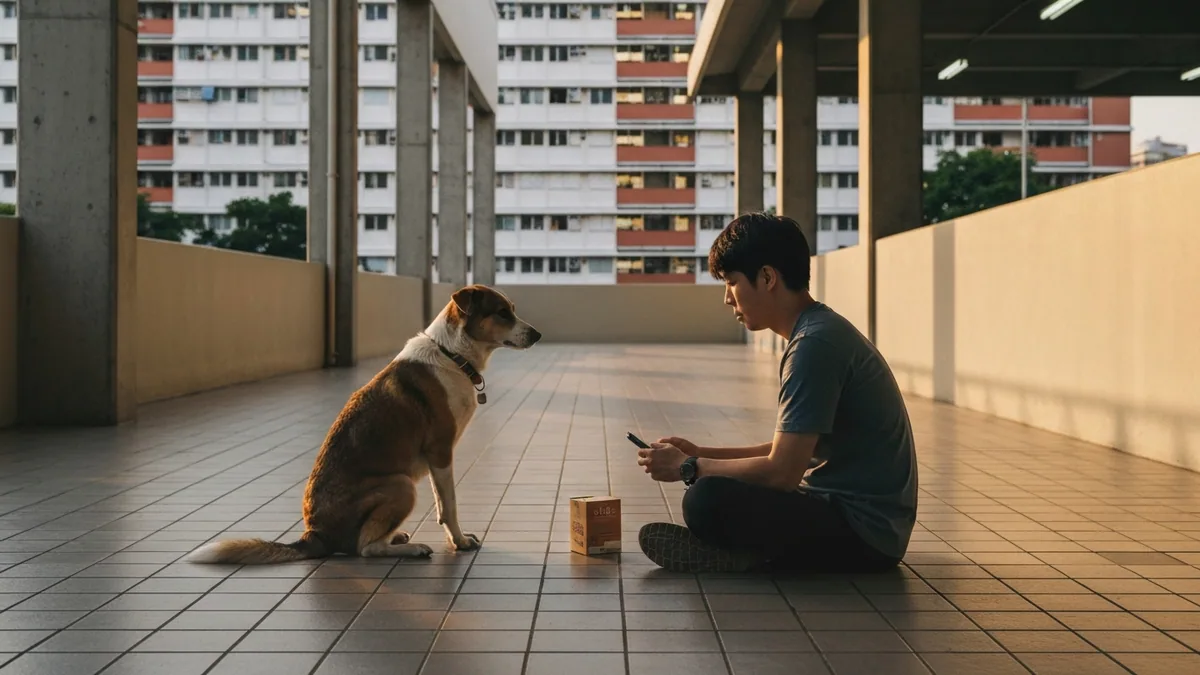 Clicker basics A clicker is a timing tool, nothing more and nothing less. Learn to use it well in a small Singapore flat and you will have the clearest, most efficient communication method available for teaching your dog almost anything.
-
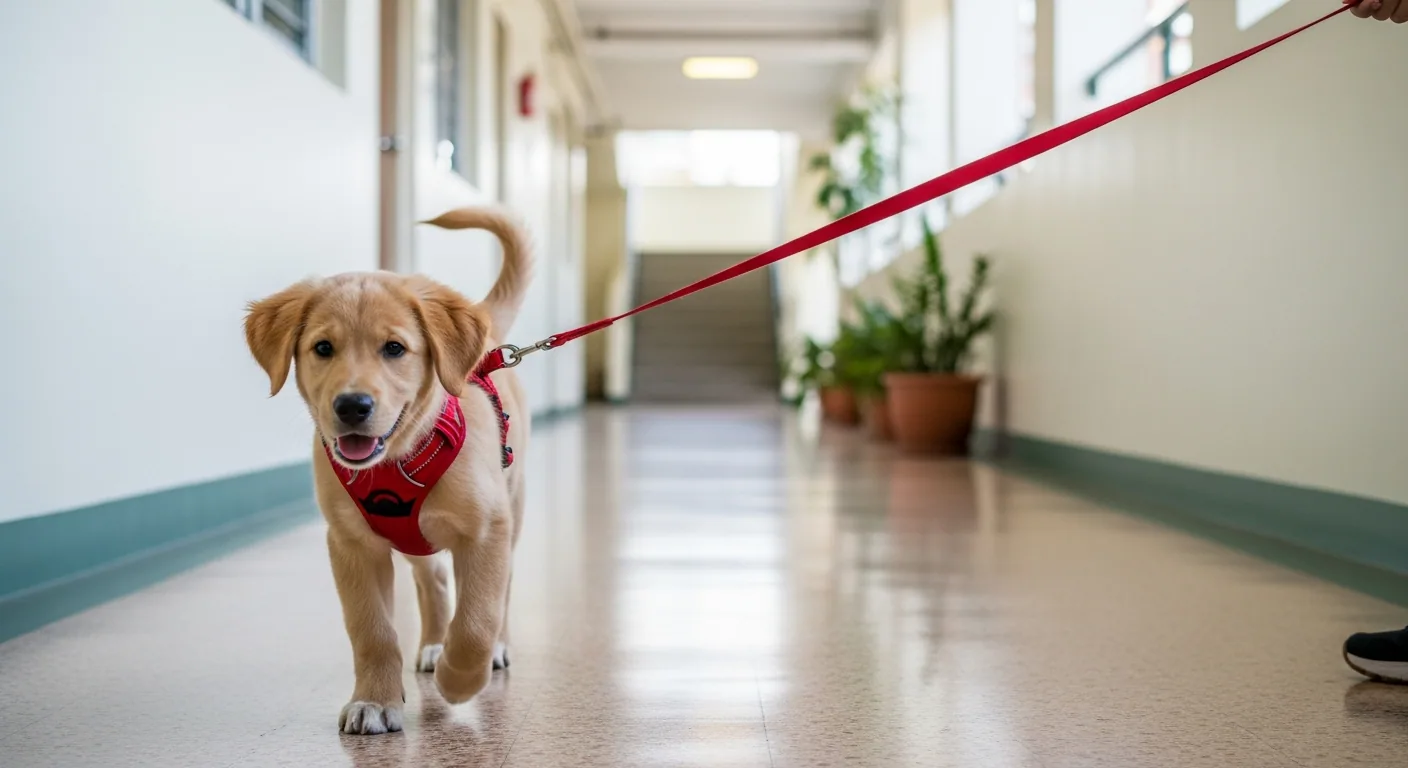 Leash Training a New Dog or Puppy in Singapore Getting a brand-new dog or puppy happy on a leash is a gentle, gradual job, not a one-session fix. Start indoors, reward the position you want, and let your dog set the pace through HDB corridors, lifts and the Singapore heat. This starter guide covers collar and harness choice, first steps, and how to handle pulling and lunging kindly.
-
 Recall, and where to practise it safely in Singapore Recall is the most important thing you can teach your dog, and Singapore gives you almost nowhere legal to practise it off-leash. Here is how to build it anyway, in the spaces you actually have.