

7 min read
Last updated
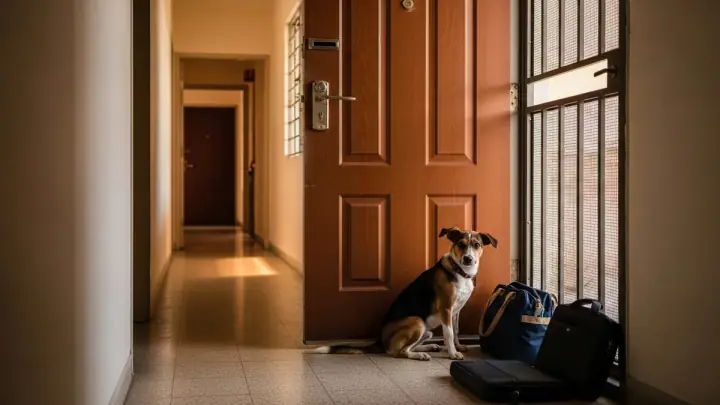
Help a dog who struggles alone with a veterinary assessment, suitable company and gradual practice within their comfort. Barking timing is not a diagnosis, confinement can worsen distress, and friendly reassurance is not a reason to blame yourself.
How do I manage a dog who struggles alone in an HDB flat?
Start with welfare and a workable care plan. A dog who panics when you leave needs help with that distress, even if the neighbours have not complained. A camera, a veterinary appointment and temporary arrangements for company are more useful first steps than buying a louder radio or a stronger crate.
Flat living can make the practical problem urgent: you may have a shift to reach, a shared wall and no family member at home. None of that makes the dog’s distress your moral failure. Write down the actual gaps in care and solve the next unavoidable absence first. Training can then proceed within a routine that does not repeatedly overwhelm the dog.
Use a camera to collect observations, not a diagnosis
The RSPCA recommends checking dogs on video when they are alone, including quieter signs of difficulty. Watch whether your dog rests, repeatedly moves between the door and window, vocalises, ignores familiar activities or reacts to corridor noise. Note what happened immediately beforehand.
Our earlier rule that boredom starts after an hour while anxiety starts immediately was too definite. Timing is useful evidence, not a diagnostic test. A dog may have several difficulties at once, including noise sensitivity, discomfort or frustration with confinement. Do not repeat a distressing absence simply to obtain a longer video.
Keep the camera pointed at your own living space, not through an open door into a neighbour’s home. Secure the account, limit who can watch and share only the clips your vet or behaviour professional needs. A short written log makes footage easier to interpret: date, departure arrangement, first change in behaviour and how the dog recovered.
Build a care rota around the difficult parts of the day
Draw a simple weekday timeline from the first person leaving to the last person returning. Include travel time and a realistic allowance for delays. A lunch visit splits the day on paper, but it does not prevent a dog becoming distressed immediately after each departure.
Consider a trusted sitter, a familiar family member, adjusted shifts or suitable daycare. Match the arrangement to your dog: a sociable dog may enjoy a carefully chosen group, while a dog worried by other dogs may need individual company. Trial the handover while you are available to help, rather than making the first full day a test.
Give the caregiver written instructions about access, feeding, medication prescribed by the vet, toileting and emergency contacts. Agree what they should do if the dog cannot settle or they are delayed. Keep a backup contact who can actually reach the flat. Review the arrangement after the first trial instead of assuming a booked service has solved the welfare problem.
Ask providers for current written prices and cancellation terms. Our earlier generic Singapore price ranges were not supported by current provider quotes. A cheaper visit is not better value if it leaves the same unmanageable absence around it.
Make the home arrangement suitable for this dog
Provide water, a comfortable resting area and a safe environment. Check where sunlight falls while you are out and whether normal household ventilation remains available. Do not move the dog into a hot service yard or close a room merely because the noise reaches neighbours less easily.
If the camera shows reactions to people passing the gate, reducing that view may help. Test any background sound at low volume while you are home. Sound masking should not be loud enough to disturb neighbours or conceal distress from you. If a closed door or gate makes the dog more upset, record that and discuss a different arrangement.
A crate can worsen escape-related distress. Do not use it to stop door scratching unless the dog is already comfortable in it and the professional plan supports that use. Broken teeth, injured nails or repeated attempts to force through a barrier are reasons to stop and obtain help.
Practise within the dog’s comfort, with professional guidance
The Merck Veterinary Manual describes graduated departures that remain below the dog’s anxiety threshold. The appropriate starting point might be much less than a trip to the lift. There is no universal three-second opening exercise or compulsory number of repetitions.
For your household plan, separate practice from unavoidable real-life departures. Record what you changed in a session, so you can tell whether closing the door, picking up a bag or moving farther away mattered. Keep the next step small enough for the dog to remain comfortable. A difficult day is information to adjust the plan, not a reason to push harder.
Professional approaches to departure cues vary. Repeatedly jingling keys until the dog stops reacting is not a mandatory treatment for every dog. Ask the professional to explain what they are teaching, how you will recognise comfort and what you should do if the dog becomes worried. Do not turn weekends into long drills to compensate for distressing weekdays.
Communicate with neighbours without promising a cure date
If barking affects nearby homes, acknowledge it and explain the practical steps underway. Offer an appropriate way to report the time and duration of noise, without asking neighbours to tolerate an indefinite problem. A factual message is more useful than promising improvement within six or eight weeks.
For example: “I’m aware our dog is struggling when left alone. We’ve arranged help and are seeking veterinary advice. If you hear sustained barking, please send the time so we can check the recording.” Adapt this to your relationship and privacy preferences. You do not need to circulate medical records or share a camera login.
Keep any formal correspondence and respond through the channel that sent it. This article does not predict an enforcement outcome or treat a complaint as a diagnosis. The immediate priorities remain reducing distress and preventing further disturbance.
Get the right help early
Dogs Trust distinguishes training skills from behaviour support for emotional problems and recommends a veterinary check when behaviour is concerning. Ask your vet about pain or illness, and about referral to someone experienced in separation cases. Check the practitioner’s actual qualification and methods; membership of an organisation alone is not the same as assessed certification.
If medication is prescribed, ask about expected benefits, adverse effects, follow-up and how it fits with the care and training plan. It is not a DIY remedy or evidence that you have failed. Seek prompt veterinary help for injuries, sustained severe distress, repeated vomiting, appetite loss or another concerning change.
Greet your dog kindly and calmly. Do not punish damage or toileting on return, and do not assume comforting the dog caused the anxiety. Track comfortable rest, eating and recovery as well as noise. A silent dog is not automatically a comfortable dog.
Frequently asked questions
Can the timing of barking diagnose separation anxiety?
No. Timing helps assessment, but video, history and a veterinary check are needed to consider other causes.
Is a lunchtime walk enough?
Not if the dog becomes distressed before or after the visit. Arrange company around the dog’s actual tolerance.
Should I crate a dog who scratches the front door?
Not as an automatic fix. Confinement can worsen distress and escape injuries. Seek a suitable professional plan.
Should I ignore my dog when I return?
Use a friendly, calm greeting. Do not punish damage or treat reassurance as proof that you caused anxiety.
Can I promise neighbours a recovery date?
No reliable fixed date applies. Explain the concrete steps you are taking and provide factual progress updates.
When should I contact the vet?
Contact the vet when distress is concerning, especially with injury, appetite loss, repeated vomiting or sudden behaviour changes. Do not wait weeks for training to fail.
Sources and editorial review
Merck Veterinary Manual: assessment and treatment; RSPCA: comfortable alone-time learning; Dogs Trust: choosing behaviour support. Editorial source review: 12 September 2026. Singapore household and neighbour examples are practical suggestions, not a clinical diagnosis or a prediction of legal outcomes.
More training guides
-
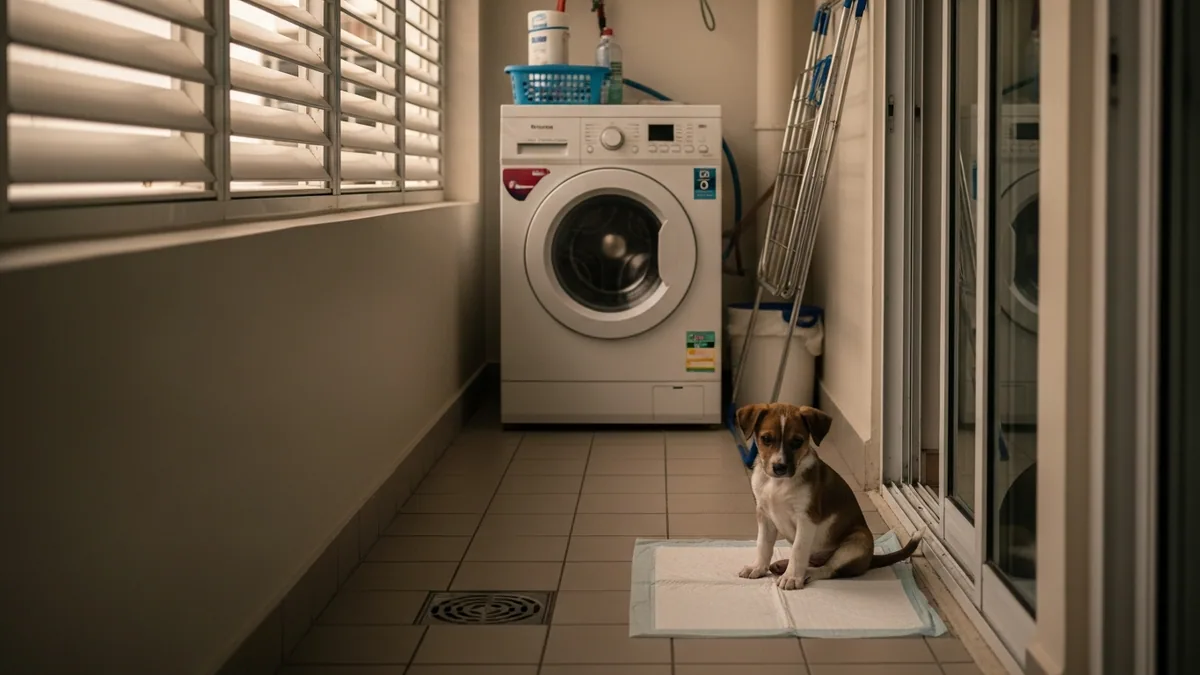 Toilet training the apartment way No garden, no driveway, just a tiled floor and a lift that takes two minutes to arrive. Here is how to toilet train a puppy in a Singapore flat without losing your mind.
-
 Clicker basics A clicker is a timing tool, nothing more and nothing less. Learn to use it well in a small Singapore flat and you will have the clearest, most efficient communication method available for teaching your dog almost anything.
-
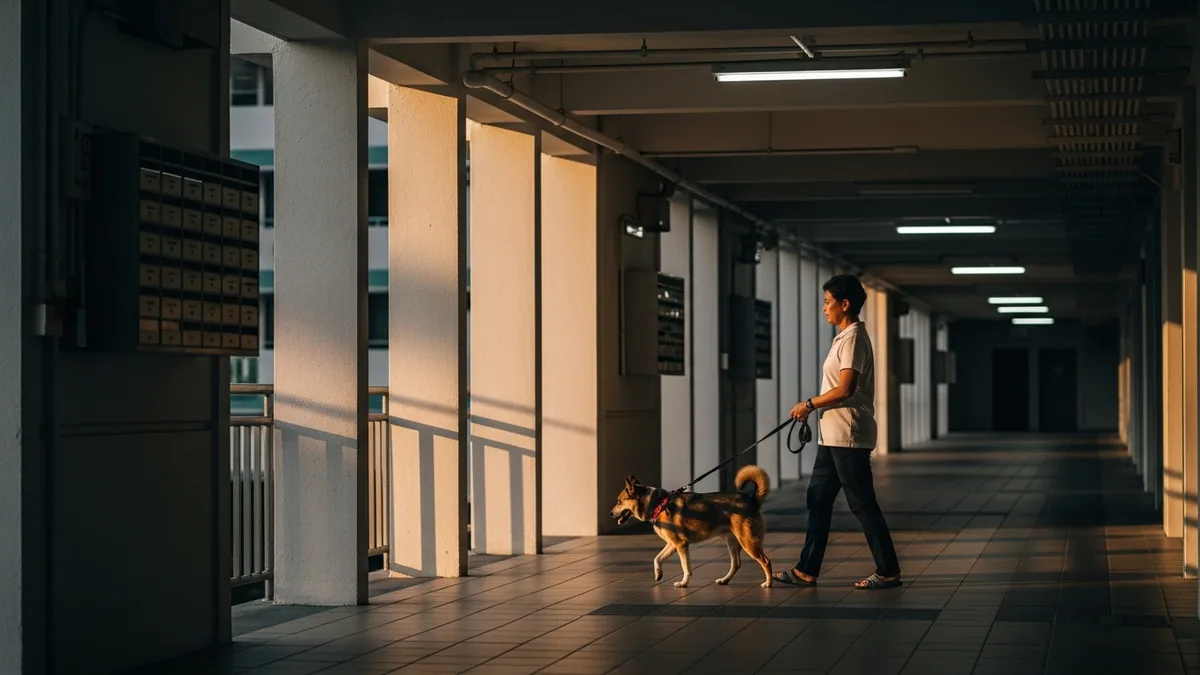 Loose-leash walking in Singapore’s shared spaces Start with room, reward a slack lead and make the task easier when your dog struggles. Lift lobbies, narrow pavements and crossings need practical choices, not a perfect heel or a fixed timetable.
-
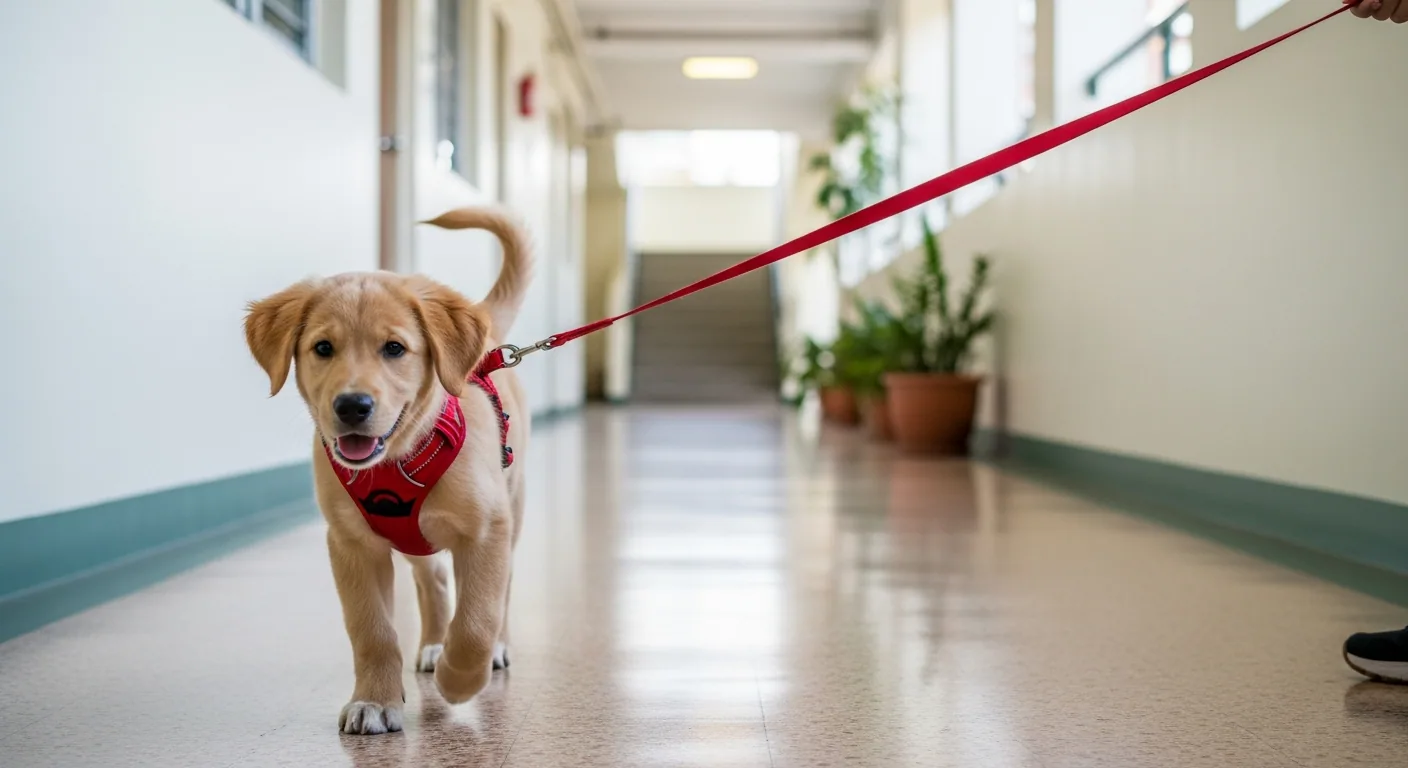 Leash Training a New Dog or Puppy in Singapore Getting a brand-new dog or puppy happy on a leash is a gentle, gradual job, not a one-session fix. Start indoors, reward the position you want, and let your dog set the pace through HDB corridors, lifts and the Singapore heat. This starter guide covers collar and harness choice, first steps, and how to handle pulling and lunging kindly.