

8 min read
Last updated First published 29 July 2026
After snapping, lunging or a bite, prevent another incident, obtain care for injuries and contact your vet. Build an individual safety plan; a muzzle reduces risk but cannot eliminate it, and investigation outcomes cannot be predicted from a general guide.
My dog has snapped or bitten. What should I do now?
First prevent another incident. Create distance without confronting the dog, keep other people and animals away, and obtain medical or veterinary help for anyone injured. A near-miss also deserves attention. You do not need to wait for a serious bite before calling your vet.
It can be frightening to see a dog you love behave this way. You may feel embarrassed about the lift lobby encounter or worried about what a neighbour will do next. The useful response is a concrete safety plan and an assessment of your individual dog, rather than blame, a social-media diagnosis or a promise that one training session will fix everything.
After a bite, put care ahead of arguments
Once everyone is safely separated, wash an animal-bite wound thoroughly with soap and water and seek medical care promptly. HealthHub lists animal bites among wounds needing a doctor. Do not judge the need for care solely by how small the surface mark looks. Serious bleeding or another emergency needs emergency medical assistance.
If another animal was bitten, contact a vet promptly and explain the location of the bite and any breathing difficulty, collapse or other concerning signs. An injured animal can react defensively to handling. Tell the clinic about both the injury and the behaviour before arrival so it can plan a safer handover.
When it is safe, exchange contact details and make a factual record: time, location, what happened, witnesses and available photographs. Do not delay care while debating fault or trying to obtain the perfect video. Keep original records privately; posting identifiable people online is not a substitute for reporting through the appropriate channel.
AVS advises urgent reporting when an animal shows signs suggestive of rabies, through its Animal Response Centre at 1800-476-1600. Singapore’s rabies-free status does not remove the need for medical assessment after a bite. Tell the doctor about any overseas exposure, import history or other relevant information you actually know.
Aggression describes behaviour, not a complete diagnosis
The Merck Veterinary Manual describes several motivations, including fear, conflict, guarding and redirected behaviour. Pain and other health problems can contribute. A vet should assess a sudden change, sensitivity to touch or a change accompanied by illness.
Barking and lunging on a lead do not tell you whether a dog wants to approach, escape or protect something. Likewise, a dog’s rescue history is not a diagnosis. Our earlier claim about the most common aggression type in Singapore rescue dogs had no suitable local evidence and has been removed.
Resource guarding may involve food, a resting place or another valued item. Do not test the problem by repeatedly taking something away. Predatory chasing needs careful assessment and secure separation from potential targets; do not arrange an introduction to see whether the dog will stop. Describe the actual behaviour to the professional rather than relying on a label.
A quiet dog is not automatically a safe dog. Some warning signals are subtle, and not every incident has an obvious growl. Ask the professional to help you recognise your dog’s early changes in posture and attention, using existing observations rather than provoking another incident.
Make tomorrow’s routine safer
Write down the situations that have been difficult: a person entering the home, another dog arriving at the lift, handling around a sore area, or someone approaching a food bowl. For each, decide who controls access and how the situation can be avoided until you have a professional plan.
In an HDB block, this may mean waiting at a distance when the lift doors open and choosing the next lift yourself if it is occupied. Do not ask strangers to become training participants or expect them to share a confined space. Plan where you can turn away before reaching a narrow section of the route.
At home, agree a visitor and delivery routine. A closed door or suitable barrier should separate the dog before someone enters, provided that arrangement itself is safe for the dog. Keep children and visiting animals away from the dog’s food and resting areas. Do not ask a child to move the dog, remove an item or practise a behaviour exercise.
Give every caregiver the same instructions, including what they should do if a gate is left open or the usual route is blocked. A written handover is especially useful when a family member, helper or walker covers a different part of the day. Avoid vague instructions such as “just be firm” or “the dog is fine once they know you”.
Choose times and places that reduce difficult encounters, but do not trade that for a hot midday walk. Check actual weather and the dog’s comfort. A quiet route today may be busy tomorrow; build in an alternative and permission to shorten the outing.
A muzzle can reduce risk, but cannot replace management
Our previous wording that a muzzle eliminates bite risk was wrong. Fit, construction, condition and how it is used all matter. A dog can also knock someone over or cause injury without a bite. Continue to prevent close contact with triggers and seek professional help.
Dogs Trust recommends a muzzle that allows eating, drinking and panting, introduced through gradual positive experiences. Ask for help selecting a suitable basket muzzle with adequate panting room. Do not force it onto a struggling dog as a routine training shortcut.
A muzzle is not protection against overheating. Watch conditions and your dog throughout an outing; do not use a restrictive fabric muzzle for exercise. If safe handling or an urgent veterinary visit cannot wait for training, call the clinic for an individual plan rather than improvising restraints.
Practise fitting equipment in a calm setting with professional guidance. Check straps and attachments before leaving home and ensure the person handling the dog can manage the arrangement. Do not leave a muzzled dog unattended. Follow any applicable licence conditions as well as the welfare plan.
Do not punish a growl or force a confrontation
A growl is information that the situation needs to change. Increase distance or end the interaction safely. Punishment can increase fear and the risk of aggression; suppressing an outward signal does not establish that the underlying discomfort has resolved.
The Dogs Trust reactive-dog guidance emphasises distance, reward-based support and avoiding overwhelming exposures. Standing close to a trigger until the dog gives up is not the same as building comfort. Neither a prong collar nor a forceful “alpha” manoeuvre substitutes for understanding the problem.
Ask the professional what the dog is learning during each exercise and what signs mean you should stop. Keep practice separate from ordinary public encounters, where you cannot control another person’s movements. You should be able to explain the plan to a caregiver without asking them to provoke, frighten or physically overpower the dog.
Choose help that matches the risk
Contact your vet early, particularly after a bite, a sudden change or when daily care cannot be managed safely. Bring the factual history, current medicines and details of any injuries. The vet can assess health factors and discuss behaviour referral or medication where appropriate.
Dogs Trust distinguishes training support from help with emotional behaviour problems. Ask the practitioner for their exact qualification, current certification, experience with comparable cases and approach to working with your vet. A logo or organisational membership alone does not prove assessed competence.
AVS provides local care guidance and refers owners to its accredited trainer scheme. Accreditation is a useful check, but you should still ask whether the person is equipped for your dog’s particular case. Agree how progress, setbacks and urgent concerns will be handled before purchasing a long package.
Keep expectations individual. Fewer reactions, more comfortable recovery and safer daily arrangements can all matter, but no generic timeline establishes that the risk has disappeared. Share setbacks honestly. If the current plan is not workable, ask for reassessment rather than continuing until someone is hurt.
What happens if an incident is reported in Singapore?
The Animals and Birds (Licensing and Control of Cats and Dogs) Rules 2024 contain provisions for bite cases and examination or observation. Authorities may seek medical or veterinary reports and issue directions. Follow the actual written requirements you receive; do not replace them with an internet summary.
This guide does not predict an investigation outcome, impose a universal ten-day observation period or promise that most cases end in a particular sanction. If you receive a formal notice, ask the issuing authority about any unclear requirement and obtain legal advice where needed. Liability and compensation depend on the facts and applicable law.
Use the AVS feedback channel to report or ask about an animal incident. Keep reference numbers and copies of correspondence. If your dog was adopted, also check the rescue’s agreed notification and support arrangements. These practical steps can help coordinate care; they are not a guarantee of a legal outcome.
Frequently asked questions
Does a muzzle make my dog completely safe?
No. It can reduce bite risk, but fit and use matter, and other injuries remain possible. Maintain distance and a professional safety plan.
Should I punish my dog for growling?
No. Safely reduce the pressure and seek help with the cause. Suppressing a warning does not establish comfort or safety.
Can pain cause a dog to snap?
Yes. A sudden change or sensitivity to touch needs a veterinary assessment rather than an assumption of disobedience.
Should I wait until my dog bites before getting help?
No. Snapping, lunging or a near-miss can justify prompt veterinary and behaviour support.
Will every bite lead to the same quarantine or legal outcome?
No. Follow the actual directions issued in the individual case. This guide does not prescribe a universal observation period or predict an outcome.
What should a person bitten by a dog do first?
Get safely away, wash the wound thoroughly with soap and water and seek prompt medical care. Serious bleeding or another emergency needs emergency assistance.
Sources and editorial review
Editorial source review: 12 September 2026. Sources are linked beside the relevant advice: Merck Veterinary Manual, Dogs Trust, AVS, HealthHub and Singapore Statutes Online. Household examples are practical planning suggestions, not an individual clinical or legal assessment.
More for Singapore dog owners
-
 HDB barking complaints: how to manage your neighbour situation A neighbour complaint about your dog's barking is serious in an HDB context, but it is a problem with a clear pathway through it. This guide covers how to identify the cause, reduce the noise now, manage a formal complaint if one has been filed, and when to bring in professional help.
-
 Vet bills in Singapore: what to expect and how to plan Plan veterinary spending around your dog: ask for written estimates, compare the scope of care, understand insurance terms and prepare for unexpected bills.
-
 Singapore dog vaccination schedule, explained Core vaccines, puppy timing, leptospirosis, kennel cough, titre testing, and how your AVS licence connects to it all. Here is what Singapore dog owners actually need to know about keeping jabs current and records straight.
-
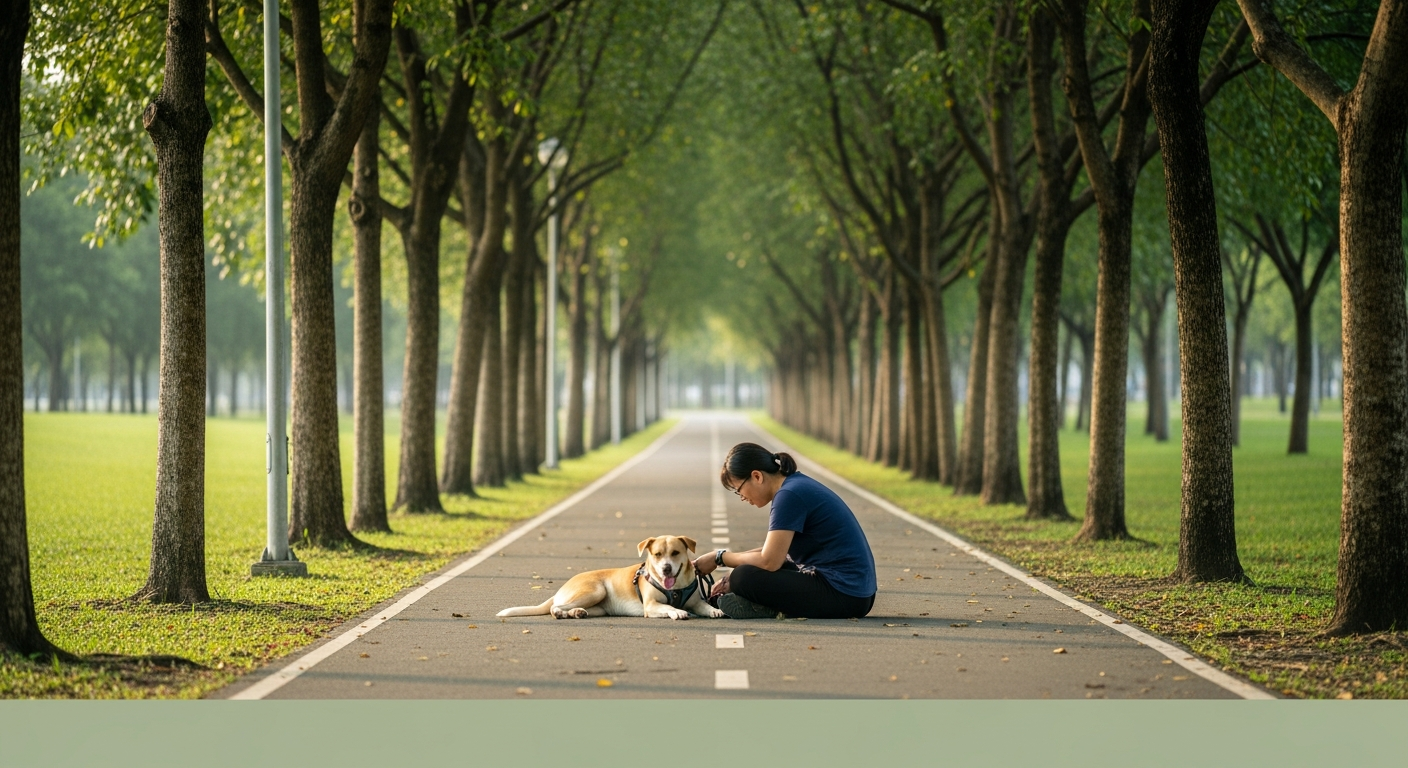 Your rescue dog's first 30 days in Singapore Bringing a rescue dog home is a different experience from raising a puppy, and the first 30 days require patience more than training. This guide covers what to expect during the decompression period, from the first quiet hours in a HDB flat to the point where your dog genuinely starts to feel at home.