

8 min read
Last updated First published 28 July 2026
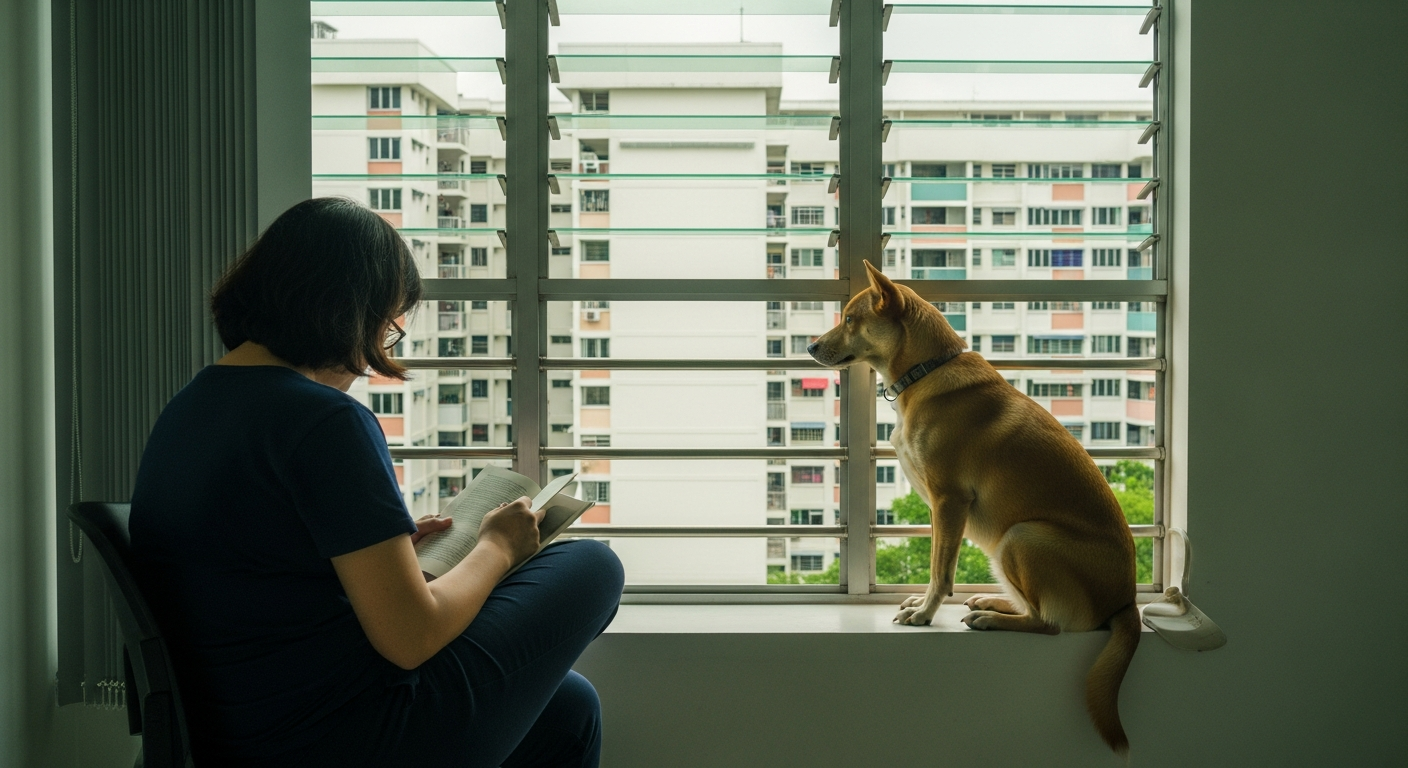
Bringing a rescue dog home is a different experience from raising a puppy, and the first 30 days require patience more than training. This guide covers what to expect during the decompression period, from the first quiet hours in a HDB flat to the point where your dog genuinely starts to feel at home.
You have brought a rescue dog home. The paperwork is done, the crate is set up, and the dog is sitting in the corner of your living room looking at you like you are a complete stranger, which, from their point of view, you are. That is entirely normal. The next 30 days are not about bonding milestones or Instagram moments. They are about giving a dog who has almost certainly had a difficult run of it enough quiet and consistency to decide that this place might be safe.
Official Singapore source
Animal and Veterinary Service: dog vaccinations
The 3-3-3 rule and what it looks like in a flat
The 3-3-3 framework is not a guarantee, but it is a useful map. Three days to decompress, three weeks to learn the routine, three months to feel genuinely at home. For a dog moving into an HDB flat, each phase has a distinctly Singapore shape to it.
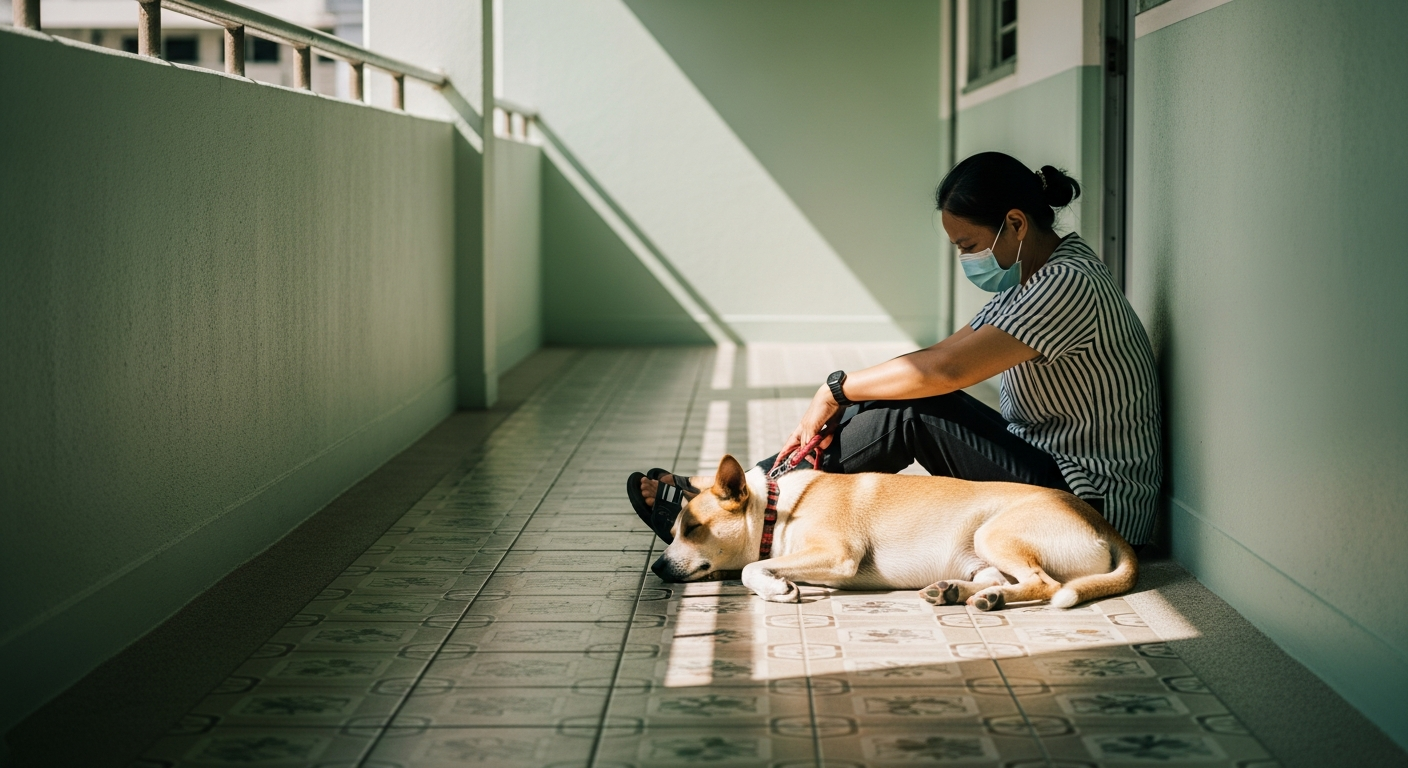
In the first three days, the dog is processing enormous sensory overload. New smells, a new soundscape, the rumble of the lift shaft through the walls, the smell of the neighbour's cooking through the corridor gap under your front door. They may not eat well, may sleep in strange positions, may pace or hide. Some dogs go very still and quiet. Others cannot settle at all. Both responses are normal.
By week three, if you have been consistent, they usually start anticipating the morning walk, recognising the sound of their lead being picked up, and sleeping more deeply. They begin to understand that the routine is repeating and that it is safe to rely on it.
By month three, most dogs have moved past hypervigilance into something closer to ease. They greet familiar neighbours with a wag rather than a flinch. They stop startling at the lift bell. This is when personality really starts to show.
The first 24 to 48 hours: less is more
Resist the urge to show the dog off. We understand the impulse, but the first day home is not the time for friends, family, or even well-meaning neighbours to meet the dog. Keep the flat quiet. Cancel any plans that involve visitors. If you have children, brief them clearly: calm voices, no running at the dog, no forcing contact.
Set up a safe zone before the dog arrives. This is a crate, a dog bed, or even just a defined low-traffic corner of the flat, somewhere away from the main door and the TV, with familiar-smelling bedding if the rescue organisation can provide a piece. This is the dog's retreat. They can come and go from it. Do not call them out of it, do not let guests reach into it. Let them go there when they need to.
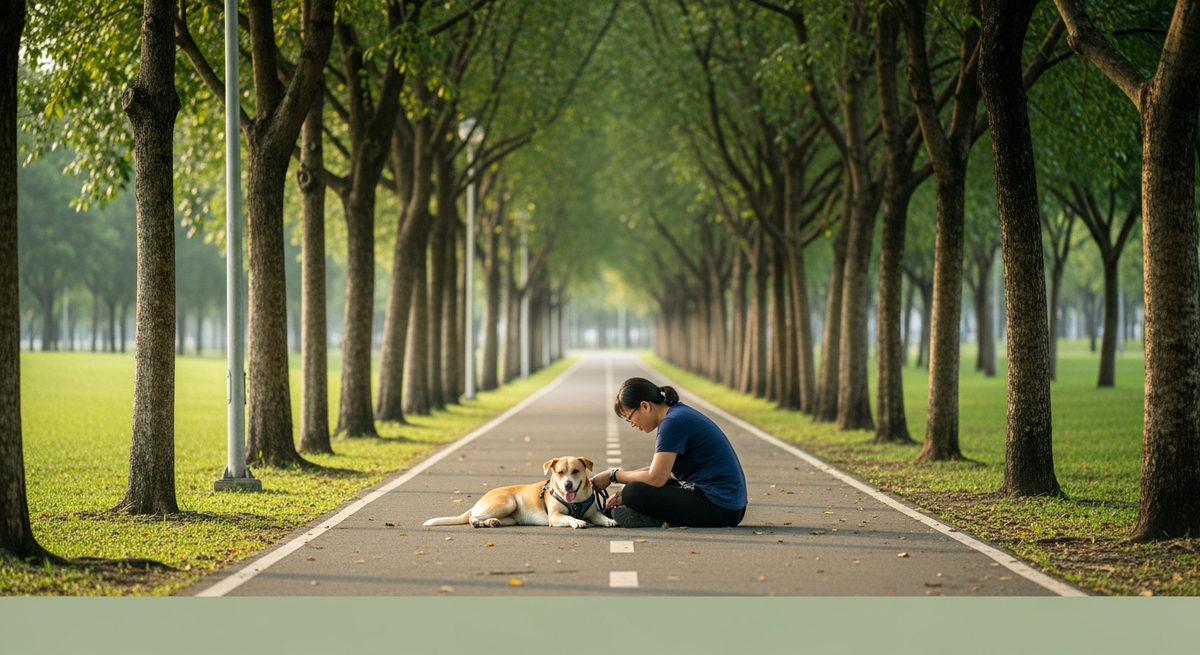
In these first hours, let the dog sniff and explore at their own pace. Offer water. Offer food at the normal mealtime, but do not be alarmed if they do not eat. Speak calmly and sparingly. Sit on the floor if you can, which is less looming than standing, but do not crowd them. Let them come to you.
House-training a rescue dog
A rescue dog is not a blank slate in the way a puppy is, but they are also not necessarily house-trained to your expectations. A dog that was kept outdoors, in a shelter run, or in a foster home with different rules will need to relearn what the toilet expectations are in your space.
Treat this part like you would with a puppy, because the underlying process is the same: frequent opportunities, calm praise when they get it right, no punishment when they do not.
- Take them out first thing in the morning, after every meal, after every nap, and last thing at night.
- Go to the same spot if possible. The void deck grass patch works well for this. Consistency of location speeds up the association.
- Wait them out. A nervous rescue dog may not toilet immediately on an outing. Give them time before bringing them back in.
- If there is an accident indoors, clean it thoroughly with an enzymatic cleaner. Do not scold. Simply remove the evidence and tighten your schedule.
Most rescue dogs who toilet indoors in the first week or two are not being difficult. They are either anxious, do not yet know what you expect, or were previously trained to a different surface or setup. Give it time and structure.
Reading your dog's signals during the adjustment period
A dog who is overwhelmed will tell you, if you know what to look for. These are the common signals worth watching in the first few weeks:
- Yawning repeatedly when there is no reason to be tired
- Licking their lips without food present
- Turning away or showing you the side of their body rather than facing you
- Low or tucked tail, ears pinned back
- Freezing when approached, or moving very slowly and deliberately
- Panting when the environment is not hot
- Refusing food they would otherwise eat
These are calming signals and stress indicators. They are not signs of aggression or a problematic dog. They are the dog communicating that they need more space, more quiet, or more time.
Signs that a dog is starting to settle look quite different: they sigh and flop down, they seek you out for proximity without being asked, they show interest in toys or food, they make eye contact with a soft expression, they sleep with their body relaxed rather than curled tight.
You will see both sets of signals in the first month, often on the same day. That is normal. The ratio shifts gradually towards the settling signals as the weeks pass.
Getting out: lifts, corridors, and neighbours
Singapore HDB life means your dog's world includes lifts, corridor encounters, void decks, and the very particular social dynamics of shared common spaces. For a rescue dog, the lift alone can be confronting: the sensation of movement, the mirrored walls, the close quarters, the smell of dozens of strangers.
In the first week or two, keep outings short and low-pressure. The goal is not a long walk. The goal is a calm experience outside the flat. If the dog plants their feet at the lift, do not drag them in. Stand quietly, let them look, and try again. If they refuse, take the stairs for now. Build lift confidence slowly over days, not in one session.
When neighbours approach and want to say hello, you are allowed to politely decline on the dog's behalf. "She's still settling in, we're keeping things low-key for a few weeks" is a complete and reasonable sentence. Most people understand. You do not need to let every well-meaning stranger reach for your dog's head in the first fortnight.
For introductions to neighbouring dogs, wait until your dog is showing consistent signs of ease in the home environment before you attempt them. When you do, choose neutral ground rather than directly outside your unit. The void deck or a nearby park corridor works better than the lift lobby, where dogs can feel cornered. Keep both dogs on lead, let them sniff briefly, and read the body language before extending the interaction. Short and positive is always better than long and complicated.
The first vet visit: timing it right
Unless your dog arrives with a visible health concern, you do not need to rush them to the vet on day one. A vet visit in the first 24 hours adds another stressful new experience to an already overwhelming day.
Aim for the first vet check within the first week, once the dog has had a few days to settle. This visit is a baseline check: weight, condition, any skin or coat issues, ears, teeth, and a review of the vaccination and sterilisation records the rescue organisation has provided. It is also a good opportunity to register with a vet clinic near your home, which matters when non-urgent questions come up later.
Vet costs in Singapore vary considerably by clinic and by what the visit involves. Budget for the consultation fee plus any follow-up treatment or parasite control that the vet recommends. If the rescue organisation has provided a health record, bring it. If there are gaps, ask the vet what they recommend to fill them. See our Singapore vet clinic guide for help finding a clinic near your area.
Official source: AVS dog licensing is required within 30 days of acquiring a dog. A licence costs S$15 per year for sterilised dogs and S$90 per year for non-sterilised dogs. You can apply and renew at the Animal & Veterinary Service via the OneStop portal. Check avs.gov.sg for current requirements and the approved breed list if your rescue dog's breed is uncertain.
What the rescue organisation will expect from you
Most reputable Singapore rescue organisations, including SOSD, ASD, OSCAS, and SPCA, include a post-adoption check-in as part of the adoption process. This typically involves a follow-up message or call in the first week or two, and sometimes a home visit.
Be honest with them. If the dog is struggling, if there is a behaviour you are not sure how to handle, or if something feels off, tell them. Rescue organisations would far rather help you work through a difficult first month than receive a dog returned at the six-week mark. They have seen this before. They are not judging you.
Most organisations also ask that you contact them before making any significant decisions, including rehoming, in the post-adoption period. This is standard. Respect it.
Normal adjustment versus something that needs support
Almost everything a rescue dog does in the first month can be traced back to stress and unfamiliarity. Barking, hiding, not eating, toileting indoors, being clingy, being avoidant, startling easily: these are all within the range of normal adjustment behaviour for a dog who has just had their world turned upside down.
However, there are some things worth escalating earlier rather than later:
- Aggression that is sudden, intense, and unpredictable, particularly if it involves snapping or biting with little or no warning signal
- Complete refusal to eat for more than two to three days, combined with lethargy
- Diarrhoea or vomiting that continues past the first couple of days
- Separation distress that is severe enough to cause the dog to injure themselves or cause damage every time you leave, even briefly
- Behaviour that seems to be deteriorating rather than slowly improving over the first three to four weeks
For anything health-related, your vet is the first call. For persistent behaviour concerns, a certified animal behaviourist is worth consulting, and your rescue organisation can often recommend someone with experience in post-rescue dogs. The earlier you get support, the easier it is to work with.
Most early behaviour does normalise. The 30-day period is genuinely just a beginning. We have seen dogs who hid under the bed for two weeks turn into dogs who greet the door with full-body wags by month two. Consistency and patience carry more weight than anything else. If you want a fuller picture of what to expect across the first year, our new owner guides cover the longer arc of rescue dog life in Singapore.
More for Singapore dog owners
-
 HDB barking complaints: how to manage your neighbour situation A neighbour complaint about your dog's barking is serious in an HDB context, but it is a problem with a clear pathway through it. This guide covers how to identify the cause, reduce the noise now, manage a formal complaint if one has been filed, and when to bring in professional help.
-
 Vet bills in Singapore: what to expect and how to plan Plan veterinary spending around your dog: ask for written estimates, compare the scope of care, understand insurance terms and prepare for unexpected bills.
-
 Singapore dog vaccination schedule, explained Core vaccines, puppy timing, leptospirosis, kennel cough, titre testing, and how your AVS licence connects to it all. Here is what Singapore dog owners actually need to know about keeping jabs current and records straight.
-
 AVS dog licensing in Singapore: a step-by-step guide AVS dog licensing is mandatory for every dog in Singapore aged three months and over, regardless of where you live. This guide covers the documents you need, the current fee structure, how to apply and renew online, and what is at stake if you let your licence lapse.