

7 min read
Last updated First published 27 July 2026
AVS dog licensing is mandatory for every dog in Singapore aged three months and over, regardless of where you live. This guide covers the documents you need, the current fee structure, how to apply and renew online, and what is at stake if you let your licence lapse.
A dog licence is one of the small pieces of administration that helps keep life together organised. Apply through the Pet Animal Licensing System (PALS), keep the record current and renew a time-limited licence before it expires. A sterilised dog can qualify for a one-time licence, so annual renewal is not universal.
Official Singapore source
Animal and Veterinary Service: dog licensing
Who must licence their dog
Every dog in Singapore that is three months old or older must be licensed. This applies whether you live in an HDB flat, a private condominium, a landed property, or a rented room. There is no exemption based on breed size, housing type, or whether the dog is primarily kept indoors.
The obligation sits with the owner, not the premises. If you recently adopted or purchased a dog, the licence must be transferred to your name or a new licence taken out. A licence in the previous owner's name does not protect you.
Arrange microchipping before the licence application. Ask the rescue, breeder or vet which records already exist rather than waiting for a birthday to begin the paperwork.
What you need before you apply
Gathering your documents before you open the portal saves you from getting halfway through the application and then stopping. You will need:
- Microchip number: your dog must be microchipped before you can apply. The chip number ties the licence to a specific animal and connects the record to the national lost-pet database. If your dog is not yet chipped, visit a vet first.
- Documents for your circumstances: check the current AVS application page. Adoption agreements, import permits and documents for Specified Dogs apply in the relevant cases. Do not assume a rabies certificate is required for every domestic application.
- Sterilisation certificate: if your dog has been sterilised, bring the vet-issued certificate confirming the procedure. This is what qualifies you for the lower licence fee.
- Your NRIC or FIN number: you will need a Singpass login to access the licensing portal.
- Payment method: credit or debit card for online payment at the point of application.
If you adopted through a rescue such as SOSD, ASD, OSCAS, or Purely Adoptions, the microchip and sterilisation paperwork should have been handed to you at adoption. If anything is missing, contact the rescue before starting your application.
The licence fee structure
The AVS fee table, updated 1 September 2026, distinguishes age, sterilisation status and the household's combined cat/dog count. For the first three pets:
- Sterilised: S$15 for one year, S$25 for two years, or S$35 for a one-time licence.
- Non-sterilised: S$90 for one year, S$165 for two years or S$230 for three years.
These are before the 10% rebate for GIRO, online or AXS payment. Pets below five months and fourth or subsequent pets have separate provisions. Check those rows if they apply. Updating sterilisation status can convert a three-year non-sterilised licence to a one-time licence. Do not delay required licensing to wait for surgery.
How to apply: step by step
The full application is done online through the AVS portal. There is no need to visit an AVS office in person for a standard application.
- Complete the Pet Ownership Course if you are a first-time applicant, then use PALS. Start from the official AVS application link above.
- Select "Apply for dog licence" from the dashboard. You will be asked whether you are applying as an individual or on behalf of a business.
- Enter your dog's microchip number. The system will check whether a record already exists. If your dog was previously licensed under another owner, AVS may require a transfer of ownership form rather than a fresh application.
- Upload the supporting records that apply to your case. Use the AVS checklist rather than assuming every applicant needs the same documents.
- Confirm your dog's details: breed, colour, name, date of birth. These must match the microchip registration record. If there is a mismatch, you will need to update the microchip record with your vet before the licence can be issued.
- Select the available licence duration for your dog and circumstances, then check the amount before paying.
- Pay online by card. You will receive an email confirmation. The licence is not a physical tag; it is a digital record tied to your dog's microchip number. Some owners print the confirmation email and keep it with their dog's other documents.
Processing is typically straightforward and the licence is issued promptly after payment, provided the documents are in order. If AVS flags a query on your application, they will contact you by email or phone.
Renewing your licence before it expires
AVS will send a renewal reminder before your licence expires, but do not rely on this as your only prompt. Set your own calendar reminder when you first apply, particularly if you opt for the one-year licence.
Renew a time-limited licence through PALS before its expiry. A one-time licence has no routine renewal, but changes to the licence record still need attention. Import vaccination conditions are a separate matter; follow the conditions that apply to your dog.
Set a personal reminder as well as checking official notices. If you discover a lapse, contact AVS and resolve it promptly rather than assuming there is a grace period.
Update sterilisation status with supporting veterinary documentation on PALS. Check the resulting licence status and applicable renewal fee, particularly if you hold a three-year licence.
Microchipping, the national database, and why they matter
The microchip is the anchor of the whole system. AVS requires every licensed dog to be microchipped because the chip number is the unique identifier that connects the licence record, the ownership record, and the national lost-pet database.
When a stray or lost dog is found and taken to a vet or AVS facility, the first thing staff do is scan for a chip. If your dog is chipped and the microchip registration is up to date with your current contact details, there is a direct path back to you. Without a chip, or with outdated contact details on the chip registration, that path does not exist.
Microchipping is done by a vet and is a one-time procedure for the dog, though the registration details can and should be updated whenever your contact details change. The chip registration sits separately from the AVS licence, so updating one does not automatically update the other. Keep both current.
If the address where the dog is kept changes, AVS requires notification within 28 days. Update it through PALS and keep contact information current.
The consequences of an unlicensed dog
Keeping a dog without the required licence is an offence. For an overdue application or a notice, contact AVS directly. Do not assume a particular inspection sequence or enforcement outcome.
Licensing and housing rules are distinct. A valid licence does not give permission to keep an otherwise ineligible dog in an HDB flat or override applicable premises rules.
If the dog changes hands, the current licensee initiates a transfer on PALS and the new licensee accepts or rejects it. Check the completion notice rather than assuming handing over the dog also transfers the licence.
It is also worth noting what the licence does not cover you for. Having a valid AVS dog licence does not:
- Override HDB breed restrictions if you live in an HDB flat. Your dog must still be an approved breed under the HDB approved list, a named list of small breeds published by HDB. See our Singapore dog regulations guide for the full breakdown.
- Exempt you from leash rules in public spaces or off-leash restrictions in parks.
- Cover veterinary costs or liability if your dog injures someone.
- Act as proof of ownership in a dispute. Ownership disputes are a separate matter.
Keep licensing, housing eligibility, veterinary care and insurance as separate checks. Each answers a different question, and none substitutes for all the others.
Keeping your records in one place
Keep the licence record, microchip details, veterinary records and any adoption or import documents together. Note which documents expire and which need updating after a change.
A simple folder, physical or digital, with copies of each document and a note of each renewal date goes a long way. Your vet's clinic record system will typically flag upcoming vaccination renewals, but the AVS licence renewal is your responsibility to track. Build the habit early and it becomes routine rather than a scramble.
For an overview of the full regulatory picture for dog owners in Singapore, including HDB rules and Town Council obligations, visit our guides hub. If you are working out the ongoing cost of dog ownership here, our cost calculator can help you map out what licensing, vaccination, and other annual expenses look like together.
Get the licence sorted, keep it current, and this is one less thing to worry about.
Editorial check, 14 September 2026: Primary guidance used for this correction. Individual needs and current local rules still apply.
More for Singapore dog owners
-
 HDB barking complaints: how to manage your neighbour situation A neighbour complaint about your dog's barking is serious in an HDB context, but it is a problem with a clear pathway through it. This guide covers how to identify the cause, reduce the noise now, manage a formal complaint if one has been filed, and when to bring in professional help.
-
 Vet bills in Singapore: what to expect and how to plan Plan veterinary spending around your dog: ask for written estimates, compare the scope of care, understand insurance terms and prepare for unexpected bills.
-
 Singapore dog vaccination schedule, explained Core vaccines, puppy timing, leptospirosis, kennel cough, titre testing, and how your AVS licence connects to it all. Here is what Singapore dog owners actually need to know about keeping jabs current and records straight.
-
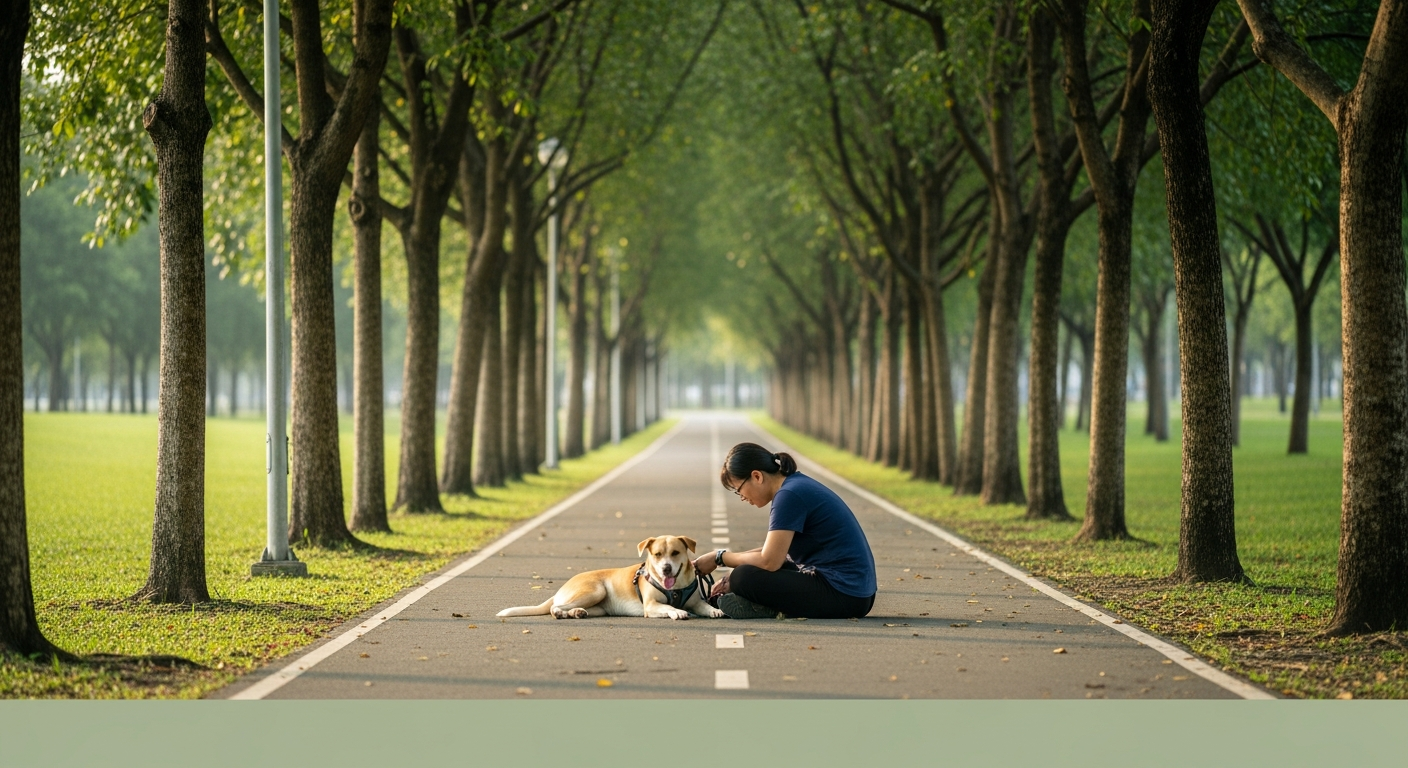 Your rescue dog's first 30 days in Singapore Bringing a rescue dog home is a different experience from raising a puppy, and the first 30 days require patience more than training. This guide covers what to expect during the decompression period, from the first quiet hours in a HDB flat to the point where your dog genuinely starts to feel at home.