
Stage 5 of 5
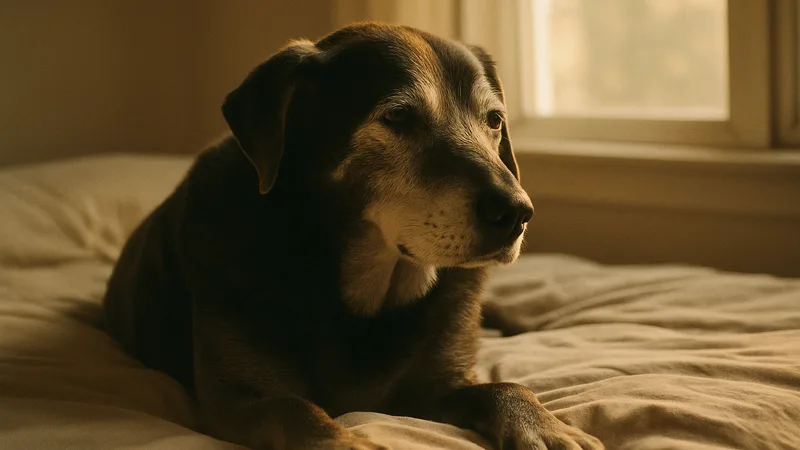
Stage five, the last chapter
Saying goodbye
If you have come to this page, you are probably carrying something heavy. Take your time with it. This is a quiet walk through the questions that arrive near the end: how to read whether your dog is still comfortable, the conversation to have with your vet, the choices you have in Singapore, and the grief that follows. There is no rush, and no right way to feel.
Reading quality of life
The hardest part is that there is rarely a clear moment. The decline is slow, you adjust to it day by day, and the question of when arrives without an answer attached. A quality of life scale gives you something steadier to hold. Look honestly at a handful of things: is the dog eating, is it in pain that cannot be controlled, can it still move and toilet with dignity, and how many good days is it having against the bad ones. Some owners keep a simple calendar, marking each day good or bad, because the pattern is clearer on paper than in a worried mind.
When the bad days clearly outweigh the good, when the small pleasures the dog lived for are gone, and when comfort can no longer be kept even with the vet's help, the kindest answer is usually close. This is not giving up. It is the last act of care, and it is yours to give because the dog cannot ask for it. Talk it through with your vet, who will be honest if you tell them you want honesty. Many people find afterwards that the only thing they would change is to have spared the dog a few of the final hard days.
The conversation with your vet
Your vet has walked many families to this point and will not think less of you for asking the blunt questions. Ask what the realistic outlook is, what pain the dog may be in that you cannot see, what the options are, and what they would do in your place. Ask about timing, so you are not making the decision in a panic at the worst possible hour. Bringing it up early, even when the day still feels far off, means the plan is in place and the choices are yours rather than the emergency's.
Talk about where it could happen, too. Many Singapore practices and mobile vets offer home euthanasia, so the dog can stay on its own bed with its family around it. If a clinic is the only option, a good one will give you a private room and all the time you need. The vet directory lists clinics by region, with the after-hours shortlist if the decline comes suddenly.
What the day can look like
Knowing the shape of it takes away some of the fear. The vet will explain every step before they begin. In most cases the dog is given a sedative first and drifts into a deep, peaceful sleep in your arms, free of fear and free of pain. The final injection comes only once the dog is fully asleep, and it is quick and gentle. You can hold your dog through all of it, speak to it, and stay with it afterwards for as long as you want.
Some families spend the last day doing the dog's favourite things: a slow visit to a loved patch of grass, a forbidden treat, a long lie in the sun. Some keep it quiet and ordinary. There is no script. Do whatever lets you be present and calm, because the dog reads you, and your steadiness is the last gift you give it.
Aftercare in Singapore
For most Singapore households the practical route is cremation. Licensed pet cremation services offer individual cremation, where your dog's ashes are returned to you, or communal cremation. Many vet clinics will arrange the whole thing on your behalf if you would rather not carry it yourself on the day, and they can talk you through the costs in advance.
Burial is tightly restricted here. You cannot bury a pet in public parks, on state land, or in HDB estates, so cremation is the path nearly everyone takes. Some families keep the ashes, some scatter them somewhere the dog loved within what the rules allow, and some keep a paw print or a clipping of fur taken on the day. There is no wrong choice. Take whatever helps you hold on to the dog gently.
The grief that follows
Grief for a dog is real grief. The bond ran through every ordinary hour of your day, the walk, the welcome at the door, the warm weight against your leg at night, so the absence turns up everywhere at once. Let yourself feel it. Talk about the dog, keep something of theirs, and do not let anyone make you feel that mourning an animal is too much. It is exactly the right amount.
Be patient with the rest of the household. Children grieve in bursts and need honest, simple words rather than euphemisms about the dog being "put to sleep", which can frighten them at bedtime. A surviving dog may go quiet, eat less, or search the house for a while; keep its routine steady and its company close, and it will find its feet again. If the grief feels too heavy to carry alone, speak to your vet, who has sat through this with many families, or to a counsellor. Reaching out is not weakness; it is the same care you gave your dog, turned at last towards yourself.
When you are ready, not before
There is no timetable for any of this, and no part of the site is going anywhere. When the day comes that you want to walk again with a dog beside you, whether that is months or years from now, the rescue groups and the first questions will be here. Until then, rest, and remember the dog the way it was on its best afternoon.
Questions families ask
How do I know when it is time to let my dog go?
There is rarely a single obvious moment, which is what makes it so hard. Vets often suggest a quality of life scale: appetite, pain, mobility, continence, and the number of good days against bad ones. When the bad days clearly outnumber the good, when the things the dog loved are gone, and when comfort can no longer be kept, the kindest answer is usually near. Your vet will talk it through honestly if you ask them to. Many owners say afterwards that the regret, if any, was waiting a little too long rather than acting a little too soon.
Can a vet come to my home for this in Singapore?
Yes. Several Singapore vet practices and mobile vets offer home euthanasia, so the dog can stay on its own bed, in its own home, with the family around it and none of the stress of a clinic on a final day. It usually needs to be booked ahead. If home is not possible, a good clinic will give you a quiet room and as much time as you need, before and after. Ask your regular vet what they offer, or look through the /vets directory for a practice near you.
What actually happens during euthanasia?
The vet will explain each step before they do anything. Usually the dog is given a sedative first, so it drifts into a deep, calm sleep in your arms with no fear and no pain. The final injection follows once the dog is fully asleep, and it is quick and peaceful. You can hold the dog throughout. You can stay afterwards for as long as you need. Knowing the shape of it in advance takes some of the fear out of the day, both for you and, through you, for the dog.
What are the aftercare options in Singapore?
The two routes are cremation and, in limited cases, burial. Licensed pet cremation services in Singapore offer individual cremation, where you receive your dog's ashes back, or communal cremation. Many vet clinics will arrange the cremation on your behalf if you would rather not handle it yourself. Burial is tightly restricted: you cannot bury a pet in public parks, on state land, or in HDB grounds, so for most Singapore households cremation is the practical path. Your vet can walk you through what they offer and what it costs.
Is it normal to grieve this much over a dog?
Completely. The bond with a dog is woven through the ordinary fabric of every day, the walks, the welcome at the door, the warm weight against your leg, so its absence is felt everywhere at once. Grief for a dog is real grief and deserves the same patience you would give any loss. Talk about it, keep something of theirs, and give yourself time. If the grief feels too heavy to carry alone, speak to your vet, who has sat with many families through this, or to a counsellor. You are not overreacting.
Should I let my other dog see the body?
Many behaviourists think it helps. A surviving dog that sees and smells its companion after death often settles more quickly than one whose friend simply vanished, because it is not left searching. Give the other dog a calm, quiet moment if you can. Then keep its routine steady in the weeks that follow, since a grieving dog leans hard on the familiar. Some dogs change for a while, eating less or sleeping more. Most come back to themselves with time and gentle company.
Useful at every stage
- Vet directory by region
General clinics plus the twenty-four-hour A and E shortlist.
- Dog-friendly places
Cafes, parks, beaches, trails, hotels, shops. Filter by region and policy.
- Plan a day out
Pick a neighbourhood and we'll build a walking + cafe + park itinerary you can save.
- All UrbanDogOwner tools
Cost, walk-time, dog-years, name picker, HDB checker, breed finder.