
Stage 4 of 5
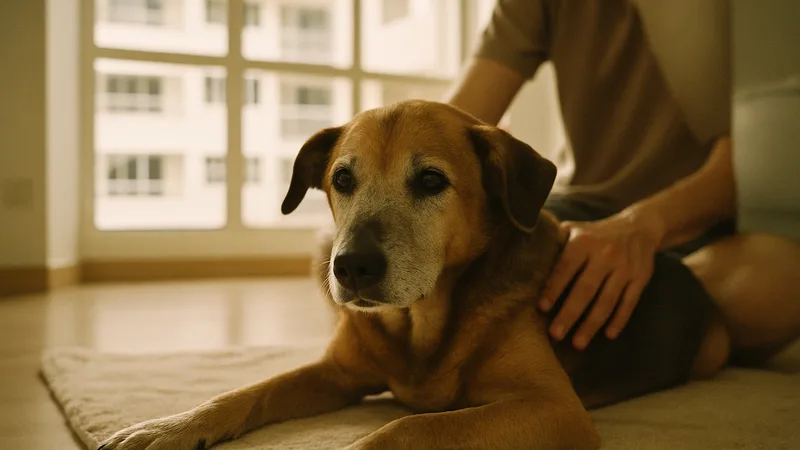
Stage four, the senior years
Caring for a senior dog
The dog has not changed who it is. It has only slowed down. The grey on the muzzle, the longer naps, the stiff first few steps in the morning. This stage is about noticing those small shifts early and bending the day around them, so the years that are left are comfortable ones.
When a dog becomes senior
There is no single birthday. A 6kg poodle can be bright and bouncing at eleven, while a Labrador is treated as senior from seven and a giant breed earlier still. Size sets the clock, so the smaller the dog, the later the senior years arrive. The reliable marker is not the number; it is the behaviour. The dog that used to take the stairs two at a time now waits for the lift. The morning starts with a stretch and a stiff shuffle before the legs warm up. Sleep gets deeper and longer. None of this is cause for alarm on its own. It is the signal to change how you read the dog.
The shift in this stage is from reacting to anticipating. A younger dog tells you loudly when something is wrong. An older dog hides it, partly by instinct and partly because the decline is so gradual that you both adjust without noticing. The work of the senior years is to look on purpose, catch the small changes while they are still small, and keep the dog ahead of its aches rather than chasing them.
This page covers the essentials. For a deeper look at nutrition, joint health, cognitive decline, vision and hearing loss, and honest guidance on end-of-life decisions, see the Senior Dogs hub.
The vet checks that matter now
Move from one vet visit a year to two. A senior health screen is the single most useful thing you can do in this stage, because the early changes in kidney, liver, thyroid and heart function show up in blood and urine long before the dog looks unwell. A panel twice a year turns a slow problem into a managed one. The cost of the screen is small set against the cost, in money and in distress, of finding the same problem in an emergency at two in the morning.
Ask the vet to add blood work, a urine test, and a blood pressure check to the normal physical exam. Mention anything you have noticed at home, however minor: drinking more, a new lump, a cough after lying down, a back leg that gives way. Write it down before the appointment, because the small things are easy to forget once you are in the room. The UrbanDogOwner vet directory lists clinics by region with hours and services, and the twenty-four-hour A and E shortlist for the nights when waiting is not an option.
A senior screen usually covers
- A full physical exam, with attention to lumps, teeth, and joints
- Blood work for kidney, liver, and thyroid function
- A urine test, which catches kidney change the blood can miss
- Blood pressure, often skipped but quietly important in old dogs
- A weight and body condition score you can track over time
Joints and mobility
Arthritis is the quiet companion of the senior years, and it is easy to mistake for the dog simply getting old and lazy. The tells are a stiff start that eases once the dog is moving, reluctance on stairs, a pause before jumping onto the sofa, and a shorter stride on walks. If you see them, see the vet, because limping has other causes and the treatment depends on the diagnosis.
Once arthritis is confirmed, the toolkit is layered. Weight control comes first and does the most. Joint supplements and a prescribed anti-inflammatory, where the vet agrees, take the edge off. The home matters too: most Singapore flats are tiled throughout, and a polished floor is treacherous for an old dog whose legs already slip. Lay runner mats along the routes the dog uses most, from the bed to the water bowl to the door, and give it a thick supportive bed off the cold floor. Trade one long walk for two or three short ones, gentle and flat, so the joints keep moving without being punished.
Weight, food, and the slowing metabolism
An older dog burns less than it used to, so the portion that kept it lean as an adult will slowly pad it out. On an arthritic dog with an ageing heart, that extra weight is not cosmetic; it is load on sore joints and strain on tired organs. Keeping a senior dog slim is one of the kindest and cheapest things you can do for it.
Weigh the dog once a month, on the same scales, and write it down. Ask the vet for an honest body condition score and adjust the food to the dog in front of you, not the number printed on the bag. A senior or light formula keeps the bowl looking full while cutting the calories, which matters to a dog that has always eaten with enthusiasm. Treats count too; if you train or reward through the day, take that out of the daily ration rather than adding it on top.
Fading sight and hearing
Many old dogs lose some sight or hearing, and most cope far better than their owners fear, because the nose was always doing most of the work. The cloudiness you see in an old dog's eyes is often a normal hardening of the lens rather than blindness, but have the vet check, since cataracts and pressure problems are treatable and worth catching.
The help a dog needs here is consistency. Do not rearrange the furniture. Leave a low light on at night. Block the balcony and any open stairs, because a dog that cannot see the edge will trust the map it remembers. A deaf dog learns hand signals quickly and will feel a firm stamp on the floor as a call to come. Approach a dog whose senses are fading from the front and let it know you are there before you touch it, so it is never startled awake. Kept predictable, the home stays safe and the dog stays confident.
Comfort and the shape of the day
The senior years ask for a gentler timetable. Walk in the cool of early morning and after sundown, when the pavement is kind to old paws and the heat is off an old heart. Keep water within reach in more than one room. Give the dog a cool tiled corner or a cooling mat for the long afternoons, and watch for heavy panting that does not settle, which in an old dog can be the first sign of trouble rather than just warmth.
Mind the teeth, because dental pain is common in older dogs and quietly miserable; bad breath, dropped food, or chewing on one side all earn a vet visit. Keep the mind working with short sniffy walks, a snuffle mat at dinner, and the same small rituals the dog has always loved. Old dogs thrive on routine and on company. They do not need more; they need the familiar, kept comfortable. If the questions in this stage start to turn towards the end, the next page is there when you are ready, with no rush to read it.
Common questions in the senior years
At what age is a dog considered senior in Singapore?
It depends on size more than a single birthday. Small dogs under 10kg often stay sprightly until ten or eleven and are usually called senior from about eleven. Medium dogs reach the senior years around eight or nine. Large and giant breeds age faster and are treated as senior from six or seven. The honest marker is behaviour, not the calendar: slower stairs, longer naps, a stiff first few steps in the morning. When you notice those, it is time to shift the routine.
How often should a senior dog see the vet?
Twice a year rather than once. A senior screening usually adds blood work, a urine test, and a blood pressure reading to the normal physical exam, because the early signs of kidney, liver, thyroid and heart change show up in the numbers long before they show up in the dog. Two visits a year means a problem is caught at the stage where it is managed cheaply and gently, not the stage where it is an emergency.
What can I do about my old dog's stiff joints?
Start with the vet, because limping has many causes and arthritis is only one of them. Once it is confirmed, the usual toolkit is weight control first, then joint supplements, a prescribed anti-inflammatory if the vet agrees, soft bedding off the cold floor, and grippy mats over slippery tiles. Singapore homes are mostly hard floors, which are hard on old hips, so a few runner mats along the routes the dog walks most make a real difference. Keep walks shorter and more frequent rather than one long one.
My senior dog is putting on weight. Does it matter?
It matters a great deal. Every extra kilo on an arthritic dog is more load on sore joints and more strain on an older heart. Older dogs burn less, so the food that kept an adult lean now slowly adds weight. Weigh the dog monthly, ask the vet for an honest body condition score, and adjust the portion down rather than trusting the bag. A senior or light formula with the same volume but fewer calories helps a hungry dog feel full.
How do I help a dog that is going blind or deaf?
Keep the home predictable. Do not rearrange the furniture, leave a light on at night, and use scent and vibration to orient a dog whose eyes or ears are fading. A deaf dog can learn hand signals and a stamp on the floor for "come". A blind dog maps the flat quickly if you keep it consistent and block off the balcony and any open stairs. Most dogs adjust far better than their owners expect, because they were always leading with the nose.
How do I keep an old dog comfortable in Singapore's heat?
Older dogs handle heat worse than they did, so walk in the cooler ends of the day, keep water everywhere, and let the dog rest on a cool tiled spot or a cooling mat through the afternoon. Watch for heavy panting that does not settle. A senior dog with a heart or airway condition is at real risk on a hot afternoon, so when in doubt, keep the walk to the void deck and the air-conditioned hours.
Stage five
Saying goodbye
When the time comes, knowing what to expect makes a hard week a little less frightening. The signs, the conversation with your vet, the options in Singapore, and the grief that follows.
Read when you are ready →Welcoming a senior rescue? Use the senior-rescue path in the first-month companion for practical arrival arrangements.
Useful at every stage
- Vet directory by region
General clinics plus the twenty-four-hour A and E shortlist.
- Dog-friendly places
Cafes, parks, beaches, trails, hotels, shops. Filter by region and policy.
- Plan a day out
Pick a neighbourhood and we'll build a walking + cafe + park itinerary you can save.
- All UrbanDogOwner tools
Cost, walk-time, dog-years, name picker, HDB checker, breed finder.