
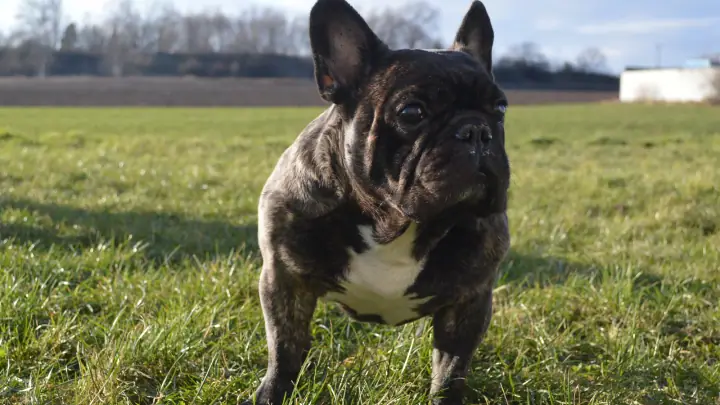
DOG BREED GUIDE · CONDO & LANDED HOMES
Last updated First published 31 May 2026
Notice one little habit together →A small idea to try, with progress kept in your Pack.
Also known as Frenchie, Bouledogue Français.
Thinking about adopting a French Bulldog?
The French Bulldog's grunting snores are the perfect soundtrack for a lazy afternoon, but its brachycephalic airways mean that even a walk to the kopitiam could turn into a mini marathon.
Can a French Bulldog live in an HDB flat?
NoNot on the HDB approved-breed list
Not on HDB's approved small-breed list, so it cannot be kept in a flat under the standard rules.
HDB sets and maintains the approved-breed list. Check the current rules at HDB.gov.sg →
Full list of HDB-approved breeds on this site →At a glance
- Size category
- Small
- Weight
- 8 to 13 kg
- Height
- 28 to 33 cm
- Lifespan
- 10 to 12 years
- Energy level
- ●●○○○ 2/5 (editorial, unvalidated)
- Shedding
- ●●●○○ 3/5 (editorial, unvalidated)
- Heat tolerance
- ●○○○○ 1/5 (editorial, unvalidated)
- Barking
- ●●○○○ 2/5 (editorial, unvalidated)
- Trainability
- ●●●○○ 3/5 (editorial, unvalidated)
- Grooming needs
- ●●○○○ 2/5 (editorial, unvalidated)
- Origin
- France (developed from English Bulldogs by 19th century Parisian lace workers)
Editorial climate-care note
Flat-faced dogs are more vulnerable to overheating. There is no fixed number of walking minutes that guarantees safety. Avoid hot conditions and ask your vet for an activity plan that suits your dog's breathing and health.
This score is not a safe temperature or exercise limit. Any dog can develop heatstroke.
Plan activity around your dog, not a timer
A breed score cannot tell you how many minutes are safe today. Avoid hot conditions, watch your dog's breathing, and agree an activity plan with your vet.
Read PDSA's heatstroke guidance →Common health issues in Singapore's climate
Build a care budget
- Year 1
- S$4,531 to S$6,129
- Over 10 years
- S$41,929 to S$56,728
Illustrative planning assumptions for food, grooming and routine vet care, with inflation and a year-one setup uplift. These are not verified provider quotes or a lifespan prediction. Adjust the calculator to current quotes; add insurance, boarding and emergencies separately.
Run the full lifetime cost calculator →The French Bulldog is a familiar companion breed whose breathing and heat-care needs deserve careful thought in Singapore. Almost everything people love about the breed comes from the same piece of anatomy that makes it fragile here: the flat face. It is affectionate, quiet, low-energy, brilliant in a small flat and genuinely funny, and it is also a dog that can be killed by an ordinary Singapore afternoon.
Breathing, heat management and access to veterinary care deserve particular attention before choosing this breed. The budget shown here is an estimate, not a verified annual bill, and an individual dog may need substantially different care.
Personality and temperament
As a companion, the Frenchie is close to ideal for apartment life. Energy is rated 2 out of 5 and barking 2 out of 5: this is a dog that wants to be near you, will happily do very little all day, and is unlikely to earn you a note from the town council. It is good with children, generally easy with other dogs, and adaptable to a routine.
What to expect beyond the marketing:
- It is a companion breed in the literal sense. Frenchies bond hard and do not enjoy long stretches alone. A household empty from nine to seven is a poor fit, and this is temperament, not training.
- Trainability is middling. Rated 3 out of 5. Frenchies are clever and frequently uninterested. Short, food-led sessions work; drilling does not.
- It is a clown, and it knows. Much of the behaviour people find hilarious is attention-seeking that got rewarded. Decide early what you are reinforcing.
- It cannot swim. This one is not a quirk. A heavy front end, a short muzzle and dense bone make the breed a poor swimmer, and drowning in pools is a documented risk. Never leave a Frenchie unsupervised near water, including a condominium pool.
Exercise in Singapore's climate
This is the section that matters most, and this page rates the French Bulldog's heat tolerance at 1 out of 5, the lowest band we use, alongside the Arctic breeds.
Dogs rely heavily on panting to lose heat. Flat-faced dogs can have restricted airways and are particularly vulnerable to heatstroke. Hot, humid conditions increase the difficulty of cooling; do not assume a particular time of day or a short walk is safe.
The rules are strict and they are not negotiable on a nice-looking day:
- Keep activity gentle and avoid hot conditions. Ask your vet for an individual plan; a fifteen-minute walk is not a guaranteed safe limit.
- Never in the middle of the day, however short the trip.
- Never in a parked car, not even briefly, not even with a window down.
- Air conditioning or strong ventilation at home through the hot part of the afternoon.
- Stop at the first sign of trouble rather than the obvious one. Noisy or laboured breathing that does not settle within a minute of stopping, a dog that will not walk on, brick-red or bluish gums or tongue, drooling, unsteadiness or vomiting are all emergencies, not a sign to slow the pace.
A Frenchie in distress does not always look dramatic. It often looks like a dog that has sat down and will not get up. Treat that as the emergency it is: shade, water, cool the dog, and phone a vet on the way.
Know your nearest 24-hour clinic before you need it. Our emergency vet page lists them, and with this breed it is worth having one saved in your phone from the day the dog arrives.
The upside of a 2-out-of-5 energy dog is that the exercise requirement is genuinely small. Two short cool-hour walks and some indoor play covers it. Fill the rest with low-exertion mental work, which is also the safest thing to do with a Frenchie in a Singapore afternoon.
Coat and grooming in the humidity
Grooming needs are rated 2 out of 5 and the short coat is the easiest part of the breed. A weekly brush handles the moderate shedding, and a full groom is rarely necessary. The annual grooming budget on this page, S$500, is the lowest of any breed we cover.
The skin, though, is a real job, and in this climate it is a weekly one. The facial folds that give the breed its expression trap moisture, and a humid climate keeps them damp far longer than a temperate one would. Left alone they develop skin fold dermatitis: red, sore, smelly and entirely preventable.
- Clean and dry the facial folds several times a week, more in wet weather. Wipe gently, then dry thoroughly. Damp is the whole problem.
- Check the tail pocket. Many Frenchies have a recess under the tail that needs the same treatment and is easy to forget because you cannot see it.
- Watch the ears. Upright ears help, but allergies are on this page's health-issue list and ears are often where they show first.
Diet and feeding
Food runs about S$1,100 a year on this page's estimate. Two feeding details matter more for this breed than most.
The first is weight. A Frenchie is a compact, heavy-boned dog and carries extra weight invisibly until it does not. Excess weight makes an already restricted airway work harder, which in this climate is directly a heat-safety issue rather than a long-term one. Keep the dog genuinely lean and weigh the food rather than judging by eye.
The second is that flat-faced dogs swallow a lot of air while eating, which is a common source of the wind the breed is famous for and, less amusingly, of discomfort. A slow-feeder bowl and a raised, but not high, dish both help. Food allergies and sensitivities are common enough in the breed that allergies appear on this page's health-issue list, so introduce any change gradually over a week or more, and if you are chasing recurrent itching or ear trouble, talk to your vet about a proper elimination diet rather than switching brands hopefully.
Keep kibble sealed and out of the heat, and keep water available and refreshed often.
Training
Keep sessions short, food-led and cheerful. A Frenchie will work for you for a few minutes at a time and then be done, and pushing past that point achieves nothing. Never train in the heat: a dog panting from exertion is a dog you should be cooling, not asking for another repetition.
Three priorities:
- Loose-lead walking on a harness. A harness rather than a collar, always. Pressure on the throat of a dog with a compromised airway is the last thing it needs.
- Time alone, built gradually. The breed's attachment is real, and the fix is practice from puppyhood in small increments, not correction later.
- Settle on a mat. With so much of the day spent indoors out of the heat, a dog that can switch off on cue makes the arrangement work for both of you.
Socialise deliberately and early, but do it in cool places. Puppy classes in an un-airconditioned hall in the afternoon are not suitable for this breed.
Health
Read this section before you choose a breeder, because with a French Bulldog the breeder decision has more effect on the dog's life than anything you will do afterwards.
The UK Kennel Club lists as good practice, the minimum, before breeding a French Bulldog: breathing testing for brachycephalic obstructive airway syndrome (BOAS) using the Kennel Club Respiratory Function Grading scheme. As best practice on top of that it lists a DNA test for hereditary cataracts (HC-HSF4-2), elbow testing under the BVA/KC Elbow Dysplasia Scheme, eye testing under the BVA/KC/ISDS Eye Scheme, and hip testing under the BVA/KC Hip Dysplasia Scheme.
That a breed has a dedicated national breathing-assessment scheme, and that it sits at the minimum tier rather than the optional one, tells you how central the airway is. The Kennel Club also places the French Bulldog in Breed Watch Category 3, its highest concern tier, meaning particular points of concern have been identified for the breed for special attention by judges. Very few breeds are in Category 3, and it is a plain statement that conformation in this breed can be and has been pushed too far.
What this means when you are choosing a puppy: ask for the parents' Respiratory Function Grading results. Not "the parents breathe fine", not a video, the graded result. It is the single most useful piece of paper in this breed, and a breeder who has not heard of the scheme is telling you something important.
This page's own health-issue flags are heatstroke, joint and mobility problems, eye conditions, allergies and dental health, which lines up with both the screening list and the climate. Spinal malformations are also common in screw-tailed breeds, which is part of why joint and mobility problems sit on that list. And it is worth knowing before you commit that many Frenchies are delivered by caesarean and many cannot mate naturally, which is why the puppies cost what they do and why a suspiciously cheap one should worry you rather than delight you.
Discuss likely care needs and contingency funding with your vet. Insurance may help with some costs, but exclusions and coverage vary. The page’s lifespan and annual-cost estimates do not predict an individual dog’s outcome.
None of this replaces your own vet's assessment of your dog.
Housing and space in Singapore
The French Bulldog is not on HDB's published list of approved breeds for flats. Size is not the test here. The list names breeds, so at 8 to 13 kg this dog would fit a flat comfortably and is still not permitted in one. Confirm the current position with HDB before committing, since HDB maintains and updates the list.
HDB permits one dog of an approved breed and up to two cats per flat. Private premises may keep up to three cats or dogs in combination, subject to the applicable rules. Check the current AVS licence-fee table before paying: sterilisation status, age and the number of pets affect the fee and available duration. A one-time licence is distinct from a three-year licence. Housing permission and an animal licence are separate requirements.
The housing requirement that actually matters for this breed is not space, it is temperature. A flat with reliable cooling in at least one room the dog is allowed into is a genuine prerequisite. A ground-floor unit that bakes in the afternoon, or a household that switches the air conditioning off when everyone leaves, is a poor home for a Frenchie however large it is.
One more, for anyone who might relocate: many airlines refuse to carry brachycephalic breeds in the hold, and some will not carry them at all, because of the deaths that have occurred in transit. If there is any chance of an international move in this dog's lifetime, look into that before you buy rather than after.
Care and cost in Singapore
The amounts in this page’s calculator are planning assumptions, not verified provider quotes or a prediction of this dog’s medical bills. Request current itemised quotes for food, grooming and veterinary care. Add acquisition or adoption costs, training, licensing and an emergency reserve separately. Compare insurance exclusions, waiting periods and limits against your own circumstances. Build an adjustable budget.
Getting a French Bulldog: buying and adoption
The breeder question is the whole game with this breed. Ask for:
- The AVS dog farm licence number.
- Respiratory Function Grading results on both parents. The single most important document.
- Hip, elbow and eye screening results, and the hereditary cataract DNA test.
- A written health guarantee, and a clear answer on what happens if the puppy needs airway surgery.
Meet the mother and listen to her breathe at rest. A parent that snorts, snores or rattles while lying still is showing you the airway her puppies may inherit. Be actively suspicious of anyone selling on colour: "blue", "lilac", "merle" and "fluffy" French Bulldogs command large premiums, several of those colours are not recognised by any kennel club, and merle in particular is not native to the breed and is associated with health problems where it has been introduced. A breeder pricing on coat colour is optimising for something other than the dog.
Check rescue organisations for current availability and ask for the individual dog’s history and veterinary records. We have not confirmed current French Bulldog availability at any named rescue. An adult dog still needs a proper veterinary assessment; hearing quiet breathing during a visit cannot rule out airway disease.
Life stages: puppy to senior
Puppy, to about 12 months. Establish the heat rules from day one so they are never up for negotiation, and start the fold-cleaning routine immediately so the dog accepts having its face handled. Build time alone gradually. Socialise in cool environments. Ask your vet to assess the airway at the puppy checks rather than waiting for a problem: knowing where your dog sits on the spectrum shapes everything else.
Adolescent, roughly 9 to 18 months. The dog reaches full chest and muscle, which can make an airway that coped at six months struggle at fourteen. If breathing at rest or recovery after mild activity is getting worse rather than better, that is a vet conversation now, not later. This is also the age at which airway surgery is most often discussed, and it is generally better done before secondary damage accumulates.
Adult, roughly 2 to 7 years. Hold the weight down, keep the folds clean, keep the harness on, keep the cool-hours rule. Watch for allergy patterns, which often establish in these years and are easier to manage once identified than chased brand by brand.
Senior care. Agree review frequency with your vet as your dog ages. Changes in movement, appetite or breathing need assessment, rather than a diagnosis from a breed guide. Adapt grooming, rest and activity to comfort; breathing difficulty or collapse needs urgent help.
See dog-friendly cafes and parks in your region → | Run the 10-year cost of a French Bulldog in Singapore →
Three things to know
-
Ask for the parents' Respiratory Function Grading result
The Kennel Club puts BOAS breathing assessment at the minimum tier for this breed and places it in Breed Watch Category 3, its highest concern band. A breeder who cannot produce a graded result on both parents is not one to buy from.
-
Heat is a survival issue, not a comfort one
Heat tolerance 1 out of 5. Avoid hot conditions, use an individual exercise plan, never a parked car, cooling at home through the afternoon, and a 24-hour vet saved in your phone before you need it.
-
Budget for the highest vet line of any small breed here
S$2,500 a year before anything goes wrong, plus a real chance of airway surgery. Arrange insurance in the first weeks, while the dog is still healthy and insurable.
Annual cost in Singapore
Editable planning estimates, not verified provider quotes or a prediction of your dog's bills. Boarding, one-off equipment and emergencies are additional.
- Food
- S$1,100
- Grooming
- S$500
- Routine vet
- S$2,500
- Sum of the three
- S$4,100/year
Run the lifetime cost calculator →
Get a current insurance quote for your dog's age and circumstances. Compare exclusions, waiting periods, excess and cover limits. Compare policy questions here →
Frequently asked questions
Is a French Bulldog HDB-approved in Singapore?
No. The French Bulldog is not on the HDB approved-breed list, so under current rules it cannot be kept in an HDB flat. It may still suit private housing. Always check the latest HDB and AVS guidance.
Do French Bulldogs bark a lot?
Our current barking assessment is: is fairly quiet (editorial estimate). It has not been independently validated. Ask about this dog's observed behaviour, triggers and time alone; the breed label cannot predict your neighbour's experience.
How much grooming does a French Bulldog need?
Our current grooming assessment is: is low-maintenance to groom (editorial estimate). Confirm the individual coat-care routine and any professional grooming with the rescue, groomer or vet. The score is not a measured frequency or price.
How does a French Bulldog cope with Singapore's heat?
An editorial heat score cannot establish a safe temperature or walk duration for an individual dog. Activity, humidity, health, age and body shape matter. Avoid hot conditions, provide shade and water, and ask your vet about an appropriate activity plan.
Is a French Bulldog a good breed for a first-time owner?
Our household-fit note is: Editorial: may suit. This is not a validated prediction. Assess the individual dog, your daily capacity, training support and known care needs before deciding.
How much does a French Bulldog cost to keep in Singapore?
The stored planning assumption is S$4,100 a year for food, grooming and routine veterinary care. It is not a verified typical cost for this breed. Replace it with current quotes and your own usage; add setup, licensing, insurance if chosen, boarding and emergency savings separately.
Other small breeds to consider


A French Bulldog in Singapore, the short version
French Bulldogs aren't on HDB's published approved-breed list. If you're considering one for a condo or landed home, check your tenancy and property's pet rules before committing. Their flat faces can make breathing and cooling difficult, so plan activity with your vet around your own dog's breathing, fitness and the conditions that day. Choose cooler conditions, keep shade and water available, and never leave a dog in a parked car. Shorter outings aren't automatically safe in heat. Discuss breathing concerns and any changes in exercise tolerance with your vet, and arrange someone who can recognise when your dog needs help.
French Bulldog vs...
Deciding between two breeds? See them side by side.
Find French Bulldog-friendly spots in Singapore
Good spots to visit with a French Bulldog in Singapore.
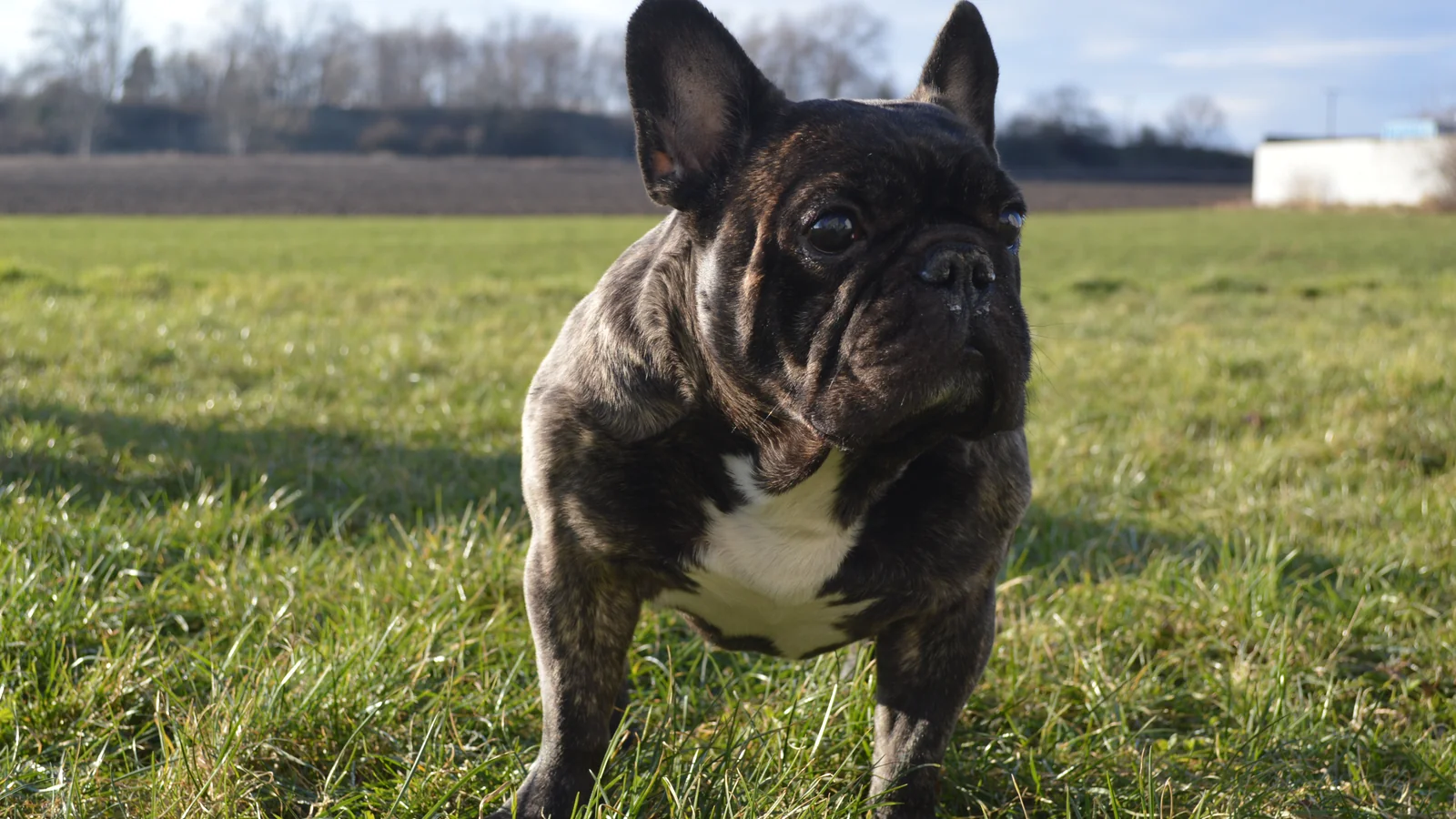 Find Your Match Meet French Bulldog first “I'm a meme with a heartbeat and I know exactly how famous I am” Swipe through a dating-profile-style card before you commit. Say hello →
 Breed fit quiz Does a French Bulldog actually suit your life? Answer a few questions about your lifestyle and see how well this breed matches your real setup. Find out →