
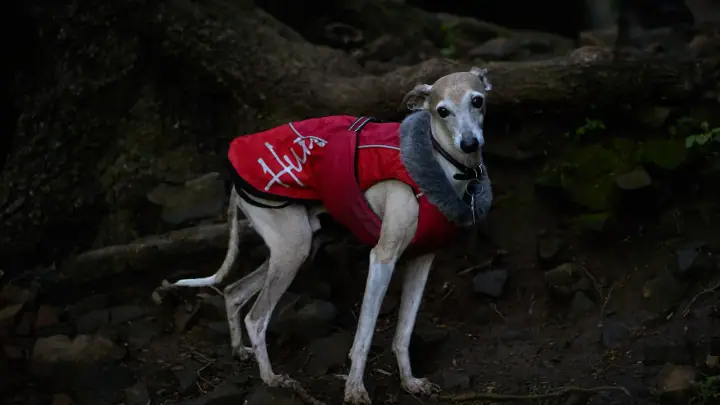
HDB-APPROVED · DOG BREED GUIDE
Last updated First published 31 May 2026
Notice one little habit together →A small idea to try, with progress kept in your Pack.
Also known as IG, Iggy, Piccolo Levriero Italiano.
Thinking about adopting a Italian Greyhound?
Italian Greyhounds have the physique of a runway model and the constitution of a Singaporean orchid; delicate, stunning, and requiring constant vigilance not to wilt.
Can a Italian Greyhound live in an HDB flat?
YesOn the HDB approved-breed list
Named on HDB's approved small-breed list for flats. Check any listed variety restrictions and confirm the individual dog before committing.
HDB sets and maintains the approved-breed list. Check the current rules at HDB.gov.sg →
Full list of HDB-approved breeds on this site →At a glance
- Size category
- Small
- Weight
- 3 to 5 kg
- Height
- 33 to 38 cm
- Lifespan
- 14 to 16 years
- Energy level
- ●●●○○ 3/5 (editorial, unvalidated)
- Shedding
- ●○○○○ 1/5 (editorial, unvalidated)
- Heat tolerance
- ●●●○○ 3/5 (editorial, unvalidated)
- Barking
- ●●○○○ 2/5 (editorial, unvalidated)
- Trainability
- ●●●○○ 3/5 (editorial, unvalidated)
- Grooming needs
- ●○○○○ 1/5 (editorial, unvalidated)
- Origin
- Italy
Editorial climate-care note
Heat tolerance rated 3 out of 5. The Italian Greyhound's short, single coat means less heat retention, making it one of the more heat-tolerant small breeds for Singapore's 28 to 32 degrees Celsius climate. However, its very lean body and low body fat make it sensitive to temperature extremes. Walk before 8am or after 7pm and provide an air-conditioned resting environment.
This score is not a safe temperature or exercise limit. Any dog can develop heatstroke.
Plan activity around your dog, not a timer
A breed score cannot tell you how many minutes are safe today. Avoid hot conditions, watch your dog's breathing, and agree an activity plan with your vet.
Read PDSA's heatstroke guidance →Common health issues in Singapore's climate
Build a care budget
- Year 1
- S$2,652 to S$3,588
- Over 10 years
- S$24,544 to S$33,207
Illustrative planning assumptions for food, grooming and routine vet care, with inflation and a year-one setup uplift. These are not verified provider quotes or a lifespan prediction. Adjust the calculator to current quotes; add insurance, boarding and emergencies separately.
Run the full lifetime cost calculator →The Italian Greyhound is what happens when a full-size sighthound is shrunk by two thousand years of selective breeding into the lap of a Renaissance noblewoman. It is small, elegant, low-shedding, and quiet, and its size alone makes it an easy physical fit for an HDB flat. In practice the breed comes with several Singapore-specific conversations that an honest guide owes you: the fragile leg bones, the surprising cold-sensitivity in air-conditioned flats, a toilet training process that runs harder than average, and the separation anxiety that catches most first-time owners off guard. If those are managed, an Italian Greyhound is among the most quietly rewarding small breeds the city offers.
What an Italian Greyhound Is Actually Like to Live With
Temperament: the quietly complicated bit
The rhythm of an IG is unlike most small breeds. The dog is a sighthound, meaning it is wired for short bursts of explosive speed (genuinely fast in a straight line) followed by long stretches of deep sleep. A well-exercised Iggy spends most of its day curled into a soft cushion arrangement that always involves at least one blanket, regardless of room temperature.
The UK's Italian Greyhound Rescue Charity, which works alongside the breed's Kennel Club affiliated club, describes the temperament honestly rather than flatteringly: individual dogs can be "quirky and sometimes aloof and shy," some "neurotic and fearful," others "outgoing and lively," but all carry a strong inborn need for company. Two traits from that same source are worth knowing before you commit. First, the breed carries a genuinely high prey drive, and recall "can be patchy if they've spotted a rabbit or a squirrel to chase," because the dog "can be selectively deaf when it suits them." In practice, treat any unfenced space, however calm it looks, as a leash-on zone, and save off-leash time for properly enclosed dog runs. Second, the breed does not respond well to firm handling: the charity recommends reward-based training over punitive methods because the dog is, in its own words, "quite sensitive." A raised voice or a rough correction tends to produce a worried, shut-down dog rather than a corrected one, which is also part of why this fine-boned, easily startled breed is not naturally suited to a household with boisterous young children.
Cold is the other half of the temperament conversation, and it catches most new owners off guard. Air-conditioned flats are genuinely cold for this breed. The short single coat and the low body fat mean the dog will shiver at 24 degrees indoors and seek out the warm spot on the sofa, the patch of sun on the floor, or your lap, in that order, even though Singapore's own night time lows rarely dip below 23 to 25 degrees Celsius outdoors. Households that run the air-con steadily through the day need a small soft jumper for the dog, an enclosed bed with blankets, and a willingness to take the breed's thermal preferences seriously.
Exercise, heat, and humidity
Outdoors, the IG handles Singapore's heat better than its delicate appearance suggests. The single coat is fine and breathable, the build is light, and the breed does not over-exert itself. Walks before 7.30am or after 7pm, shaded routes (the green corridors through Bishan-Ang Mo Kio, the Park Connector Network, the cooler stretches of the Southern Ridges), and a willingness to call the walk on a particularly humid morning. A good IG walk is short and engaged rather than long and steady; 25 minutes of varied pace is often more satisfying than an hour of plodding.
Worth knowing: Singapore's early morning cool comes with a trade-off. Relative humidity climbs above 90 percent just before sunrise and falls to nearer 60 percent on a dry afternoon, so the coolest hour is also the most humid one. Watch the dog rather than the clock, and shorten the walk on a sticky morning. Given the recall caution above, keep leads on for any walk outside a fenced dog run: a bolting Italian Greyhound in an open park is a road safety risk as much as a recall problem.
The leg bones: a daily habit, not a one-off precaution
The leg bones are the part that needs daily attention. The Italian Greyhound Club's own Active Health Project, run under the UK Kennel Club, is blunt about it: "Leg breaks in Italian Greyhound puppies are unfortunately incredibly common," and the risk is highest in puppies and young adults, whose "long slim legs, compared to their body mass and their desire to run and jump," outpace a skeleton that has not finished developing. Jumping off a sofa, missing a step on a stair, or landing wrong on a slippery tile can produce a fracture, and the same project notes that when surgery is needed, plates and screws are "the most common form of treatment" today, since a cast alone tends to give a worse repair.
The protective routine is straightforward: a ramp or step for any furniture the dog uses regularly, non-slip mats on tile or vinyl floors in the areas the dog runs, and a firm "no jumping" rule that the household sticks to. None of this is fussy. It is the reason a well-managed Italian Greyhound can spend its full 14 to 16 years on four working legs rather than living with a plated repair and long-term mobility limits.
Toilet training: harder than it looks
This is one of the least advertised parts of Italian Greyhound ownership, and it deserves a straight answer. The Italian Greyhound Club of America, the breed's official club recognised by the American Kennel Club, is direct about it: house training "can be very difficult if there is no one home during the day," and young puppies "do not have the ability to go without eliminating for long periods of time." Bladder control develops at around 14 to 16 weeks, and mental maturity lags behind that physical milestone, so setbacks well into the first year are normal rather than a sign you are doing something wrong.
In a flat this matters more than it would in a house with a garden door. Build a consistent schedule from day one: first thing after waking, after every meal, after play, and last thing before bed, using a dedicated spot, whether that is a balcony area, a washable indoor pad, or a fixed route to ground level. Crate training helps, since the breed generally will not soil where it sleeps, and a predictable toileting routine also reduces the anxious pacing that comes with the breed's separation sensitivity, covered next. If you work full days away from the flat with nobody able to let the dog out around midday, plan for that gap before you bring the puppy home, not after.
Separation anxiety
IGs bond intensely with their household, are bred to be companions, and do not enjoy long solo days. A working couple who is out of the flat from 9am to 7pm five days a week without arrangement will produce an Iggy who paces, vocalises, and develops compulsive behaviours that are unkind to live with. A midday walker, half-day daycare twice a week, or a household pattern that keeps someone within reach is the kind of plan that works. The breed will reward it with one of the most devoted small-dog relationships you can have.
Grooming and coat care in Singapore's humidity
A salon visit every 8 to 12 weeks for a tidy, a nail trim, and a bath covers most of what this breed needs professionally; the grooming cost breakdown elsewhere on this page sets out what that runs to. At home, the short single coat needs almost nothing beyond a weekly rubber-glove brushing and a soft towel after a walk in the rain. The IG is one of the cleanest, lowest-odour small breeds available, which is the quiet upside of the breed's other complexities, and Singapore's humidity actually works in the coat's favour here: a coat this thin dries within minutes of a towel-off and rarely holds the damp, musty smell a double coat can develop in this climate.
The trade-off is skin rather than hair. A very lean dog with almost no coat to buffer against friction can develop small abrasions, calluses on the elbows and hocks from lying on hard floors, or irritation where the coat is thinnest, on the belly and inner thighs. A weekly hands-on brushing session is as much a skin check as a grooming routine, and it is the easiest way to catch a callus, a hot spot, or an early skin issue before it becomes a vet visit.
Diet and feeding in the heat
Feeding an Italian Greyhound in Singapore is mostly about body condition and climate logistics rather than the food itself; the food cost breakdown elsewhere on this page covers the budget side. Iggies should be lean but not bony; the famously visible spine and tucked waist of a sighthound is correct, and a fluffier IG is an unwell IG.
Humidity changes what happens to food between meals more than it changes what you feed. Kibble left out in an un-air-conditioned kitchen softens and attracts pests quickly in Singapore's humidity, so seal bags tightly after opening, decant into an airtight container, and avoid leaving a bowl of dry food sitting out all day the way you might in a drier climate. Because the breed carries very little insulating fat, it also tends to feel iced water or a straight-from-the-fridge bowl more than a heavier dog would, so many owners let water settle to room temperature before serving it, particularly to a dog that has just come in from a hot walk. Splitting food into two smaller meals rather than one large one suits the breed's fast metabolism and small stomach, and helps avoid a dog gorging before its body temperature has settled after exercise. None of this requires a particular brand or product, only consistency and attention to the dog's waistline, which is the simplest running health check available to you.
Training: what's hard and what's easy
What is easy: the Italian Greyhound is intelligent, food motivated, and, per the breed's own rescue charity, responds well to reward-based methods rather than firm correction. Basic obedience, name recognition, and settling on cue are all reachable with a calm, consistent, treat-led approach, and the breed's need for closeness to its owner works in your favour here: a dog that wants to be near you is a dog that wants to work for you.
What is hard: recall fights the breed's sighthound instincts directly, as covered above, and toilet training fights both a small bladder and a flat's less immediate outdoor access. Socialisation is worth front loading, too. Because the breed can be reserved or worried around strangers and loud environments, structured, positive exposure during the puppy months, to noise, other dogs, and the everyday sounds of an HDB block such as lift doors and corridor traffic, tends to pay off for years afterward. Harsh, correction based training or anything that startles the dog tends to backfire with this temperament.
Health and routine care in Singapore
The cost breakdown and cost range elsewhere on this page cover what to budget for food, grooming, and vet care. Of the three, annual routine vet care tends to be the largest line, driven mainly by the dental and screening needs below rather than by frequent illness.
What the breed's own clubs say to watch for
Italian Greyhounds are generally considered a healthy breed by the organisations that track them, and the breed carries a Kennel Club Breed Watch category of 1 in the UK, meaning "currently no points of concern specific to this breed have been identified" in conformation judging. The breed's UK health project is similarly measured, noting that "there is no evidence in the UK to suggest that Italian Greyhounds are particularly prone to specific health problems." That is a statement about the absence of an unusual, breed-wide epidemic, not a claim that no individual dog needs monitoring: like every breed, the Italian Greyhound has a standard set of conditions that its own clubs test for as a matter of routine, and those are worth knowing before you commit.
- Dental disease. Gum disease tends to start early in this breed: gingivitis "is often first noticed at about 2 years of age" and untreated periodontitis "usually begins at 4 to 6 years of age," per the breed's UK health project, and left untreated it "can destroy the bone that supports your dog's teeth" and lead to tooth loss. A minority of Italian Greyhounds also carry an inherited enamel condition, familial enamel hypoplasia, which the University of California, Davis, Veterinary Genetics Laboratory describes as pitted, discoloured enamel with unusually small, pointed teeth and gaps that widen as the dog ages; a DNA test for it is available through that laboratory. Daily brushing from puppyhood, recommended by the Italian Greyhound Club of America as best practice, is the single highest-value habit for this breed's teeth.
- Patellar luxation and joint health. The Italian Greyhound Club of America's recommended health testing includes an OFA patella evaluation after 12 months of age and, for breeding dogs, hip radiographs after 24 months, reflecting a known predisposition to kneecap and joint issues that sits alongside the leg fracture risk covered above.
- Eye conditions. Progressive retinal atrophy is the main concern in the breed. The UC Davis Veterinary Genetics Laboratory notes it is typically diagnosed at an average age of around 6.5 years, and DNA testing for susceptibility is available through that laboratory; the Italian Greyhound Club of America also recommends annual ophthalmologist eye exams for breeding dogs.
- Thyroid function. The Italian Greyhound Club of America's testing schedule includes an OFA thyroid blood test annually from age two to four, then every two years to age eight, which reflects thyroid function as something the breed is monitored for over its lifetime rather than a single check.
- Anaesthesia sensitivity. This is a sighthound-wide trait rather than one specific to Italian Greyhounds, and it is genuinely worth raising with your vet before any procedure that needs a general anaesthetic, including a dental clean. Sighthounds carry unusually low body fat, around 17 percent against roughly 35 percent in an average dog, and clear certain drugs more slowly through the liver. Writing in the veterinary continuing education publication Clinician's Brief, board certified veterinary anaesthesiologists advise avoiding thiobarbiturate anaesthetics in sighthounds specifically, and note that even propofol, a safer alternative, can be metabolised more slowly in these dogs. Most vets in Singapore are aware of sighthound anaesthesia protocols, but mentioning the breed proactively before any procedure costs nothing.
None of this is diagnostic advice. A change in your dog's teeth, gait, eyes, or energy is always a reason to see your vet rather than a symptom to research online.
Housing and space: HDB, AVS, and the flat itself
HDB sets and maintains the approved list of dog breeds allowed in flats, and the Italian Greyhound is currently on that list, which is one of the reasons this breed appears so often in Singapore apartment life. Because that list can change, check the current version directly at HDB before you commit rather than relying on this page or any other secondary source.
AVS sets ownership limits on top of HDB's breed list: an HDB flat may keep a maximum of one dog of an approved small breed alongside up to two cats, while private property may keep up to three cats or dogs in combination. AVS also excludes any dog on its Specified Dogs list from HDB flats altogether, a list the Italian Greyhound does not fall under. Licensing is mandatory regardless of property type. At the time of writing, in August 2026, a sterilised dog's licence costs S$15 for one year, S$25 for two years, or S$35 for three years or as a one-time fee, with a 10 percent rebate for payment by GIRO, online, or AXS; an unsterilised dog costs S$90 for one year up to S$230 for three years or as a one-time fee. AVS has stated that dog and cat licence fees will be harmonised under the same structure from 1 September 2026, so check the current fee schedule at the time you licence your dog.
Inside the flat, the fine bone structure covered above turns ordinary Singapore flooring into a genuine consideration rather than a cosmetic one. Tile and vinyl, the two most common flooring types in HDB and condominium units, offer little grip for a light, fast dog cornering indoors, which is exactly the setting the breed's health project warns about for fracture risk. Rugs or non-slip mats along the routes the dog actually runs, particularly around corners and near furniture it jumps from, do more for this breed's long-term health than almost anything else in the home. The same logic applies to balconies and gaps in railings sized with a larger dog in mind: an Italian Greyhound's narrow body and light weight mean fittings that are safe for a bigger dog are worth a second look for this one.
Getting an Italian Greyhound in Singapore
If you are going the breeder route, take the search itself seriously rather than treating it as a formality. Be prepared to look beyond a single local option, including across the regional breed networks, and do not let time pressure shortcut the checks below. Before any deposit, ask for (a) the AVS dog farm licence number on the breeder's site or invoice, (b) patella and hip screening on both parents, (c) eye certification from a board-certified veterinary ophthalmologist for both parents, (d) a dental and structural assessment, and (e) a written health guarantee covering hereditary conditions.
A good IG breeder will be honest about the fragility of the front legs and will want a clear picture of your household. If a breeder dismisses the fragile-bones conversation, treat that as a flag about the breeder rather than reassurance about the breed.
If you would rather adopt than buy, treat it as a genuinely longer search rather than a quick alternative. AVS's Project ADORE scheme, which rehomes local mixed-breed dogs (Singapore Specials) into HDB flats, does not cover the Italian Greyhound or Italian Greyhound crosses, so it is not a route to this specific breed. Check general rescue and shelter listings for sighthound-type dogs instead, and treat any claim of local availability, including on this page, as something to verify directly rather than take on trust. An adult IG from a careful rehoming source, if you do find one, is often the easier first-time route: the household knows what it is taking on, the dog is past the worst of the puppy fragility window, and the temperament is fully formed.
The honest counsel on imports: don't. The genetic conditions worth screening for in IGs are precisely the ones an imported sale will skip, and a fragile-boned small dog with no early dental and orthopaedic baseline is a long-term cost the savings on the original price will not cover.
Life stages
Puppy (0 to 12 months)
This is the highest-risk window for the leg fractures covered above. Growing bones combined with a puppy's total lack of self-preservation is exactly the combination the breed's health project warns about. Limit unsupervised access to sofas, beds, and stairs, and physically carry the puppy over thresholds it has not yet learned to navigate safely. This is also the toilet training window: expect it to run past the standard puppy timeline, and expect setbacks as bladder control, from around 14 to 16 weeks, and mental maturity develop on different schedules. Socialisation, started as early as your vet allows given the puppy's vaccination schedule, matters more for this breed's adult temperament than for most.
Adult (roughly 1 to 8 years)
Once past the puppy growth phase, day to day fracture risk drops, though it never fully disappears, which is why the household habits above (ramps, non-slip flooring, no jumping off furniture) are worth keeping for the dog's whole life rather than just the puppy phase. This period is also when the breed's recommended screening schedule begins in earnest: thyroid blood tests from age two, and annual eye exams for any dog used for breeding.
Senior (from roughly 8 years)
Dental disease, which can already be established by 4 to 6 years of age if untreated, tends to be the most visible senior issue, alongside the cumulative effect of any joint or fracture history. Cold sensitivity generally becomes more pronounced with age as muscle mass drops, so an older Italian Greyhound in an air-conditioned flat needs the jumper and blanket habits above even more consistently than a younger dog. With a typical lifespan of 14 to 16 years, many owners are caring for a genuinely elderly dog for several years, which is worth planning for financially as well as practically.
Three things to know
-
The bones are the daily commitment
Ramps, non-slip mats, no jumping off furniture, and a household trained on how to pick the dog up. An Italian Greyhound treated with this care lives 14 to 16 active years; one treated as a normal small dog often lives with a healed fracture and ongoing issues.
-
Cold-sensitive in the tropics is real
Air-conditioned flats are genuinely cold for the breed. Soft jumpers, an enclosed bed with blankets, and a willingness to let the dog claim the warm spots in the flat. None of this is fussy; the dog has almost no body fat.
-
Plan for company
IGs do not do well left alone for full working days without arrangement. A midday walker, part-time daycare, or a flexible household pattern is the kind of plan the breed deserves. The reward is one of the most quietly devoted small-dog relationships in the breed catalogue.
Annual cost in Singapore
Editable planning estimates, not verified provider quotes or a prediction of your dog's bills. Boarding, one-off equipment and emergencies are additional.
- Food
- S$700
- Grooming
- S$400
- Routine vet
- S$1,300
- Sum of the three
- S$2,400/year
Run the lifetime cost calculator →
Get a current insurance quote for your dog's age and circumstances. Compare exclusions, waiting periods, excess and cover limits. Compare policy questions here →
Frequently asked questions
Is a Italian Greyhound HDB-approved in Singapore?
Yes. The Italian Greyhound is on the HDB list of breeds approved for flats. Confirm the current HDB and AVS rules before you commit, as the approved list can change.
Do Italian Greyhounds bark a lot?
Our current barking assessment is: is fairly quiet (editorial estimate). It has not been independently validated. Ask about this dog's observed behaviour, triggers and time alone; the breed label cannot predict your neighbour's experience.
How much grooming does a Italian Greyhound need?
Our current grooming assessment is: needs minimal grooming (editorial estimate). Confirm the individual coat-care routine and any professional grooming with the rescue, groomer or vet. The score is not a measured frequency or price.
How does a Italian Greyhound cope with Singapore's heat?
An editorial heat score cannot establish a safe temperature or walk duration for an individual dog. Activity, humidity, health, age and body shape matter. Avoid hot conditions, provide shade and water, and ask your vet about an appropriate activity plan.
Is a Italian Greyhound a good breed for a first-time owner?
Our household-fit note is: Editorial: may need more support. This is not a validated prediction. Assess the individual dog, your daily capacity, training support and known care needs before deciding.
How much does a Italian Greyhound cost to keep in Singapore?
The stored planning assumption is S$2,400 a year for food, grooming and routine veterinary care. It is not a verified typical cost for this breed. Replace it with current quotes and your own usage; add setup, licensing, insurance if chosen, boarding and emergency savings separately.
Other small breeds to consider


A Italian Greyhound in Singapore, the short version
The Italian Greyhound is HDB-approved and an elegant, low-maintenance companion well-suited to Singapore apartment living. Its short, single coat requires minimal grooming and manages the tropical heat better than most small breeds. Walks should still be timed before 8am or after 7pm to avoid the midday heat, and air-conditioning is appreciated given the breed's lean body type. Italian Greyhounds are sensitive and gentle. Early socialisation is key. Dental care is a priority as the breed is prone to tooth and gum disease. Annual vet costs typically range SGD 700 to 1,100.
Italian Greyhound vs...
Deciding between two breeds? See them side by side.
Find Italian Greyhound-friendly spots in Singapore
Good spots to visit with a Italian Greyhound in Singapore.
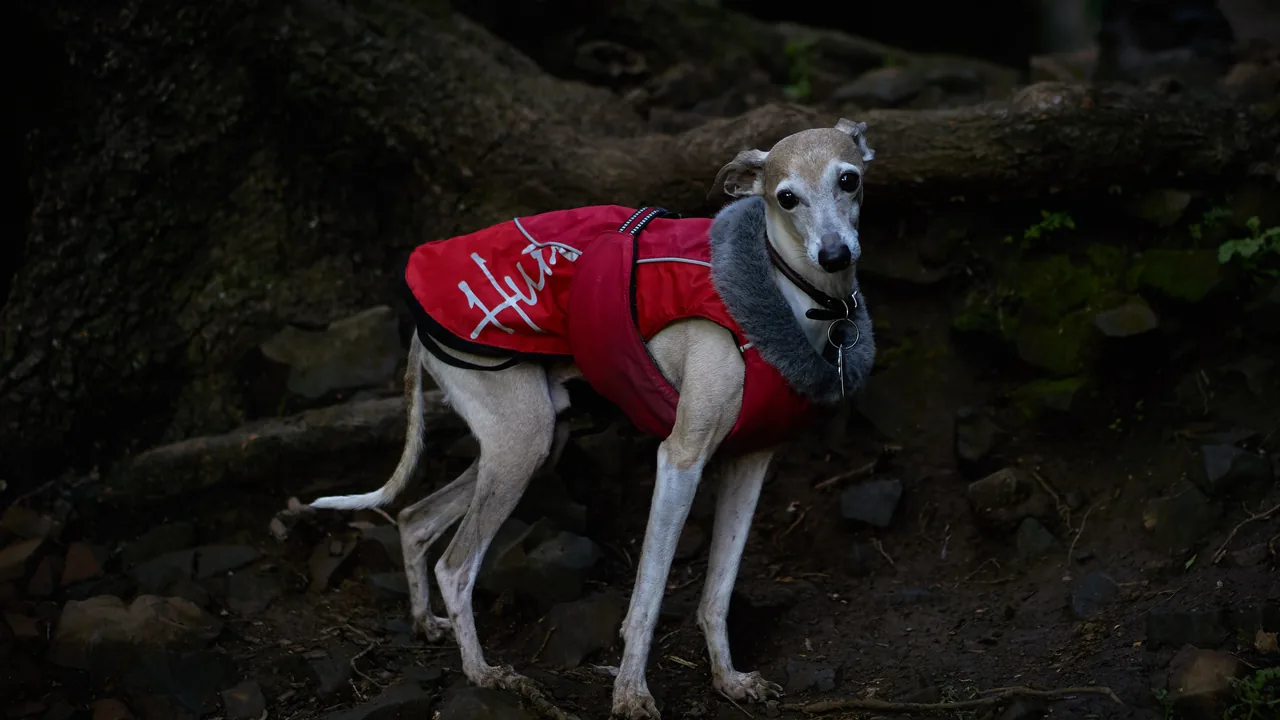 Find Your Match Meet Italian Greyhound first “I'm built like a wine glass and I demand to be treated like one” Swipe through a dating-profile-style card before you commit. Say hello →
 Breed fit quiz Does a Italian Greyhound actually suit your life? Answer a few questions about your lifestyle and see how well this breed matches your real setup. Find out →