
Veterinary health certificate
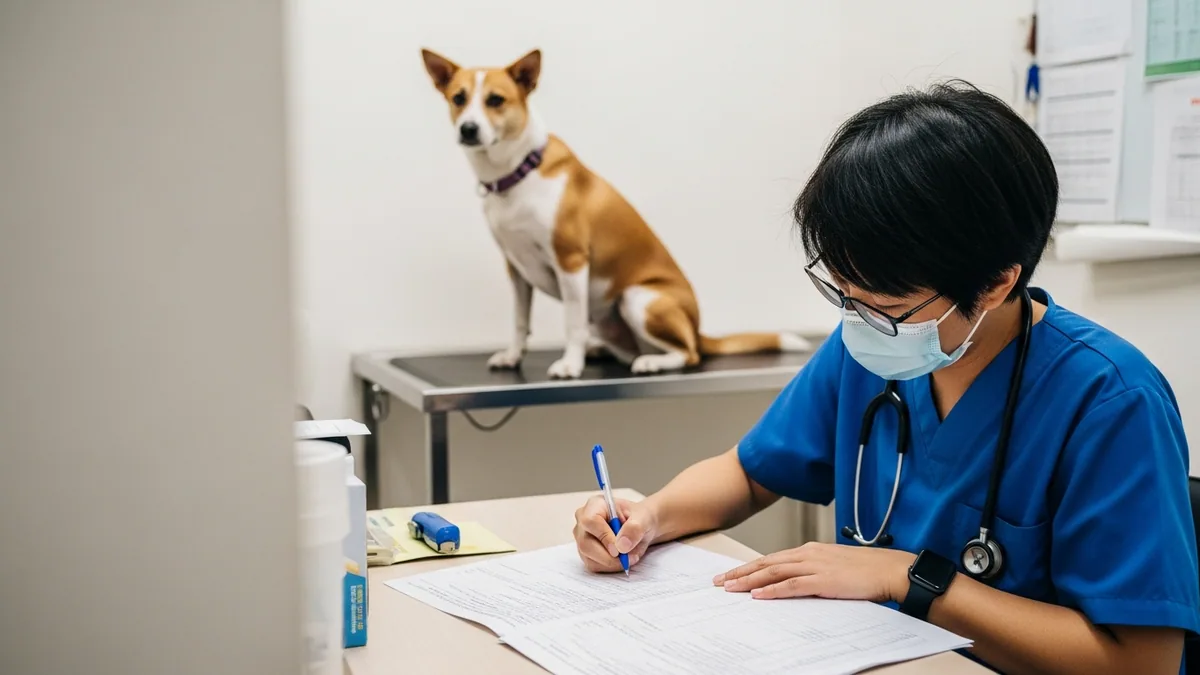
The certificate confirming a dog meets Singapore’s veterinary conditions for import, is healthy, free from clinical signs of contagious or infectious disease, and fit for travel. It is completed between two and seven days before export and endorsed by the exporting country’s official government veterinarian.
What it means for you
This is the last document in the sequence and the tightest window in the whole process. Everything else can be done months ahead. This one has to happen between two and seven days before your dog flies, which means it lands in the same week as the packing and the goodbyes.
It also needs two different signatures, and the second one is not your vet’s. An official government veterinarian in the exporting country has to endorse it, and government vets keep their own appointment books. Booking that endorsement early, even though the certificate itself cannot be completed early, is the thing that saves the week.
The parasite treatments go in the same visit, so the practical shape of it is one appointment covering treatment and certification.
How it works
The template is not generic. You download and print it from the veterinary conditions document for your dog’s rabies risk category, so a Schedule II dog uses the Schedule II certificate.
The sequence AVS sets out:
- Download and print the certificate from the relevant veterinary conditions document.
- Send the dog for external and internal parasite treatments, and have the treating vet complete Sections I to III.
- Have the exporting country’s official government veterinarian endorse Section IV of the same certificate.
The certificate confirms the dog fulfils the required veterinary conditions for import, is healthy, is free from any clinical sign of contagious or infectious disease, and is fit for travel at the time of export.
Alongside it, the dog must have valid core vaccinations supported by records on arrival, and where the dog comes from a Schedule I or II country a captain’s declaration form endorsed by the transporting airline is needed too. That template also lives inside the veterinary conditions document.
Common misconceptions
- My own vet can sign the whole certificate.
- Your treating vet completes Sections I to III. Section IV has to be endorsed by the exporting country’s official government veterinarian, which is a separate appointment with a separate authority.
- It can be done in advance with the rest of the paperwork.
- The parasite treatments and the certificate sit in a window between two and seven days of export. Earlier is not better here, it is invalid.
- One health certificate template covers every country.
- There is a separate template inside each of the Schedule I, II and III veterinary conditions documents. Using the wrong one is a rejected certificate.
Sources and last checked
- Importing dogs and cats Animal and Veterinary Service (AVS), NParks Accessed 15 Aug 2026 Page states it was last updated 5 August 2026 and carries the Schedule I, II and III country lists.
This entry describes published rules and veterinary guidance. It is a reference, not a substitute for your vet or for the agency handling your application, and where a decision turns on a fee or a deadline the source links above are the ones to confirm against. If something here has gone out of date, tell us and we’ll correct it and say what changed.