
Core vaccination (canine)
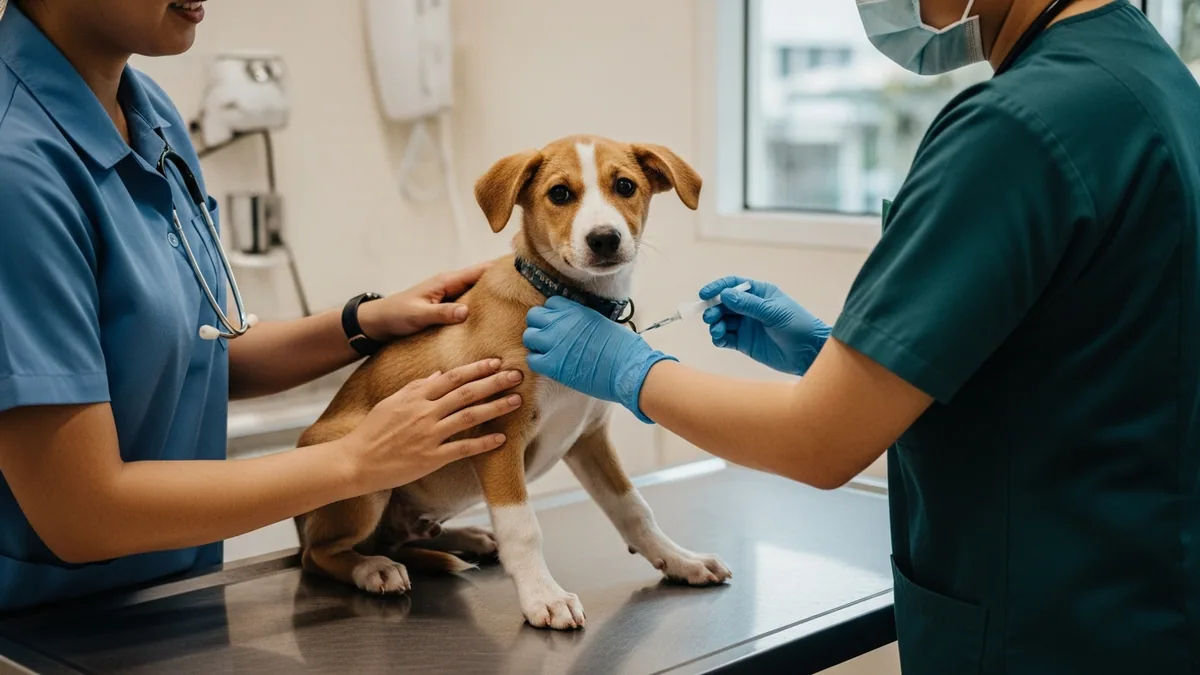
The baseline vaccinations a dog is expected to hold. For entry into Singapore, AVS names three specifically: canine distemper virus, canine adenovirus type 1 and canine parvovirus type 2, supported by vaccination records on arrival.
What it means for you
Core means the vaccinations every dog is expected to have, as distinct from the ones your vet recommends based on where your dog goes and who your dog meets. If you’re bringing a dog into Singapore, AVS turns that clinical idea into a checkable list of three.
The word doing the work in the requirement is valid. AVS defers to the vaccine manufacturer’s recommendations on validity, including how many doses are needed and how long to leave between them. So a single dose given last week is not automatically a valid vaccination, and a puppy part-way through a course may not yet qualify.
Rabies sits outside this list and is handled under the rabies risk category rules instead. Our vaccinations guide covers what your dog needs once you are both here.
How it works
For import, AVS requires dogs to hold valid vaccination against:
- Canine distemper virus
- Canine adenovirus type 1
- Canine parvovirus type 2
These must be supported by vaccination records on arrival in Singapore. AVS gives examples of a valid record, such as a vaccination card or certificate, and lists what it has to show:
- The microchip number of the animal.
- The date of vaccination.
- The vaccine brand name and batch number.
- The signature or endorsement of the attending veterinarian.
Records matter beyond the border too. Where a dog is going into quarantine at the Animal Quarantine Centre, AVS requires both rabies and general vaccination records to be provided when the quarantine space is reserved, so that animals are adequately protected before quarantine begins.
Your dog must also be at least twelve weeks of age at the time of export, which for a puppy interacts directly with how far through a vaccination course it can be.
Common misconceptions
- Core vaccination means rabies.
- AVS lists distemper, adenovirus type 1 and parvovirus type 2 as the core requirement for dogs. Rabies is required separately, and only for dogs from Schedule II and III countries, alongside a serology test.
- A vaccination card with dates on it is enough.
- AVS wants the microchip number, date, vaccine brand name and batch number, and the vet’s signature or endorsement. A card missing the batch number or the chip number is an incomplete record.
- One dose is one vaccination.
- Validity follows the vaccine manufacturer’s recommendations, including the number of doses required and the interval between them. A partially completed course may not be a valid vaccination.
Sources and last checked
- Importing dogs and cats Animal and Veterinary Service (AVS), NParks Accessed 15 Aug 2026 Page states it was last updated 5 August 2026 and carries the Schedule I, II and III country lists.
This entry describes published rules and veterinary guidance. It is a reference, not a substitute for your vet or for the agency handling your application, and where a decision turns on a fee or a deadline the source links above are the ones to confirm against. If something here has gone out of date, tell us and we’ll correct it and say what changed.