
ISO microchip (11784 and 11785)
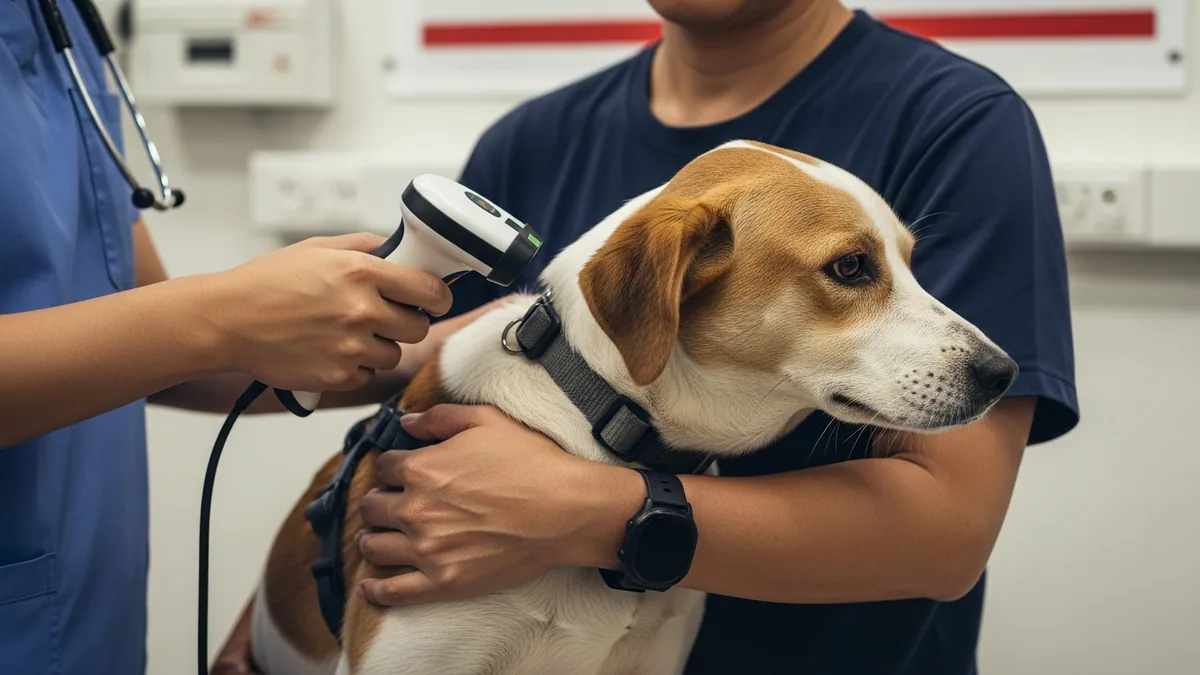
A microchip conforming to International Standards Organisation Standard 11784 or Standard 11785 Annex A, which is the identification standard AVS requires for dogs entering Singapore. The chip number must appear on every vaccination and treatment record.
What it means for you
The microchip is what ties every other document to your actual dog. Without a chip number on them, a rabies certificate and a serology result are pieces of paper about a dog that could be any dog, which is exactly how AVS treats them.
That gives you an ordering rule worth remembering: chip first, then vaccinate, then test. A dog vaccinated before it was chipped has records that cannot carry the chip number, and those records may have to be redone.
Not every chip qualifies. Some older or regional chips sit outside the ISO standards and cannot be read by a standard ISO scanner. Our microchipping guide covers what to ask your vet, including for dogs already chipped abroad.
How it works
AVS requires the dog to be microchipped according to ISO Standard 11784 or ISO Standard 11785 Annex A, and states that the microchip number must be indicated in all vaccination and treatment records.
That requirement threads through the rest of the import file:
- The rabies vaccination record, which is what makes the serology test valid.
- The core vaccination records, which AVS lists as needing the microchip number, the date of vaccination, the vaccine brand name and batch number, and the attending veterinarian’s signature or endorsement.
- The parasite treatments recorded on the veterinary health certificate.
Microchipping is also a condition attached to dogs rehomed under Project ADORE, and AVS lists microchipping among the criteria it weighs when assessing an application to keep more than three pets on private premises.
Separately from the import rules, a chip is the thing that gets a lost dog home. Our lost pet reporting guide covers what to do in the first hour.
Common misconceptions
- A microchip is a tracker.
- It is a passive identification chip read by a scanner held against the dog. It carries a number, not a location, which is why the registered contact details behind that number matter so much.
- Any microchip will do for an import.
- AVS names ISO Standard 11784 or ISO Standard 11785 Annex A. A chip outside those standards may not be readable on arrival.
- Vaccinating first and chipping later is fine.
- The chip number has to appear in all vaccination and treatment records, so records created before the chip existed cannot carry it.
Sources and last checked
- Importing dogs and cats Animal and Veterinary Service (AVS), NParks Accessed 15 Aug 2026 Page states it was last updated 5 August 2026 and carries the Schedule I, II and III country lists.
- Limits of ownership Animal and Veterinary Service (AVS), NParks Accessed 15 Aug 2026 Page states it was last updated 31 October 2025.
This entry describes published rules and veterinary guidance. It is a reference, not a substitute for your vet or for the agency handling your application, and where a decision turns on a fee or a deadline the source links above are the ones to confirm against. If something here has gone out of date, tell us and we’ll correct it and say what changed.