
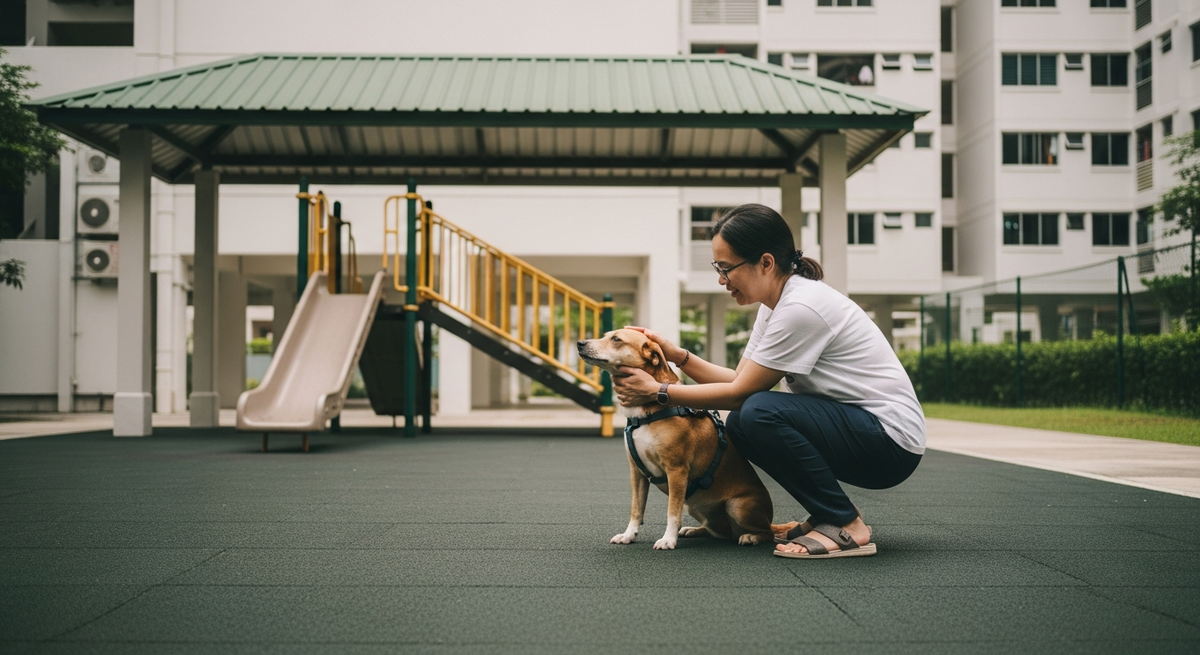

The first month with a new dog sets the foundation for everything that follows. This week-by-week checklist covers the practical steps, the training priorities, and the vet visits you need to action in weeks one through four.
9 min read · Updated 11 September 2026
Your dog's first month at home sets the foundation for everything that follows. The checklist below breaks that month into four weekly phases covering vet visits, toilet training, crate introduction, basic commands, and socialisation milestones. Print it, tick it off, and come back to it each time you notice a gap.
Official Singapore source
Animal and Veterinary Service: microchipping
Week 1: decompression and the basics
Week one is not about training. It is about letting your dog understand that your home is safe. Dogs coming from a rescue, a breeder, or a pet shop have just experienced a significant upheaval, and the stress hormones from that transition can take several days to settle. Pushing for too much too soon during this period is one of the most common mistakes new owners make.
Your week one checklist:
- Book a vet health check within 72 hours of bringing the dog home. Your vet will confirm vaccinations are current, check for parasites, and flag any immediate health concerns. In Singapore, bring the dog's vaccination record from the breeder or rescue. If you do not have one, your vet will advise on how to proceed.
- Set up a consistent feeding spot, a sleeping area, and a toilet area. Consistency during week one matters more than the perfect setup.
- Begin toilet training immediately. In an HDB flat, designate a specific spot, indoors on puppy pads or outdoors via the lift, and take your dog there every hour during waking hours, after every meal, and immediately after waking from a nap. Reward every successful toilet trip. Do not punish accidents: they are information, not defiance.
- Introduce the crate as a positive space by feeding meals inside it with the door open. Do not close the crate door in week one unless the dog voluntarily enters and seems comfortable.
- Keep visitors to a minimum. Your dog needs to settle before meeting the extended family.
According to the American Veterinary Medical Association's new dog guidance, the first 72 hours are the highest-stress period for most new dogs, particularly adult rescues. A calm, predictable environment during this window significantly reduces the risk of anxiety-related behaviours in the weeks that follow.
Week 2: routine and first commands
By week two, most dogs have begun to relax into the rhythm of the household. This is a good time to start building a predictable daily routine, because routine reduces anxiety and makes all subsequent training easier. Meals at the same time, walks at the same time, and bed at the same time signal to the dog that the world is consistent and safe.
Your week two checklist:
- Establish a fixed daily routine: morning walk or toilet trip, breakfast, a period of calm, midday enrichment, afternoon walk or toilet trip, dinner, evening wind-down, bedtime. The specific timing matters less than the consistency.
- Start teaching "sit" using a lure (a treat held above the nose and moved back). Mark the sit with a verbal marker or clicker and reward immediately. Keep sessions to two to three minutes maximum, several times per day.
- Begin crate door exercises: close the door for ten seconds, then open it and reward. Gradually increase the duration over the week. Never use the crate as punishment.
- If your dog is a puppy in the socialisation window (3 to 12 weeks), begin gentle, positive exposure to common Singapore sounds and sights: the lift, the void deck, other people at a distance. Keep every exposure positive and end before the dog shows any signs of stress.
- Begin teaching your dog its name by saying it once and rewarding enthusiastic eye contact.
The AVSAB's position on puppy socialisation is unambiguous: missing the critical window between 3 and 12 weeks has lasting consequences for a dog's ability to cope with novel experiences. If your dog is still within this window, gentle positive exposure to Singapore's urban environment is a higher priority than any formal training.
Week 3: expanding commands and increasing independence
Week three is typically when dogs begin to show their full personality in the new home. Some owners are delighted; others are surprised by behaviours that were not visible in the first two weeks. This is normal. A dog that was shut down by stress in week one may become boisterous, mouthy, or demanding in week three. This is a good sign: it means the dog feels safe enough to express itself.
Your week three checklist:
- Add "down" and "stay" to the training repertoire, building on the "sit" the dog already knows. Use the same lure-mark-reward method. Keep sessions short and positive.
- Practise "sit" before every meal as a calm default behaviour. This builds impulse control in a low-stakes context and translates to better manners in more stimulating situations.
- Begin loose-leash walking practice inside the home or in a quiet corridor before tackling a busy outdoor environment. Reward the dog for walking alongside you without pulling.
- Review toilet training progress. By week three, most dogs should be consistently using the designated spot with a low accident rate. If accidents are still frequent, increase the frequency of toilet trips and reduce the dog's unsupervised roaming time inside.
- If the dog is comfortable in the crate, begin leaving it there for short periods (ten to fifteen minutes) while you move to another room. Build duration gradually.
For dogs with a tendency to mouth or nip, week three is the right time to begin teaching bite inhibition. The ASPCA's guidance on house training notes that consistent, predictable responses to unwanted behaviours produce faster results than variable responses. Decide what your household rules are and apply them consistently from all family members.
Week 4: consolidation and first outings
By week four, your dog should have a working knowledge of sit, down, and stay, a reliable toilet routine, and a comfortable relationship with its crate. Week four is the right time to consolidate these gains and begin introducing more complex challenges such as walking in busier outdoor environments.
Your week four checklist:
- Take your first full neighbourhood walk if vaccinations are complete. In Singapore, keep your dog on a two-metre lead in all public spaces. Practise the loose-leash skills from week three in a real environment.
- Introduce "recall" (come): call your dog's name, followed by "come", and run backwards a few steps to encourage the dog to follow you. Mark and reward heavily when the dog reaches you. Recall is the most important safety command and the one that requires the most long-term reinforcement.
- Review AVS registration: all dogs in Singapore must be licensed with AVS. If you have not done this yet, the deadline is within two months of the dog arriving in Singapore or within two months of a puppy turning three months old. See our guide on microchipping and registration.
- Book your first proper grooming session if needed. Singapore's humidity means most breeds need more frequent grooming than they would in a temperate climate.
- Assess progress honestly. If toilet training is still unreliable, crate comfort is not established, or the dog is showing anxiety or aggression signs, booking a session with a certified trainer now is far more effective than waiting another month.
Frequently asked questions
My new dog will not eat in week one. Is that normal?
A new environment can affect appetite, but do not assume food refusal is harmless settling-in stress or wait a fixed 48 hours. Contact your vet promptly for advice, especially for a puppy, a dog with an existing condition, or any vomiting, lethargy, pain or reduced drinking. Record what was actually eaten and any other changes. Breathing difficulty, collapse or repeated unproductive retching needs urgent care. VCA explains the possible causes and veterinary assessment of appetite loss.
When can my puppy meet other dogs?
Before full vaccination (typically at around 16 weeks), only socialise your puppy with dogs you know are fully vaccinated and healthy. The risk of parvovirus and distemper in Singapore is real, and unvaccinated puppies are vulnerable in any environment frequented by unknown dogs. After completing the vaccination course, your puppy can gradually meet a wider range of dogs. Puppy classes run by certified trainers are a good controlled environment for this.
My dog was toilet trained at its previous home. Why is it having accidents now?
Toilet training in a new environment often regresses because the dog is still learning the cues and expectations of the new home. The surfaces, smells, and schedule are all different. Treat week one as starting from scratch rather than assuming prior training transfers automatically. With consistent reinforcement of the correct toilet spot and routine, most previously trained dogs re-establish reliable habits within two to three weeks.
Can I start formal dog training classes in week one?
Most certified trainers recommend waiting until week two or three before starting classes, to allow the dog to decompress first. A dog in a high-stress state learns far less effectively than a dog that feels safe in its home. Use week one to establish routine and positive associations, then enrol in classes once the dog is eating, sleeping, and relaxed. The exception is veterinary-recommended puppy classes that specifically account for early socialisation in a controlled, low-stress setting.
More dog-friendly guides
-
 HDB barking complaints: how to manage your neighbour situation A neighbour complaint about your dog's barking is serious in an HDB context, but it is a problem with a clear pathway through it. This guide covers how to identify the cause, reduce the noise now, manage a formal complaint if one has been filed, and when to bring in professional help.
-
 Vet bills in Singapore: what to expect and how to plan Plan veterinary spending around your dog: ask for written estimates, compare the scope of care, understand insurance terms and prepare for unexpected bills.
-
 Singapore dog vaccination schedule, explained Core vaccines, puppy timing, leptospirosis, kennel cough, titre testing, and how your AVS licence connects to it all. Here is what Singapore dog owners actually need to know about keeping jabs current and records straight.
-
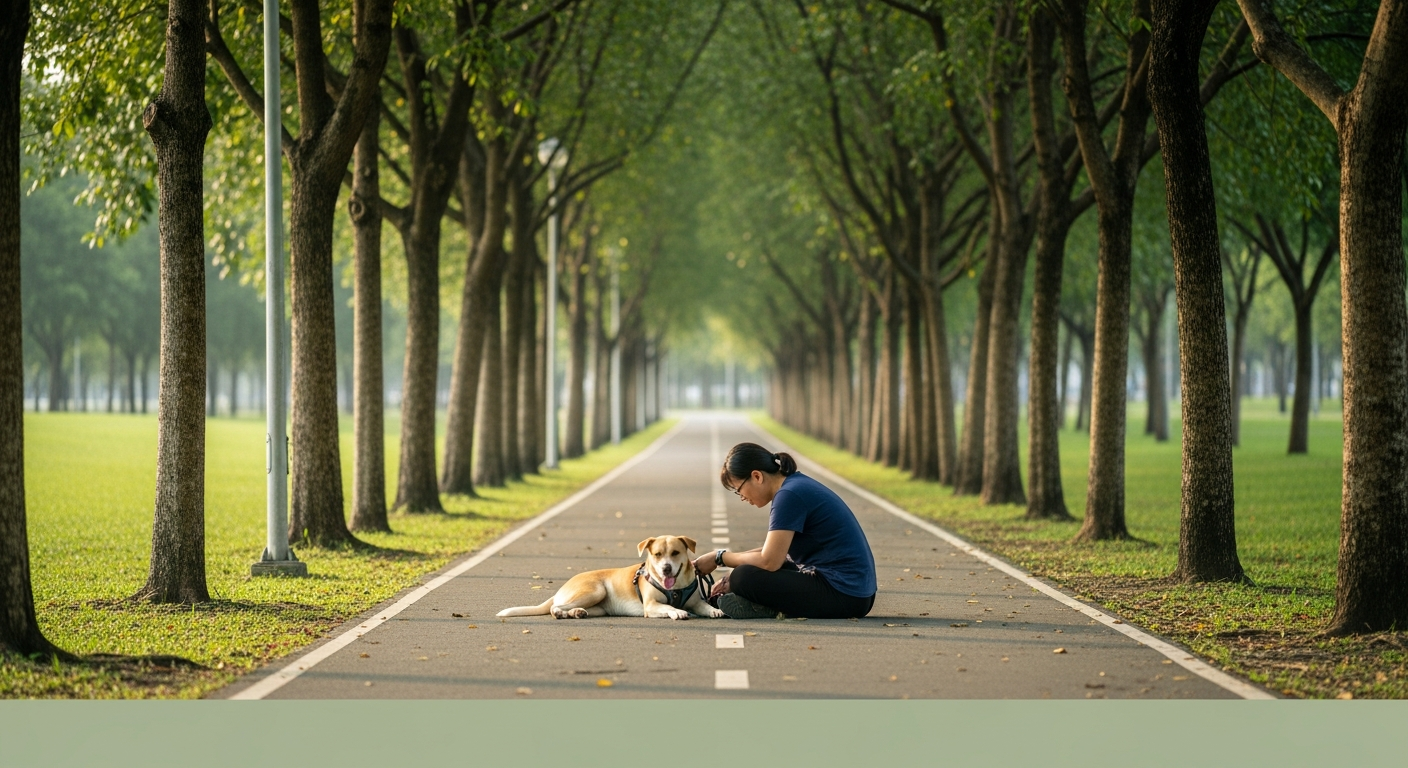 Your rescue dog's first 30 days in Singapore Bringing a rescue dog home is a different experience from raising a puppy, and the first 30 days require patience more than training. This guide covers what to expect during the decompression period, from the first quiet hours in a HDB flat to the point where your dog genuinely starts to feel at home.