


Adopting is the cheap part. The honest cost of a dog in Singapore is a recurring monthly figure plus a handful of large, predictable bills, and the owners who struggle are usually the ones who only budgeted for the puppy.
7 min read
People ask how much a dog costs in Singapore and expect a single number. The useful answer is two numbers: a monthly running cost between roughly 200 and 600 dollars depending on size and choices, and a lifetime total that lands between 25,000 and 60,000 dollars across a 12 to 15 year life. Here is where every dollar goes, and which lines you can control.
Official Singapore source
Animal and Veterinary Service: dog licensing
The one-off and annual fixed costs
The licence is the cheapest legal requirement you have. An AVS dog licence bought through the Pet Animal Licensing System on the NParks site costs about 15 dollars a year for a sterilised dog and more for an unsterilised one, with multi-year options that work out cheaper. Microchipping, which is mandatory, is a one-off 35 to 90 dollars at a vet, often bundled with a first consultation.
Insurance is the line owners skip and later regret. Pet insurance in Singapore runs from around 300 dollars a year for a basic accident plan to 1,500 dollars or more for comprehensive cover on an older or larger dog, through providers such as Liberty, AON, MSIG, Income, Etiqa and Sompo. Read the excess, the co-insurance percentage and the exclusions before you buy, because the gap between a 300 dollar plan and a 900 dollar plan is usually exactly the surgeries you most fear. Our insurance guide walks through the questions that matter.
The monthly running costs
Food is the largest recurring line for most owners. Premium kibble runs roughly 8 to 15 dollars a kilogram, so a small dog eating 4kg a month costs 40 to 60 dollars, while a medium dog can reach 80 to 120 dollars. Fresh or raw diets push that figure two to three times higher.
Grooming depends entirely on coat. A short-coated dog needs little, but a Poodle, Shih Tzu or Bichon needs a full groom every four to six weeks at 60 to 90 dollars, which is 700 to 1,000 dollars a year. Then there are the smaller monthlies: flea and tick prevention at 20 to 40 dollars, heartworm prevention at 15 to 30 dollars, treats, poop bags and the occasional toy.
If you work full time, add daycare or a walker. Daycare in Singapore runs 35 to 60 dollars a day, and a midday walker charges 25 to 40 dollars a visit. Three daycare days a week alone is over 400 dollars a month, which is why the routine you choose, covered in our working-owner guide, has such a large financial tail. Compare boarding and daycare options on our boarding directory.
The big, lumpy vet bills
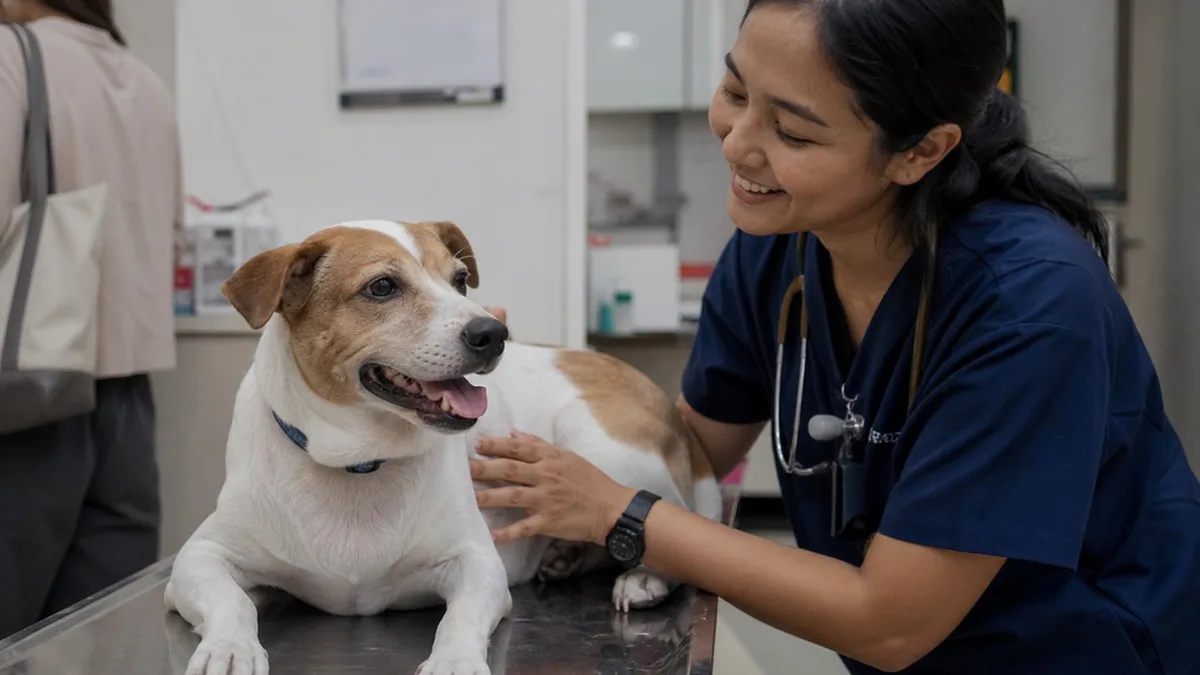
Routine veterinary care is predictable: an annual wellness check at 80 to 150 dollars, yearly vaccinations at 60 to 120 dollars, and a dental cleaning under anaesthetic every year or two at 400 to 1,200 dollars. Build those into the annual figure rather than treating them as surprises.
The bills that break budgets are the emergencies. A foreign-body surgery to remove something a dog swallowed runs 3,000 to 6,000 dollars. Cruciate ligament repair lands around 4,000 to 8,000 dollars. Cancer treatment can exceed 10,000 dollars. None of these are rare across a long life, and they are the entire argument for either insurance or a dedicated savings buffer. Price your own dog on our cost calculator, and keep the vet directory handy so you know where to go before the emergency arrives.
How much does a dog really cost per year in Singapore?
For a small, healthy, low-maintenance dog with insurance, expect 200 to 300 dollars a month, or 2,500 to 3,500 dollars a year. For a medium dog with grooming needs and some daycare, 400 to 600 dollars a month is realistic, or 5,000 to 7,000 dollars a year. Across a 13 year life, that compounds to somewhere between 30,000 and 60,000 dollars before a single major surgery.
Prices also vary by where you go, not just what you buy. A neighbourhood clinic in a heartland estate usually charges less than a specialist practice in the central districts, grooming in a quiet HDB shopfront undercuts a mall salon, and bulk-buying food or splitting a vet's annual package can shave real money off the running total. None of that means chasing the cheapest option on every line, because continuity of care and a groomer your dog trusts have a value of their own, but it does mean the headline figures above are a band rather than a fixed bill. The owners who feel in control are the ones who wrote the numbers down once, found the lines they could trim without harm, and then stopped agonising over the rest.
The holiday line nobody budgets for
Every trip you take is a cost line for the dog. Boarding in Singapore runs roughly 40 to 80 dollars a night at a licensed facility, and home boarding sits in a similar range, so a two-week holiday can add 600 to 1,100 dollars on top of your own travel. Owners who travel often either build that into the annual figure or lean on a regular sitter, and the trade-offs between kennel, home boarder and pet hotel are laid out on our boarding directory. Book early for peak periods such as December and Chinese New Year, when the good places fill weeks ahead and prices firm up.
Daycare deserves the same honest accounting. It is a recurring monthly line for working owners rather than an occasional treat, and at 35 to 60 dollars a day it can quietly become one of the largest items in the budget, as the working-owner routine in our daily-routine guide sets out.
Build an emergency fund, not just a policy
Insurance covers the big surgeries, but it rarely pays at the counter. Most pet policies in Singapore work on reimbursement, which means you settle the bill first, sometimes several thousand dollars, and claim it back over the following weeks. That cashflow gap catches owners out, so a separate buffer of a few thousand dollars sitting ready earns its place precisely because it lets you say yes to treatment in the moment rather than choosing between your dog and your account balance. Treat the buffer and the insurance as partners: the policy absorbs the loss, the fund absorbs the timing.
Why does the first year of dog ownership cost the most?
The opening year carries costs that never repeat, and budgeting for the steady state instead of the first year is the classic mistake. On top of the running costs, the first twelve months absorb the microchip, the initial vaccination course rather than a single booster, sterilisation at 200 to 800 dollars depending on size and clinic, and the kit a new dog needs: crate, bed, bowls, lead, harness, baby gates and a starter pile of toys, easily 300 to 600 dollars together.
If you buy from a breeder, the purchase price dwarfs all of it, with popular breeds running 3,000 to 6,000 dollars and some designer crosses far higher. Adoption collapses that line to a few hundred dollars through a shelter such as the SPCA, which usually includes sterilisation, microchipping and a first vaccination in the fee. Add a few rounds of puppy training classes at 200 to 500 dollars for a course, and a realistic first-year total lands well above the steady-state annual figure, often by a couple of thousand dollars.
Where owners overspend, and where they cut too deep
The overspending tends to cluster in two places: premium gear the dog does not care about, and boutique food bought on marketing rather than need. A mid-range complete kibble that meets recognised nutritional standards keeps most dogs healthy, and a vet, including the practitioners listed by the Singapore Veterinary Association, can steer you to one without the markup. You do not need the most expensive bed in the shop for a dog that will shred it anyway in month two.
The dangerous cutting happens on prevention and insurance. Skipping monthly heartworm or tick prevention to save 30 dollars a month sets up a treatment bill in the thousands, and going uninsured to save a few hundred a year is a gamble against a single emergency that can cost more than a decade of premiums. The right economy is a cheaper, climate-suited dog and disciplined prevention, not a cheaper approach to keeping the dog you have alive and well. Run the numbers honestly on our cost calculator before you decide which corners are safe to cut.
The figure should not scare you off. It should change how you choose. A smaller dog with a low-maintenance coat and good genes is dramatically cheaper to run than a high-maintenance breed, and adopting through our rescue listings removes the breeder premium entirely. Budget for the dog you will actually live with for the next decade, not the puppy in front of you today, and the cost stops being a source of dread and becomes just another part of a well-run household.
Related guides: renting with a dog, wet versus dry dog food, neutering and spaying, how many dogs you can keep in Singapore.
More from The Block
-
 Dog supplements in Singapore: what helps and what to skip Most healthy dogs on a complete diet need no supplements. A few have real evidence; many are marketing. How to tell them apart, and why to ask your vet first.
-
 Flying with your dog from Singapore: cabin, cargo and relocation (2026) Start with the operating airline and exact route. A pet may travel in the cabin, as checked baggage or through a cargo arrangement depending on the carrier and journey. Confirm acceptance before buying equipment or treating your own flight booking as a pet booking.
-
 Raw feeding for dogs in Singapore: a safe, honest guide Raw feeding is not proven to be healthier than an appropriate balanced cooked diet. CDC advises against raw pet food because of risks to animals and people. Nutritional formulation, cold storage and careful cleaning do not remove every infection hazard. A complete cooked diet is a practical starting point for discussing your dog's needs with your vet.
-
 Choosing a dog for an HDB flat: eligibility, adoption and everyday care A dog can become a much-loved part of flat life. Start by checking eligibility for your actual home, then choose for the individual dog’s needs and the daily care you can offer. A small body or a seller’s assurance is not proof of HDB approval.