
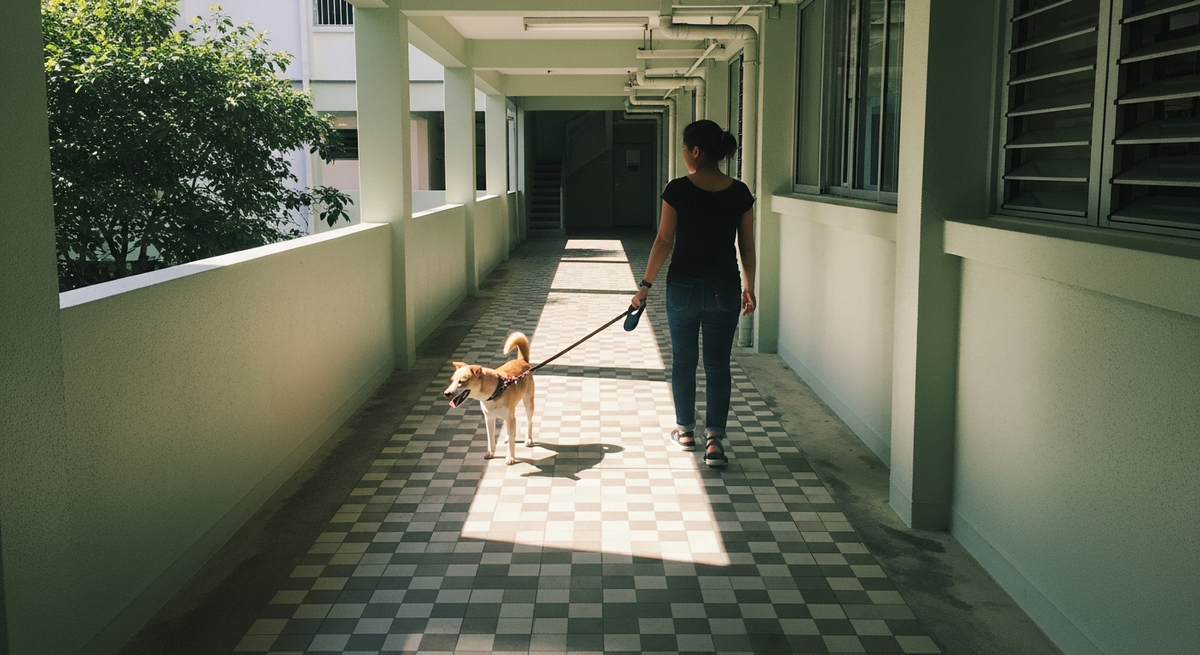

10 min read
Last updated First published 29 July 2026
HDB households are officially limited to one dog per flat under HDB rules, and that single rule settles the question for most Singapore flat owners. Condo residents need to check their MCST bylaws individually. Either way, the financial and behavioural case for a second dog deserves honest scrutiny before you commit.
We get this question a lot, and we understand the pull: one dog is wonderful, so two must be better, right? Before you commit, here is what Singapore's rules, your wallet, and your first dog actually need you to know.
Official Singapore source
Animal and Veterinary Service: dog licensing
BY THE NUMBERS
- 1 Dogs of an approved small breed allowed per HDB flat, under the Housing and Development (Animals) Rules 2024 Housing & Development Board (HDB)
The regulatory picture: HDB vs condo
The single most important thing to understand before you start looking for a second dog is what your tenancy or ownership rules actually permit. This is not a grey area you can quietly ignore.
HDB permits one dog of an approved small breed per flat under the Housing and Development (Animals) Rules 2024. The AVS ownership-limits page explains the rule. Another household keeping two dogs is not evidence of permission for yours.
Official source: HDB's rules on dogs in flats, including the approved-breed list and the one-dog-per-household limit, are published on the AVS ownership-limits page. Check there before making any decisions.
Private premises normally have a combined limit of three cats and dogs; keeping more requires prior AVS approval. Check your development’s management rules as well before adding a dog. Count any resident cats, not only dogs, when planning. Management permission does not replace AVS requirements.
Our HDB approved breeds guide covers the full list of permitted breeds in detail if you need a refresher on what you are already working within.
The real cost of running two dogs in Singapore
First-time owners often underestimate the cost of one dog. Two dogs is not simply double the budget line items, though in most categories it is exactly that.
Each dog needs its own licence, but the cost is not necessarily a recurring annual fee. The AVS fee table lists S$15 for a one-year sterilised-pet licence among the first three cats and/or dogs, or S$35 for an eligible sterilised pet’s one-time licence. The corresponding non-sterilised one-year fee is S$90. Compare the actual licence category, duration and rebate before budgeting for two dogs.
The categories that compound quickly:
- Food: doubles, and the ratio matters more with two dogs of different sizes or life stages.
- Grooming: doubles, and appointments for two dogs can be harder to schedule at budget salons in popular heartland areas.
- Veterinary care: vaccinations when due under each dog’s veterinary plan, flea and tick prevention, dental checks, and any acute illness or injury costs now apply to two animals. Singapore vet costs are not cheap. A single emergency visit can run from S$300 to well over S$1,000 depending on the practice and the condition.
- Boarding or pet-sitting: two dogs at a licensed boarder typically doubles the nightly rate, and some boarders charge extra for households with multiple dogs requiring separate handling.
- Training: if your second dog needs professional help settling in, or if behavioural issues emerge between the two dogs, group classes or one-on-one sessions add up fast.
We have a detailed breakdown of Singapore's first-year dog ownership costs at first-year cost breakdown, which covers realistic ranges for each category. Read it with both dogs in mind before you decide.
For vet cost expectations specifically, vet bills: what to expect gives a clearer picture of what Singapore practices typically charge and where the big variables sit.
Will a second dog fix your first dog's loneliness?
This is the reason many owners give for wanting a second dog, and it deserves an honest answer rather than a reassuring one.
For some dogs, a companion genuinely helps. A confident, well-socialised dog that is bored and under-stimulated during the day can thrive with a second dog in the flat. The two settle into a rhythm, and the household becomes calmer. This does happen.
A second dog is not a reliable treatment for separation distress, but it is also inaccurate to say that another dog inevitably makes anxiety worse. Dogs differ in what triggers their distress. The Merck Veterinary Manual describes dogs distressed by the absence of a particular caregiver and others distressed when alone. Ask your vet to assess the behaviour and any medical contributors. A short video of an ordinary departure can help the assessment. Make an individual treatment plan before deciding whether you can also meet a new dog’s needs.
Our guide on separation anxiety in HDB flats is a good starting point if this is what you are dealing with. And if you are wondering how long is actually reasonable to leave a dog alone in a flat, how long alone: HDB covers that honestly.
It is also worth remembering that two dogs vocalising in a flat multiply your noise risk with neighbours. If you have ever worried about barking complaints, two dogs raises the stakes. See our HDB noise complaint guide for how that process typically unfolds.
Introducing a second dog in a Singapore flat
If you have done the regulatory and financial checks, confirmed your first dog is stable enough to benefit from a companion, and decided to proceed, the introduction process matters enormously in a small space.
Neutral ground first
Do not bring a new dog directly into the flat and expect the resident dog to be fine. A flat that one dog considers its territory is not neutral ground. The first meeting should happen somewhere neither dog has claimed: a quiet void deck neither uses regularly, a park area, or a car park space. Keep both dogs on leash, let them sniff briefly, and watch body language carefully. Loose, wiggly bodies and relaxed tails are good signs. Stiff posturing, sustained hard staring, or raised hackles are not.
Separate resources, always
Feed the two dogs in separate areas of the flat, ideally with a visual barrier between them. Resource guarding over food bowls is one of the most common triggers for conflict between dogs in small spaces. Give each dog its own sleeping space, its own water bowl, and its own set of toys. Do not assume they will share graciously from day one.
Structured separate walks before off-leash time together
Walking the two dogs together before allowing free interaction in the flat builds positive association without the pressure of a confined space. Start with parallel walks where they are not directly interacting, then move to walking closer together, then allow brief off-leash sniffing in a larger outdoor space before you try free interaction at home. This process can take days or several weeks depending on both dogs.
Our guide on loose-leash walking in HDB environments covers the mechanics of managing two dogs on lead in lifts and void decks, which is its own practical challenge.
Which pairings tend to work better
There is no guaranteed formula, but some combinations are more likely to settle smoothly than others in a small flat.
- Similar energy levels: a high-energy dog and a very low-energy dog can frustrate each other. The energetic dog pesters; the older or calmer dog snaps. Matching energy levels reduces friction.
- Sex and temperament: VCA’s guidance on a second dog puts personality first, while noting that sex can matter. An opposite-sex pairing is not a compatibility guarantee. Prevent unintended breeding if either dog is fertile, and discuss sterilisation timing with your vet rather than treating early surgery as a general solution to conflict.
- Reasonable size compatibility: a very large dog and a very small dog can coexist well, but in a small flat the physical size difference creates hazards during play. Accidental injury to a small dog from an enthusiastic larger dog is a real veterinary presentation in Singapore clinics.
- Age and health: Consider whether the resident dog can comfortably manage the newcomer’s activity and play style. A senior dog may need more protected rest. There is no universal one-to-three-year gap that guarantees an easier introduction; assess the individuals and provide time apart.
If you are considering adopting rather than buying, rescue organisations including SOSD and SPCA Singapore can often advise on which dogs in their care have been tested with other dogs and which have not. That information is genuinely useful when you are trying to match a second dog to a resident one.
Our adoption vs breeder guide covers the process differences in more detail if you have not yet decided which route you will take.
The honest conclusion for most HDB owners
For an HDB household, the one-dog rule needs to be settled before compatibility or budget. If your circumstances are unusual, ask the relevant authority for clarification before making a commitment. A second dog should not arrive with an unresolved question about whether they can stay.
Beyond the rules, consider whether you can give both dogs individual attention, appropriate exercise, rest and veterinary care. Singapore’s heat and humidity make flexibility important. Before 8am or after 6pm is not automatically safe: assess current conditions, hot surfaces, exertion and each dog’s health. The RSPCA’s hot-walk guidance explains why exercise can cause heat-related illness. Shorten, postpone or replace a walk with suitable indoor activity when conditions are unsafe. Plan separately if the dogs have different tolerances.
If you are a condo owner who has confirmed your MCST permits two dogs, the calculus is different, and two dogs in a larger space with two active owners can work well. But even then, the financial and behavioural groundwork laid out above applies in full.
For authoritative guidance on animal welfare standards and multi-dog households, the WSAVA animal welfare guidelines are a useful international reference point that Singapore vets frequently cite.
If you are still working out whether one dog is the right fit right now, our guides section has the practical tools to help you make that first decision well. Get the first dog right, and the question of a second one will answer itself in time.
Frequently asked questions
Can HDB flat owners legally keep two dogs?
HDB’s published rule permits one approved small-breed dog per flat. It is an HDB rule, not permission that depends on whether neighbours complain. Check the official ownership limits before committing to another dog.
Do condo owners in Singapore have different rules for keeping two dogs?
Private premises normally have a combined three-cat-and-dog limit. Check your MCST or property rules too; they do not replace AVS requirements. Keeping more than three requires prior AVS approval.
Will getting a second dog help my dog's separation anxiety?
Do not adopt another dog as a treatment for separation anxiety. Responses vary, and a companion does not address every cause of distress. Ask your vet for an assessment and individual plan before adding another animal.
How much more does it cost to keep two dogs in Singapore?
Budget separately for each dog’s food, grooming, preventive care and boarding. Costs depend on each animal and are not always exactly double. Licence duration matters: eligible sterilised pets have a one-time option as well as shorter licences. Use current quotes and the AVS fee table rather than assuming every fee or vaccine repeats annually.
What is the safest way to introduce a second dog to my flat?
Arrange a calm, supervised introduction on neutral ground with a handler for each dog. Allow distance and breaks; do not force interaction. At home, provide separate feeding and rest areas and keep the dogs apart when you cannot supervise until a safe routine is established. Seek qualified help if there are threats, guarding or a bite history.
Which dog pairings work best together in a small Singapore flat?
Assess personality, health, activity and play style, and arrange supervised meetings. Age, size and sex can affect the practical fit, but no pairing guarantees compatibility. Protect rest and provide separate resources for both dogs.
More for potential dog owners
-
 What owning a dog actually costs in year one Plan your first year around the dog you are bringing home. Separate setup purchases, regular care and emergency savings, check what adoption fees already cover, and replace estimates with current quotes before committing.
-
 HDB approved dog breeds: what you need to know before you choose HDB ordinarily permits one dog from its approved list, including crosses of two listed breeds. Project ADORE and written-permission provisions cover separate cases. Check housing eligibility, AVS licensing and the individual dog’s care needs before committing.
-
 Adoption or buying in Singapore: fees, care and questions to ask Compare the written arrangement: what care has already happened, what your payment includes and what remains to arrange. Neither route guarantees health, temperament or a match for your household.
-
 How long can you leave a dog alone in an HDB flat? Plan time alone around your individual dog's comfort, toilet needs and reliable care. A full working day needs a support plan, not a blanket six-to-eight-hour allowance.